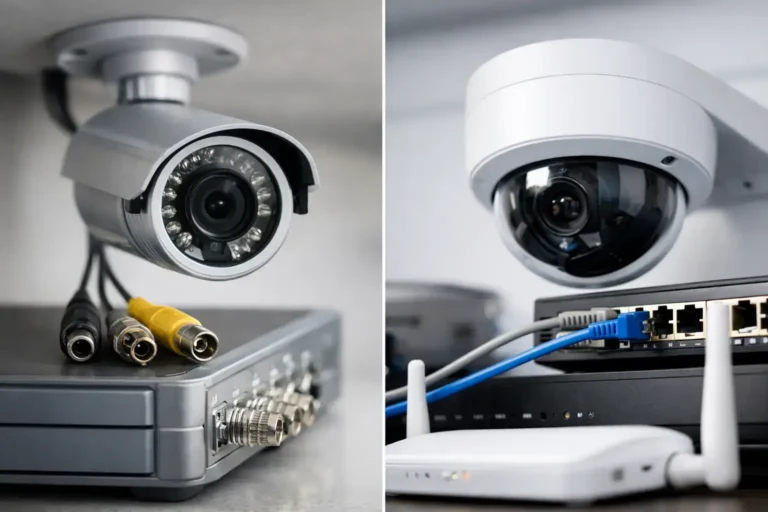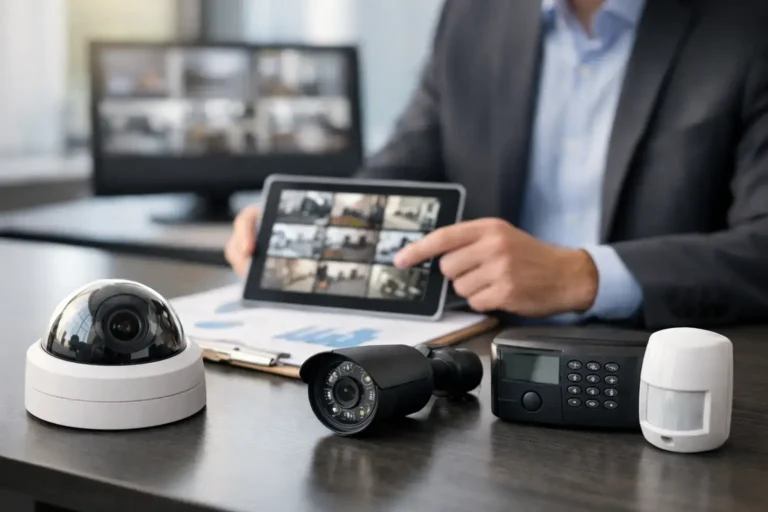
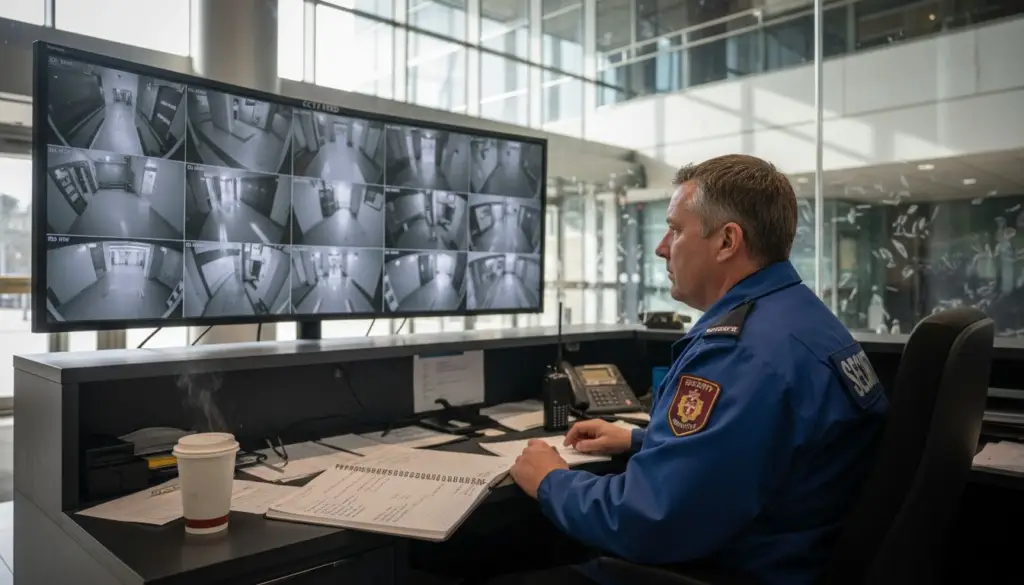
When a break-in, theft, or incident occurs on a commercial property in Essex, few things are as crucial as having reliable CCTV evidence. Facility managers know that video not only captures what happened but also gives an undeniable record that can help identify suspects, build timelines, and support police investigations. CCTV footage plays a vital role in detecting crime, establishing facts, and protecting vulnerable premises. Choosing the right system and maintaining best practices ensures your investment truly supports both prevention and response.
Key Takeaways
| Point | Details |
|---|---|
| Importance of CCTV Evidence | CCTV provides objective evidence crucial for criminal investigations and helps deter potential offenders. Proper installation and maintenance are essential for legal admissibility. |
| Types of Footage | Understanding different types of CCTV footage maximises security effectiveness and supports diverse investigative needs. Choose formats that align with specific security concerns. |
| Legal Compliance | Adhering to UK GDPR and data protection laws is mandatory to ensure footage is admissible in court. Proper signage and restricted access are vital components of compliance. |
| Maximising Effectiveness | Regular reviews of camera positioning and integration with other security measures enhance overall system effectiveness. Maintenance and training are critical for optimal performance. |
Understanding CCTV Evidence in Crime Contexts
When a crime occurs on your commercial property in Essex, the first thing many facility managers think about is what happened and who was responsible. This is where CCTV evidence becomes invaluable. Modern security systems capture detailed footage that can identify suspects, establish timelines, and verify witness accounts with remarkable accuracy. Unlike witness statements which can be unreliable or conflicting, video evidence provides an objective record of events as they unfolded. The effectiveness of this evidence, however, depends heavily on how your system is installed, maintained, and how footage is properly preserved and recovered.
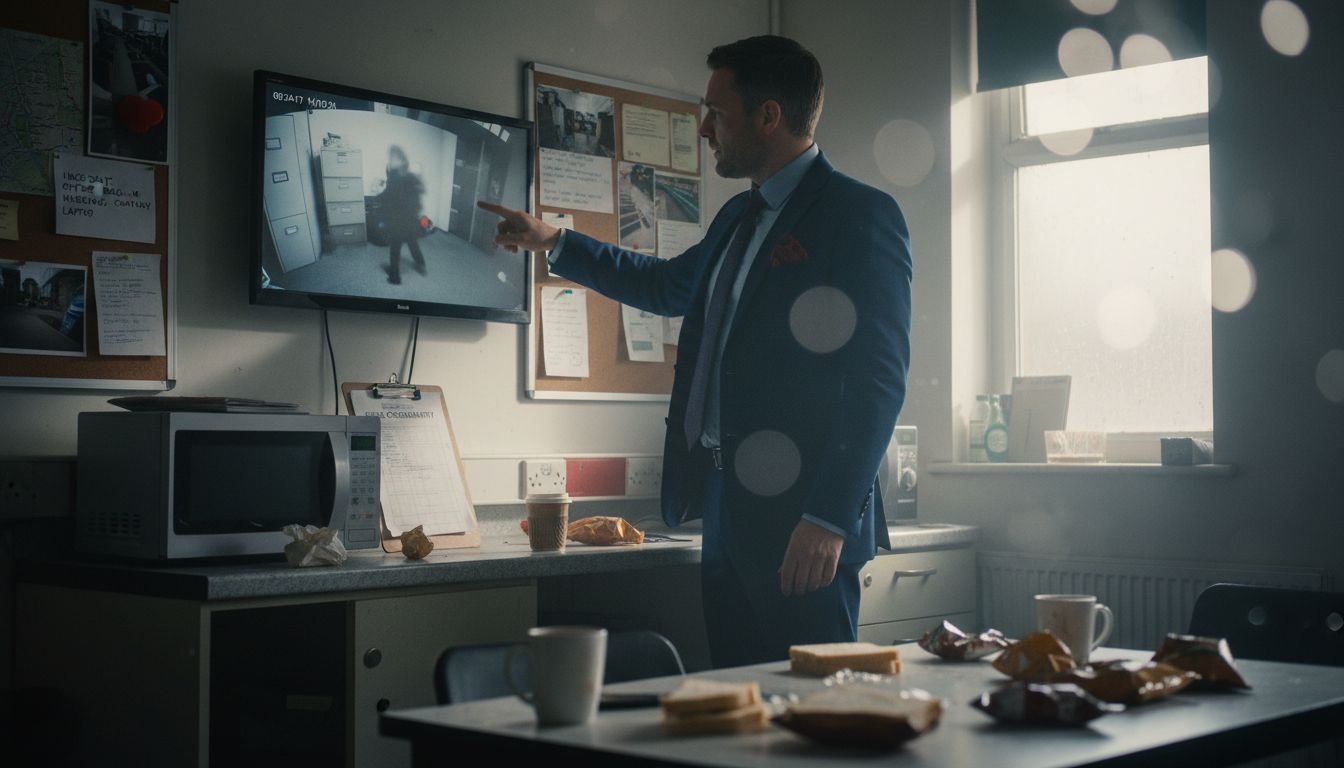
CCTV plays a multifaceted role in criminal investigations. Video surveillance detects crime in progress, identifies potential witnesses and suspects through facial recognition, and creates clear timelines that prosecutors can use in court proceedings. Beyond investigation, quality CCTV systems also function as strong deterrents to potential offenders. When criminals know cameras are recording, they are significantly less likely to target your premises. Your system serves a dual purpose: it catches crimes after they happen and prevents them from happening in the first place. This is why many facility managers view burglar alarm systems integrated with video monitoring as essential infrastructure rather than optional upgrades.
CCTV footage fulfils critical functions within criminal investigations by providing material for intelligence gathering, supporting missing persons enquiries, and helping police determine who should be interviewed and when. Quality standards for recovery and processing of footage have been established to ensure its evidential value in court. This matters directly to you because poorly maintained or improperly stored footage can become inadmissible in legal proceedings, essentially rendering your system useless when you need it most. The technical infrastructure supporting your cameras, the way operators use the system, and the specific security settings you implement all affect whether evidence will hold up under legal scrutiny. This is why understanding how your system captures, stores, and protects footage is not just a technical concern but a strategic business imperative.
Professional tip: Document your CCTV system specifications, maintenance records, and footage storage procedures thoroughly from day one. This documentation becomes critical evidence itself if your footage is ever needed in court, demonstrating that your system was operating to recognised standards and that the evidence has not been tampered with or compromised.
Types of CCTV Footage and Their Uses
Not all CCTV footage is created equal. As a facility manager, understanding the different types of footage your system captures and how each type serves specific purposes will help you maximise the value of your security investment. Modern surveillance systems can record multiple formats simultaneously, from basic video files to advanced data streams that include audio, metadata, and analytical information. Each type serves distinct functions in crime prevention, investigation, and operational management.
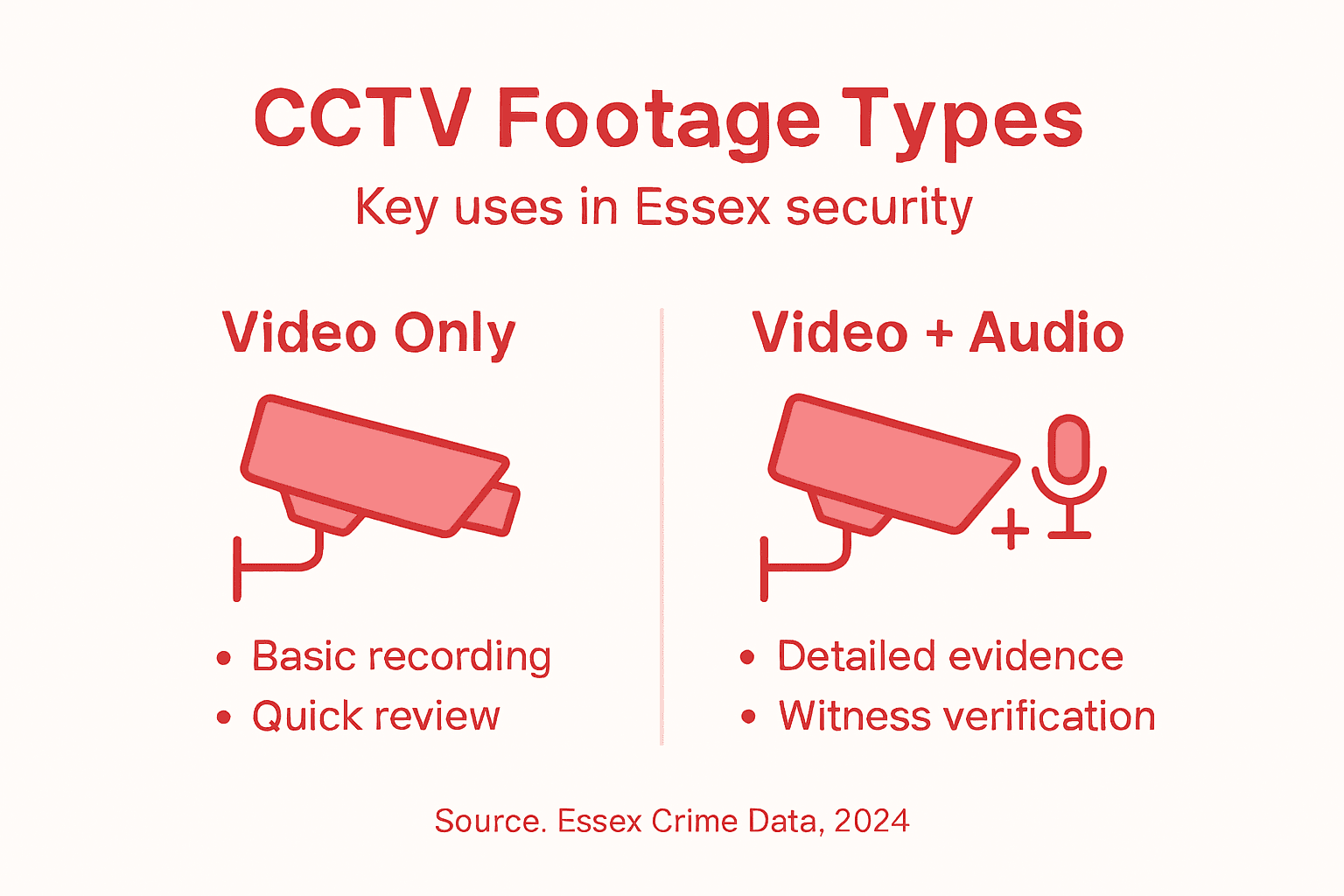
The most common footage type in commercial settings combines video images with audio recording, creating a comprehensive record of events as they unfold. CCTV footage assists in detecting crimes and identifying suspects whilst simultaneously providing forensic opportunities for investigators. This dual function matters because you gain both immediate security benefits and long-term investigative value. High-definition video footage establishes clear timelines of events, allows officers to verify witness accounts, and supports missing persons enquiries. However, video quality varies dramatically depending on your camera specifications, lighting conditions, and storage infrastructure. Footage recorded in poor conditions or compressed too heavily for storage may look usable at first glance but prove inadmissible in court due to inability to definitively identify individuals or verify critical details.
Beyond traditional video, modern security systems integrate advanced technologies like Automatic Number Plate Recognition and Facial Recognition Technology. These systems automatically extract specific data from video footage, creating searchable databases that allow you to track vehicle movements or identify known individuals within seconds rather than reviewing hours of footage manually. Fixed cameras mounted at entry points capture different information than mobile systems installed on doors or integrated into smart devices. Your system might also include wireless cameras and smart doorbells that provide remote monitoring capabilities whilst maintaining the same forensic-quality standards.
When selecting types of security cameras for your Essex property, consider what specific crimes or security concerns you face. A retail environment needs different coverage than a warehouse or office building. The footage types you prioritise should directly address your primary security risks. Audio recording, for instance, provides invaluable context for investigating disputes or confrontations, but it carries additional data protection considerations that you must address.
Professional tip: Request footage samples of the exact camera models under consideration before committing to a full installation, testing them under your specific lighting conditions and distances to ensure the quality meets your investigative standards.
Here is a comparison of common types of CCTV footage and how each supports security operations:
| Footage Type | Key Benefit | Typical Use Case |
|---|---|---|
| Basic Video Only | Visual record of events | Entrance monitoring, basic deterrence |
| Video + Audio | Adds context to incidents | Dispute investigation, retail safety |
| Video with Metadata | Easier retrieval, tracking | Automatic number plate recognition |
| Analytical Footage | Real-time alerts, searches | Smart surveillance, rapid response |
Legal Requirements for CCTV in the UK
Installing CCTV on your Essex commercial property is not simply a matter of purchasing equipment and mounting cameras. The UK operates under strict legal frameworks that govern how you can install systems, monitor footage, process data, and retain recordings. Understanding these requirements before implementation protects your business from costly compliance breaches and ensures that any footage you capture remains admissible as evidence in criminal proceedings.
Operating CCTV systems in the UK requires compliance with two distinct regulatory frameworks. CCTV use is governed by UK GDPR and the Data Protection Act 2018, which establish your responsibilities for lawful processing, transparency, accountability, and data minimisation. This means you must have a legitimate reason for recording, inform people that monitoring is occurring, and protect stored footage from unauthorised access. Beyond data protection, operating CCTV for certain purposes requires a Security Industry Authority licence. Using CCTV for monitoring public areas or identifying individuals may require SIA licensure depending on the nature of your activity. If your system guards against disorder or protects people from assault, you must hold the appropriate licence even if your operators hold other security credentials.
Your compliance obligations extend beyond licensing and data protection to practical operational standards. You must display clear signage informing individuals that CCTV monitoring is in place. Footage access must be restricted to authorised personnel only. Retention periods should be limited to what is necessary for your stated purpose, and stored recordings must be protected with robust security measures. Compliance with the Surveillance Camera Code of Practice is mandatory for public authorities and recommended for all commercial operators. Consider integrating privacy and CCTV compliance measures into your broader security strategy from the outset rather than attempting to retrofit compliance after installation.
The interplay between these requirements affects system design significantly. A camera installed to monitor employee attendance operates under different legal constraints than one monitoring public entrances. Audio recording introduces additional complexity under data protection law. When selecting systems like burglar alarms integrated with monitoring capabilities, ensure your installer understands these distinctions and designs infrastructure accordingly. Facility managers who underestimate these requirements often discover during investigations that their evidence cannot be used because systems were implemented without proper legal foundation.
Professional tip: Obtain written documentation from your CCTV installer confirming that your system complies with UK GDPR, the Data Protection Act 2018, and any applicable licensing requirements before final installation, and retain these records indefinitely for audit and legal defence purposes.
This summary shows the main UK legal requirements for CCTV compliance on commercial premises:
| Requirement | Description | Business Impact |
|---|---|---|
| Data Protection Registration | Register with ICO, pay annual fee | Avoids fines, legal risk |
| Clear Signage | Notify staff and public about recording | Ensures transparency |
| Access Controls | Limit footage viewing to trained personnel | Prevents misuse, safeguards |
| Retention Policy | Keep footage only as long as necessary | Reduces data liability |
Data Protection and Privacy Responsibilities
Your CCTV system collects data about individuals every second it operates. As a facility manager, you hold significant responsibilities to protect that data and ensure it is processed lawfully. The difference between a secure, compliant system and a liability waiting to happen often comes down to whether you understand and implement proper data protection procedures from the outset.
When operating CCTV on commercial premises in Essex, you must comply with UK GDPR and the Data Protection Act 2018. Organisations using CCTV must assess compliance across multiple dimensions including installation location, operation procedures, public awareness, signage placement, data security measures, and your lawful basis for processing footage. This assessment should identify risks specific to your property and implementation. Start by asking yourself fundamental questions: Why are you recording at each location? Who needs access to footage? How long should you retain it? What happens if someone requests to see footage recorded of them? These questions form the foundation of compliant operation. Privacy impact assessments are encouraged by regulators to identify and mitigate risks before problems arise.
Practical compliance requirements demand specific actions. Businesses using CCTV must register with the Information Commissioner’s Office and pay an annual fee unless operating purely domestic systems. You must display clear, visible signage informing people that recording is taking place before they enter monitored areas. Access to stored footage must be strictly controlled, with only authorised personnel permitted to view recordings. You can only use CCTV footage for the purposes stated when systems were installed. If you initially installed cameras to monitor building access, using that same footage to monitor employee productivity without proper notification violates data protection law. When individuals request recorded footage of themselves, you have 30 days to provide it unless exemptions apply. Many facility managers underestimate this obligation until faced with requests during investigations.
Implementing data security measures for CCTV systems protects both privacy and your legal position. Ensure footage storage systems are encrypted, access is logged and monitored, and backup copies are maintained securely. Train all personnel with access to understand their responsibilities. Document everything: retention schedules, access logs, requests for footage, and decisions about what to record where. This documentation becomes critical evidence that you took your obligations seriously if any complaint or incident occurs.
Professional tip: Conduct a data protection impact assessment before finalising your system design, document it thoroughly, and review it annually as your business operations change or new risks emerge.
Maximising CCTV Effectiveness for Security
Owning a CCTV system and maximising its effectiveness are two entirely different things. Many facility managers install cameras, connect them to recorders, and assume the job is complete. In reality, effectiveness depends on deliberate choices about placement, maintenance, integration with other security measures, and how well your team understands the system’s capabilities. A poorly positioned camera covering a brick wall whilst missing the actual entry point wastes resources and creates false confidence.
The Surveillance Camera Code of Practice establishes 12 guiding principles that directly improve CCTV effectiveness. Strategic camera placement and adherence to technical standards enhance how well your system serves both deterrence and investigation purposes. Having a clear purpose for each camera location ensures you capture footage relevant to your actual security concerns. A camera positioned to monitor vehicle entry needs different specifications than one covering a building entrance. Transparency about recording, proportionality between risk and monitoring intensity, and accountability for footage access all contribute to systems that genuinely protect your property rather than creating regulatory liability. Regular review of camera positions, image quality, and storage capacity ensures your system adapts as your facility and operational risks evolve.
Effective CCTV systems prioritise quality footage capture and proper storage to support both immediate investigation and long-term evidential needs. This means investing in equipment maintenance schedules, ensuring adequate lighting at monitored areas, and configuring storage systems that preserve footage integrity. Training your security team on how to retrieve footage efficiently, what constitutes suspicious activity, and when to escalate concerns transforms raw technology into actionable security intelligence. Maintenance cannot be an afterthought. Cameras accumulate dust, lenses become obscured, and storage systems require regular health checks. Documenting all maintenance activities protects you legally and ensures your equipment performs as designed when needed.
Integrating CCTV with complementary security measures amplifies overall effectiveness. Consider combining video surveillance with burglar alarm systems that trigger immediate alerts, door entry controls that limit access to sensitive areas, and access logging that creates accountability trails. When integrated properly, these systems work together to deter offenders, detect intrusions rapidly, and create comprehensive evidence if incidents occur. The most secure facilities do not rely on CCTV alone. They layer multiple technologies so that breaching one triggers response from others. Selecting systems with 7 essential features ensures you capture the capabilities needed for your specific security challenges.
Professional tip: Schedule quarterly reviews of your camera positions and footage samples to verify that each camera still covers its intended target area and captures usable image quality, adjusting positioning or cleaning lenses before problems are discovered during an actual incident.
Strengthen Your Essex Security with Expert CCTV Solutions
Understanding the critical role of CCTV evidence in crime prevention and investigation reveals the need for expertly installed and maintained surveillance systems. Many facility managers face challenges such as ensuring footage quality, legal compliance, and effective system integration to maximise their security investment. At 247 CCTV, we specialise in addressing these pain points with tailored solutions including CCTV installation, burglar alarms, and access control systems designed to meet UK data protection standards and operational demands.

Secure your Essex property with confidence by choosing a provider who understands not only camera specifications but also the legal frameworks like UK GDPR and SIA licensing requirements. Don’t risk losing vital evidence due to inadequate maintenance or non-compliance. Visit 247 CCTV today and discover how our comprehensive security services can protect your business with reliable technology and professional support. Act now to enhance your security infrastructure and stay one step ahead of potential threats.
Frequently Asked Questions
What is the role of CCTV in criminal investigations?
CCTV plays a crucial role by providing detailed footage that can identify suspects, establish timelines, and verify witness accounts. It serves as an objective record of events, making it invaluable for investigations.
How can I ensure the evidence captured by my CCTV is admissible in court?
To ensure admissibility, it’s essential to maintain and store footage properly, adhere to established quality standards, and document your CCTV system’s specifications and maintenance records thoroughly.
What are the different types of CCTV footage and their uses?
CCTV footage can vary, including basic video, video with audio, and footage with metadata. Each type serves distinct functions, from basic surveillance to advanced applications like facial recognition, aiding in crime detection and investigation.
What legal requirements must I follow when operating CCTV on my commercial property?
You must comply with UK GDPR and the Data Protection Act 2018, which include registering your system, displaying clear signage, limiting footage access, and ensuring data protection measures are in place.
Recommended
- Why Everyone in Essex Is Talking About 4K CCTV Systems (And You Should Too) – 247 CCTV Security Ltd
- Why Everyone in Essex Is Talking About 4K CCTV Systems (And You Should Too) – 247 CCTV Security Ltd
- 7 Key Advantages of CCTV for Homes in Essex and London – 247 CCTV Security Ltd
- 7 Top CCTV Benefits for Businesses in Essex and London – 247 CCTV Security Ltd