
FIRE ALARMS
Fire Alarm Systems for Homes & Businesses
Wired and wireless fire alarm systems designed and installed for homes and businesses across Essex, London and surrounding areas.
Essex, London & surrounding areas

Established 2003
Homes & Businesses Domestic & commercial fire alarms
Essex & London And surrounding areas
4.9 from 116 customer reviewsGoogle & Facebook reviewsRead our customer reviewsSTART WITH THE BUILDING
Fire Detection Designed Around the Building
The right fire alarm depends on the building and how it is used. Before recommending a system, we look at:
- Size and layout
- How the building is used
- Who occupies it, and when
- The escape strategy
- Existing fire precautions
- Your fire risk assessment
Where a fire risk assessment is already in place, its findings help determine the type and extent of detection and warning required. We design the fire alarm system around the requirements identified in that assessment.
HOMES & BUSINESSES
Domestic and Commercial Fire Detection
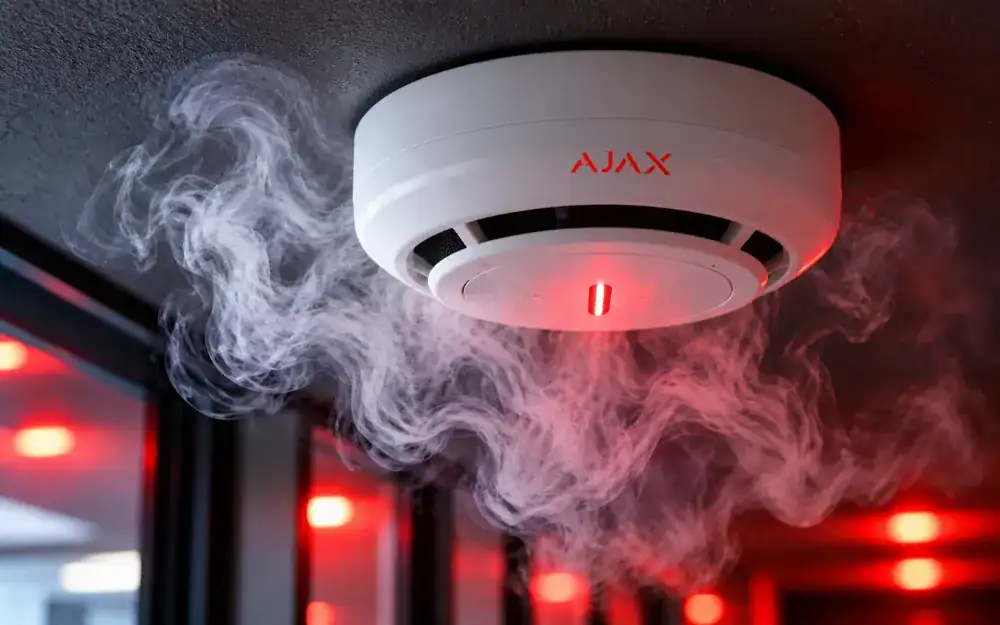
Home Fire Alarms
Modern domestic systems use interlinked smoke and heat detection, so an alarm in one part of the home is heard throughout. Heat detection suits kitchens and other areas where a smoke detector would be prone to false alarms, and wireless options can avoid lifting floors or chasing walls in an occupied home.
- Interlinked smoke and heat detection
- Wireless options for existing homes
- Houses, flats and extensions
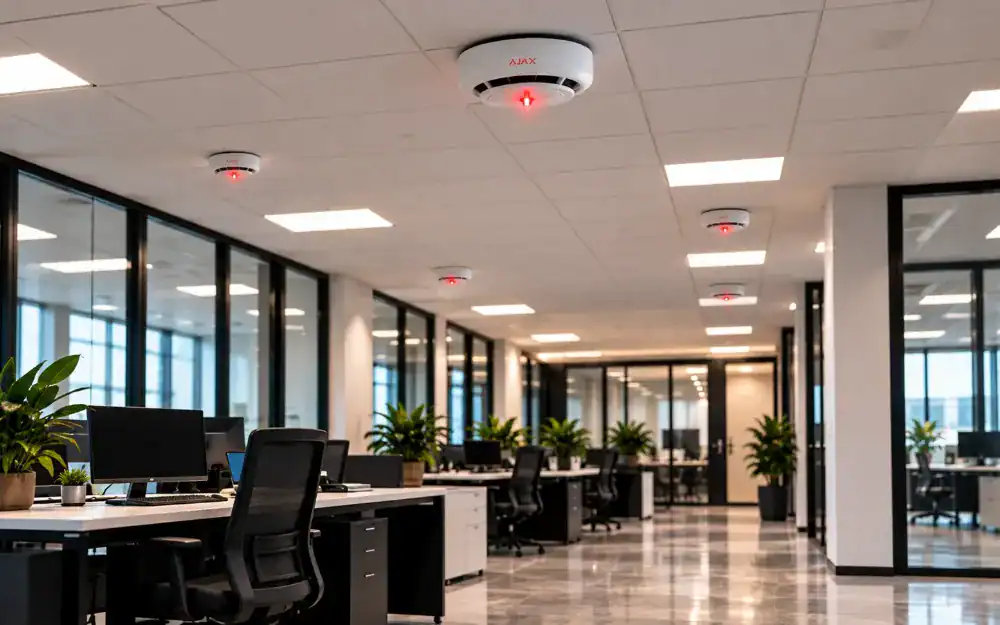
Business Fire Alarms
Commercial systems range from smaller conventional installations for shops and offices to addressable and wireless systems for larger or more complex buildings, with manual call points, sounders and visual alarm devices where they are required.
- Conventional, addressable, two-wire and wireless systems
- Honeywell Gent, Kentec and Ajax equipment
- Servicing, maintenance contracts and monitoring
SYSTEM TYPES
Choosing the Right Type of Fire Alarm System
No single technology is right for every building. The size of the premises, how precisely an alarm needs to be located, the cabling that’s practical and the disruption that’s acceptable all point towards the right option.
Conventional
Devices are grouped into zones, so the control panel shows which area an alarm came from.
Often suits: many smaller premises with a straightforward layout.
Addressable
Each device is individually identified by the control panel, so an activation or fault can be traced to a specific location.
Often suits: larger or more complex buildings where locating an alarm quickly matters.
Two-wire
Detection and alarm devices share the same circuit, which can reduce the cabling needed.
Often suits: smaller and medium-sized premises where simpler cabling helps.
Wireless
Devices communicate with the system by radio, reducing cabling and installation disruption.
Often suits: occupied, finished or sensitive buildings where new cable routes would be difficult.
We’ll recommend a system type after the survey and explain the reasoning.
AJAX WIRELESS FIRE SYSTEMS
Ajax Wireless Fire Alarm Systems
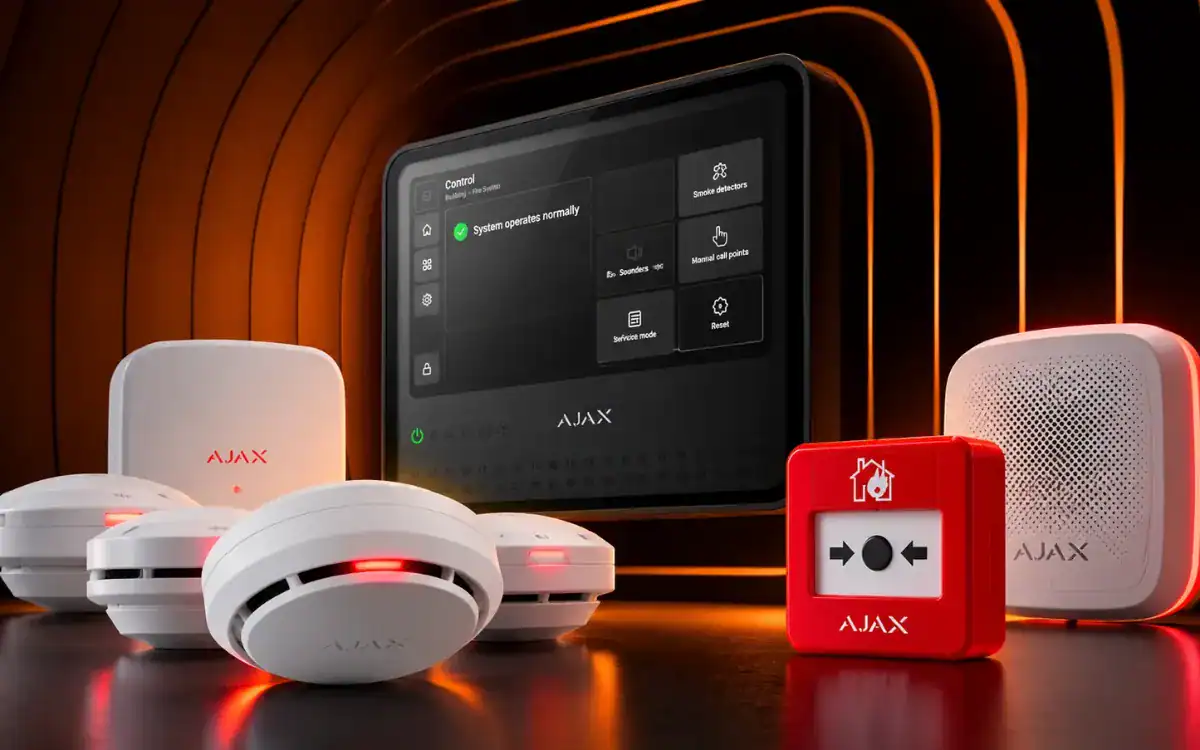
Ajax wireless fire systems are our preferred wireless solution. They can combine detection, warning and manual activation devices within a professionally designed system, without running new cables to every device.
Wireless can be a practical choice for:
- Occupied premises that need to keep working
- Finished interiors and refurbishment projects
- Buildings where new cable routes would be disruptive
- Some heritage or sensitive interiors
- Homes as well as commercial premises
Wireless isn’t automatically better than wired. Suitability depends on the survey, the system design and the radio conditions in the building, and wireless devices need their batteries checked as part of regular servicing.
HOW IT WORKS
How a Fire Alarm System Works
A fire alarm system detects a fire, raises the alarm and, where specified, passes a signal on. Each part has a clear job.
01 · DETECT
Smoke detectors
Detect smoke from a developing fire, often giving the earliest warning.
Heat detectors
Respond to a rise in temperature. Suited to kitchens and areas where smoke detection would cause false alarms.
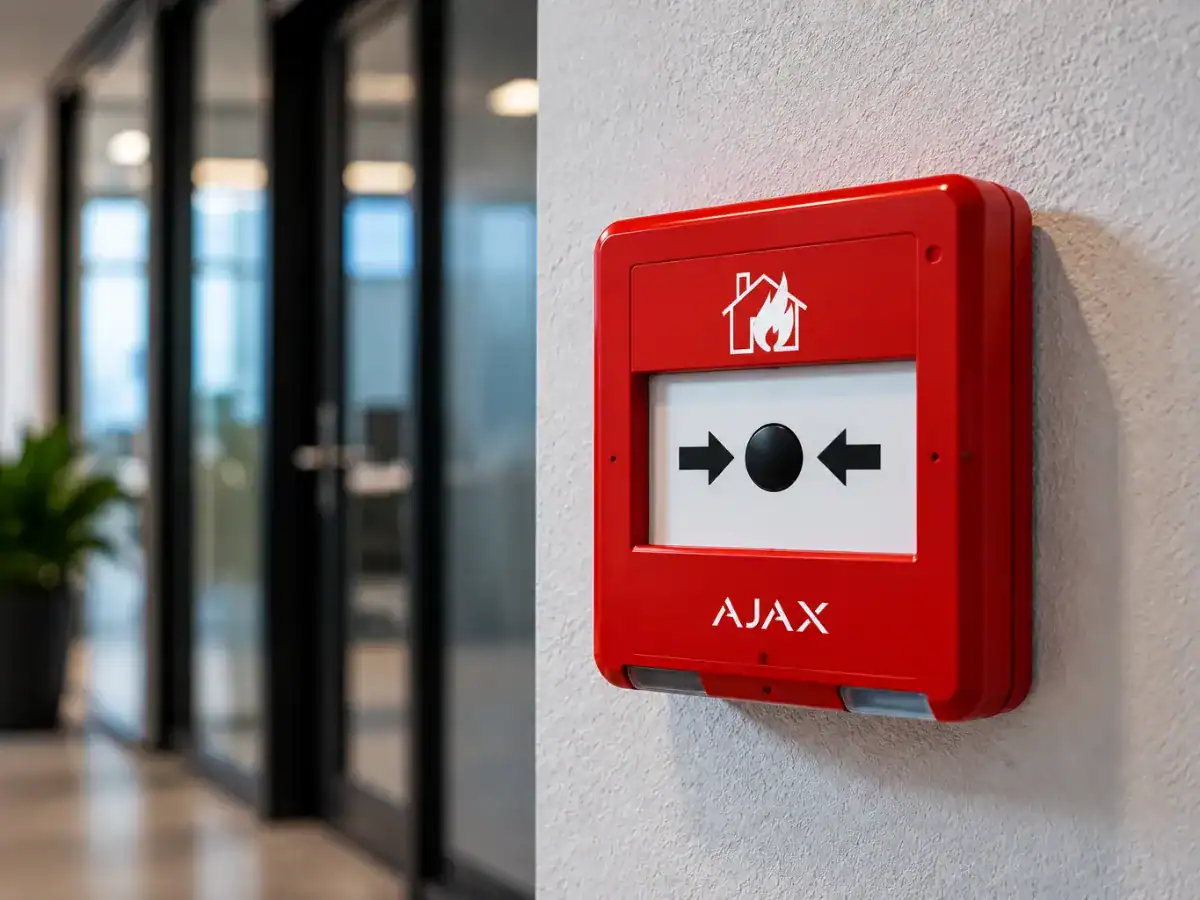
Manual call points
Let anyone who discovers a fire raise the alarm straight away.
02 · CONTROL
Control panel
Receives signals from the devices, shows where the alarm came from and monitors the system for faults.
03 · WARN & SIGNAL
Sounders
Give an audible warning throughout the building.
Visual alarm devices
Flashing beacons where required, for example in noisy areas or for people with hearing loss.
Monitoring
Where specified, sends the alarm signal to an Alarm Receiving Centre.
EXISTING SYSTEMS
Upgrading or Replacing an Existing Fire Alarm
Common reasons to review an existing system include:
- Ageing or obsolete equipment
- Extensions or changes to the building
- Recurring faults
- False alarms
- A need for additional detection
- Moving away from older technology
Where new cabling would be disruptive, a wireless system or extension may be worth considering. We’ll assess what’s there and recommend the practical option, and if an existing system needs work outside our scope, we can put you in touch with a suitable partner.
HOW WE WORK
Our Fire Alarm Installation Process
01
Site Survey
Look at the building, how it’s used and the findings of any fire risk assessment.
02
System Design
Select the system type, devices and their positions.
03
Installation
Install the system with care for the building and the people using it.
04
Commissioning
Test and set up the system so it operates as designed.
05
Handover & Support
Show you how to use and test it, and agree ongoing servicing.
Commercial systems are designed and installed with reference to BS 5839-1, and domestic systems with reference to BS 5839-6, as applicable.
SERVICING & MAINTENANCE
Testing, Servicing and Maintenance
Routine user testing, such as regularly operating a call point on a commercial system, confirms that the alarm sounds. Professional servicing goes further, checking detectors, devices, the control panel and power supplies, and identifying faults before they become a problem.
Commercial fire alarms need regular inspection and servicing appropriate to the system and the requirements that apply to it. We offer planned servicing and maintenance contracts, with call-out support for systems we have installed.
- Planned servicing
- Maintenance contracts
- System testing
- Detector and device checks
- Fault identification
- Support for systems we have installed
MONITORING
Fire Alarm Monitoring
A monitored system can transmit an alarm signal to an Alarm Receiving Centre (ARC), rather than relying solely on someone at the premises noticing the activation. The ARC then follows the response procedure agreed for the site.
Monitoring can be added where it is appropriate for the building and how it is occupied, including when premises are empty.
Monitoring Costs and Response
Monitoring is an ongoing service with its own cost. The response depends on the arrangements specified, and monitoring doesn’t guarantee fire service attendance.
WHY 247 CCTV
Fire Alarm Experience Since 2003
- Established 2003
- Experience across electronic security and life-safety systems
- Wired and wireless options
- Ajax wireless fire systems as our preferred wireless solution
- Conventional, addressable and two-wire systems
- Experience with Honeywell Gent and Kentec equipment
- Domestic and commercial systems
- Design, installation, commissioning and maintenance
- Monitoring options
- Constructionline Gold Member
- Essex, London and surrounding areas
YOUR QUESTIONS
Fire Alarm Questions
Straightforward answers to the questions we are asked most often.
What type of fire alarm system do I need?
It depends on the building, how it’s used and the requirements identified in your fire risk assessment. Homes usually need interlinked smoke and heat detection; commercial premises may suit a conventional, addressable, two-wire or wireless system. We’ll recommend an option after the survey.
What’s the difference between conventional and addressable fire alarms?
A conventional system shows which zone an alarm came from. An addressable system identifies the individual device, which helps in larger or more complex buildings.
Are wireless fire alarms reliable?
A professionally designed wireless system can be a dependable option where it suits the building. The survey considers radio conditions, and wireless devices need their batteries checked as part of regular servicing.
Can Ajax fire alarms be used in businesses?
Yes, where suitable. Ajax wireless fire systems can be used in commercial premises as well as homes, subject to the survey and system design.
How often should a commercial fire alarm be serviced?
Commercial systems need regular inspection and servicing at intervals appropriate to the system and the requirements that apply to it. We’ll recommend a servicing schedule and can provide a maintenance contract.
Can you upgrade an existing fire alarm?
We can assess an existing system and advise whether a repair, upgrade, extension or replacement makes sense. Where work falls outside our scope, we can refer you to a suitable partner.
Can a fire alarm be monitored?
Yes. Where appropriate, a system can signal an Alarm Receiving Centre. Monitoring is an ongoing service, and the response depends on the arrangements specified.
Do you carry out fire risk assessments?
247 CCTV does not currently carry out fire risk assessments. The fire alarm system can be designed around the requirements identified in the responsible person’s fire risk assessment.
RELATED SERVICES
Other Security Systems We Install
FREE SITE SURVEY
Need the Right Fire Alarm for Your Property?
Tell us about the building and what you need, and we’ll arrange a free site survey.