A security system usually looks straightforward until you have to rely on it at 2am. That is where the difference shows between a basic alarm and an ajax alarm system designed to detect properly, notify quickly and stay dependable day after day. For homeowners, landlords and commercial operators, the real question is not whether it looks modern – it is whether it suits the risks on your site and the way the building is actually used.
What an ajax alarm system is designed to do
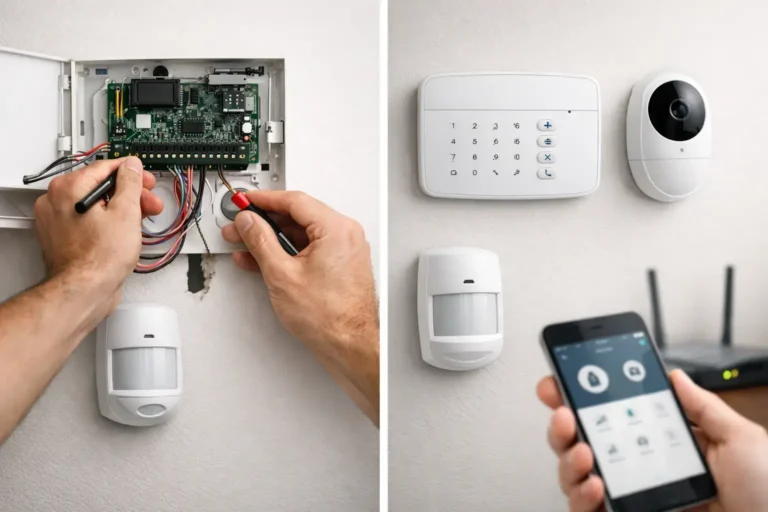
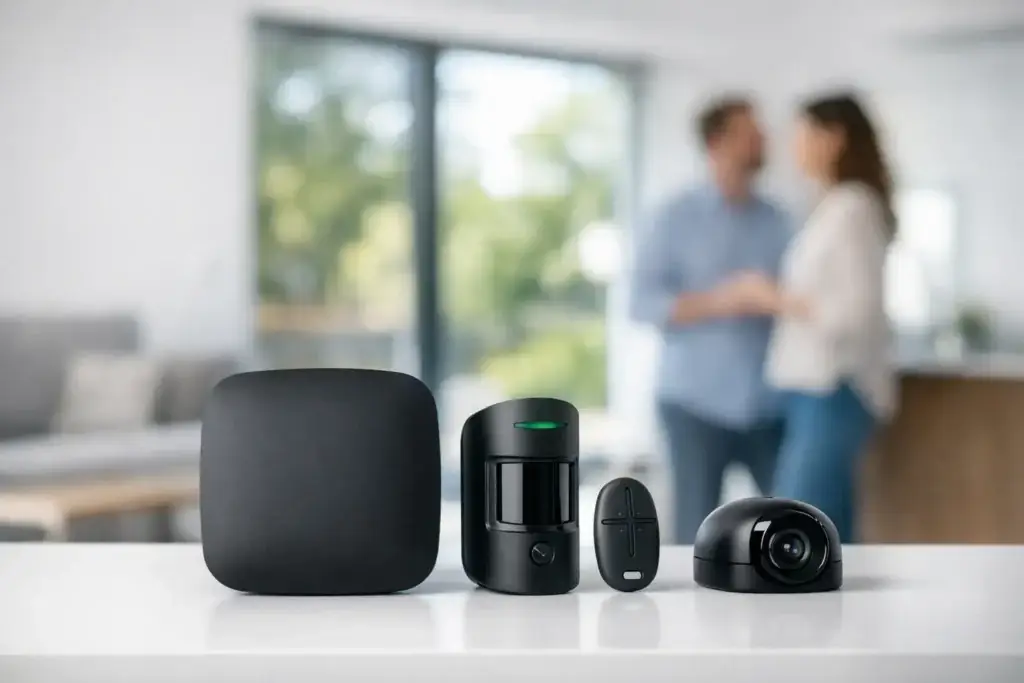
Ajax is a professionally specified intruder alarm platform built around wireless detection, app-based control and fast event reporting. In practical terms, that means door contacts, motion detectors, keypads, internal and external sounders, panic devices and other peripherals all work as part of one managed system.
What has made the ajax alarm system popular is the balance it strikes. It gives users the convenience of smart control and clean installation, but it is also aimed at serious security use rather than gadget-level home automation. That matters if you are protecting a family home, a rental property, a retail unit, an office or a site with regular opening and closing routines.
The system is also flexible. A smaller domestic setup may only need perimeter protection and a few internal detectors, while a larger commercial premises may need multiple areas, staff access control, out-of-hours alerts and integration with other security measures.
Why so many buyers look at Ajax first
The appeal is easy to understand once you look beyond the branding. Installation can often be less disruptive than a fully wired alternative, especially in finished homes, listed properties, offices or buildings where cable runs would be difficult or unsightly. Devices are also designed to be visually discreet, which is useful in customer-facing environments and modern residential interiors.
There is also a strong user experience element. Many clients want to arm and disarm from an app, check device status remotely, receive alerts instantly and know whether a detector has triggered, been tampered with or gone offline. Ajax handles that well, which makes daily use simpler for both households and businesses.
That said, convenience should never be the only reason to choose any alarm platform. The right system still depends on building layout, the value of assets at risk, occupancy patterns, insurance requirements and whether the alarm needs to connect with monitoring or wider site security.
Where an ajax alarm system works especially well
Ajax is often a strong fit for residential properties where owners want a professionally installed intruder alarm without major redecoration. Detached homes, flats, extensions, garden offices and rental properties can all benefit from a system that is quick to install and easy to manage.
It is equally relevant in commercial settings where flexibility matters. Small shops, cafés, offices, schools, clinics, warehouses and mixed-use premises often need reliable protection without the delay and cost that can come with extensive rewiring. If the layout changes, or if a business expands into additional rooms or units, the system can often be adapted more easily than older alarm setups.
Temporary or changing environments can also suit Ajax well. Construction site offices, modular buildings and short-term commercial spaces may all benefit from wireless devices that can be deployed with less disruption. In these cases, speed of installation matters almost as much as the hardware itself.
The strengths – and the trade-offs
A properly designed ajax alarm system offers several clear advantages. Wireless communication reduces installation disruption. App control gives users visibility and convenience. Detector ranges are broad enough to cover common domestic and commercial risks. The system also looks modern and tends to be well received by users who do not want overly complicated controls.
But there are trade-offs, and a professional installer should be honest about them. Wireless does not mean fit-and-forget. Device placement still matters, signal paths still need to be checked, and batteries still require long-term maintenance planning. In the right system these are manageable issues, but they should never be ignored.
There is also the question of site complexity. On some larger, higher-risk or heavily regulated premises, a different alarm design or a more integrated security approach may be the better choice. If a site has challenging construction materials, unusual access patterns, high-value stock or strict insurer conditions, specification should come before brand preference.
What matters more than the hardware
The quality of the design is usually more important than the badge on the detector. A poor alarm layout leaves blind spots, creates false alarms and gives occupants a false sense of security. A well-designed system does the opposite – it protects likely entry routes, matches detectors to real risk areas and supports the way people use the building every day.
For example, a family home may need a night-set arrangement that protects downstairs doors and vulnerable rooms while allowing upstairs movement. A commercial property may need separate arming areas for staff entrances, storage rooms and office space. A landlord may want protection that is simple for tenants to use but still secure between occupancies.
That is why survey work matters. The right installer will ask where the likely attack points are, who enters the building and when, whether pets are present, whether there are outbuildings or plant areas to protect, and whether alarm response needs to connect with keyholding or monitoring arrangements.
Professional installation versus off-the-shelf setup
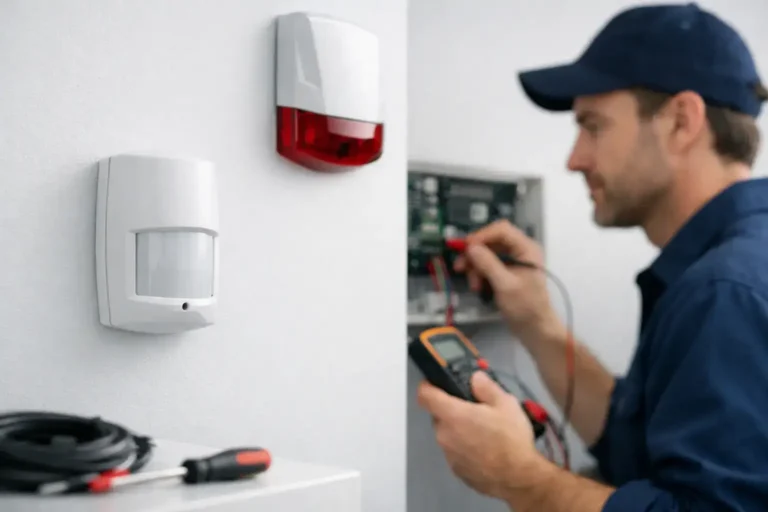
An ajax alarm system can be attractive partly because it feels user-friendly, but security performance should not be left to guesswork. Professional installation brings several advantages that are easy to underestimate until something goes wrong.
First, detector positioning is critical. A motion detector mounted in the wrong place may miss movement or trigger unnecessarily. A contact on the wrong door or window may protect the less vulnerable point while leaving the more likely route exposed. Sounder placement, communication paths and user permissions all need proper planning.
Secondly, commissioning matters. Devices need pairing, testing, programming and sensible configuration. Entry and exit times, sensitivity levels, part-set modes and notifications all need to suit the premises. A rushed setup can leave users frustrated or, worse, reduce the effectiveness of the system.
Thirdly, compliance matters. Many buyers – especially businesses, landlords and higher-value homeowners – need assurance that the system has been installed to recognised standards and is acceptable to insurers. That is where working with an experienced, SSAIB-approved installer becomes important.
How Ajax fits into wider site security
An alarm should rarely be considered in isolation. On many premises, the best results come from combining intruder detection with CCTV, access control, lighting and managed response procedures. The ajax alarm system can be a strong part of that wider strategy, but it is most effective when each layer supports the others.
If an external detector or door contact activates, good CCTV coverage helps verify what happened. If a business has restricted areas, access control helps reduce internal risk as well as perimeter threats. If a site is unattended overnight, monitored response and clear escalation procedures improve the chances of acting quickly.
This is particularly important for commercial users. A warehouse, school, healthcare setting or retail unit often needs more than a siren and a phone alert. The security plan should reflect operational reality, not just the product catalogue.
Questions worth asking before you choose
If you are comparing options, the better questions are usually practical ones. Is the system being designed around your risks or simply sold as a package? Will it be easy for staff, tenants or family members to use correctly? Is it suitable for insurer expectations? What is the plan for maintenance, battery replacement, fault response and future expansion?
You should also ask what happens after installation. Good support is not an extra. It is part of the value of a professionally installed alarm system. Buildings change, users change and risks change. Your alarm should be able to keep up.
For clients across Essex, London and the South East, that is often where a specialist security company adds most value. Firms such as 247 CCTV do not just supply devices – they survey, specify, install and support systems so the end result works in the real world, not only on paper.
Is Ajax the right choice?
For many homes and businesses, yes – provided the system is properly specified and installed. Ajax offers a strong mix of usability, flexibility and professional-grade security features, especially where clients want clean installation and dependable remote control. It is often a very good fit, but not every property has the same risk profile, and not every site should be approached in the same way.
The best starting point is not the app, the detector range or the look of the equipment. It is a proper assessment of what needs protecting, how the building operates and what level of resilience you expect from the system. Once that is clear, the right answer tends to follow naturally.