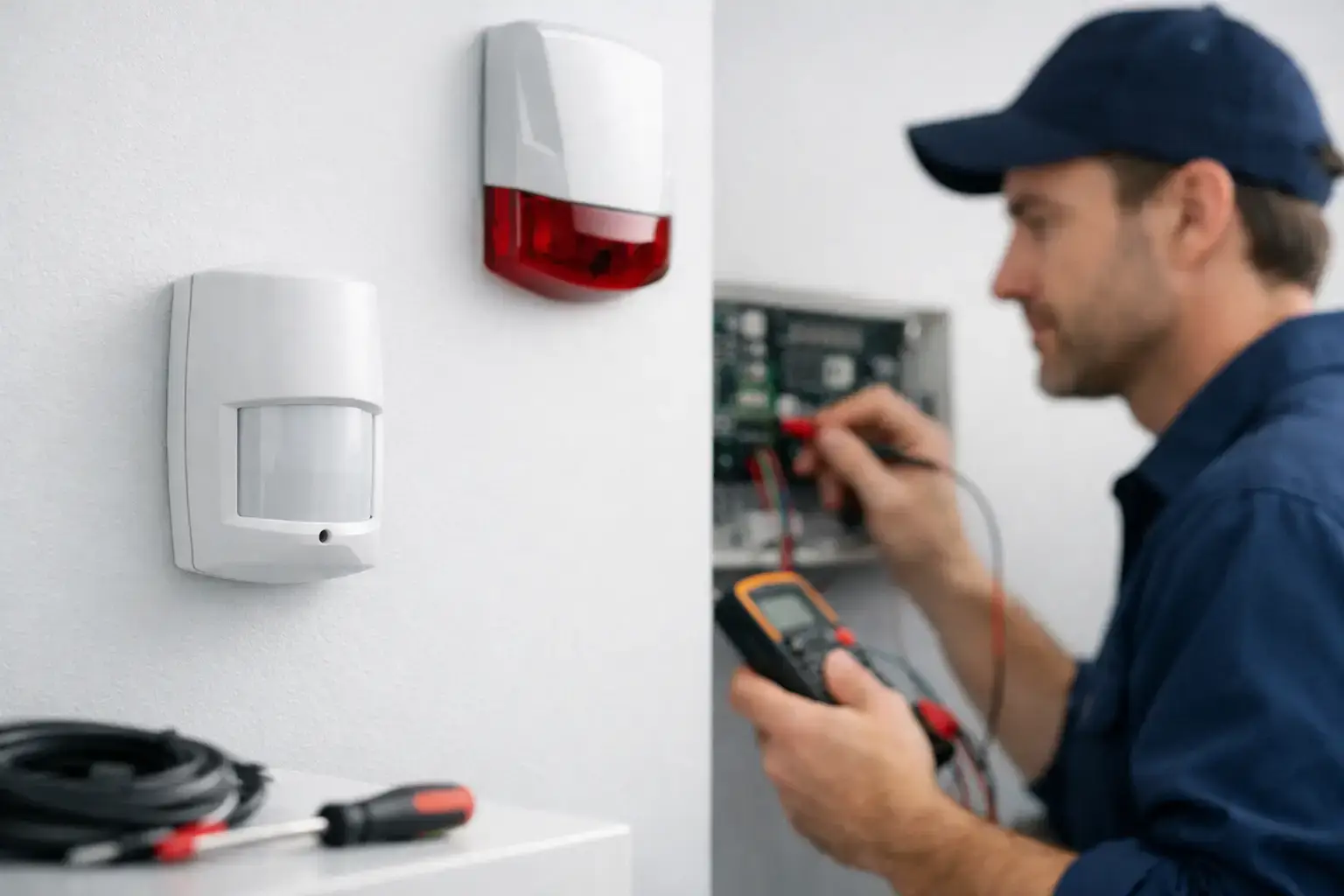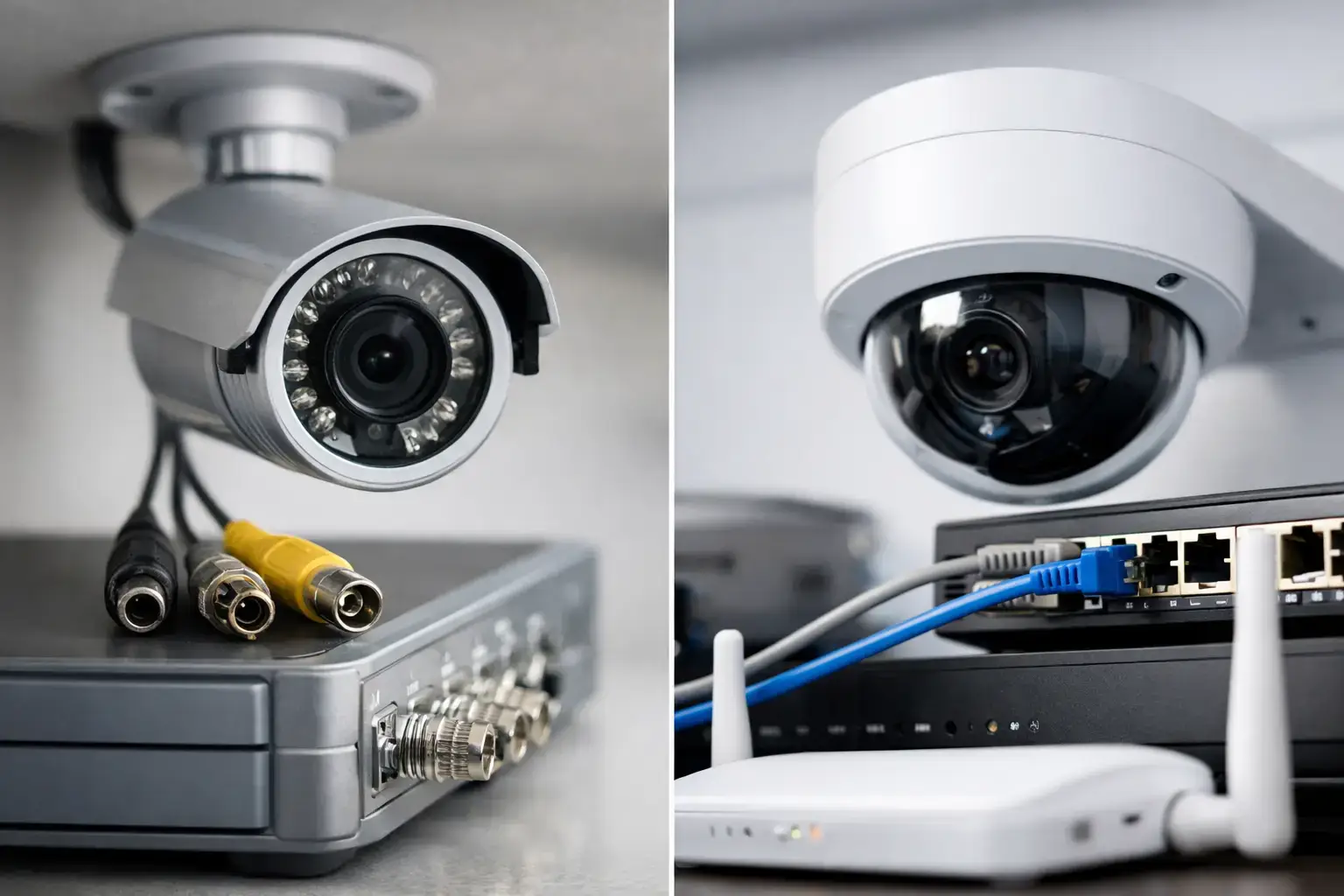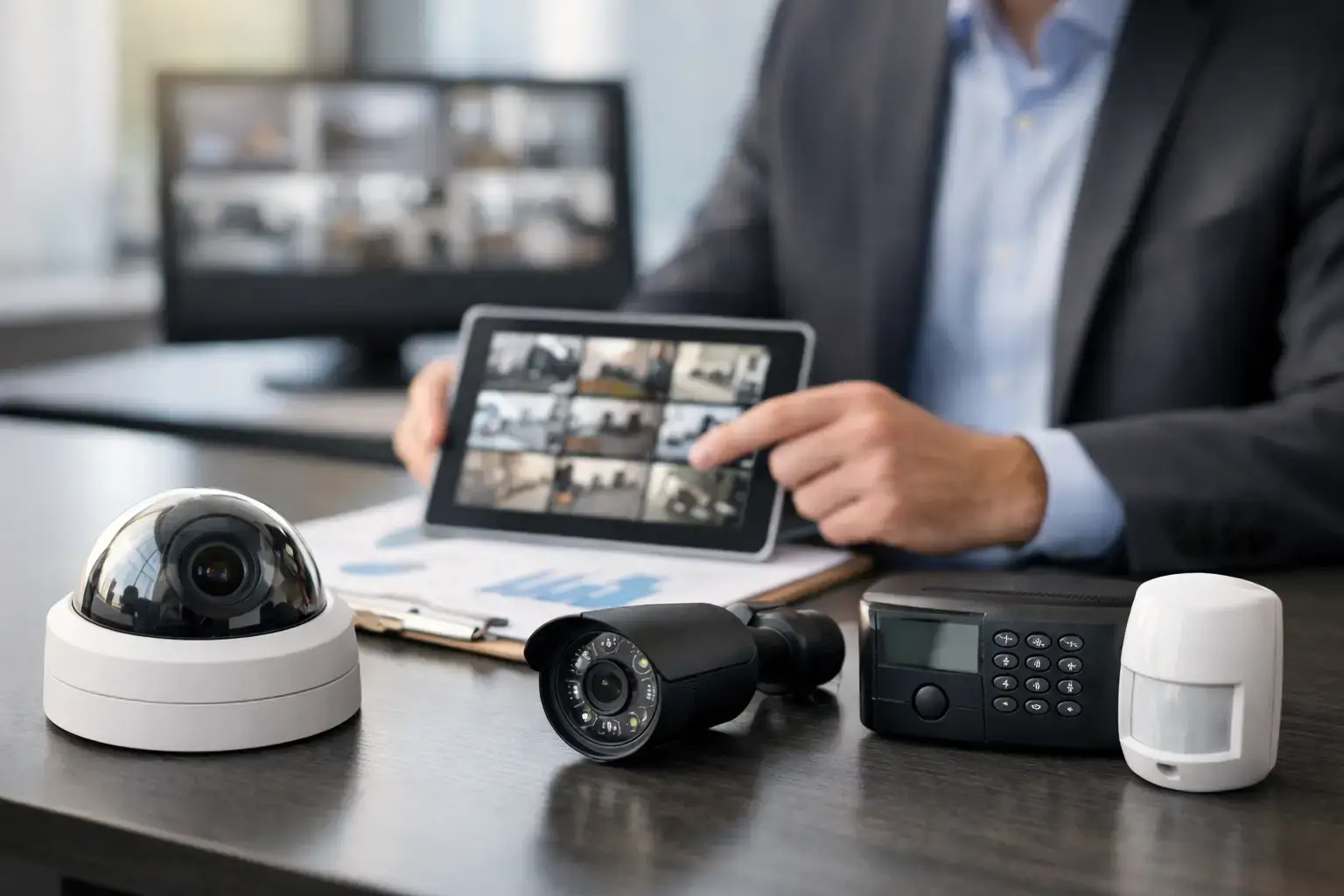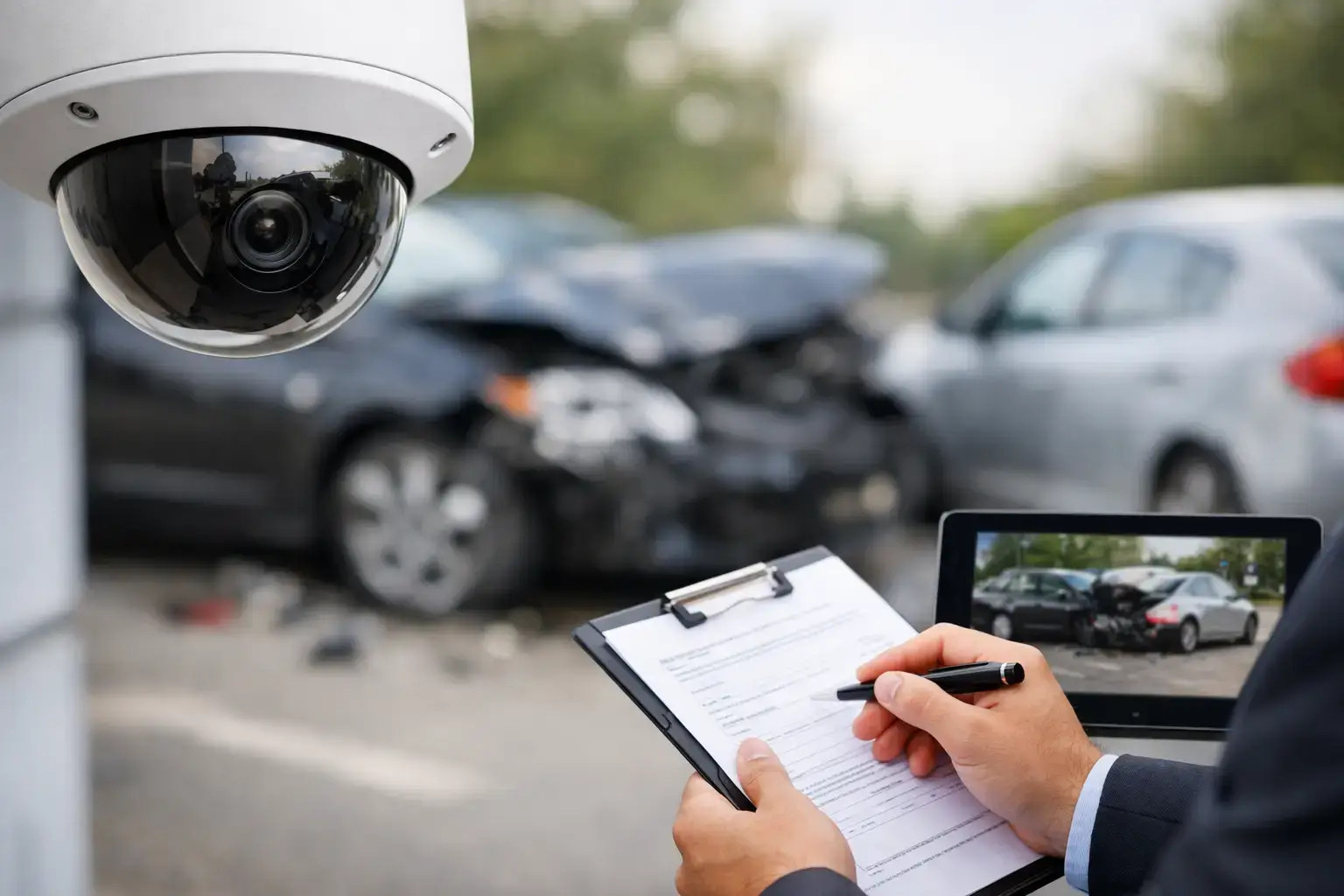
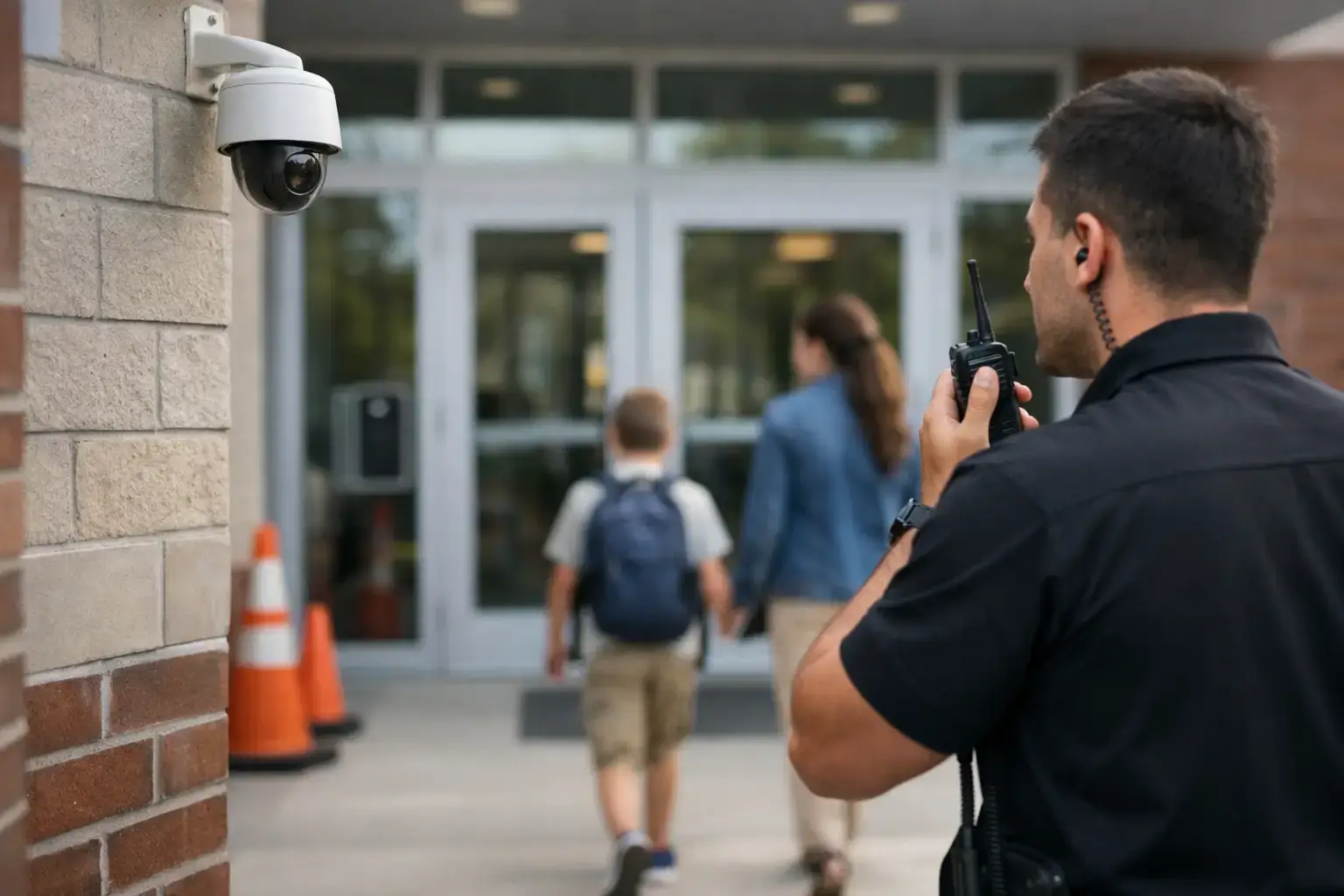
At most schools, the main entrance sets the tone for everything that follows. It needs to feel welcoming to pupils, staff and parents, while still stopping unauthorised access, tailgating and avoidable safeguarding risks. That balance is exactly why knowing how to secure school entrances matters – and why a single lock or camera is never enough on its own.
For schools, academies and colleges, entrance security is not just about deterring crime. It is about controlling who can get near children, managing visitors properly, protecting staff, and making sure the site can respond calmly if something goes wrong. The right approach combines physical security, electronic systems and day-to-day procedures so the entrance works reliably during the busy realities of the school day.
How to secure school entrances with layered security
The strongest school entrance security is built in layers. If one measure is missed, another still supports it. That is far more effective than relying on a receptionist, a buzzer, or a camera feed alone.
A typical school entrance should start with good perimeter definition. Visitors should be guided towards one clear point of entry rather than being able to approach several doors and hope one is open. Fencing, gates, signage and controlled routes all help reduce confusion and limit opportunistic access.
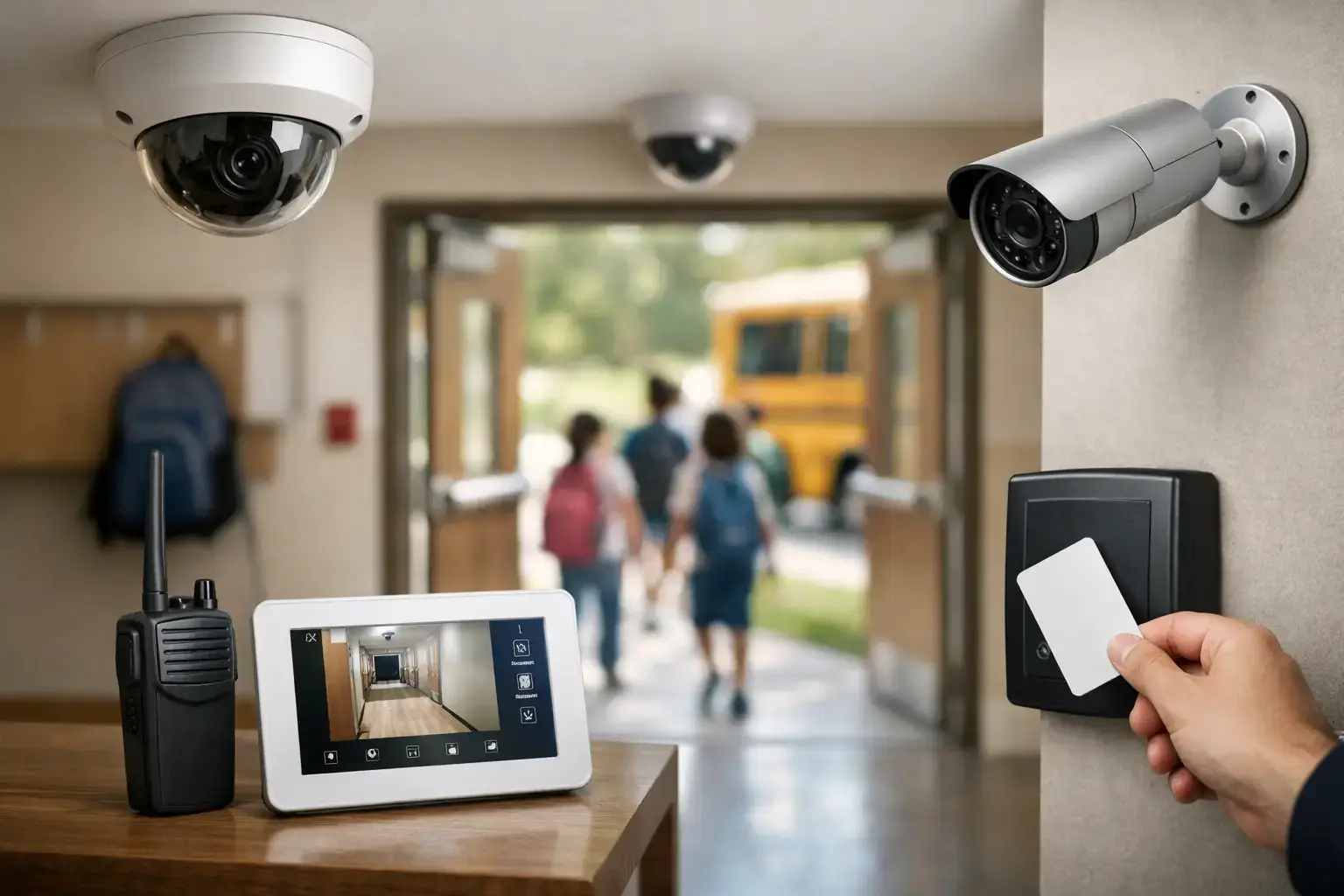
From there, the entrance itself should be managed with a combination of access control, door entry and surveillance. In practice, that often means an electronically locked external door, an audio or video intercom, monitored CCTV coverage, and a second internal barrier before access is granted deeper into the building. This creates a controlled transition from public space to school space.
That layered model matters because school sites are rarely static. Doors are opened for deliveries, parents arrive unexpectedly, contractors attend for maintenance, and pupils move around in groups. A well-designed entrance system accounts for normal disruption without compromising safeguarding.
Start with the real risks at your entrance
Before choosing equipment, schools need to be clear about what they are trying to prevent. The risks at a small primary school differ from those at a large secondary school, an SEND setting or a college campus with multiple access points.
For some schools, the biggest issue is unauthorised visitors reaching reception unnoticed. For others, it is pupils leaving site without permission, parents attempting to bypass sign-in procedures, or doors being left unsecured during drop-off and collection periods. In urban locations, anti-social behaviour, theft and after-hours trespass may also be major concerns.
This is why a proper site survey matters. Traffic flow, blind spots, queueing points, delivery access, safeguarding arrangements and fire escape requirements all need to be considered together. Security should reduce risk without creating bottlenecks or making the entrance feel hostile.
Different times of day create different vulnerabilities
One of the most overlooked points in school security is that the entrance behaves differently across the day. The morning rush, late arrivals, lunch periods, end-of-day collections and evening lettings all create separate access challenges.
A door that is manageable at 10.30 am may become difficult to control at 8.30 am when parents, pupils and staff are arriving at once. The best systems are configured around these patterns, with timed permissions, restricted door schedules and clear user access levels.
Access control is usually the backbone
If you want a dependable answer to how to secure school entrances, access control is usually the starting point. It gives schools control over who can enter, when they can enter, and which doors they can use.
For staff, this may mean proximity fobs, cards, keypads or app-based credentials. For visitors, it usually means controlled admission through reception after identification. Access control also removes some of the weaknesses that come with traditional keys, which can be copied, lost or passed between users without any audit trail.
A professionally specified system also allows permissions to be tailored. Senior leadership may have broader access than teaching staff. Caretakers may need out-of-hours access. Contractors may require temporary permissions that can be removed immediately once the work is complete.
For schools, that flexibility is valuable because staffing changes are frequent and site usage can vary term by term. Electronic access control makes updates easier and more accountable.
Why door release should not be the only check
Many schools still rely on a simple buzzer and door release button from reception. That can work at a basic level, but it places too much responsibility on one quick judgement. If staff cannot see clearly who is outside, or are distracted by phones, visitors and pupils, mistakes become more likely.
Adding video door entry improves verification before release. Reception staff can check identity, assess behaviour and speak with the visitor before opening the door. Combined with CCTV recording, this creates a clearer record of events if there is ever a concern.
CCTV should support decisions, not replace them
CCTV is one of the most effective tools around school entrances, but only when it is designed for the task. A poor-quality camera mounted too high, facing into bright daylight, may record activity without producing useful evidence. Schools need clear images of faces, entry attempts and movement around the approach to the building.
Entrance CCTV should cover the main doorway, approach routes, reception-facing areas and any side doors that could be used to bypass controls. Image quality, lighting and positioning matter more than camera count. In some cases, analytics can also be useful for detecting loitering, after-hours movement or line crossing near restricted access points.
What CCTV should not do is become a substitute for access management. Cameras can help staff verify, monitor and investigate, but they do not physically stop entry. The strongest systems combine CCTV with locked doors, intercoms and clear procedures.
Reception layout matters more than many schools realise
A school can invest in good electronic security and still leave gaps if reception is poorly laid out. If a visitor can step through the front door and walk straight into corridors, the security chain is already weakened.
A more secure arrangement creates a managed reception zone. Visitors enter one controlled area, report to staff, sign in, and wait there until authorised. Internal doors beyond reception should also be controlled where appropriate, especially in larger schools or settings with safeguarding sensitivities.
Glazing, counters, sightlines and panic alarm provision all play a part here. Reception staff should be able to see who is approaching, communicate clearly, and summon assistance quickly if needed. Security works best when the space supports the staff using it.
Procedures are just as important as hardware
Even the best-installed system depends on consistent use. Schools need clear entrance procedures that staff understand and follow, especially during busy or pressured moments.
Visitors should know where to go, how to request entry and what identification is expected. Staff should know not to hold secure doors open for unknown individuals or allow visitors to follow them in. Deliveries should be managed through defined processes rather than informal arrangements.
It also helps to review what happens when things go wrong. If an intercom fails, if a parent becomes aggressive, or if a pupil tries to leave through the main entrance, staff need a practical response plan. Training matters because entrance security is partly technical and partly behavioural.
Maintenance is not optional
A school entrance system is used heavily. Doors open and close hundreds of times, intercoms are pressed repeatedly, access credentials are added and removed, and cameras must perform in changing light and weather conditions. Without maintenance, small faults turn into weak points.
Routine servicing helps keep locks aligned, readers responsive, recordings available and software up to date. It also reduces the risk of nuisance faults that tempt staff to wedge doors open or bypass the system. For schools, reliability is not a luxury. It is part of safeguarding.
The right solution depends on the site
There is no universal answer to how to secure school entrances because every school has its own layout, staffing model and risk profile. A one-form-entry primary school may need a straightforward but well-managed front entrance with video entry, access control and perimeter CCTV. A larger secondary school may need multiple controlled zones, separate visitor management, staff-only entrances and stricter after-hours control for sports and community use.
Budget matters too, but cheap systems often cost more over time through poor performance, weak integration or early replacement. Schools usually get better value from a properly designed system that matches the site and can be maintained long term.
That is why many education settings choose specialist installers with experience across CCTV, access control, door entry and ongoing support. A joined-up approach tends to deliver better results than buying disconnected products from different suppliers. For schools across Essex, London and the South East, companies such as 247 CCTV are often brought in for that reason – to survey the risks properly and design systems that work in day-to-day operation, not just on paper.
School entrances should never feel like an afterthought. When they are planned properly, they protect pupils and staff, support safeguarding, and make daily site management calmer and more controlled.