A fire alarm that fails during a genuine emergency is rarely the result of one dramatic fault. More often, it comes down to small issues missed over time – a dirty detector, a failed standby battery, a blocked call point or a panel fault left unresolved. That is why a clear fire alarm maintenance checklist matters. It gives property owners, facilities managers and responsible persons a practical way to keep systems dependable, compliant and ready to perform when they are needed most.
For commercial premises in particular, maintenance is not just good practice. It supports life safety, helps reduce false alarms, protects business continuity and demonstrates that the system is being looked after properly. In homes, HMOs, rental properties and mixed-use buildings, the same principle applies. A professionally maintained system is far less likely to let you down.
What a fire alarm maintenance checklist should cover
A useful checklist should not be treated as a substitute for competent servicing, but it does help you stay on top of routine checks between professional visits. The right schedule usually includes user checks, visual inspections, basic function testing and planned engineer maintenance.
The exact detail depends on the system type, building use and fire risk. A small domestic alarm arrangement will not be managed in the same way as an addressable commercial fire alarm across a school, warehouse or care setting. Even so, the essentials are consistent: the control equipment must show normal operation, detection devices must remain unobstructed, sounders must be audible, and any faults must be acted on promptly.
Weekly fire alarm maintenance checklist
Weekly checks are often the most overlooked, yet they are the quickest way to spot developing issues before they become serious. In many commercial environments, this is the minimum level of routine user attention a fire alarm should receive.
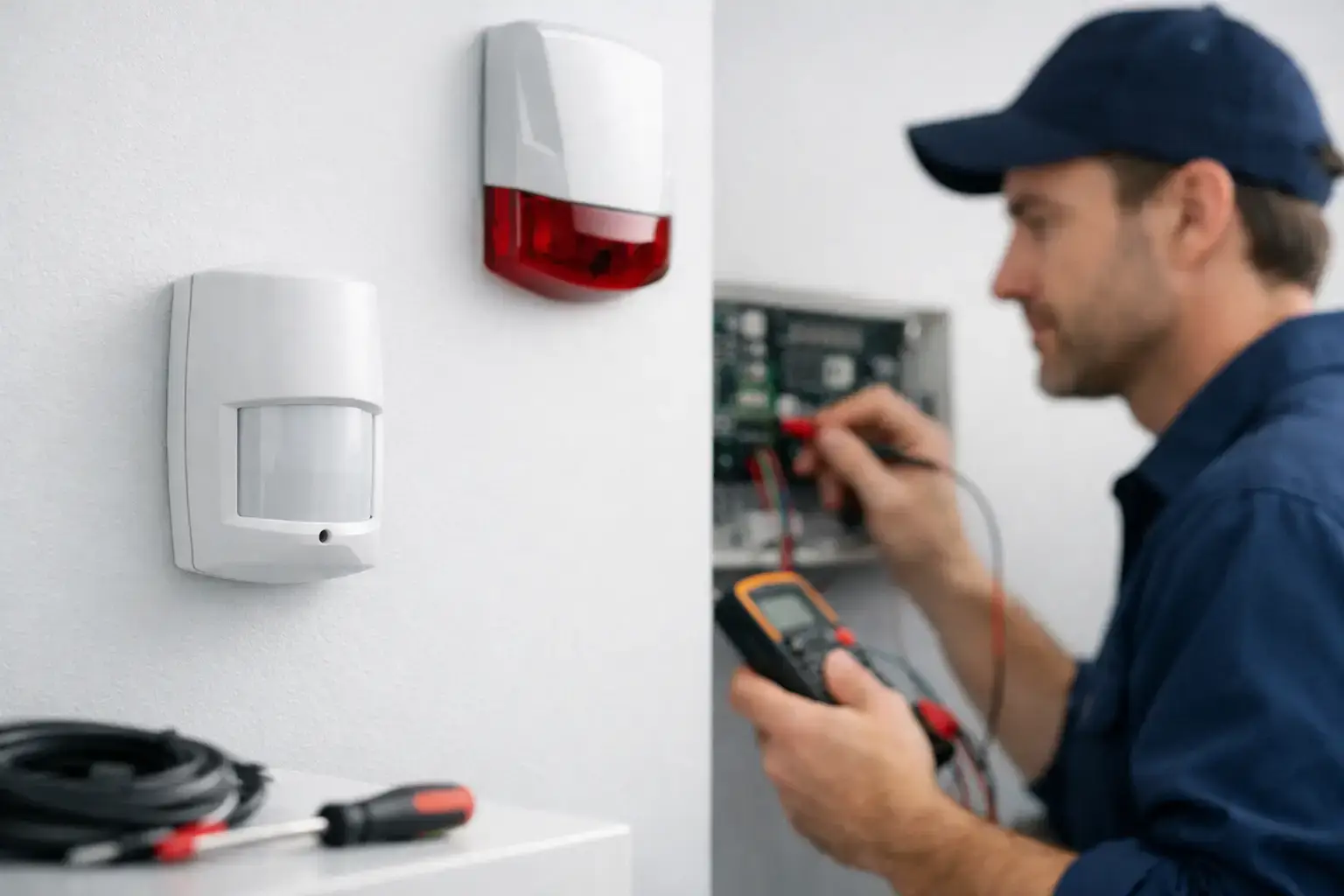
Start at the fire alarm control panel. Check that the system indicates normal status and that there are no fault, disablement or test warnings left active from previous work. If anything unusual is showing, it should be recorded and investigated rather than ignored.
A manual call point test should then be carried out on a rotational basis, so a different call point is used each week over time. This confirms that the panel receives the signal and that the alarm activates correctly. In occupied buildings, this should be done at a consistent time with relevant staff informed in advance, especially where remote monitoring, lift controls, access control interfaces or automatic door releases are connected.
You should also confirm that alarm sounders are clearly audible in the areas that matter. In a compact premises this may be straightforward. On a larger site with multiple zones, noisy plant areas or staggered occupancy, audibility can be more complicated and may require a more structured approach during servicing.
Once the test is complete, reset the system and make sure it returns to normal condition. Every check should be entered into the fire log book with the date, time, device tested and any faults identified.
Monthly checks that help prevent avoidable faults
Monthly checks sit between quick user testing and formal servicing. They are useful for spotting environmental issues that often cause unwanted alarms or device failure.
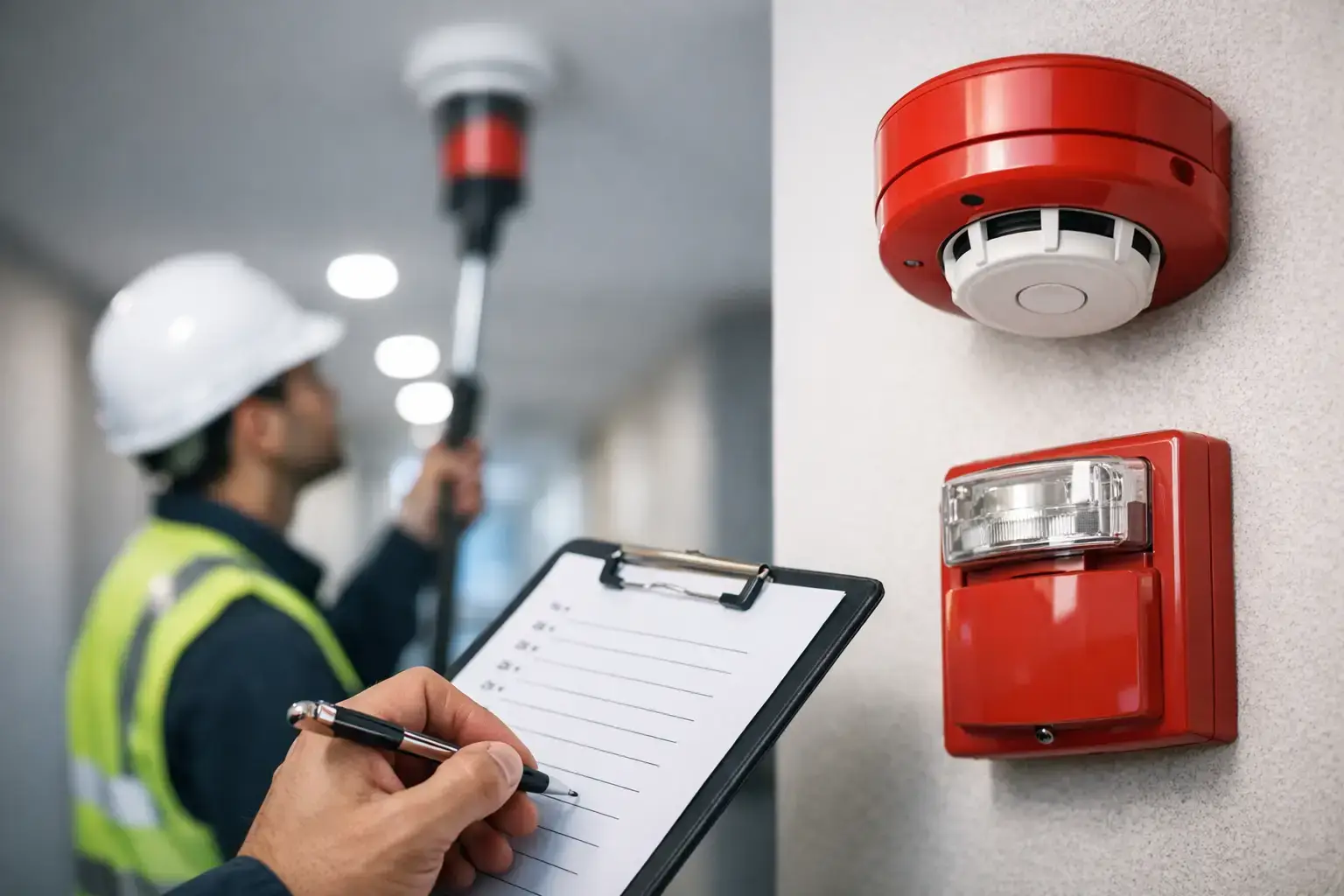
Walk the building and look at a sample of detectors, call points, interfaces and sounders. Check that detectors are not painted over, covered in dust or blocked by new fittings, signage, stock or temporary works. It is common for layout changes, ceiling works or storage creep to interfere with detector performance without anyone noticing straight away.
Backup power also deserves attention. If the system relies on standby batteries, their condition should be monitored as part of regular maintenance. Many faults first show up as battery warnings at the panel, but visual signs such as swelling, leakage or age beyond service life should not be ignored. In commercial systems, battery testing is normally best carried out by a competent engineer, but site staff should still report anything unusual immediately.
If your fire alarm is linked to other systems, monthly checks should also consider those connections. Magnetic door holders, automatic shutters, lift grounding, smoke control and remote signalling all need to work as intended. Interfaces are often where faults hide, particularly after building alterations or third-party electrical work.
Quarterly and six-monthly considerations
Not every site follows the same service frequency, but many commercial premises benefit from more than one engineer visit each year. Higher-risk sites, larger buildings and complex systems often need more frequent inspection and testing than smaller, simpler properties.
At this stage, maintenance becomes more technical. A competent fire alarm company will test a proportion of automatic detectors and call points in line with the maintenance programme, inspect the panel and power supplies, review fault history, assess batteries and confirm that linked cause-and-effect functions still operate properly. The aim is not simply to tick boxes, but to identify wear, contamination, damage or programming issues before they affect safety.
There is a trade-off here. Testing more devices more often improves confidence in the system, but it can also be disruptive in busy environments such as schools, hotels, healthcare settings and distribution sites. That is why maintenance should be planned around occupancy and risk rather than carried out as a generic exercise.
Annual fire alarm maintenance checklist
Your annual fire alarm maintenance checklist should be the most thorough part of the schedule. For many premises, this is where every device and system function should be checked across the full installation.
A proper annual service typically includes testing detectors, manual call points, alarm sounders, control equipment, standby power supplies and any ancillary interfaces. Device sensitivity, contamination and siting issues may also be reviewed, especially where false alarms have been a problem. If records show repeated faults in one area, the cause should be investigated rather than repeatedly reset.
Documentation is just as important as the physical testing. Zone charts should still match the building layout. Device labelling should be clear. Log books should be up to date. Any changes to partitions, room use, tenant occupation or fire strategy should be reflected in the alarm configuration. A well-maintained system can still become unsuitable if the building changes around it.
For landlords, managing agents and duty holders, annual maintenance is also a good point to review whether the current system category still matches the risk. A premises that once had a straightforward arrangement may need a different level of coverage after refurbishment, extension or change of use.
Common issues a checklist helps uncover
The value of a maintenance checklist is that it catches patterns early. Dirty smoke detectors are one of the most common causes of false alarms, particularly in kitchens, staff areas, corridors near building works and industrial spaces. Damaged call points, missing covers and accidental knocks are also frequent on busy sites.
Battery faults are another recurring issue, especially where systems are left for long periods without proper servicing. In some buildings, the panel appears normal until a mains failure exposes the weakness in the standby supply. That is a risk no responsible person wants to discover during an actual incident.
User error can also play a part. Systems are sometimes left in test mode, zones may be disabled for maintenance and not re-enabled, or fault warnings are acknowledged but not followed up. A good checklist creates discipline around these basics.
Who should carry out the checks?
Routine weekly checks can usually be carried out by a trained member of staff, site manager or responsible person. The key is consistency and proper record keeping. They do not need to be a fire alarm engineer to spot a panel fault, test a call point or recognise that a detector has been obstructed.
Servicing, fault diagnosis, battery testing, device cleaning, programming changes and full system inspection should be handled by a competent specialist. Fire alarms are life safety systems, and there is little value in taking chances with unqualified maintenance. For many businesses, working with one trusted provider for installation, servicing and related security systems keeps standards higher and fault resolution faster.
Keeping the checklist practical
The best checklist is one your team will actually use. That means it should reflect the building, the system and the people responsible for it. A single-sheet weekly process may work well for a small office or block management setting. A larger site with multiple panels, outbuildings or monitored connections may need a more structured maintenance regime and clearer escalation procedures.
It also helps to build the checklist around real operating conditions. If your site runs nights, receives deliveries early, or has restricted access areas, maintenance should fit around that. If false alarms carry significant disruption or brigade attendance costs, that should shape how faults and detector contamination are monitored.
At 247 CCTV, we see the difference regular maintenance makes across commercial and residential systems alike. Well-maintained fire alarms are not only more dependable, they are easier to manage, easier to evidence and less likely to create avoidable disruption.
A fire alarm should never become background noise in building management. Keep the checklist current, act on faults quickly, and treat every test as proof that the system will respond properly when it matters most.