
When a business grows from one premises to five, ten or fifty, security usually becomes harder before it becomes better. Different buildings end up with different alarm panels, different CCTV standards, separate access control users, and a patchwork of maintenance arrangements. That is exactly where multi site security management starts to matter. It gives owners, facilities teams and operational managers a practical way to control risk across every location without losing sight of what is happening on the ground.
For some organisations, the challenge is obvious. A retailer may need to monitor stock loss, out-of-hours access and cash handling across several branches. A school trust may need consistent safeguarding controls across multiple campuses. A logistics operator may be dealing with perimeter protection, staff access, vehicle movements and evidential CCTV across depots. In each case, the issue is not simply having security installed. It is knowing that every site is working to the same standard, that incidents are seen quickly, and that no location becomes the weak point.
What multi site security management really means
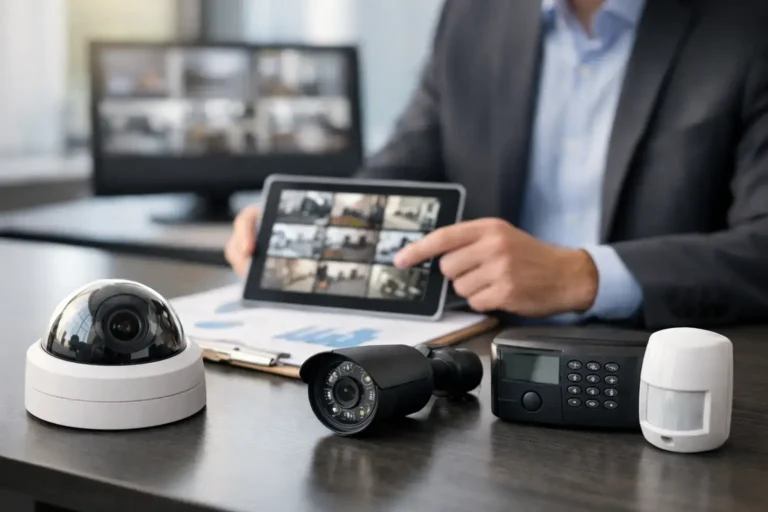
At its best, multi site security management is not just remote viewing from a mobile phone or a head office screen. It is the coordinated management of CCTV, intruder alarms, access control, fire interfaces, door entry and maintenance across a portfolio of properties. That includes how systems are specified, who can use them, how alerts are handled, how footage is stored, and how faults are reported and resolved.
This matters because inconsistency creates risk. One site may have excellent image quality and clear camera coverage, while another has blind spots at delivery bays. One branch may remove access rights promptly when staff leave, while another forgets. One site may have monitored signalling in place, while another is still relying on an outdated arrangement that no longer suits the insurer’s expectations. Problems like these rarely show up in a brochure, but they show up very quickly after an incident.
A proper strategy brings those moving parts together. It does not always mean every site must have identical equipment. In fact, that is often unrealistic. A town centre shop, a warehouse and a residential block have very different risks. What matters is that they are designed under a consistent standard, managed through a clear process and supported by a provider that understands the full estate.
Why separate systems create bigger problems over time
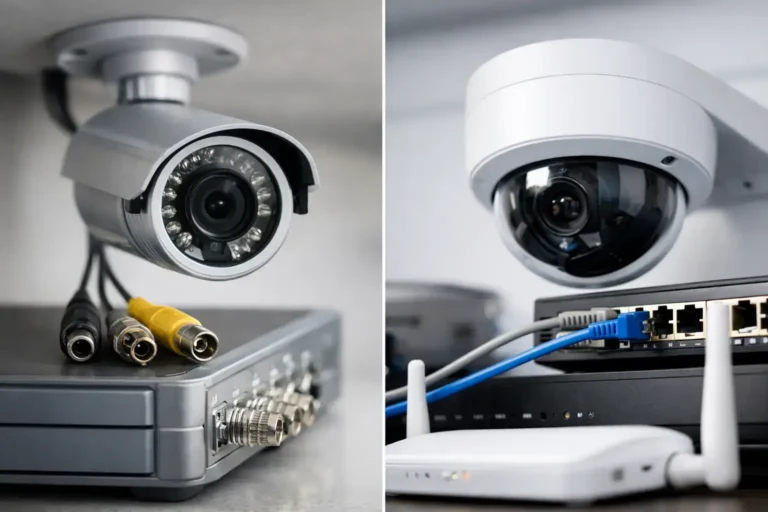
Many businesses end up with a mixed estate by accident. One branch moves premises and gets a new CCTV installer. Another adds access control after a break-in. A third keeps an old alarm because replacement never quite reaches the top of the budget list. In the short term, that can seem manageable. Over time, it becomes expensive and difficult to control.
The first issue is visibility. If each site uses different software, different logins and different reporting methods, central oversight becomes slow. Managers waste time switching between platforms or chasing local staff for updates. During an incident, even a ten-minute delay matters.
The second issue is accountability. When there are multiple contractors, it is never entirely clear who owns the fault, the maintenance history or the upgrade path. If camera coverage is poor at one site, was it a design issue, a hardware issue or a maintenance issue? If alarm activations keep generating false call-outs, is the cause user error, detector placement or an ageing control panel? Without a joined-up approach, answers come slowly.
The third issue is compliance and insurer acceptance. Certain sectors and insurers expect professionally specified, properly maintained systems with a clear audit trail. If the estate is inconsistent, proving standards across all sites can be more difficult than many decision-makers expect.
Building a practical multi site security management plan
The strongest approach starts with a survey of the full estate, not just a quote for extra cameras. A proper review looks at each site in the context of how it operates, when it is occupied, what assets it holds and what incidents are most likely. A school may prioritise visitor control and safeguarding. A care setting may focus on protecting vulnerable occupants while respecting privacy. A construction site may need temporary CCTV towers, intruder detection and remote monitoring to deal with changing risks as the project develops.
From there, the aim is to create a standard that works across the group. That usually includes common principles for camera positioning, image retention, alarm signalling, access permissions, maintenance intervals and response procedures. It does not mean forcing every site into the same layout. It means setting a reliable baseline.
For CCTV, centralised visibility is often the biggest operational gain. Live and recorded footage from multiple sites can be viewed through a managed platform, giving head office or nominated managers a clearer picture of what is happening without travelling between locations. That said, central access should be controlled carefully. Too many users with broad permissions can create data protection issues as well as confusion.
For intruder alarms, consistency in signalling and response matters as much as the hardware. If one site has a police response-capable monitored system and another has a lesser arrangement, internal expectations can become muddled. Businesses need to know what happens after an activation, who receives alerts, and how keyholders and monitoring services fit into the response chain.
For access control, the real value across multiple sites is administrative control. Being able to add, amend and remove permissions centrally can reduce risk significantly, particularly where staff move between locations or leave the business at short notice. It also improves auditability, which is increasingly useful for regulated environments and internal investigations.
Multi site security management and day-to-day operations
Security should support operations, not fight them. That is where many systems underperform. A technically capable setup can still frustrate staff if door schedules are awkward, camera searches are clumsy or alarm setting procedures vary from site to site.
Good multi site security management accounts for real use. In retail, that may mean tailoring opening and closing procedures so teams are not left wrestling with complicated alarm routines. In logistics, it may mean separating pedestrian and vehicle access so deliveries can continue without weakening perimeter control. In residential developments, it may mean combining door entry, communal CCTV and remote support in a way that protects residents without creating unnecessary inconvenience.
There is also a staffing reality to consider. Many organisations no longer have a dedicated security manager at every building. Responsibility often sits with facilities teams, operations managers or site leads who already have several priorities competing for attention. Systems therefore need to be understandable, dependable and properly supported. A clever setup that only one person can operate confidently is not a long-term solution.
Choosing the right technology across multiple locations
This is where trade-offs matter. Not every site needs the highest specification analytic CCTV, and not every premises should be managed in exactly the same way. The right answer depends on threat level, operating hours, site layout, lighting conditions, public access and budget.
Analytic CCTV can be highly effective for larger perimeters, vehicle routes and out-of-hours detection, especially where early intervention matters. However, analytics need correct design and calibration. Put simply, poor positioning or unrealistic expectations can lead to nuisance alerts rather than useful intelligence.
Cloud-managed or centrally managed systems can improve oversight, but bandwidth, cyber security and retention requirements still need thought. Some businesses benefit from hybrid arrangements that combine local resilience with central access. For sites with weak connectivity or stricter operational demands, that may be the more sensible route.
Access control also varies by environment. A single-door office setup is very different from a multi-entrance school, healthcare facility or industrial estate. The principle is the same, though: control who goes where, know when they did it, and make sure permissions can be managed without delay.
The value of one specialist partner
A single provider will not solve every problem by default, but it often removes a great deal of friction. When one experienced security partner handles survey, design, installation, maintenance and support, it becomes far easier to standardise systems, coordinate upgrades and keep records in order. Faults are easier to track, responsibilities are clearer, and future planning becomes more straightforward.
That is especially relevant where businesses need CCTV, intruder alarms, access control and related systems to work together rather than sit in isolation. An integrated approach can improve incident response, reduce duplicated cost and make staff training simpler across the estate.
For organisations across Essex, London and the South East, that support is most useful when it is grounded in compliance, insurer-recognised standards and practical installation experience. 247 CCTV works with exactly these kinds of environments, where security decisions need to stand up not only on day one, but over years of daily use, staff changes and site development.
What to look for before you commit
Before investing in any estate-wide programme, ask how the system will be managed in practice six months from now. Who reviews footage after an incident? Who removes old user credentials? How quickly are faults diagnosed across remote sites? What happens when a site is refurbished, extended or re-purposed? These are the questions that reveal whether a proposal is genuinely fit for purpose.
The right multi-site setup should give you clearer visibility, faster response and fewer operational headaches. Just as importantly, it should give you confidence that each location is being protected to a known standard, rather than left to evolve into its own separate risk.
If your current estate feels fragmented, that is usually a sign to step back and review the full picture. Security works best when it is planned as an operational system, not bought piecemeal every time a problem appears.