A warehouse manager in Essex does not need the same CCTV setup as a homeowner in Chelmsford, and that is exactly why the analogue CCTV vs IP systems question still matters. On one site, a simple perimeter view and dependable recording may be enough. On another, remote access, number plate capture and analytical alerts can make the difference between spotting an incident later and preventing one in real time.
The right answer is rarely about picking the newest option for the sake of it. It is about choosing a system that suits the risks, the layout of the property, the quality of evidence you may need, and how the system will be managed over time. For some sites, analogue remains a sensible, cost-effective choice. For many others, IP offers clearer images, smarter functionality and more room to grow.
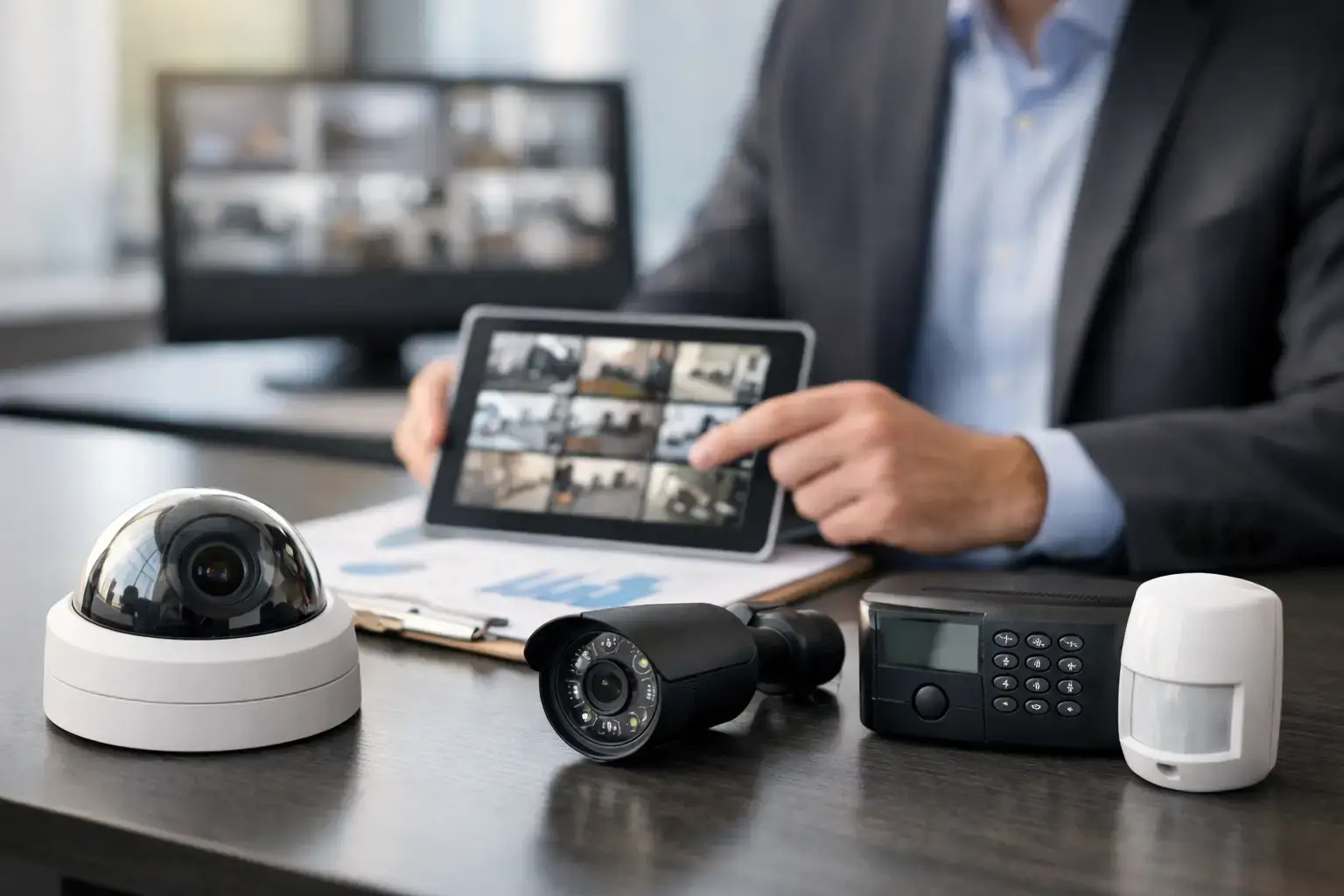
Analogue CCTV vs IP systems: the core difference
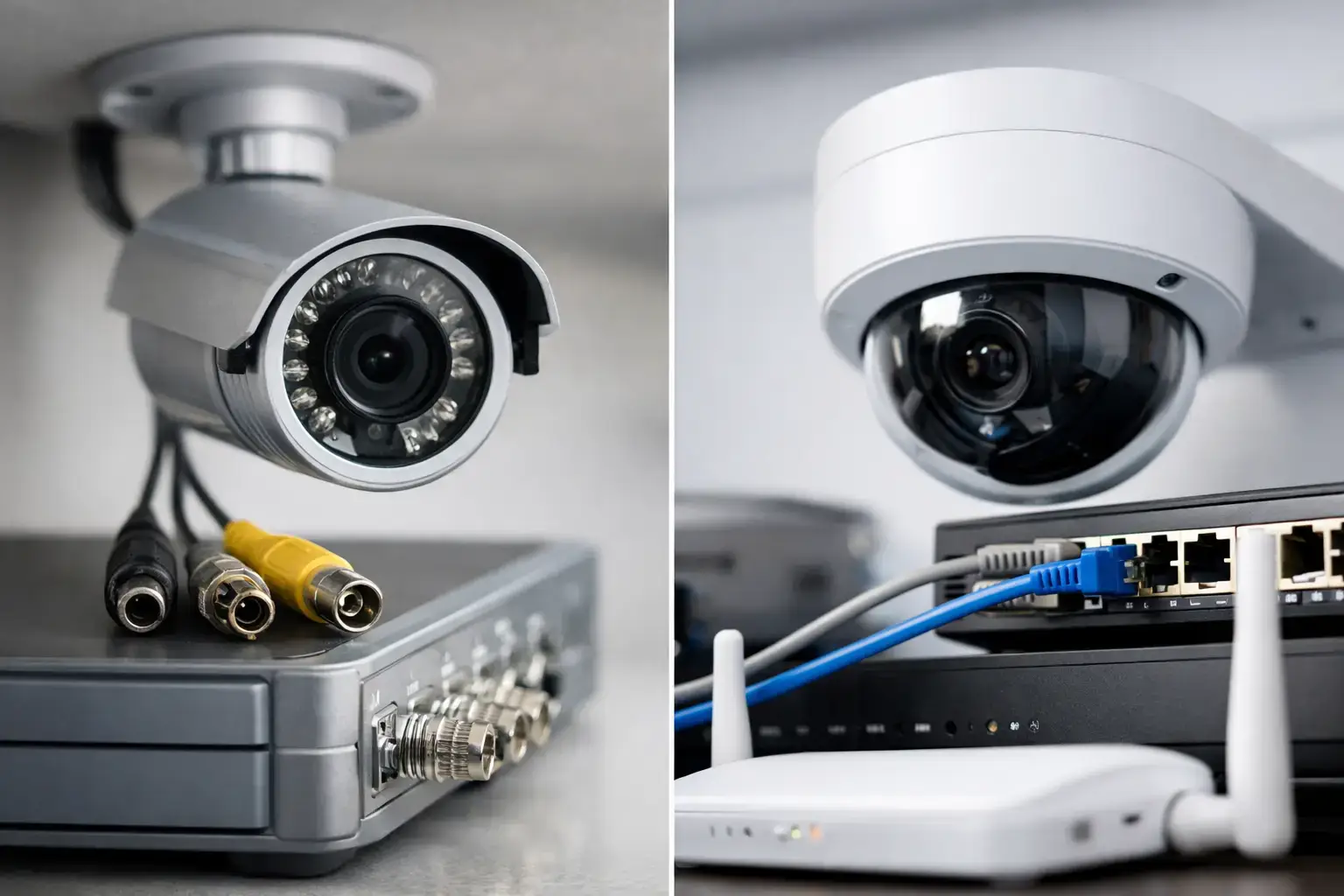
At the simplest level, analogue CCTV sends video from cameras to a recorder over coaxial cabling. The recorder stores the footage, and the system is usually more self-contained. Traditional analogue systems were limited in image quality, although modern HD-over-coax options have improved matters considerably.
IP systems work differently. Each camera is a network device that sends digital video over a data network, commonly using Cat5e or Cat6 cabling. That allows for higher resolutions, more flexible system design and features such as remote access, motion analytics, line crossing detection and easier integration with other security systems.
That technical distinction has practical consequences. Analogue systems tend to be simpler and can be very effective for straightforward coverage. IP systems tend to offer better detail, stronger flexibility and more intelligence, which matters when a site has higher risk, larger coverage requirements or a need for operational insight as well as security.
When analogue CCTV still makes sense
Analogue is sometimes dismissed too quickly, but that is a mistake. There are still premises where it performs well and keeps costs under control. If a small shop, garage, house or lock-up unit mainly needs visible deterrence, general coverage and local recording, a professionally installed analogue setup can be entirely appropriate.
It can also make sense where an existing coaxial infrastructure is already in place. In many retrofit projects, reusing suitable cabling helps reduce disruption and installation cost. For landlords, smaller businesses and homeowners with a fixed budget, that can be a practical route to improving security without redesigning everything.
There is another point worth making. Simplicity has value. Sites that do not need advanced analytics, multi-site management or detailed forensic footage may benefit from a more straightforward arrangement with fewer moving parts. If the brief is clear and realistic, analogue can deliver reliable day-to-day performance.
That said, the phrase to focus on is suitable use case. Analogue is not automatically outdated, but it is more likely to reach its limits on larger, more complex or higher-risk sites.
Where IP systems pull ahead
IP systems are now the preferred choice for many commercial environments and a growing number of homes because they address demands that analogue struggles to meet. Resolution is the obvious advantage. If you need to identify faces clearly, read registration plates or review incidents with better evidential value, higher-definition IP cameras are often the stronger option.
The second advantage is flexibility. Cameras can be deployed across a network more easily, and the system can usually be expanded without the same constraints found in older analogue layouts. For a growing business, school, care setting, industrial unit or multi-building site, that matters. Security needs tend not to stay still.
Then there are the smart features. IP systems can support virtual tripwires, intrusion zones, people counting, object detection and targeted alerts. Used properly, these tools can reduce the time spent manually checking footage and help staff respond faster to genuine issues. On commercial premises, that can improve both security and operational control.
Remote access also tends to be better developed in IP environments. For business owners, site managers and homeowners who want to check live or recorded footage securely from a mobile phone or desktop, that convenience is no longer a luxury. It is often part of the requirement from day one.
Image quality is not just about sharpness
People often reduce the analogue CCTV vs IP systems comparison to picture quality alone, but the real issue is usable evidence. A camera that shows movement at a doorway is one thing. A camera that lets you distinguish clothing, faces, vehicle details or actions clearly is something else entirely.
This is where system design matters as much as technology. A poorly positioned high-resolution IP camera can still underperform. Equally, a well-designed analogue camera may do a solid job in a lower-risk area such as a rear access point or internal corridor. The question is not simply which format is clearer. It is what level of detail each area actually requires.
For example, a homeowner may want broad external coverage around the property but sharper footage at the front entrance. A logistics yard may need overview cameras for traffic flow and tighter views for gate control. Matching camera type and resolution to each risk point is what creates a dependable result.
Costs: upfront spend versus long-term value
Budget is always part of the decision, and it should be. Analogue systems usually have a lower entry cost, particularly on smaller sites or where existing coaxial cabling can be reused. If the need is basic and the coverage area is modest, analogue can represent good value.
IP systems often cost more at the outset because the cameras, networking and storage requirements can be higher. However, the comparison should not stop at installation price. If an IP system reduces blind spots, improves evidential quality, supports faster incident review or allows easier future expansion, it may offer stronger value over its lifespan.
There is also the cost of getting the specification wrong. A cheaper system that fails to capture a theft clearly, cannot scale with the site, or produces too many false alerts can become more expensive in practice. Businesses in particular should weigh the security outcome, not just the equipment total.
Installation, maintenance and reliability
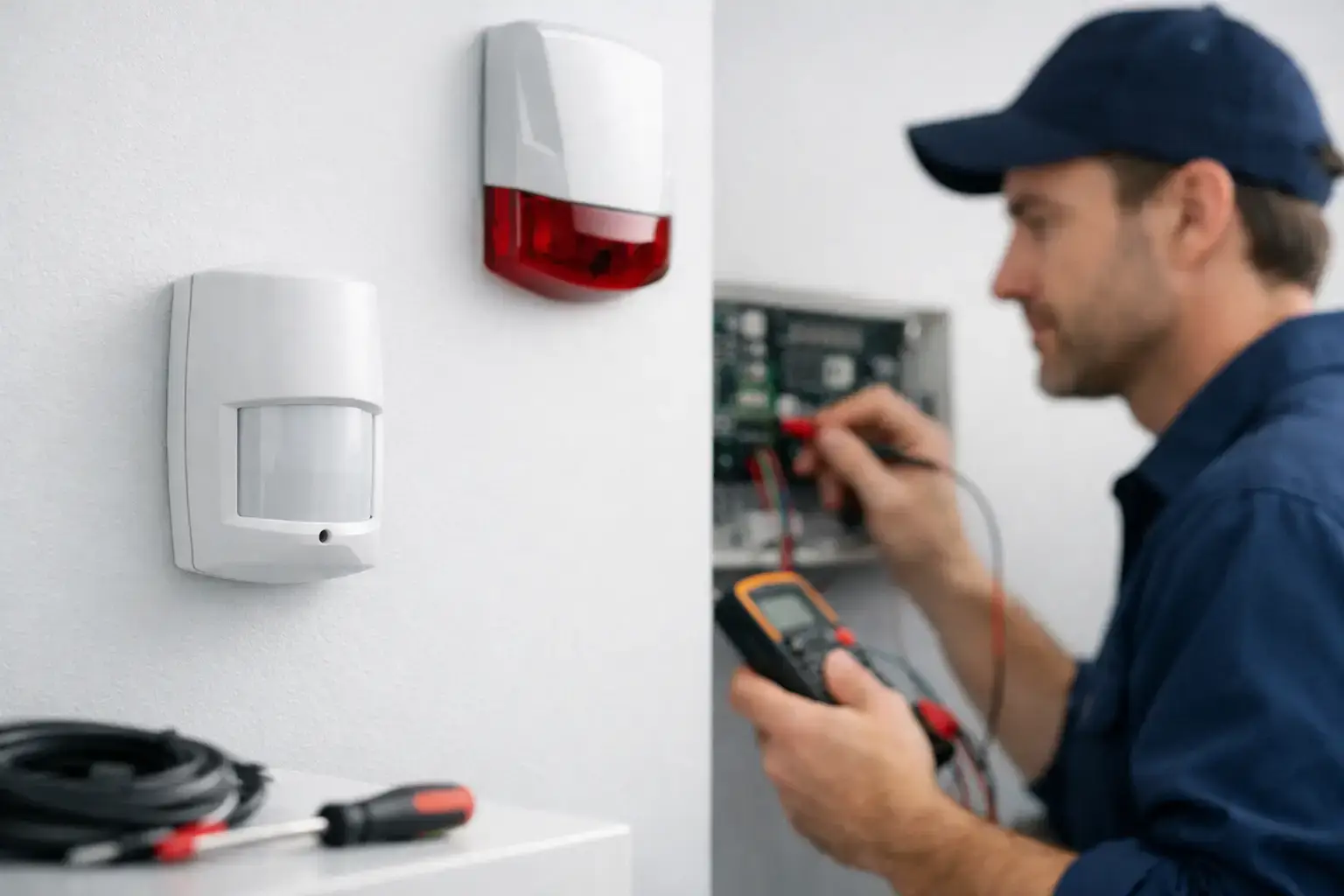
A professionally installed system should be designed for dependable long-term use, whether it is analogue or IP. Still, the two approaches differ in how they are deployed and managed.
Analogue systems can be relatively straightforward to install and maintain on simple sites. IP systems require proper network planning, bandwidth consideration, storage sizing and secure configuration. That may sound more complex, because it is, but complexity is not a problem when it is handled correctly at design stage.
In fact, a well-specified IP system can be easier to manage across larger estates because of centralised control, health monitoring and integration options. The key is competent design, compliant installation and ongoing support. That is especially important where insurer expectations, staff safety, public access or evidential standards are involved.
Which is better for homes?
For residential properties, the answer depends on what the homeowner wants from the system. If the aim is visible deterrence, basic recording and straightforward coverage, analogue may still be suitable in some cases. It can protect key access points effectively when designed well.
But many homeowners now expect more. They want to check footage remotely, receive alerts, capture clear images day and night and add cameras or smart features later. In those cases, IP is often the better fit. The gap between domestic and commercial expectations has narrowed, and many homes now benefit from the same design principles once reserved for business sites.
Which is better for businesses?
For most commercial premises, IP is usually the stronger long-term choice. Retail units, schools, healthcare settings, warehouses, offices and construction sites often need more than basic recording. They need better image quality, flexible expansion, remote management and sometimes integration with alarms, access control or monitored response.
That does not mean analogue has no place in business. Smaller shops, low-complexity sites and certain upgrades can still justify it. But if a business is thinking ahead, planning for growth or managing risk across multiple areas, IP generally provides more control and better future-proofing.
The right decision starts with the site, not the brochure
The best CCTV choice is rarely made by comparing camera boxes side by side. It comes from surveying the site properly, understanding where incidents are most likely to occur, identifying what footage must achieve, and balancing that against budget and operational needs.
That is why the most useful advice is often the least dramatic: it depends. It depends on the property, the risks, the existing infrastructure and the standard of evidence you may need after an incident. A trusted installer should be able to explain those trade-offs clearly rather than pushing a one-size-fits-all answer.
At 247 CCTV, that is how system design should work – around the site, the risk profile and the level of protection required. If you are weighing analogue against IP, the sensible next step is not guessing which is better in general. It is finding out which one is right for your premises, your users and the way you need your security to perform over the years ahead.