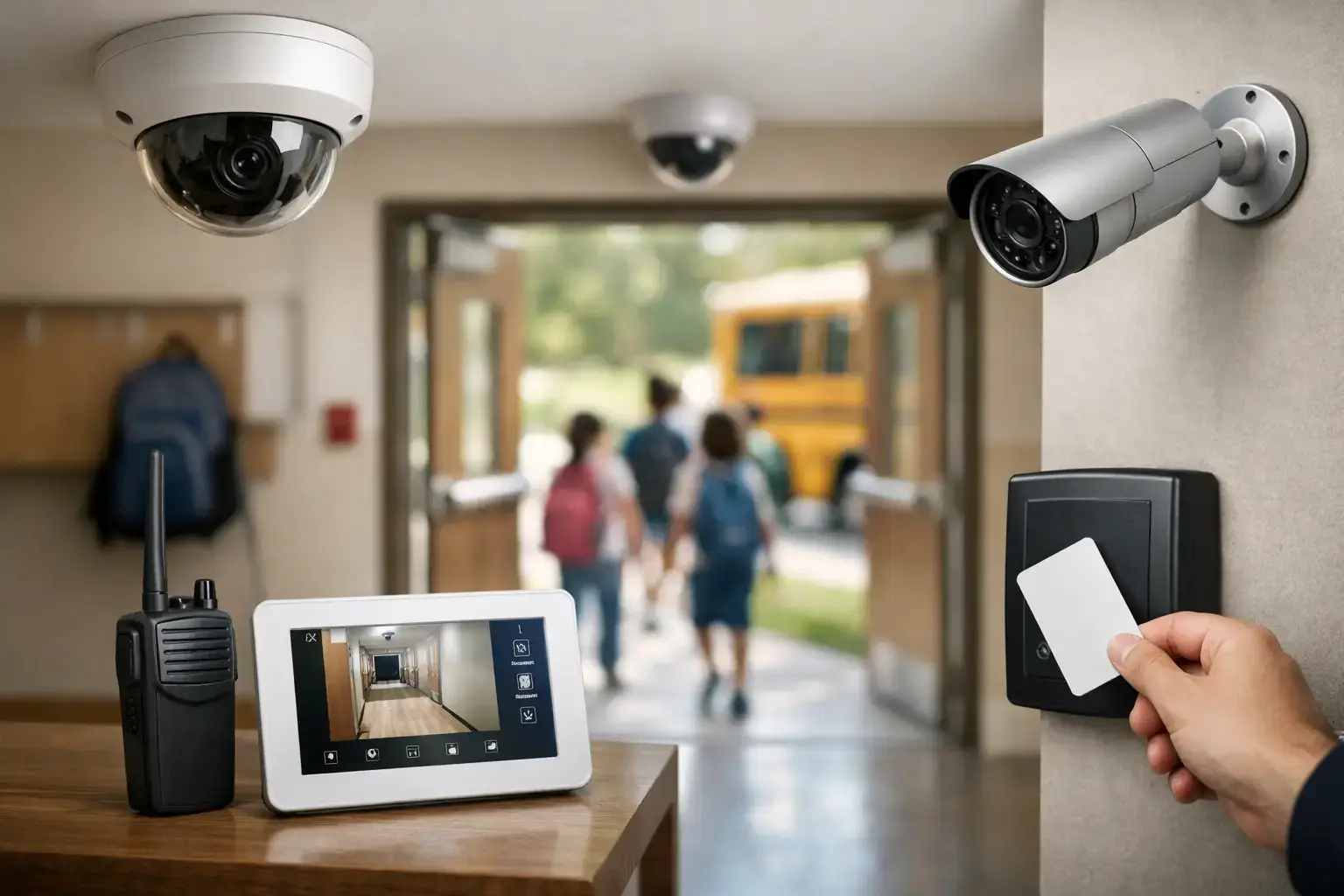
A lost key can become a costly security problem faster than most businesses expect. One member of staff leaves, a contractor does not return a fob, or a side entrance is left too accessible, and suddenly the question is not whether your building is secure, but how quickly you can regain control. That is why access control for offices has become a core part of modern workplace security rather than an optional extra.
For many organisations, the real value is not just keeping the wrong people out. It is making sure the right people can move through the building safely, at the right times, with a clear record of who entered where and when. In a busy office environment, that matters for security, staff safety, compliance, and day-to-day management.
Why access control for offices matters
Traditional locks still have a place, but they create obvious management issues in commercial buildings. If keys are copied, lost or not returned, there is rarely a simple fix beyond changing cylinders and issuing replacements. That becomes expensive and disruptive, especially across multi-door sites or shared office premises.
An electronic access control system gives you far more control. Access permissions can be issued, restricted or removed quickly. Staff can be assigned different access levels depending on their role, and sensitive areas such as server rooms, stock areas, records storage or plant rooms can be protected separately from general office space.
There is also the issue of visibility. With a properly designed system, you are not relying on assumptions about whether doors are being used correctly. You have an audit trail. That can help with incident investigations, internal procedures, and demonstrating that reasonable security measures are in place.
For businesses in sectors such as healthcare, education, finance, logistics and hospitality, this level of control is often more than a convenience. It supports safeguarding, protects confidential information, and helps reduce opportunities for theft, unauthorised access and internal security failures.
What a good office access control system should do
The best systems are designed around how the building actually works. That sounds obvious, but it is where many cheaper or rushed installations fall short. An office with one main entrance and a handful of staff has very different needs from a multi-floor building with shared tenant areas, delivery access, visitors, cleaners and out-of-hours users.
At a practical level, access control for offices should let you decide who can enter, where they can go, and during which hours. It should also allow you to manage users without unnecessary complexity. If every small change requires major disruption, the system is not doing its job properly.
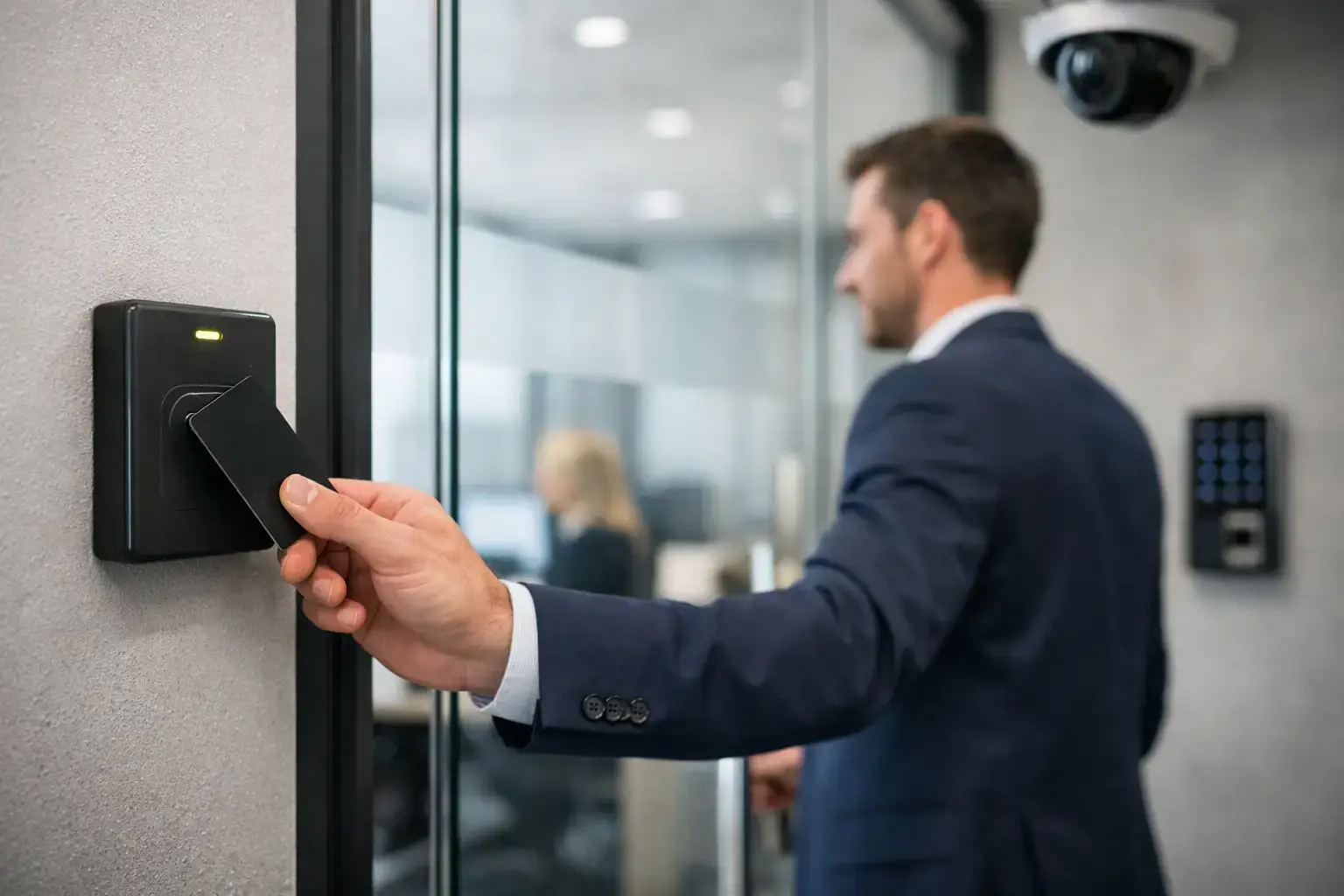
Most office systems use cards, fobs, PIN entry, mobile credentials or a combination of these. The right choice depends on the level of security required and how the site operates. Cards and fobs are familiar and straightforward. PINs reduce reliance on physical credentials but can be shared. Mobile-based access can be convenient, although not every business wants staff using personal phones for entry.
In higher-security environments, multi-factor access may be appropriate. That might mean a card plus PIN for restricted areas. For lower-risk internal zones, a single credential may be enough. The right answer depends on risk, user behaviour and budget rather than marketing claims.
Choosing the right level of access control for your office
Not every office needs the same setup, and overspecifying can be just as unhelpful as under-protecting. A small professional practice may only need secure control of the main entrance and a comms room. A larger site may require multiple controlled doors, reception integration, lift restrictions and separate permissions for different departments.
The key is to assess the building in layers. External entry points are usually the starting point, followed by internal areas where access should be limited. That may include finance offices, HR records, IT infrastructure, stock rooms, management areas or archive storage. In some offices, access control also needs to account for staff welfare, such as protecting lone workers or restricting public movement in mixed-use premises.
This is where a proper site survey matters. A system should reflect occupancy patterns, fire safety requirements, visitor flow, and how doors are used throughout the day. The cheapest equipment on paper can become poor value if it causes bottlenecks, false alarms, maintenance issues or repeated user workarounds.
Access control and office compliance
Security decisions are rarely just about stopping opportunistic entry. Businesses also need to think about their responsibilities around data protection, staff safety and building management. While access control is not a complete compliance solution on its own, it supports a more defensible security position.
If confidential records are kept on site, if only authorised employees should enter certain rooms, or if there is a duty to monitor who accessed a controlled area, an electronic system gives you stronger evidence and better control than a traditional key setup. For insurers, that can also be relevant. Professionally specified, insurer-recognised security measures may support wider risk management and claims defensibility.
It is equally important that access systems are installed correctly alongside fire alarm interfaces and emergency escape requirements. A secure door that fails to release safely in an emergency is not an asset. Good design takes both security and life safety into account from the start.
Integrating access control with wider office security
Access control works best when it is not treated in isolation. In many offices, the strongest results come from integrating it with CCTV, intruder alarms and door entry systems. If a restricted door is forced or propped open, CCTV footage can help verify what happened. If a building is armed out of hours, access events can be tied to alarm activity. If visitors need entry, a door entry system can manage that without weakening site security.
That joined-up approach is often more effective than adding separate systems over time. It gives facilities managers and business owners a clearer picture of what is happening on site and reduces the friction of managing multiple disconnected platforms.
For example, if a member of staff enters the building early, the system may allow authorised disarming procedures. If an external visitor requests entry, reception or an authorised user can verify identity before granting access. If a sensitive internal door is opened outside permitted hours, managers can review both the access event and the corresponding footage.
These details matter because security failures in offices are not always dramatic break-ins. More often, they are routine gaps – unreturned credentials, poor visibility, unrestricted movement, or lack of follow-up after a door incident.
Common mistakes when buying office access control
One of the most common mistakes is treating access control as a box-ticking purchase. Businesses compare headline prices without considering software usability, future expansion, ongoing support or the quality of the installation. A system may look acceptable on day one but become difficult to manage once staffing changes, departments move or extra doors need adding.
Another issue is poor planning around user permissions. If everyone can access everything because it feels simpler, the security benefit is weakened immediately. On the other hand, if permissions are made too restrictive without understanding workflow, staff will find ways around the system. The balance has to be practical.
There is also the question of maintenance. Access control hardware works hard in commercial buildings, particularly on busy entrance doors. Readers, locks, exit devices and door closers all need to perform reliably. Long-term dependability matters more than a short-term saving on equipment.
Working with an experienced installer helps avoid these problems. A company that understands commercial security design, regulatory considerations and integration with other systems can recommend what is appropriate for the site rather than what happens to be easiest to supply.
When to upgrade your current office system
Some businesses already have access control in place but still experience avoidable security issues. That may be because the system is outdated, unsupported, difficult to administer or too limited for the building’s current use. If permissions are hard to change, if reports are poor, or if extra doors cannot be added without major compromise, it may be time to review the setup.
Frequent staff turnover is another trigger. If credentials are not being managed properly, risk builds quietly. The same applies after an office refurbishment, expansion, tenancy change or merger. Security design should reflect how the premises operate now, not how they operated five years ago.
For businesses across Essex, London and the South East, professionally installed systems from experienced providers such as 247 CCTV are often a better long-term choice than patching together consumer-grade products. The difference is not just in the hardware. It is in survey quality, system design, compliance awareness, reliable installation and ongoing support.
Office security is rarely improved by guesswork. The best access control systems are the ones that fit the building, support staff, reduce risk and remain manageable as the business changes. If you are reviewing entry security, start with how people actually use the premises each day – because the right system should make that safer, clearer and easier to control.