A CCTV system rarely fails all at once. More often, it starts with small frustrations – grainy night footage, limited storage, an app that no longer works properly, or a recorder that cannot support newer cameras. That is usually the point where people start asking why some CCTV systems become obsolete so quickly, especially when the system is only a few years old.
The short answer is that many systems are bought on upfront price rather than long-term suitability. In security, that decision often proves expensive later. A camera system is not just a set of cameras fixed to a wall. It is a working security platform made up of recording hardware, network capacity, software, remote access, storage, power, maintenance and compliance considerations. If one of those elements is underspecified at the start, the whole system can age faster than expected.
Why some CCTV systems become obsolete so quickly
Obsolescence in CCTV is not always about age. It is often about mismatch. A system becomes outdated when it can no longer meet the practical needs of the property, the business, the insurer or the people using it day to day.
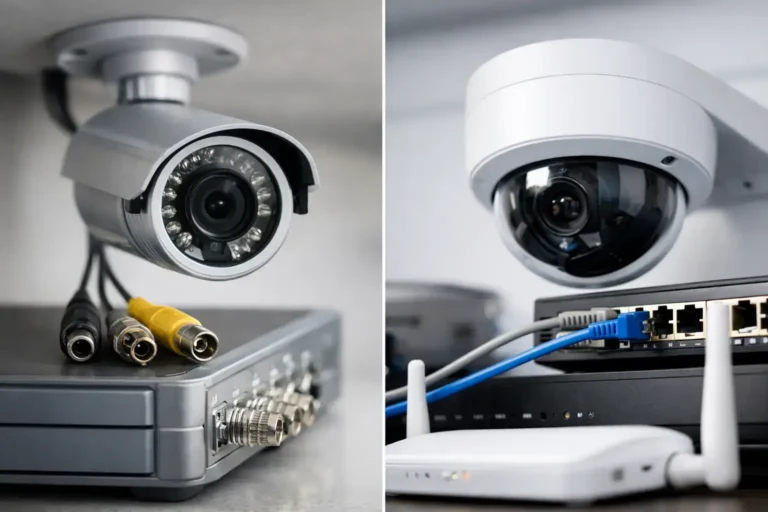
In some cases, the equipment itself is the problem. Older analogue systems, low-resolution cameras and budget recorders can fall behind quickly because image quality expectations have changed. If footage is not clear enough to identify faces, number plates or incidents with confidence, the system may still switch on every day, but it is no longer doing its job properly.
In other cases, the issue is less obvious. The system may have been installed without enough storage, with no allowance for future camera additions, or with software that depends on a manufacturer that has since withdrawn support. That kind of weakness is often hidden at installation stage and only becomes clear when the site changes or a fault occurs.
Cheap hardware ages faster
Low-cost CCTV equipment tends to look attractive because it promises a quick solution. For a homeowner protecting a driveway or a small business trying to control costs, that can be tempting. The difficulty is that very cheap systems often rely on entry-level components with limited processing power, lower-grade sensors and short manufacturer support cycles.
That matters because CCTV performance depends on more than resolution printed on the box. A camera may claim high definition, but if its low-light performance is poor, if motion handling is weak, or if compression is inefficient, the practical result can still be disappointing. Once the site experiences changing light, weather exposure, or busy movement, those limitations become obvious.
The same applies to recorders. A budget recorder may handle a small number of cameras at purchase, but struggle when higher bitrates, better frame rates or extra channels are needed later. At that point, the whole system can be held back by one cheap component.
Closed systems limit future upgrades
Some systems become obsolete quickly because they are too closed off. They only work properly with one brand, one app, one recorder range or one approved accessory line. That can create problems if the manufacturer discontinues a product, changes a platform, or simply stops supporting older firmware.
A more flexible system design usually gives better long-term value. That does not mean every component should be mixed without thought. It means the system should be specified with compatibility and future expansion in mind. If a site might need additional cameras, remote monitoring, analytics, access control integration or longer retention periods, those requirements should shape the design from the outset.
For commercial sites in particular, scalability is not a luxury. A retail premises may expand, a school may need wider coverage, or a logistics site may want searchable footage by vehicle or movement type. If the original CCTV design has no room to grow, obsolescence arrives early.
Poor system design is often the real issue
When clients ask why some CCTV systems become obsolete so quickly, the answer is often not the camera brand. It is the original specification.
A poorly designed system can become ineffective even when the hardware is relatively modern. Cameras may be installed too high to capture usable identification, aimed into glare, or selected without regard to the real risk areas on site. Storage may be set too low, frame rates too heavily reduced, or network bandwidth too restricted for reliable image recording.
This is where professional surveying makes a clear difference. A proper survey looks beyond coverage maps and asks what the footage actually needs to achieve. Is the aim deterrence, identification, evidential recording, remote oversight, health and safety review, or all of the above? Different outcomes require different camera positions, lens choices, recording settings and lighting considerations.
Without that thinking, a system can be technically operational but practically outdated from day one.
User needs change faster than equipment cycles
Another reason systems age quickly is that property use changes. A domestic installation that once covered a front door and rear garden may later need parcel protection, vehicle monitoring or better app access for family members. A business that started with basic perimeter coverage may later need analytics, line crossing alerts, ANPR or integration with intruder alarms.
If the original system was only just adequate for the first requirement, it will not cope well with the second. This is especially common in commercial settings where growth, compliance pressures and operational changes move faster than expected.
There is always a balance to strike. Not every site needs a highly advanced platform from the start. Over-specifying can be wasteful. Under-specifying, however, tends to cost more over time because replacement arrives sooner.
Software support can date a system overnight
People often think of CCTV as hardware, but software support is just as important. Mobile apps, remote viewing platforms, cybersecurity updates and firmware patches all affect whether a system remains usable and secure.
A recorder with outdated software may still record locally, yet become difficult to access remotely or vulnerable to known security issues. If the manufacturer no longer provides updates, the equipment can become a liability rather than an asset. This matters even more for systems connected to business networks or used for remote access across multiple sites.
Cybersecurity is not a marketing extra. It is part of system longevity. The longer a CCTV platform remains supported, the more likely it is to stay compliant with current expectations around secure access and data handling.
Resolution standards keep moving
A system installed years ago may have been acceptable at the time, but standards have shifted. Expectations around facial identification, incident review and evidential clarity are much higher now. In many environments, older low-resolution cameras simply do not deliver enough detail.
This does not mean every older camera must be replaced immediately. Some locations still only require general scene monitoring. But where footage may be needed for police, insurers, management investigations or staff safety review, limited image quality becomes a genuine weakness.
The key point is this: obsolescence is functional, not just technical. If footage cannot answer the question that prompted the review, the camera is already behind the requirement.
How to avoid CCTV becoming obsolete too quickly
The best protection against early obsolescence is not chasing the newest product. It is getting the system design right.
That starts with a proper site survey and a clear brief. A good installer should ask what risks you are trying to reduce, what evidence you may need, who will use the system, whether remote viewing matters, how long footage must be retained, and whether future expansion is likely. Those answers shape the right specification far better than price alone.
It also helps to choose equipment with a realistic upgrade path. That may include recorders with spare capacity, cameras suited to the lighting conditions, storage sized for actual retention needs, and software from manufacturers with a credible support history. For business premises, insurer expectations, compliance needs and maintenance arrangements should be considered early rather than added later.
Ongoing servicing matters as well. Even a well-designed CCTV system can fall behind if firmware is ignored, lenses become obscured, hard drives deteriorate or settings are never reviewed after site changes. Long-term reliability depends on maintenance, not just installation quality.
For many clients across Essex, London and the South East, the difference comes down to whether CCTV is treated as a one-off purchase or as part of a wider security strategy. The systems that last are usually those designed around the property, the risk profile and the likely future demands, not just the lowest starting quote.
A CCTV system should still be doing its job years after installation. If it is already struggling to provide clear evidence, reliable access or room for change, the problem is rarely bad luck. More often, it is a sign that the system was never built with enough foresight in the first place.