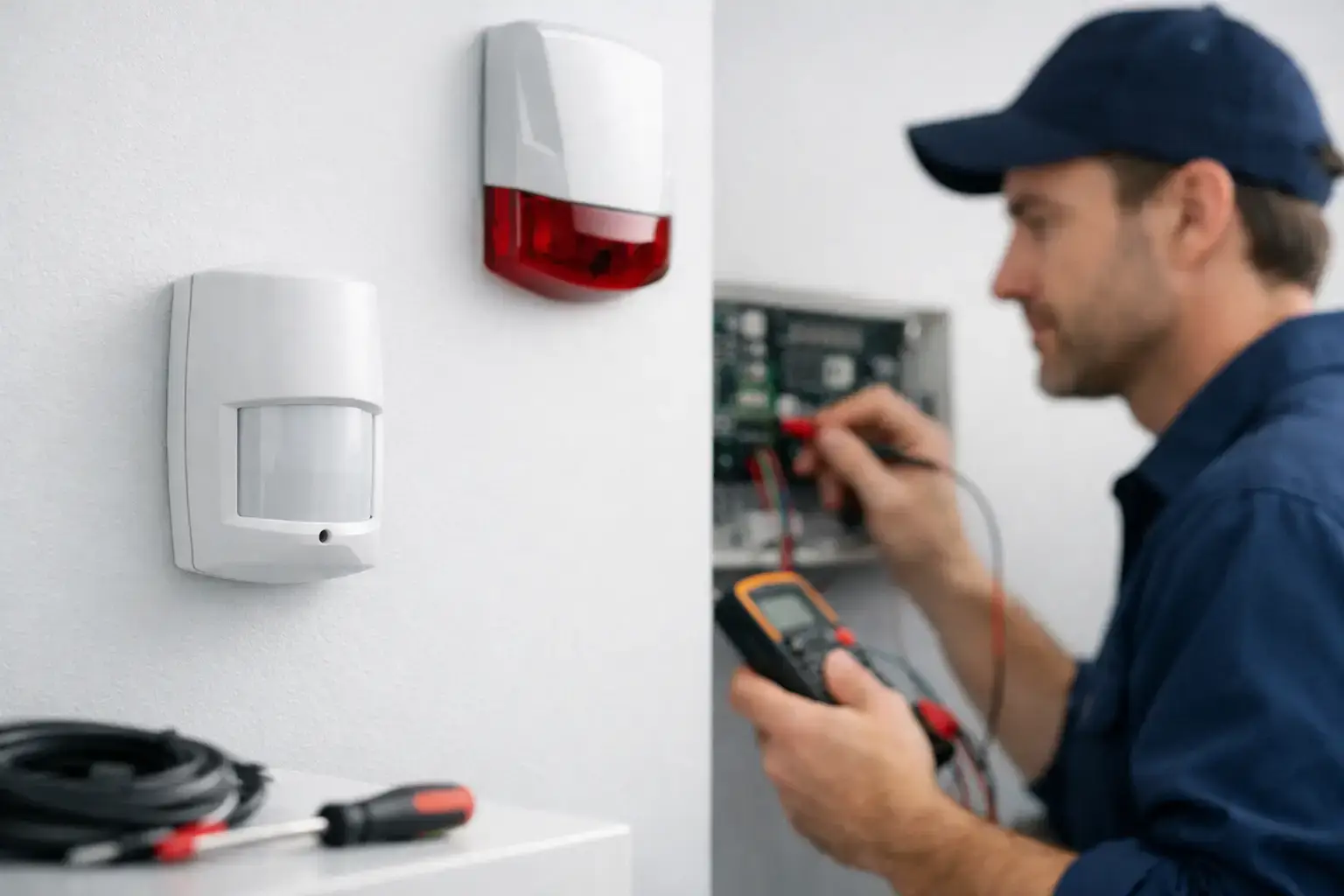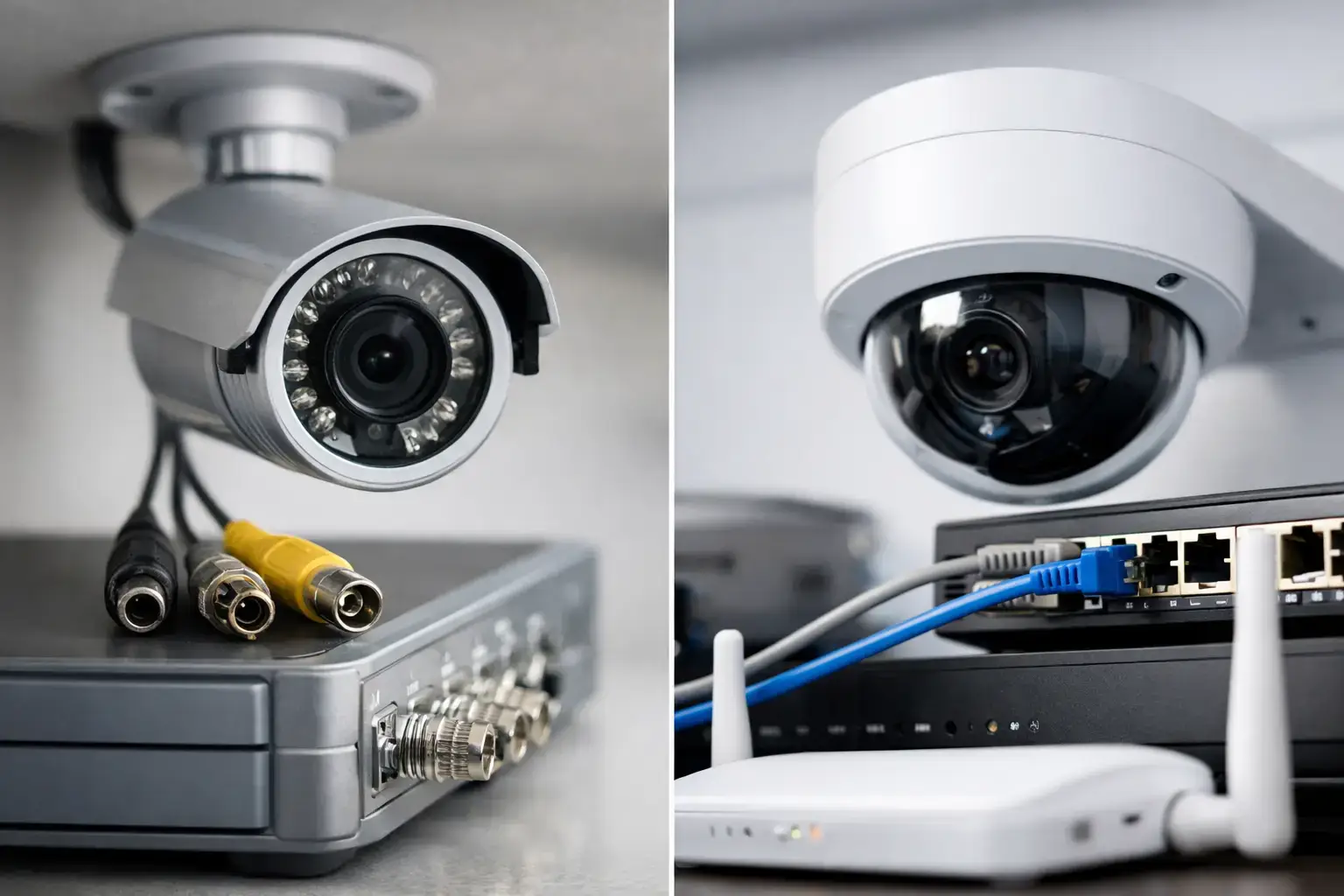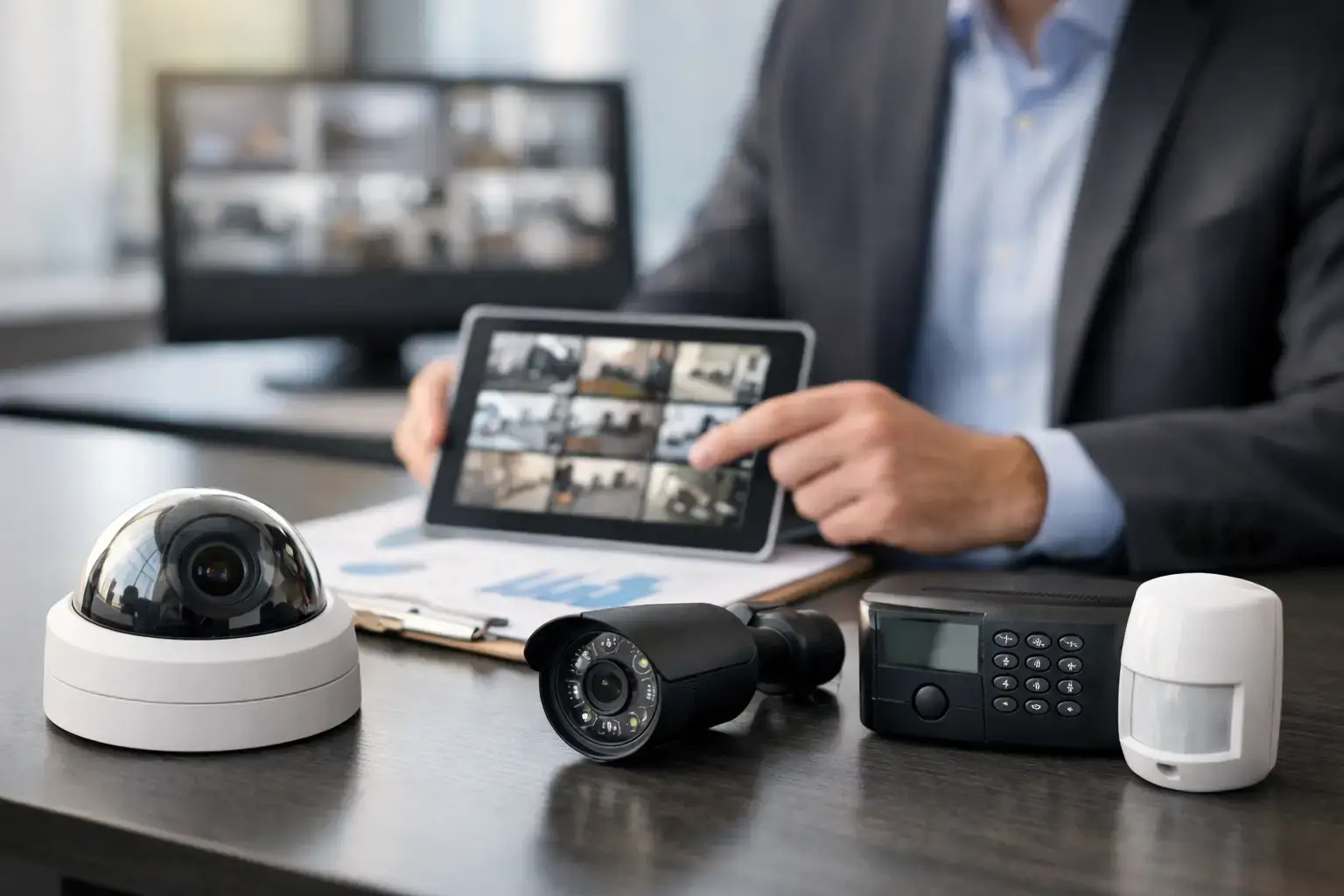
A CCTV system can be undermined long before a single camera is fitted. What M&E contractors get wrong when roughing in cable routes for CCTV is rarely about effort – it is usually about treating security cabling like a generic first-fix item, rather than part of a live surveillance design.
On a new build or refurbishment, that mistake tends to surface late. The containment is in, ceilings are closed, finishes are complete, and only then does someone realise the camera position does not line up with the route provided, the cable path crosses electrical noise sources, or there is no sensible way to service the device once installed. At that stage, the cost is not just financial. It affects programme, appearance, compliance and, most importantly, the effectiveness of the system.
Why CCTV cable routing is often misunderstood
M&E teams are used to working from coordinated drawings, planned zones and fixed service runs. Security systems do not always behave in the same way. A CCTV route is driven by field of view, lighting conditions, mounting height, recorder location, network architecture, power method and future maintenance access. If those factors are not considered together, the route may look tidy on a drawing but fail in practice.
This is where roughing in cable routes for CCTV often goes wrong. The route is planned around the easiest path for the installer on first fix, not the best path for the finished camera system. That might mean dropping cables to a visually neat point that produces a poor angle, bringing everything back to a cupboard with the wrong environmental conditions, or forcing external runs into areas exposed to weathering and vandalism.
A properly designed CCTV system is not just a set of camera locations. It is an evidence-gathering tool, and the cable route plays a direct part in whether it performs reliably over years rather than months.
What M&E contractors get wrong when roughing in cable routes for CCTV
The most common issue is assuming the camera point on the drawing is final. In reality, camera positions often need slight adjustment once the installer has considered lens choice, soffit depth, signage, door swings, roller shutters, external lighting and likely obstructions. If the rough-in allows no tolerance, a small design change becomes a major site problem.
Another regular mistake is underestimating containment capacity. CCTV projects may start with a handful of cameras and expand later. If containment is sized only for day-one requirements, adding analytics cameras, ANPR coverage, extra perimeter views or relocated devices becomes difficult and expensive. Spare capacity is not wasted space. It is part of sensible futureproofing.
There is also a tendency to route CCTV cabling through whatever riser or tray is available without enough regard for segregation and interference. Depending on cable type, route length and the wider building services environment, poor routing can introduce performance issues or create avoidable maintenance headaches. The same applies where installers are left with awkward transitions between internal and external areas, with no proper consideration for weatherproof entry points, mechanical protection or termination space.
Then there is access. A route may technically reach the camera point, but if every junction, pull point or power supply location ends up above inaccessible ceilings or inside locked third-party areas, the system becomes harder to maintain. That is a poor result for the end user, especially in schools, healthcare sites, warehouses and managed residential blocks where access arrangements matter.
Design intent is not the same as first-fix convenience
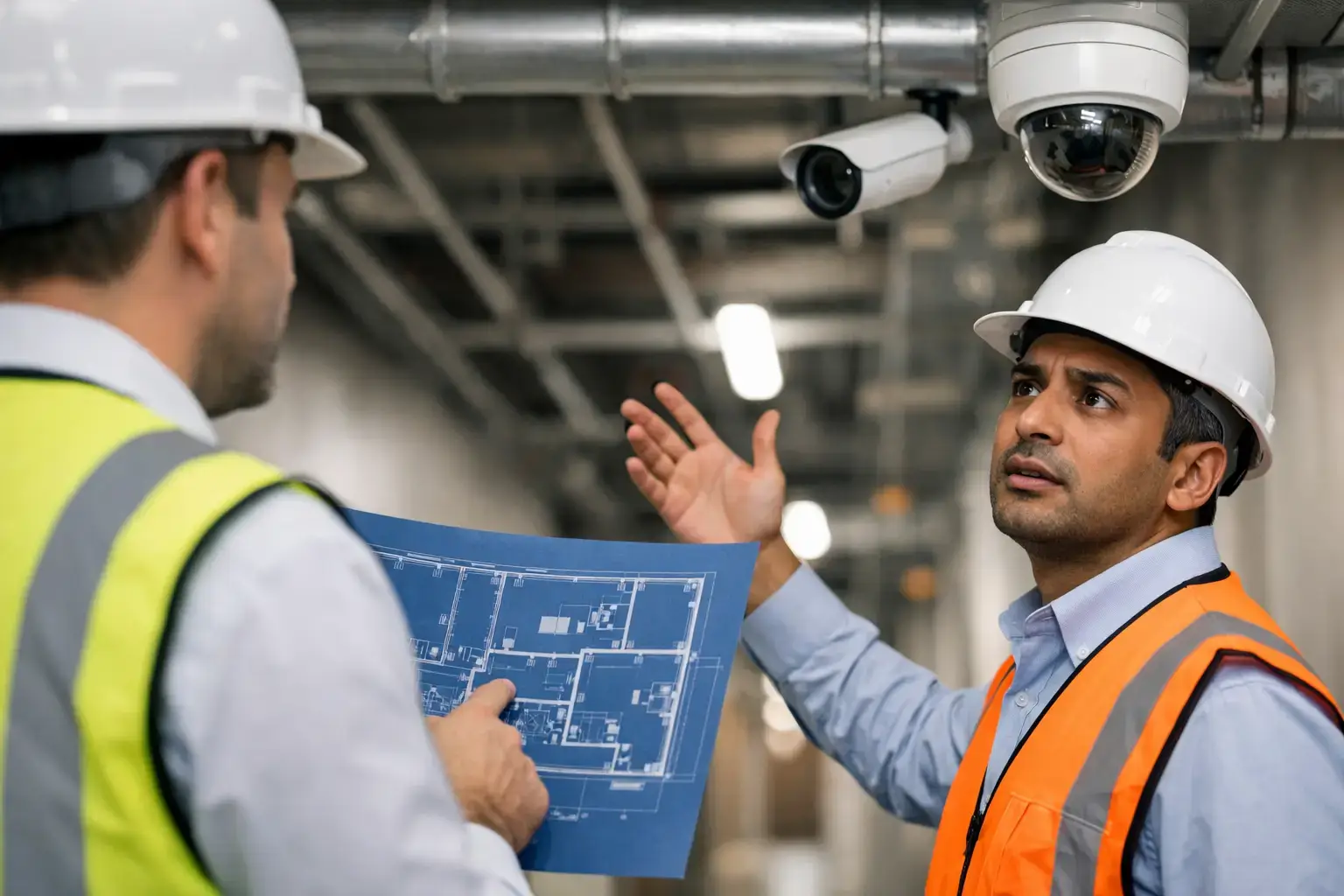
One of the biggest disconnects on building projects is the gap between design intent and installation sequencing. M&E contractors are often under pressure to get first-fix done quickly, but CCTV should not be roughed in on assumption alone. Security design needs input from the specialist who understands image usability, recorder requirements, network loading, power budgets and operational risk.
For example, a camera above a reception entrance may seem straightforward until you account for glazed reflections at night, facial capture requirements, the need to avoid direct backlighting and the practical route back to the network switch. The shortest cable route may not support the best camera position. Equally, the neatest containment route may place critical infrastructure in a location that overheats, floods or becomes inaccessible once the building is occupied.
This is why early coordination matters. On well-run projects, security is not left to fit around the leftover space after electrical and mechanical services have taken priority. It is considered at the same stage as access control, fire interfaces and network requirements.
The hidden cost of getting CCTV routes wrong
Rework is the obvious cost, but it is not the only one. A poor cable route can force visible surface containment in finished areas, compromise the look of high-end residential or commercial spaces, and delay handover while faults are traced. It can also reduce system life if cables are exposed to moisture, heat, movement or accidental damage.
There are more serious consequences too. If a camera ends up in the wrong place because the route was fixed too early, you may lose identification quality at entrances, loading bays, car parks or cash handling points. That matters if the footage is ever needed for an incident investigation, insurer query or police request. A system that records something is not necessarily a system that records usable evidence.
For commercial clients, especially in retail, logistics, hospitality and construction, these errors can affect risk management more broadly. Blind spots around delivery areas, inaccessible maintenance routes or unreliable links between outbuildings and the main recorder all create weak points that did not need to exist.
How CCTV rough-in should be approached instead
The best approach starts with accepting that CCTV is a specialist discipline, not an afterthought. The cable route should follow the surveillance objective, not the other way round. That means confirming what each camera is meant to achieve before containment is fixed in place. Is it general observation, facial recognition, licence plate capture, perimeter detection or incident review? Each use case affects positioning and routing.
It also means allowing for adjustment. A sensible rough-in gives the CCTV installer enough flexibility to fine-tune final camera locations without opening up finished walls or ceilings. In practice, that may involve better draw-wire planning, sensible containment sizing, appropriate access points and coordinated handover between M&E and the security contractor.
Network and power design should be considered early as well. IP CCTV systems are now standard on most quality installations, but not every route is equally suitable for power-over-ethernet runs, cabinet locations or switch placement. Long distances, external buildings and high-bandwidth cameras all need proper planning. If these details are missed at rough-in stage, the final system may rely on workarounds instead of a clean, dependable design.
For sites with phased occupation or likely expansion, routes should also reflect future needs. A landlord, facilities manager or homeowner may only install part of the system at first, but the rough-in should not block sensible upgrades later. This is particularly relevant on larger homes, schools, industrial estates and mixed-use buildings where coverage often develops over time.
Better coordination leads to better security
The projects that run smoothly usually have one thing in common: the CCTV specialist is involved before first fix is locked down. That avoids the classic problems of camera points clashing with signage, cable routes missing gate posts, recorder cupboards lacking ventilation, or external routes emerging in vulnerable positions.
For clients, this is not about adding complexity. It is about avoiding false economy. A cheap first-fix decision can become an expensive operational problem once the building is live. By contrast, coordinated routing protects the appearance of the property, supports insurer-recognised standards where relevant, and gives the end user a system that is easier to maintain and more likely to deliver clear footage when it counts.
At 247 CCTV, we often see the difference between projects where security design was consulted early and those where the cable routes were guessed during first fix. The former tend to hand over cleanly. The latter usually involve compromises that nobody wanted but everyone has to live with.
If you are planning a new build, fit-out or refurbishment, the practical lesson is simple. Treat CCTV cable routing as part of the security design, not just part of the building services package. When the route is planned around performance, access and long-term reliability from the start, the finished system stands a far better chance of doing the job it was installed to do.