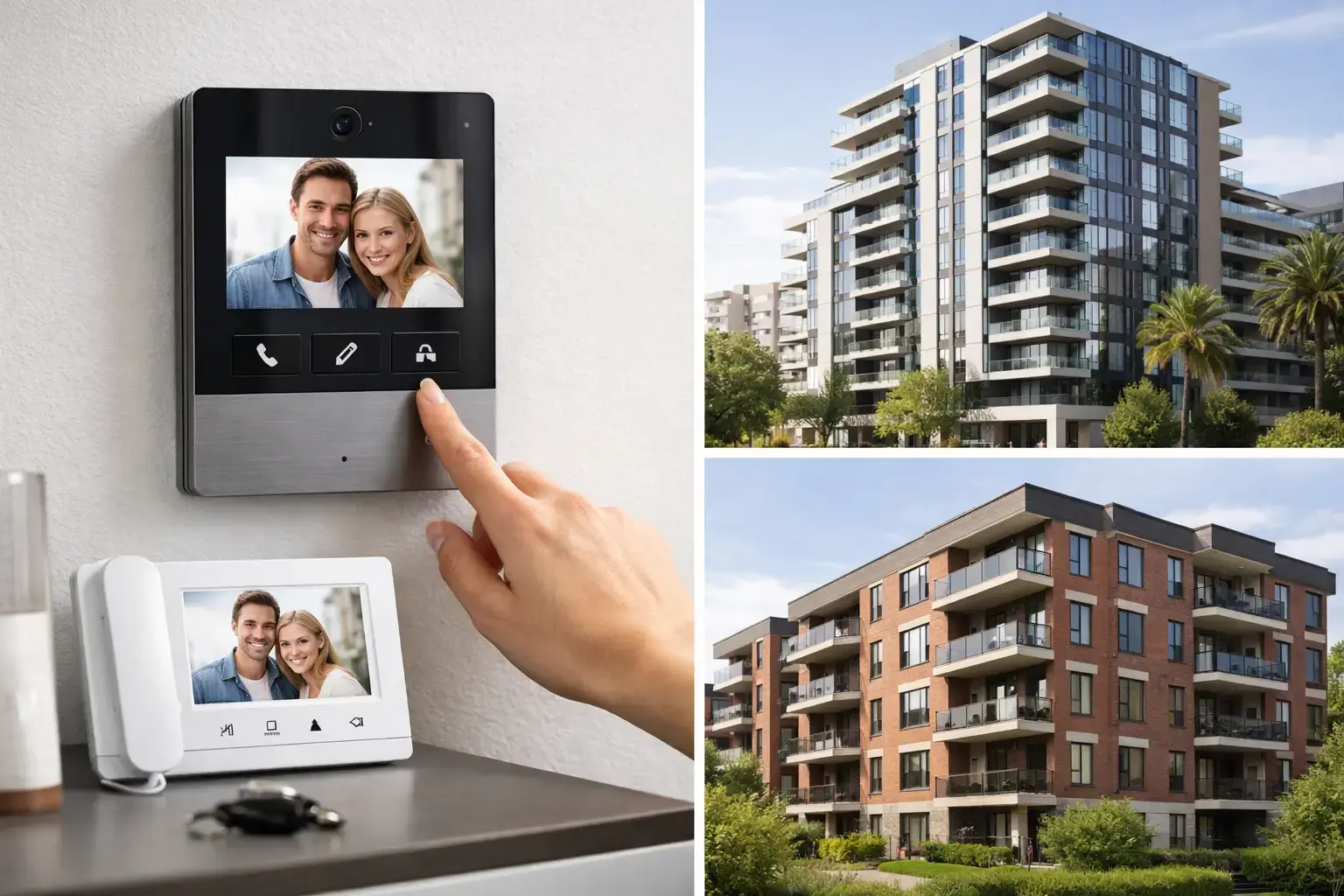
A parcel left in a communal hallway, a tradesperson waiting outside, a resident trying to let in a visitor from work – these are ordinary moments, but they are also the points where building security is tested. A video intercom for flats gives residents and property managers a clearer, more controlled way to manage access without relying on guesswork, worn-out audio handsets or a front door that is too easily held open.
For blocks of flats, the right system is not simply about seeing who is outside. It is about protecting shared entrances, reducing unauthorised access, making life easier for residents and choosing equipment that will still perform properly years after installation. That is where specification, installation quality and ongoing support matter just as much as the handset on the wall.
Why a video intercom for flats matters
In a single dwelling, a door entry system protects one household. In a block of flats, the same system protects multiple residents, communal areas and often several access points. The stakes are higher because one weak entrance can affect everyone in the building.
A video intercom adds a visual check before entry is granted. That sounds simple, but in practice it makes a considerable difference. Residents can verify whether the caller is a genuine visitor, courier or contractor. Managing agents can improve control at main entrances. Landlords can present a more secure, better-maintained building to tenants.
It also helps address a common problem in older buildings – audio-only systems that no longer offer enough confidence. Background noise, poor sound quality and ageing handsets often lead residents to release the door without being certain who is outside. Video changes that decision-making process.
What residents and landlords usually need from the system
The best system depends on the building. A converted house with four flats has very different requirements from a purpose-built development with dozens of dwellings, trade access and separate service entrances. Still, most buyers are looking for the same outcomes.
They want reliable identification at the door, clear speech, straightforward operation and a secure release mechanism. They also want a system that suits the people using it. In some buildings, a simple monitor in each flat is enough. In others, mobile app answering is useful because residents are often out during the day. That feature can be convenient, but it must be configured properly and should not come at the expense of security or reliability.
For landlords and freeholders, maintenance matters just as much as features. A video entry panel that looks good on day one but proves awkward to service is rarely a good long-term choice. The same applies to systems with consumer-style components that are difficult to replace or integrate later.
How to choose a video intercom for flats
The starting point is always the entrance layout. A single front door with one call panel is straightforward. Multiple entrances, gated access, internal lobby doors or separate bin and cycle store access will all affect the design. A proper site survey should identify how residents move through the building and where control is actually needed.
Then there is the question of occupancy. If the building houses professionals who are often out, mobile answering may be valuable. If many residents are older or less comfortable with apps, a reliable internal monitor with large, clear controls may be the better fit. The technology should suit the users, not the other way round.
Wiring also plays a major part. In existing flats, the condition and route of cabling can influence whether a system can reuse infrastructure or whether a full upgrade is more sensible. Retrofitting a video intercom into an older block is entirely possible, but the neatest and most dependable outcome usually comes from planning around the building rather than forcing a like-for-like replacement.
Wired, IP and app-based systems
There is no single best option for every block. A traditional wired system can still be the right answer where reliability and simplicity are the priority. These systems are often well suited to smaller or mid-sized residential buildings where residents want fixed handsets or screens and straightforward operation.
IP-based systems offer greater flexibility. They can support higher image quality, easier integration with access control, remote management and a wider range of devices. For larger developments or mixed-use buildings, that flexibility can be particularly useful. However, IP systems need proper design, secure network configuration and professional commissioning. They are not something to treat as a plug-and-play consumer product.
App-based answering is increasingly popular, especially where residents want to speak to visitors and release the door from their mobile. It is useful, but there are trade-offs. Mobile connectivity, user settings and resident turnover all need to be managed. In many cases, the strongest approach is a hybrid one – fixed internal devices for dependable day-to-day use, with mobile access as an added convenience rather than the only method.
Security features that are worth paying for
Clear video quality matters, but image quality on its own is not enough. The entrance camera needs to cope with varying light levels, direct sunlight and poor weather. A panel mounted outside a block in winter conditions in Essex or London needs to perform reliably when visibility is less than ideal.
Access control integration is often where a video intercom becomes far more effective. If residents also use fobs, keypads or proximity credentials, the entire entrance process becomes easier to manage. Lost credentials can be removed, communal access can be controlled more tightly and there is less dependence on physical keys.
For larger blocks, audit trails may also be useful. Not every residential building needs event logging at a detailed level, but some sites benefit from recorded door activity, timed access permissions or concierge integration. This is particularly relevant where there are shared staff, delivery routines or recurring contractor visits.
Another feature worth considering is accessibility. A good system should support clear audio, suitable mounting heights and straightforward use for residents and visitors with mobility or sensory limitations. This is not just a technical detail. It affects whether the entrance works properly for everyone using the building.
Common mistakes in flat door entry upgrades
One of the most common mistakes is choosing on price alone. Cheap equipment can appear attractive, especially for landlords managing costs across a portfolio, but lower-grade systems often create more problems later through poor image quality, unreliable door release, limited parts availability and weak aftercare.
Another mistake is underestimating resident use. A system may look advanced on paper, but if it is awkward to answer, hard to hear or confusing to operate, residents will find workarounds. In security, workarounds usually mean weaker control.
There is also the issue of installation quality. Even good equipment performs badly if the panel position is wrong, the lock release is poorly set up or the cable infrastructure is compromised. Door entry systems sit at the meeting point between electronics, physical security and day-to-day behaviour. That is why experienced installation matters.
Maintenance, compliance and long-term reliability
A video intercom is not a fit-and-forget item. In shared residential buildings, it should be treated as a core security system that needs periodic inspection, testing and support. Wear at the entrance panel, vandal resistance, speech quality, release timing and lock condition all affect performance over time.
Property managers should also think beyond the initial install. How quickly can faults be diagnosed? Are replacement parts available? Can additional flats or entrances be added later? A professionally specified system gives you a clearer route for maintenance and future changes.
This is one reason many landlords and managing agents prefer to work with an established security specialist rather than a general trades supplier. With a company such as 247 CCTV, the advantage is not just installation. It is the ability to survey the building properly, design the system around actual use and support it over the long term.
When a flat block should consider a wider security upgrade
Sometimes the intercom is only part of the problem. If there are repeated issues with tailgating, vandalism, antisocial behaviour or insecure side access, the answer may involve more than replacing the front panel. CCTV coverage, controlled internal doors, automatic door closers or improved external lighting may all need attention.
That broader view is often what separates a basic equipment change from a meaningful security improvement. A video intercom can greatly improve front-door control, but it works best as part of a building security strategy rather than as a standalone fix for every access issue.
For any block of flats, the right choice comes from understanding how the building is used, where access control breaks down and what residents need to feel safe using it every day. When the system is well designed, easy to operate and properly maintained, it becomes one of those rare building features people only notice when it is missing – which is usually the clearest sign it is doing its job well.