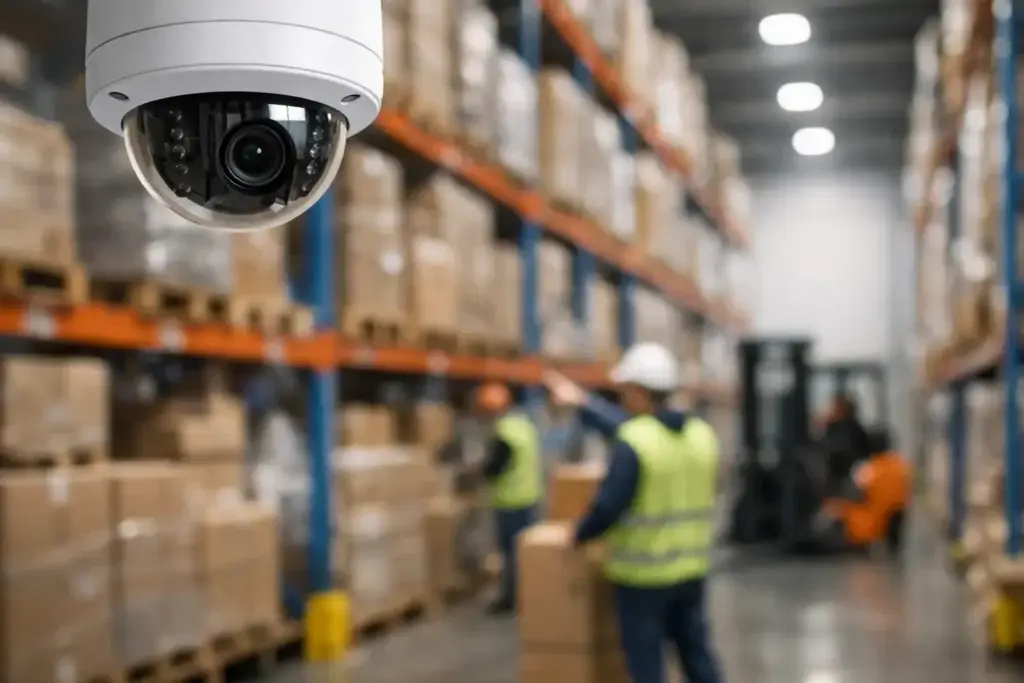
A warehouse rarely has one weak spot. It has dozens. Goods move in and out all day, staff and visitors cross paths, shutters open early, yards stay active after dark, and a single blind area can become the place where loss, damage or disputes begin. Choosing the best CCTV for warehouses is not about buying the highest number of cameras. It is about building a system that covers the right risks, records usable evidence and keeps working reliably under pressure.
For most warehouse operators, that means moving beyond basic off-the-shelf kits. Storage facilities, distribution centres and mixed-use industrial units all have different layouts, lighting conditions and operational patterns. A good warehouse CCTV system should be designed around those realities, with camera types, recording capacity and analytics matched to the building and the way it is used.
What makes the best CCTV for warehouses?
The best systems do three jobs well. First, they deter opportunist theft and unauthorised access. Secondly, they provide clear footage that can actually be used when an incident occurs. Thirdly, they support day-to-day management, whether that means monitoring loading bays, checking delivery disputes or reviewing health and safety events.
In warehouse settings, image quality matters, but placement matters just as much. A 4K camera mounted too high over a loading area may still fail to identify a face or registration plate. Equally, a cheap wide-angle camera may show activity without capturing enough detail to prove what happened. The strongest systems balance overview coverage with targeted identification points.
This is why warehouse CCTV normally works best as an IP system rather than an older analogue setup. IP cameras offer better image quality, greater flexibility, remote access and smarter analytics. They are also easier to scale if your operation grows or your risks change.
Camera types that suit warehouse environments
No single camera suits every area of a warehouse. Internal aisles, dispatch zones and external yards each present different challenges.
Dome cameras for internal coverage
Dome cameras are often used inside warehouses where you need broad coverage across picking areas, stock rooms, corridors and workspaces. They are compact, difficult to tamper with and well suited to general monitoring. In clean, well-lit areas, they can provide excellent all-round visibility.
That said, they are not always the best choice for very high ceilings or long viewing distances. If you need to capture detail at range, another camera style may perform better.
Bullet cameras for perimeter and yard areas
Bullet cameras are a common choice for external warehouse protection. Their shape allows them to cover longer distances, which makes them useful for fences, gates, vehicle routes and loading yards. They are also highly visible, which can support deterrence.
For outdoor use, low-light performance is critical. A camera that works well in daylight may struggle once the yard lights drop or a vehicle shines headlights directly towards it. Good night performance, glare handling and weather resistance should be treated as essentials, not extras.
PTZ cameras for large sites
PTZ cameras, which pan, tilt and zoom, are useful where one camera needs to cover a wide area and follow live activity. On larger warehouse sites, they can be valuable for yards, circulation roads and open storage areas.
However, PTZ cameras should not replace fixed cameras altogether. A PTZ only looks in one direction at a time. If it is tracking one event, it may miss another. In practice, they work best as part of a wider system with fixed cameras covering key points continuously.
ANPR and specialist cameras
If vehicle control is part of your security plan, number plate recognition can be a sensible addition. This is particularly relevant for warehouses with regular deliveries, out-of-hours access or shared industrial estates. Thermal cameras and advanced analytics can also help on higher-risk sites, especially where perimeter detection is needed in poor lighting.
Coverage areas that matter most
When clients ask about the best CCTV for warehouses, the first discussion is usually not brand or model. It is coverage. Miss the right areas and even expensive equipment will leave security gaps.
Entry and exit points should always be a priority, including staff entrances, roller shutters and fire exits that could be misused. Loading bays need close attention because they combine goods movement, vehicle traffic and frequent access. External yards, gates and perimeter lines often require stronger night performance and wider-range cameras. Inside the building, stock holding areas, high-value goods zones, dispatch desks and forklift routes are also common priorities.
There is also a management benefit in covering welfare areas and circulation routes appropriately, provided the system is designed with privacy and data protection in mind. Good footage can resolve disputes, support incident investigations and help identify recurring operational issues.
Resolution, storage and retention
Higher resolution is generally better, but only if the rest of the system is designed to support it. A warehouse with dozens of high-resolution cameras can generate substantial data. Without the right recorder, hard drive capacity and network infrastructure, you may end up with reduced frame rates, poor playback performance or footage that is not retained long enough.
For most warehouse environments, retention periods should be considered carefully at design stage. Some businesses only need a few weeks. Others may need longer retention for compliance, insurance or operational reasons. The right answer depends on the site, the risk profile and how incidents are typically reported.
Compression technology, motion-based recording and analytics-triggered recording can all help manage storage more efficiently. But none of this should come at the cost of footage quality at critical points such as entrances, tills, dispatch stations or loading bays.
Why analytics can make a big difference
Modern analytic CCTV has become particularly useful for warehouses because these sites often have predictable movement patterns. Cameras can be configured to alert on line crossing, intrusion after hours, loitering near loading doors or vehicles entering restricted areas.
Used properly, analytics can reduce the need for constant manual monitoring and help security teams respond faster. They can also cut false alerts compared with basic motion detection, although setup is important. Poorly configured analytics may react to rain, insects, shadows or routine activity.
This is one area where professional design matters. Analytics should support your operation, not create noise. In a busy yard, for example, it may make sense to focus alerts only on specific time periods or restricted zones.
Installation quality matters as much as equipment
A well-specified camera still depends on correct installation. In warehouses, installers have to deal with height, dust, changing light levels, racking, metal cladding, long cable runs and sometimes patchy network infrastructure. Camera angles need to avoid glare from skylights, overexposure from loading doors and blocked sight lines from stored pallets or equipment.
There is also the issue of resilience. A warehouse CCTV system should be dependable over the long term, with suitable housings, clean cable management, secure mounting and recording equipment protected against tampering or power disruption. If the system is likely to be relied upon for insurer acceptance or evidential purposes, professional standards are especially important.
For that reason, many businesses prefer an SSAIB-approved installer with experience in commercial and industrial environments. It gives greater confidence that the system is not only fitted neatly, but designed with compliance, reliability and real operational use in mind.
How to choose the right system for your site
The right system depends on what you need it to achieve. A small warehouse with limited public access may need clear entry coverage, yard cameras and remote viewing for the owner. A larger distribution facility may need a layered system with internal domes, external bullets, PTZ coverage, analytics, access control integration and monitored alerts.
Budget matters, but it should be judged against risk. If stock values are high, delivery activity is constant or incidents are likely to be disputed, under-specifying the system can cost more later. On the other hand, not every warehouse needs the most advanced option in every area. In many cases, the best result comes from mixing camera types and performance levels based on actual exposure.
A proper site survey remains the best starting point. It will identify blind spots, lighting issues, vulnerable access points and the practicalities of cable routes, recorder placement and future expansion. It also allows the system to be designed around insurer expectations and day-to-day site use, rather than guesswork.
At 247 CCTV, this is typically where warehouse projects deliver the most value – not from adding more hardware, but from matching the system to the real risks of the building and the operation inside it.
If you are deciding on the best CCTV for warehouses, think less about buying cameras and more about protecting movement, stock, people and evidence. The right system should feel dependable on a normal day and prove its worth on a difficult one.