A fire alarm system usually gets attention only when something goes wrong – a failed inspection, a persistent fault, a false alarm that disrupts trading, or a question from your insurer after an incident. That is why a commercial fire alarm compliance guide matters. Compliance is not just about fitting detectors and call points. It is about proving your system is appropriate for the building, properly installed, regularly maintained and supported by the right records.
For business owners, facilities managers and landlords, the challenge is that compliance sits across several responsibilities at once. Fire safety law, building use, system standards, staff procedures and maintenance records all play a part. Miss one area and the whole arrangement can become difficult to defend.
What commercial fire alarm compliance actually means
In practical terms, compliance means your fire alarm system is suitable for the risks within the premises and managed properly throughout its life. That starts with a fire risk assessment, because the alarm system should reflect how the building is used, how many people occupy it, the layout, any sleeping risk, and whether fast warning is needed to protect property as well as life.
A compliant system is not always the largest or most complex option. In some buildings, a manual system may be enough. In others, automatic detection across escape routes, plant rooms, voids or high-risk areas will be expected. The right answer depends on the premises, not on a one-size-fits-all package.
For most commercial premises in the UK, fire alarm design, installation, commissioning and maintenance are assessed against British Standard BS 5839-1. That standard does not replace your legal duties, but it is the benchmark most professionals, insurers and enforcing authorities will look to when judging whether a system has been specified and managed properly.
Legal duties behind a commercial fire alarm compliance guide
The main legal framework for non-domestic premises in England is the Regulatory Reform (Fire Safety) Order 2005. This places duties on the responsible person, which may be the employer, owner, landlord, managing agent or another person with control of the premises. In simple terms, that person must take appropriate fire precautions and make sure people can be warned in case of fire.
That does not mean every premises must have the same type of alarm system. The law is risk-based. A small, simple building with good visibility and low fire risk may need something different from a hotel, school, care setting, warehouse or multi-let commercial property.
The difficulty is that many decision-makers assume compliance is achieved once installation is complete. It is not. Ongoing inspection, testing, maintenance, staff awareness and record keeping are all part of the picture. If your weekly tests are not being done, your faults are not being addressed, or your log book is missing, the system may be installed but your compliance position can still be weak.
Choosing the right system category
One of the most common mistakes is specifying a system that does not match the building risk. BS 5839-1 uses categories to describe the purpose and extent of protection.
Category M systems rely on manual warning, such as break glass call points. Category L systems are designed for life protection, with levels ranging from more localised coverage to comprehensive automatic detection throughout the building. Category P systems focus on property protection, often driven by business continuity or insurer requirements.
This is where experience matters. A retail unit, school, HMO common area, office block and industrial site all present different considerations. You may need life protection only, or a mixed approach that also supports remote monitoring to reduce property loss outside working hours. The correct category should come from competent survey and design, not guesswork.
Design, installation and commissioning requirements
A compliant system begins long before the first device is fitted. Survey work should identify escape routes, high-risk rooms, ceiling types, plant areas, access issues and any environmental conditions that may affect detector performance. Good design also considers how the system will be used day to day, including access for testing, cause and effect programming, monitoring requirements and integration with other systems.
Installation quality is just as important as specification. Poor cable routing, unsuitable detector positioning, missing labels or untidy panel configuration can create problems later, especially during maintenance or emergency response. Commissioning then confirms the system operates as intended and provides the documentation needed to hand the system over correctly.
This stage often exposes the difference between a compliant installation and a cheap installation. A lower initial price can quickly lose its appeal if the system generates false alarms, lacks proper documentation or needs corrective work to satisfy insurers or fire safety officers.
Commercial fire alarm compliance guide for testing and maintenance
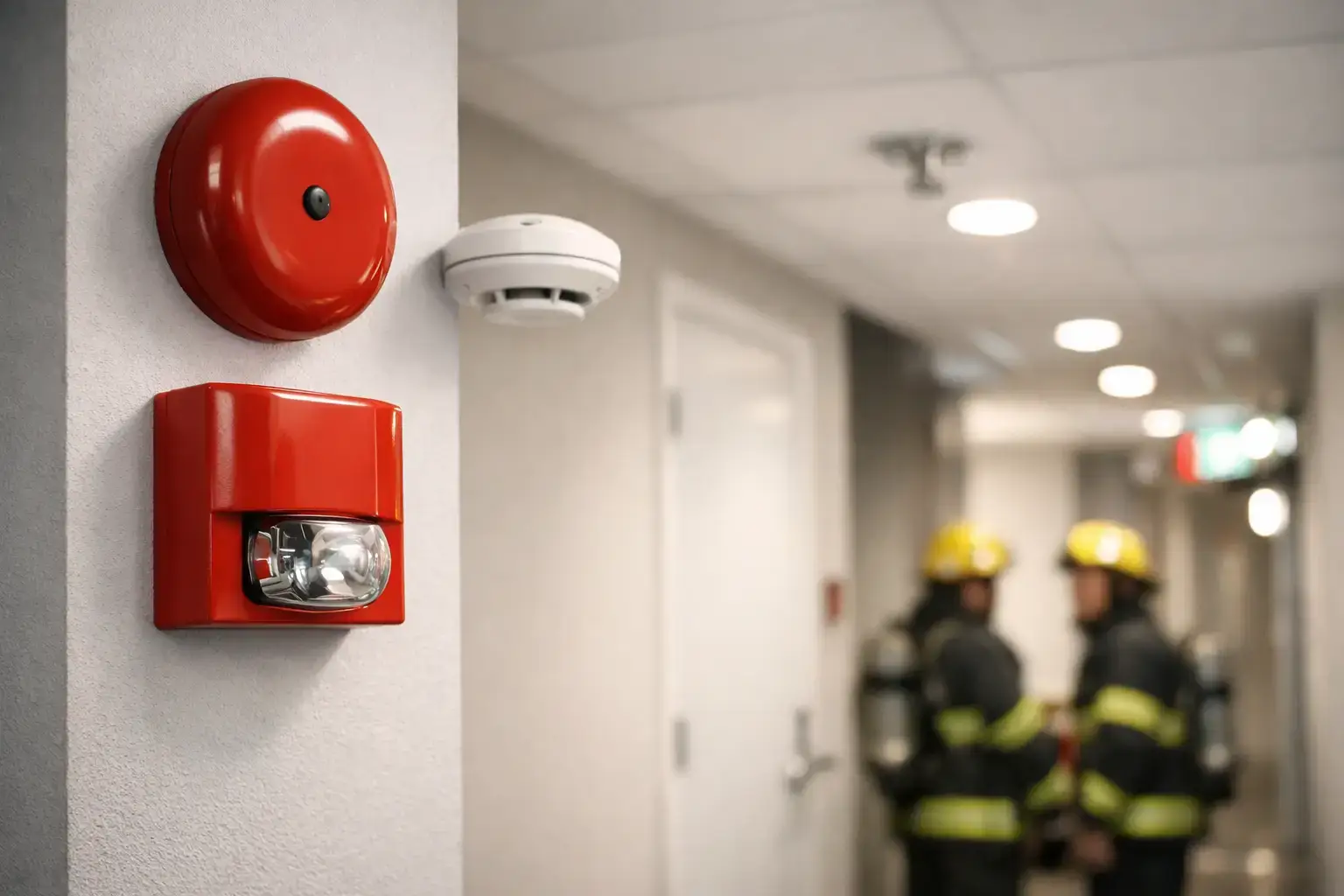
Once the system is live, regular testing is essential. In most commercial settings, the user should carry out a weekly fire alarm test, rotating call points over time and recording the result in the log book. Any fault, silence failure, disabled zone or signalling issue should be investigated promptly.
Maintenance by a competent fire alarm company is typically carried out every six months, though some sites require more frequent attention depending on risk, occupancy or insurer expectations. During servicing, engineers inspect the panel, power supplies, batteries, detection devices, sounders and interfaces, and confirm the system remains in working order.
Records matter here. If there is ever an incident, an audit trail helps demonstrate that the system was maintained and faults were handled responsibly. Without that paper trail, even a technically sound system can become harder to defend.
For larger premises, multi-site estates or buildings with integrated security systems, maintenance also needs coordination. Access control releases, automatic doors, smoke control interfaces and monitoring links should all be checked in the wider life safety context, not treated in isolation.
False alarms are a compliance issue too
False alarms are often dismissed as an inconvenience, but they have real compliance and operational consequences. Frequent unwanted alarms disrupt staff, inconvenience customers, create complacency and can lead to avoidable fire service attendance issues.
In some premises, the cause is obvious – poor detector selection in kitchens, dusty areas, shower rooms or loading bays. In others, the issue is more subtle, such as detector ageing, draughts, aerosol use, temporary building works or changes in room use since installation.
Reducing false alarms is part of responsible system management. That may involve changing detector types, adjusting device locations, reviewing investigation delays where appropriate, or rethinking zoning and cause and effect. The right answer depends on the building and how it operates. What works in an office may not suit a school or warehouse.
Documentation you should be able to produce
If you are responsible for a commercial premises, you should not have to guess whether the paperwork exists. At a minimum, you should expect system design and commissioning records, zone charts where applicable, a log book, service reports, records of weekly testing, and details of any faults, isolations or modifications.
You should also be clear about who is responsible for what. In multi-occupied buildings, that line can become blurred between landlord, managing agent and tenant. Common areas may be one party’s responsibility while demised spaces fall to another. If those boundaries are not documented properly, gaps appear quickly.
When compliance needs a fresh look
Even a previously compliant system may need reviewing if the premises changes. Refurbishment, partitioning, changes in occupancy, new plant, storage changes, extended opening hours or altered escape routes can all affect whether the existing arrangement is still suitable.
This is common in commercial property. Units get repurposed, offices become mixed-use spaces, and warehouses add racking or mezzanines. The alarm system may still function, but that does not automatically mean it still meets the needs of the building.
A competent review can identify whether you need minor alterations or a more substantial upgrade. That is usually far better than waiting for a failed inspection, an insurer query or an incident to expose the problem.
Working with a competent fire alarm partner
Compliance is easier to manage when design, installation and maintenance are handled by specialists who understand both standards and day-to-day building pressures. For many organisations, the real value is not just the panel on the wall. It is having clear advice, dependable servicing, sensible recommendations and records that stand up to scrutiny.
That is especially true where fire alarms connect with wider building security. Businesses across Essex, London and the South East often benefit from dealing with one experienced provider that can assess fire detection alongside access control, automatic doors, intruder alarms and monitored security arrangements. When systems overlap, coordinated thinking reduces risk.
At 247 CCTV, that practical, compliance-led approach is what commercial clients usually need most – not sales language, but confidence that the system is right for the premises and will remain dependable over time.
If you are unsure whether your current setup meets the mark, the safest next step is not to assume. A professional survey, a review of your records and an honest look at how the building is used will usually tell you far more than the panel lights ever will.