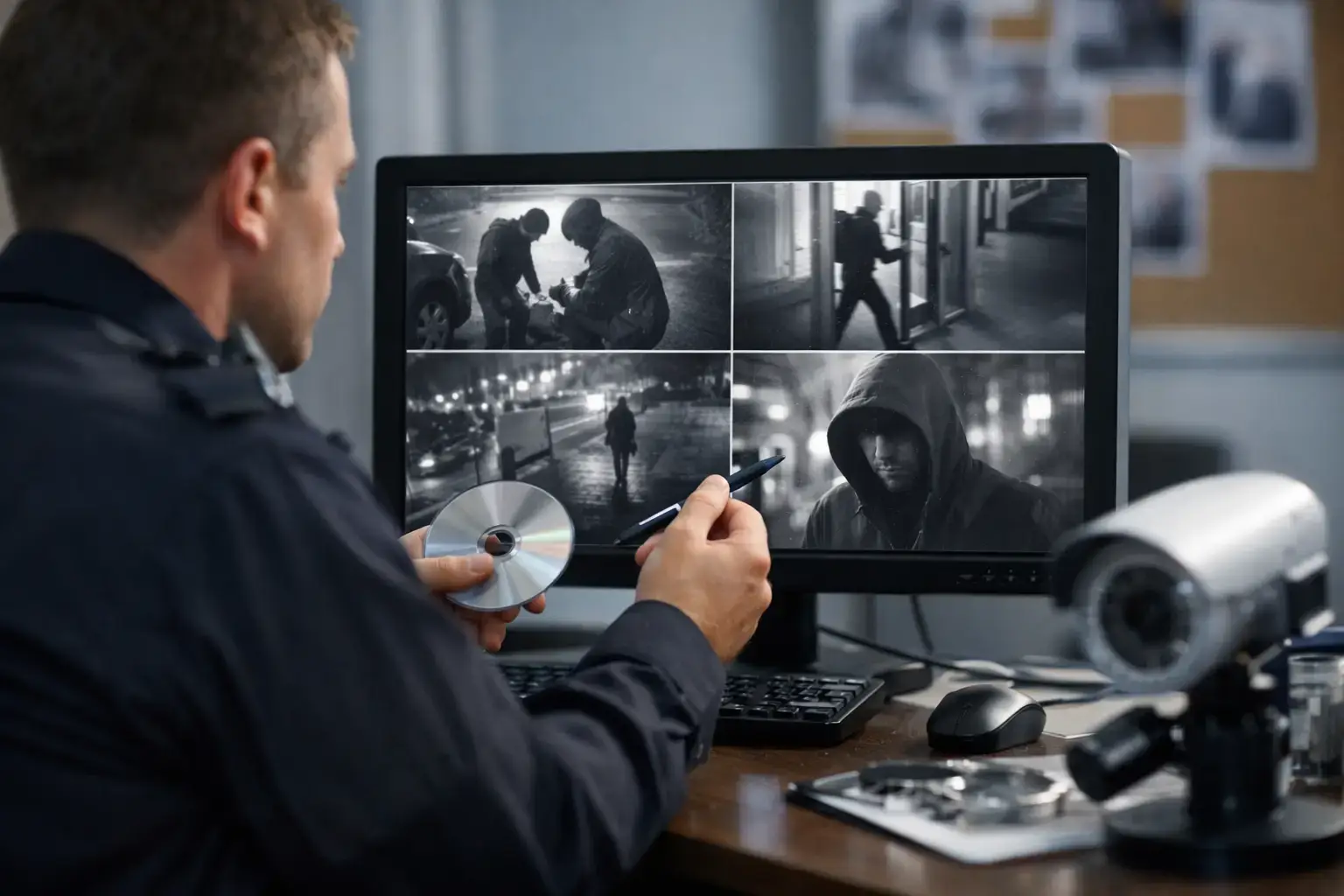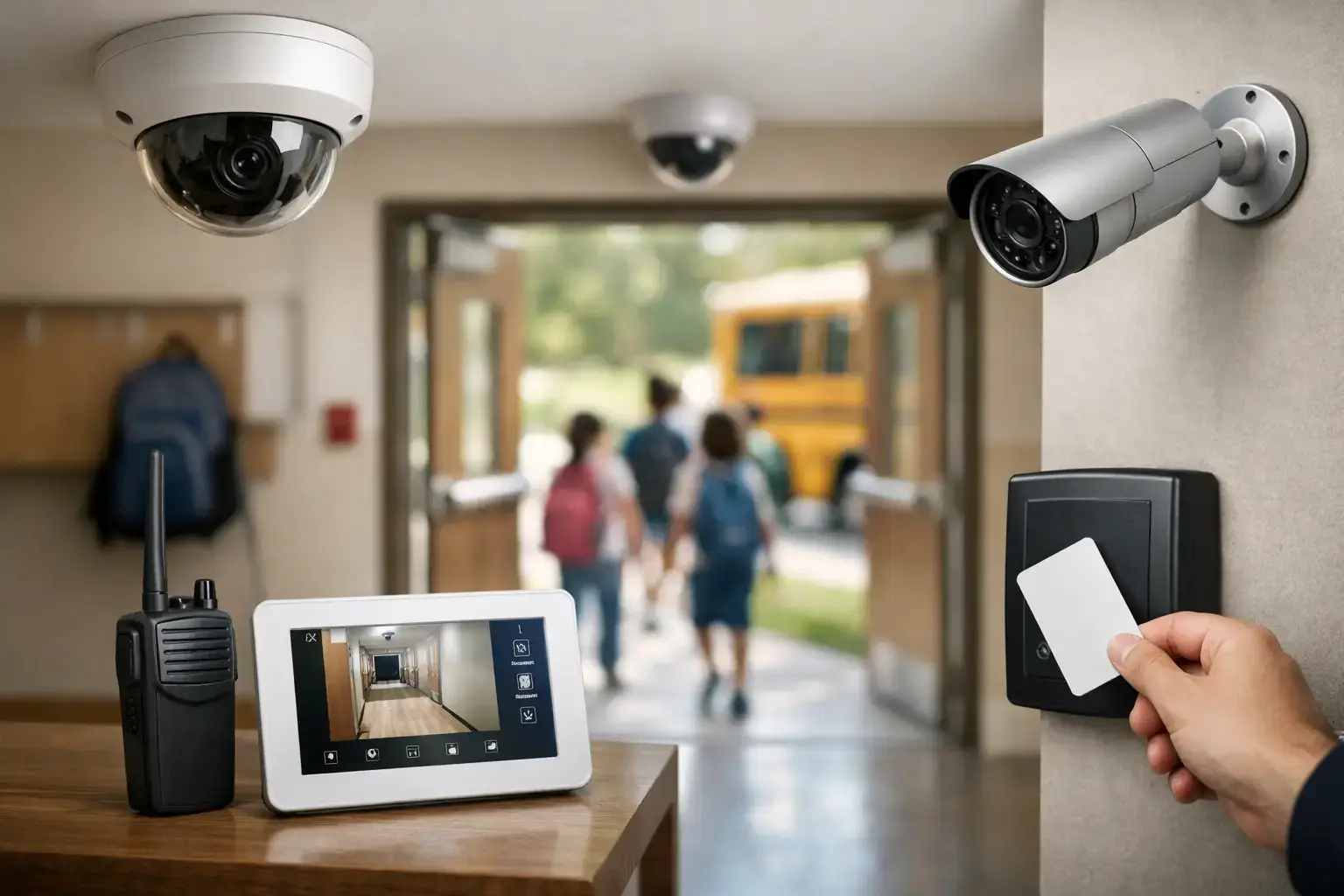
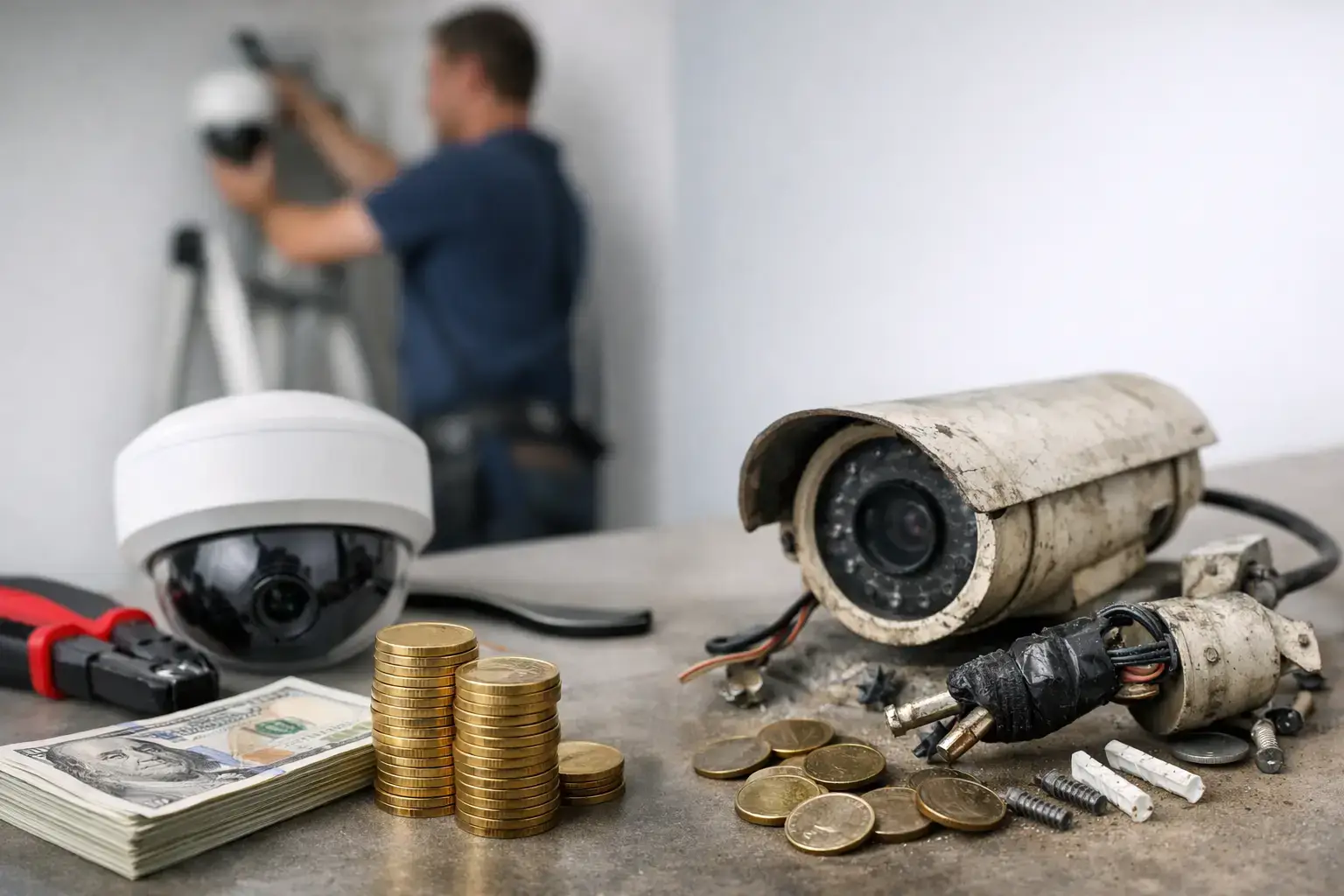
A CCTV quote that comes in hundreds of pounds below the rest can look like an easy decision. In practice, why the cheapest CCTV quote is usually not the cheapest comes down to what has been left out, downgraded or ignored. Security systems are judged properly over years of performance, not on the day the paperwork is signed.
For a homeowner, that can mean blind spots around the driveway, poor night images or an app that stops working reliably after a few months. For a business, it can mean missed incidents, unusable footage, compliance problems and repeated call-out costs. The cheaper figure often moves the cost from the quote to the future.
Why the cheapest CCTV quote is usually not the cheapest
The first thing to understand is that two CCTV quotes can look similar on paper while delivering very different outcomes. One installer may price for a properly surveyed system with suitable camera positions, recording capacity, network configuration, remote access setup and user training. Another may simply price a set number of cameras and a recorder with little attention to how the site actually operates.
That gap matters. A camera is only useful if it covers the right area, at the right angle, with the right image quality, in the right lighting conditions. If a quote has been built around hitting a low price rather than solving a security problem, the system can end up failing at the exact moment it is needed.
Cheap quotes also tend to assume ideal conditions. Existing cabling is expected to be reusable, network infrastructure is assumed to cope, power requirements are overlooked, and installation time is kept unrealistically low. Once work starts, those assumptions often turn into extras.
The hidden costs usually sit outside the headline price
A low headline figure is attractive because it feels clear and comparable. The difficulty is that CCTV pricing is rarely that simple. The real cost includes design quality, equipment life, false economy in labour, aftercare and whether the system is acceptable to insurers or stakeholders who rely on it.
Poor coverage leads to expensive corrections
One of the most common problems with low-cost CCTV installations is inadequate coverage. Cameras may be placed where cabling is easiest rather than where evidential images are most likely. Entrances, vehicle routes, till points, loading bays, side access paths and perimeter weak spots need different treatment.
When those areas are not assessed properly at survey stage, the fix is rarely cheap. Additional cameras, repositioning works, new cabling runs and recorder upgrades all add cost after the original installation. What looked inexpensive at the outset becomes a part-finished system needing remedial work.
Lower-grade equipment often costs more over time
Not all cameras, recorders and accessories are equal. Budget equipment may offer acceptable specifications on a datasheet but fall short in real conditions, particularly at night, in backlit areas or during poor weather. Footage that looks passable in daylight can become noisy, blurred or unusable after dark.
The same applies to recorders and storage. Systems that are too lightly specified may not retain footage for as long as required, may struggle with multiple high-resolution streams, or may fail earlier than expected. Replacing hardware early, dealing with faults and losing confidence in the system all come at a cost.
Installation quality is not a small detail
A CCTV system is only as dependable as the standard of installation behind it. Cheap quotes often reduce labour time first. That can mean poor cable management, inadequate testing, weak network setup, untidy terminations, rushed commissioning and little attention to long-term reliability.
On a domestic property, that may result in water ingress, unstable connections or visible cabling that spoils the finish. On a commercial site, it can affect system uptime, maintenance access and overall performance. Saving money on labour usually means paying later for fault finding and corrective work.
The cheapest quote may not include what you assume it does
This is where buyers get caught out. Many low quotes look competitive because they exclude items that should reasonably form part of a professional CCTV installation.
Survey and design work
A proper survey is not an administrative extra. It is where camera locations, risks, lighting, access routes, privacy considerations, storage requirements and operational needs are assessed. If there is little or no survey work, the quote may be based on guesswork.
Configuration and user setup
Remote viewing, motion analytics, user permissions, mobile app setup, notification settings and playback functions all need proper configuration. If this stage is rushed or omitted, the system may technically be installed but not genuinely usable.
Training and handover
Many buyers only discover after installation that nobody has shown them how to retrieve footage, export evidence or manage users properly. That creates dependence on chargeable call-outs for basic tasks.
Maintenance and support
If support is absent or vague, any fault becomes a separate cost. Ongoing maintenance matters, especially for business premises, managed properties and sites where recorded evidence may be needed quickly.
Compliance, insurer requirements and accountability
For many commercial buyers, and some higher-risk residential settings, price is only one part of the decision. Compliance, accreditation and accountability matter just as much. If a system needs to satisfy insurer expectations or form part of a wider security strategy, the cheapest installer may not be providing the level of assurance required.
That does not mean every site needs the most complex specification available. It does mean that the design and installation should be appropriate to the property, the risks and the operational demands. An installer working to recognised standards, with experience across sectors and an understanding of insurer-approved systems, is less likely to leave costly gaps.
This is particularly relevant on construction sites, schools, retail premises, industrial units and multi-occupancy buildings, where CCTV often sits alongside intruder alarms, access control and fire systems. A cheap standalone quote may ignore integration entirely, even when coordinated security would deliver better protection and better value.
Where a higher quote can actually save money
The better quote is not always the highest one, and the cheapest is not always wrong. Sometimes a simple domestic installation on a straightforward property can be delivered cost-effectively without compromise. The key is whether the quote matches the real requirement.
A more considered price can save money by reducing future call-outs, improving evidence quality, avoiding unnecessary replacements and making sure the system is fitted properly first time. It can also protect against less obvious losses – staff time spent chasing faults, incidents that cannot be investigated properly, disputes over missing footage, and operational disruption while remedial work is carried out.
For many businesses, there is another cost that matters more than the installation price: the cost of the system failing during an incident. If theft, trespass, vandalism or a health and safety dispute occurs, poor footage can be more expensive than any original saving.
How to compare CCTV quotes properly
If you are looking at several proposals, compare outcomes rather than just numbers. Ask what each system is designed to achieve, how long footage will be stored, whether key risk areas are properly covered, what support is included and whether there is clear accountability after handover.
It is also worth checking whether the equipment is appropriate for the environment. External cameras exposed to weather, warehouse cameras looking across large areas, and domestic systems used for remote monitoring all have different demands. A serious installer should be able to explain those differences in plain English.
You should also look at what is not on the quote. If there is no mention of commissioning, testing, app setup, training, maintenance options or future scalability, the lower price may be low for a reason. Experienced providers such as 247 CCTV build value through proper design, recognised standards and ongoing support, not by stripping out the parts that keep a system dependable.
Why the right CCTV quote should feel clear, not just cheap
A good CCTV proposal should leave you with confidence. You should know what is being installed, why it has been specified, what areas are covered, how the system will be supported and what result you can expect in day-to-day use.
If a quote only wins because it is the lowest figure on the page, it is worth pausing before you commit. In security, the real price is measured by reliability, evidential quality and whether the system stands up when something goes wrong. Paying for the right system once is usually cheaper than paying to correct the wrong one twice.
The best quote is the one that protects the property properly, works when you need it, and does not leave you spending more to fix avoidable shortcuts later.