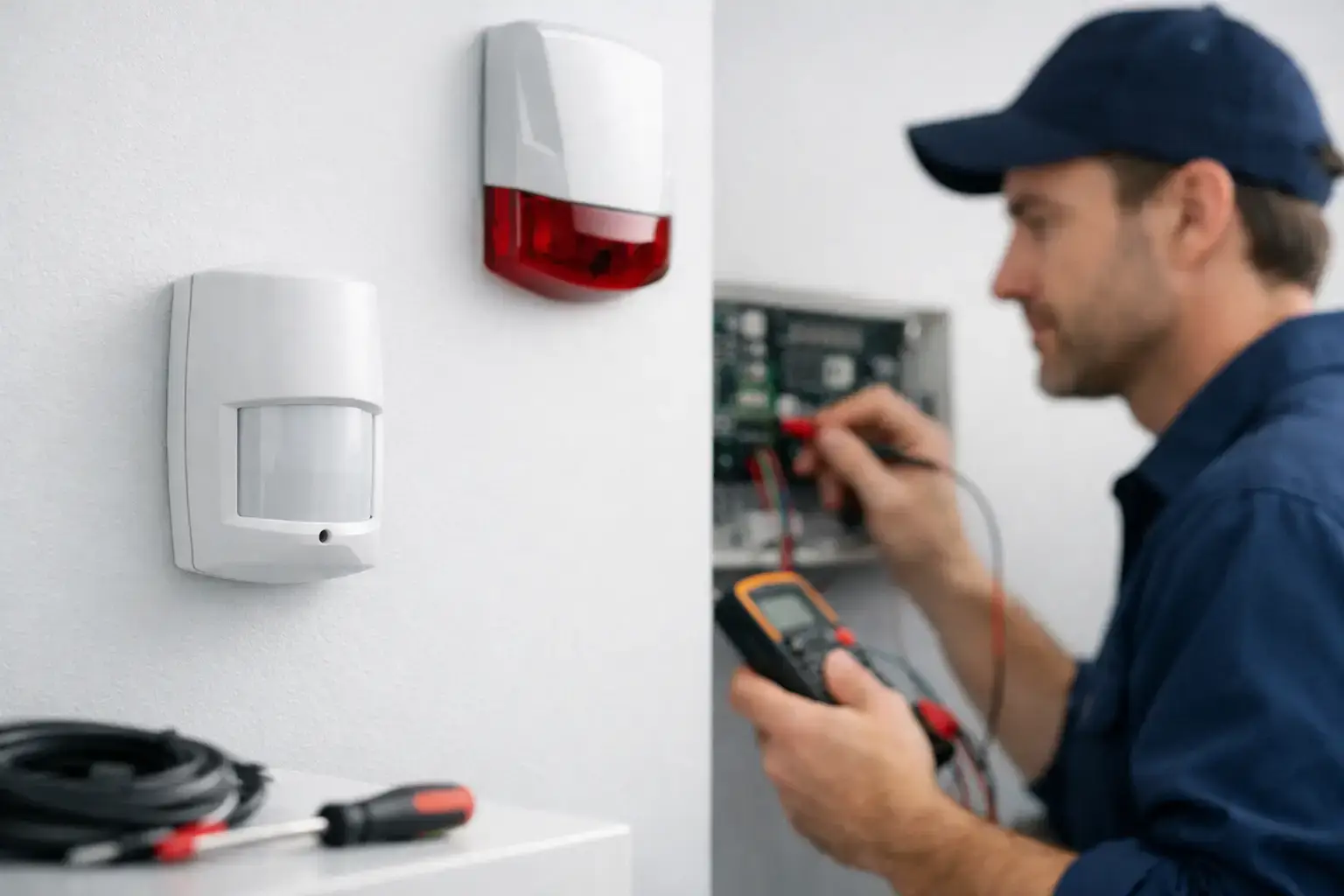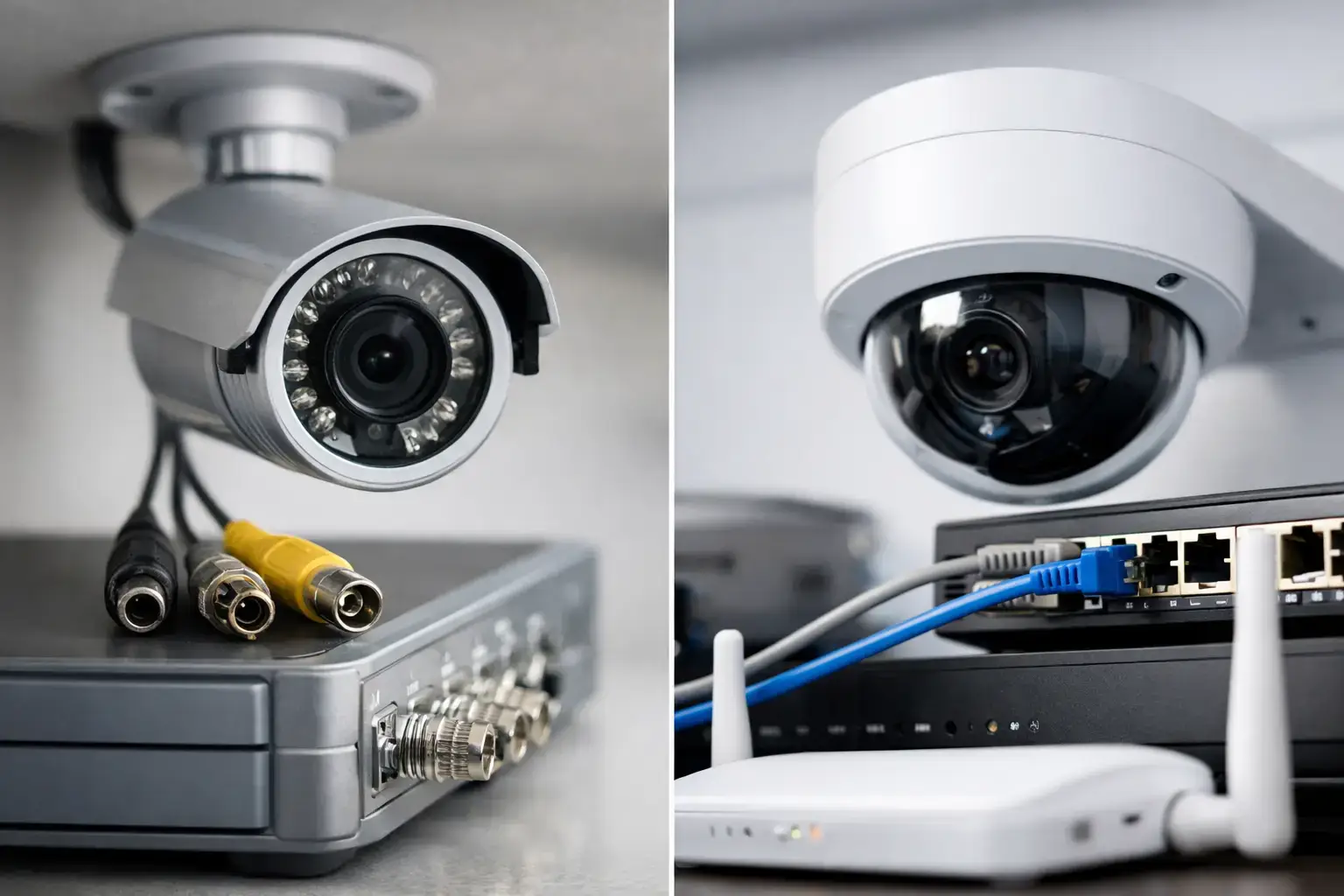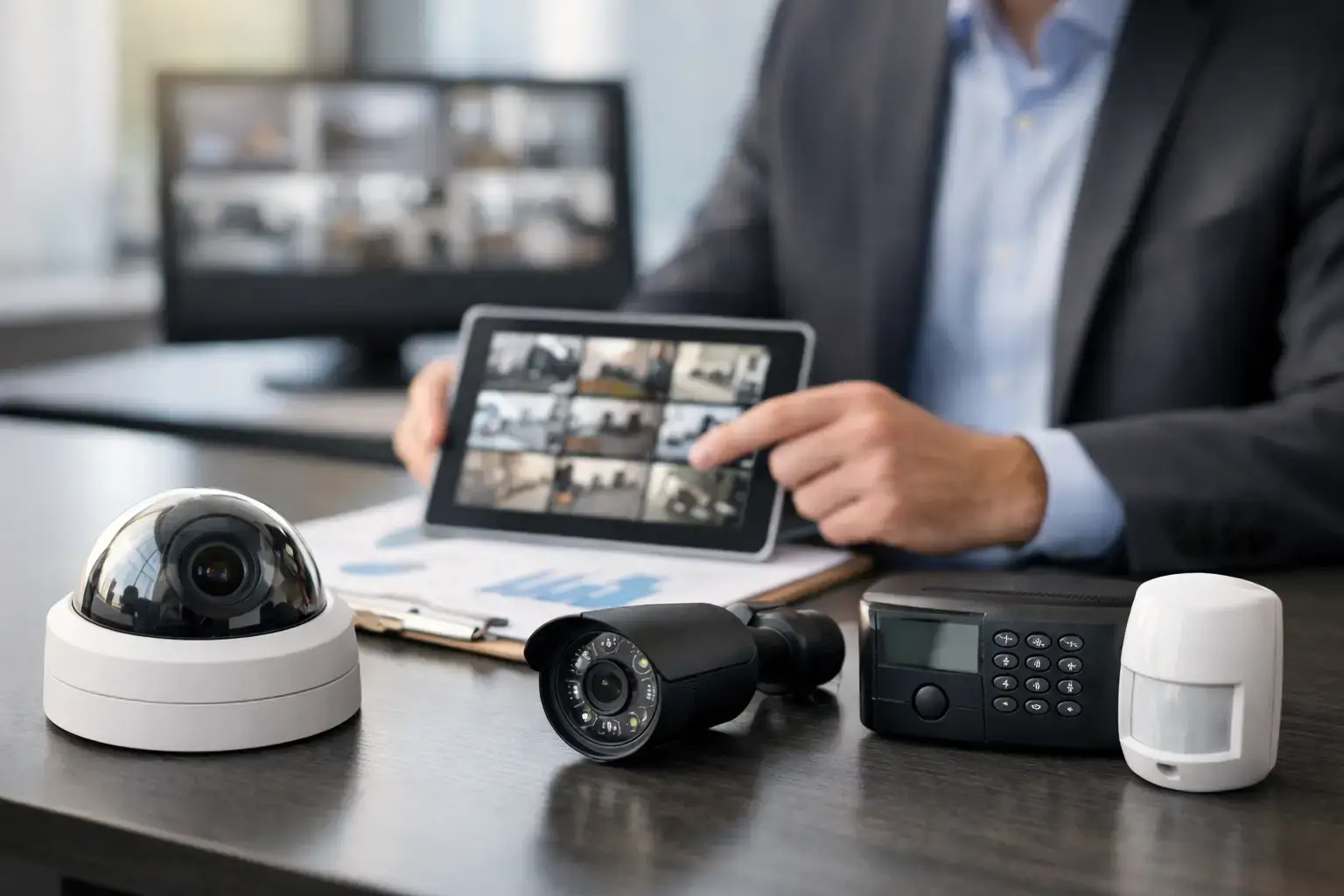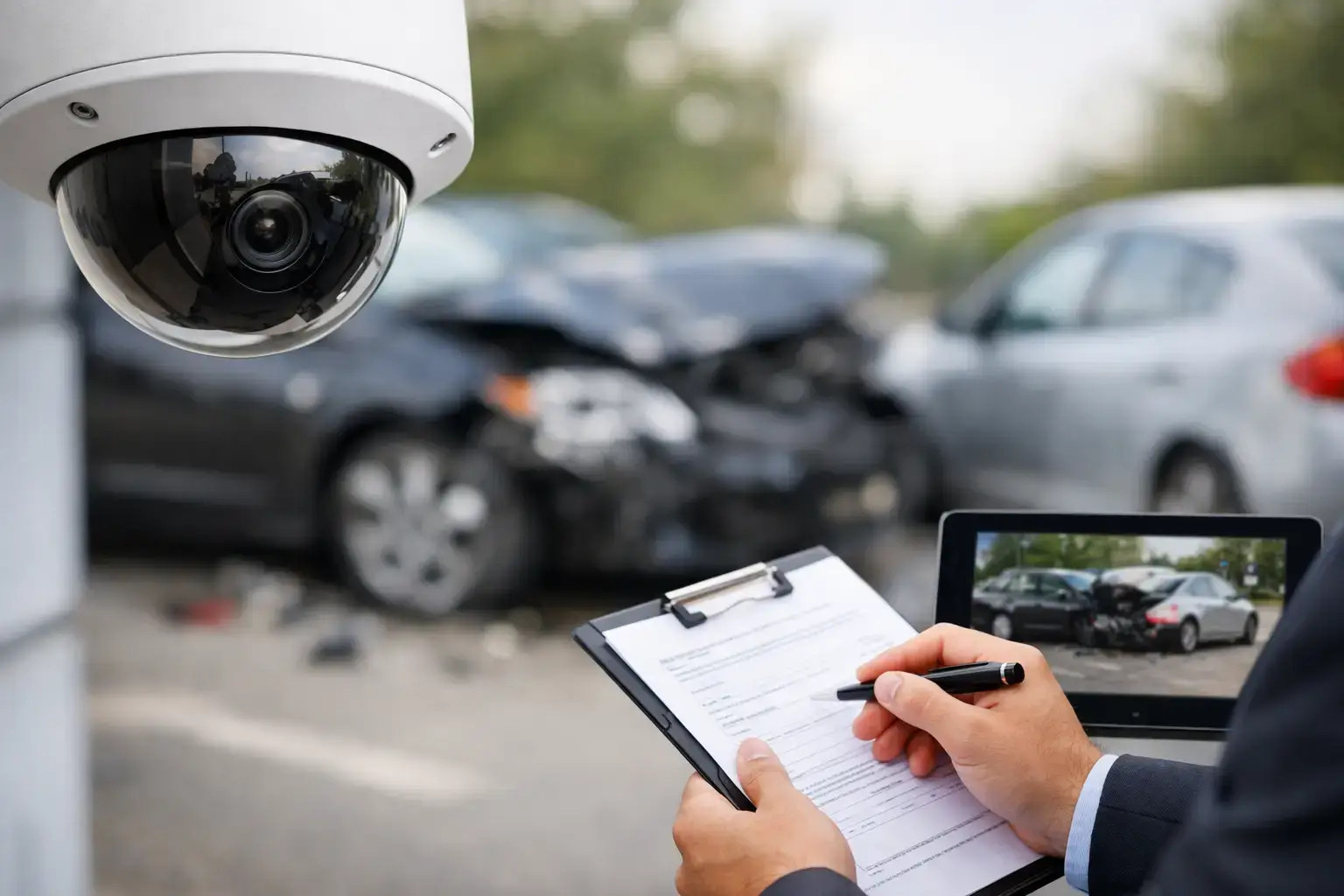
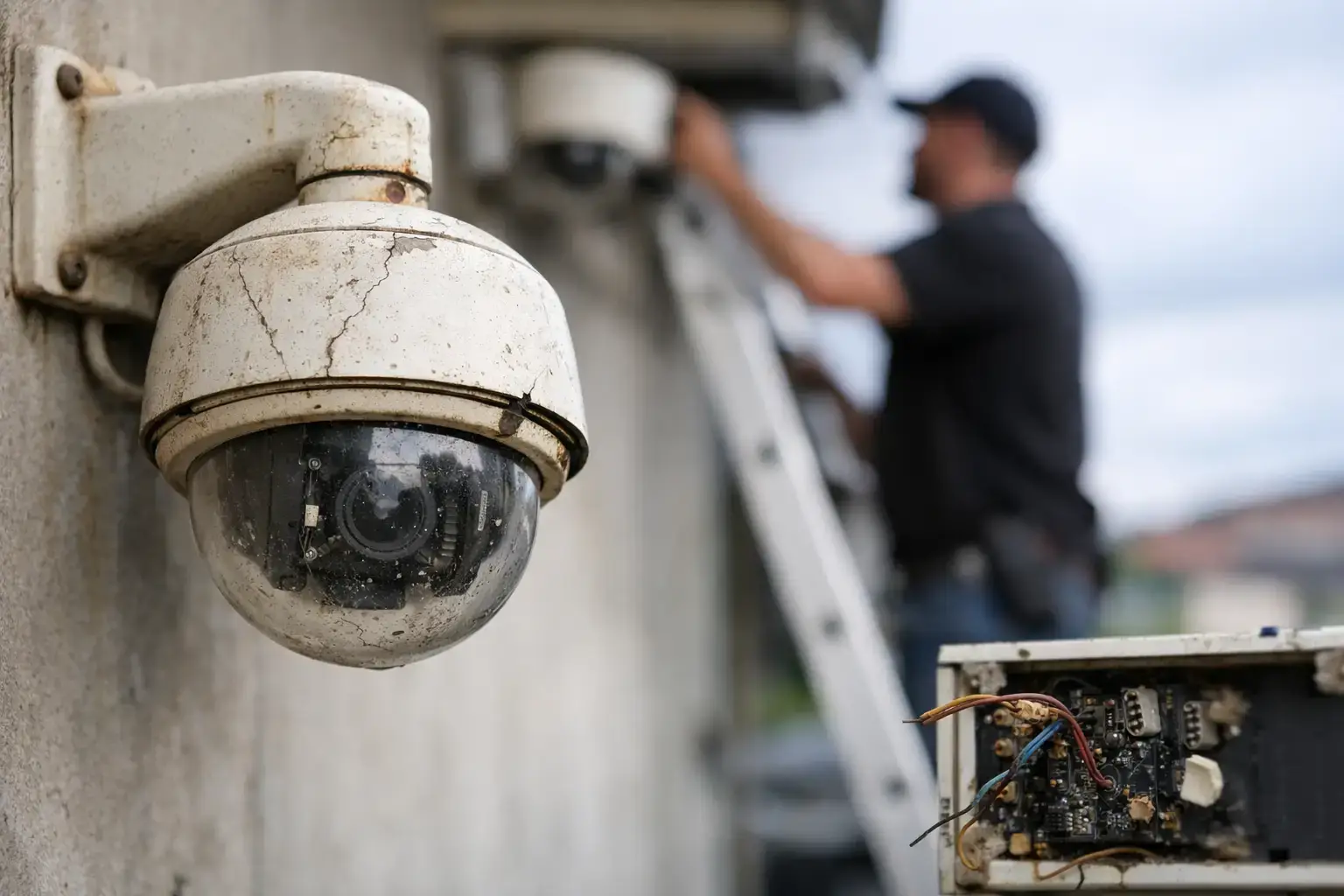
A CCTV system rarely fails all at once. What usually happens is slower and more expensive. One camera drops offline in wet weather. Night images become grainy. Remote viewing stops working after a router change. The recorder starts missing footage. That is why budget CCTV installations often fail after 2-3 years – not because every cheap system is worthless on day one, but because the weaknesses are built in from the start.
For homeowners and businesses alike, the problem is not simply that a lower-cost installation uses cheaper parts. It is that budget systems are often sold as boxes to fit a price, rather than security solutions designed to protect a property properly over time. On paper, two systems can look similar. In practice, one may still be working reliably in year six while the other is already becoming a liability by year three.
Why budget CCTV installations often fail after 2-3 years
The first issue is usually component quality. Lower-cost cameras, power supplies, hard drives and connectors tend to be built to hit a price point, not to withstand years of continuous use. CCTV is not like a television you switch on for a few hours in the evening. Recorders run around the clock. External cameras deal with rain, wind, cold, summer heat, dirt, insects and voltage fluctuation. If the materials and internal electronics are poor, that constant strain shows up quickly.
Hard drives are a common weak point. In many budget installations, the recorder may look acceptable, but the storage inside is not always intended for surveillance duty. Standard-grade drives wear out faster when they are writing footage all day, every day. When that happens, you may still see live images on screen and assume everything is fine, only to discover later that recordings are incomplete or missing.
Power supplies and terminations also matter more than many buyers realise. A camera is only as stable as the power reaching it. Inferior power units, badly crimped connectors or poorly protected cable joints can create intermittent faults that are difficult to trace. The result is the kind of system that works most of the time, until you actually need clear evidence.
Cheap installation often means poor design, not just cheap equipment
Price pressure affects the design stage as much as the hardware. In a proper CCTV survey, the installer should assess lighting conditions, distances, entry points, vulnerable areas, data requirements, and whether the system needs identification-quality images or only general monitoring. Budget installs often skip that thinking altogether.
Instead, cameras are placed where it is easiest to run cable, not where they capture the right field of view. A wide-angle camera may cover a car park but fail to identify faces at the gate. A front door camera may be mounted too high, giving the top of a hood rather than a usable image. At night, the problem gets worse. Poorly positioned infrared cameras can bounce light back from nearby walls, fascias or signage and wash out the picture.
This is one of the biggest reasons cheap systems disappoint after a couple of years. The customer starts by accepting a system that is merely “good enough”. Then the site changes. Trees grow, lighting changes, stock areas move, traffic flow increases, or criminal behaviour adapts. A badly designed system has no resilience. It was barely right on day one.
Exposure to weather is often underestimated
External CCTV in Essex, London and the South East has to cope with more than rainfall. Moisture ingress, temperature swings, direct sunlight and airborne grime all affect long-term reliability. Budget housings and seals are more likely to degrade, especially where cameras are fitted in exposed positions without much thought for environmental protection.
A camera that claims to be weather resistant is not automatically suitable for every location. Coastal exposure, industrial dust, driving rain or heat build-up under eaves all create different demands. If the enclosure quality is poor or the installation method is careless, corrosion and image failure tend to appear much sooner than expected.
Cabling is where many long-term faults begin
Good cabling is rarely the part a buyer sees, which is exactly why it gets cut back on cheaper jobs. Lower-grade cable, rushed routing, weak containment and badly protected external joints can all shorten the life of a system.
Water ingress into cable runs is a regular culprit. So is mechanical strain where cables are left unsupported or exposed. In some properties, installers also fail to account for electrical interference, distance limitations or future expansion. The system may work at handover, but it has very little margin for ageing or change.
Software, firmware and remote access can become the weak link
Modern CCTV is no longer just cameras and a recorder. It relies on firmware, apps, network settings, cyber security controls and compatibility between devices. This is another area where budget installations often age badly.
Some low-cost systems come from manufacturers with limited long-term support. Apps disappear, firmware updates stop, and replacement parts become hard to source. If the system was set up with poor network security or using outdated remote-access methods, it can also become vulnerable or unstable over time.
For businesses, this is more than an inconvenience. If a site manager cannot access footage remotely, if audit trails are patchy, or if exported evidence is unreliable, the CCTV is not doing its job. For homeowners, the experience is simpler but no less frustrating – notifications fail, live view stops loading, or settings vanish after an internet provider change.
A professional installer plans for the network environment and for future support. A budget supplier often installs what works that week and moves on.
Lack of maintenance is part of the reason budget CCTV installations often fail after 2-3 years
Even a well-installed system benefits from inspection and servicing. Lenses need cleaning. Recording performance should be checked. Time and date settings must remain accurate. Storage health, power stability and image quality all need occasional review. Yet many budget installations are sold with no realistic aftercare at all.
That creates a false economy. Small faults go unnoticed until they become larger ones. A camera may have been out of focus for months. A recorder may have reduced retention time because the drive is failing. A spider nest over an infrared lens can ruin night footage without anyone realising. None of these are dramatic failures, but together they make the system less dependable every month.
This matters particularly on commercial sites, where duty of care, loss prevention and insurer expectations can all be affected by CCTV performance. A system that has not been maintained is much harder to rely on after an incident.
The real cost appears when something goes wrong
The appeal of a budget installation is obvious. Lower upfront spend can look sensible, especially for a landlord, small business or homeowner trying to improve security quickly. Sometimes a modest system is entirely appropriate. Not every property needs analytics, monitored response or enterprise-grade infrastructure.
The issue is whether the system has been designed honestly for the risk, the environment and the expected lifespan. If the answer is no, the saving at installation can disappear fast. Replacing failed cameras, tracing cable faults, upgrading unsupported recorders and reworking poor coverage usually costs more than getting it right the first time.
There is also the cost you cannot invoice easily: the missed theft, the unusable vehicle registration, the staff incident with no clear footage, the intruder whose face is just a blur. CCTV only proves its value when the images are available, clear and admissible when needed.
What a longer-lasting system looks like
A dependable CCTV installation does not need to be extravagant, but it does need proper design, suitable equipment and ongoing support. That means choosing cameras for the task rather than for the box count, using surveillance-grade storage, protecting cable infrastructure, configuring remote access properly and allowing for maintenance.
It also means being realistic about trade-offs. If budget is limited, it is often better to install fewer well-positioned cameras than to cover every elevation badly. It can make more sense to phase a system properly than to fill a site with low-grade devices that will need replacing early. In many cases, the most economical route over five years is not the cheapest quotation, but the one that reduces rework, downtime and evidential gaps.
That is where an experienced security partner adds value. A company such as 247 CCTV is not simply fitting cameras to walls. The job is to assess risk, specify equipment that will hold up in the real world, and support the system after installation so it remains dependable.
If you are comparing CCTV quotations, it is worth asking a simple question: will this system still be doing its job properly in three years’ time? If the answer depends on luck, it is probably not the right system for your property.