A false alarm at 2am is more than a nuisance. For a homeowner, it means disturbed sleep and worried neighbours. For a business, it can mean staff disruption, wasted call-out costs, avoidable police attendance issues and less confidence in the system when a real incident happens. If you are looking at how to reduce false alarms, the answer is rarely one single fix. It usually comes down to better design, better setup and better day-to-day use.
Professionally installed alarm systems should be dependable, but even high-quality equipment can generate unwanted activations if it is poorly positioned, badly maintained or used inconsistently. The good news is that false alarms are usually preventable when the system is tailored properly to the site and supported over time.
How to reduce false alarms at the design stage
The biggest improvements often happen before the system is even switched on. A well-designed intruder alarm takes into account how the building is actually used, not just where devices can physically fit.
In a commercial setting, that might mean separating office areas from warehouse zones, setting different arming routines for cleaners or delivery access, and accounting for changes in temperature or airflow near loading doors. In a home, it may mean avoiding detector positions that face staircases, radiators, large glazed areas or spaces where pets move freely.
This is where many lower-cost, off-the-shelf systems fall short. They may offer basic coverage, but they are not always configured around the realities of the property. False alarms become more likely when devices are expected to work in conditions they were not selected for.
A proper site survey matters because different environments need different sensors. A dual-tech detector may be more suitable in some commercial areas than a standard PIR. Door contacts may be a better option than motion detection in specific rooms. External protection needs even more care, as wind, vegetation, wildlife and weather exposure all affect performance. Good alarm design is not about adding more devices. It is about choosing the right ones and placing them correctly.
User behaviour is a major cause of false alarms
Even a correctly installed system can produce repeat false alarms if users are not confident with it. In many properties, the most common trigger is simple operator error – wrong codes, incorrect setting and unsetting, opening protected doors too soon, or entering areas that were assumed to be disarmed.
This tends to be more common in shared buildings where multiple staff members use the alarm, especially if there is staff turnover or out-of-hours access for contractors. Residential systems can run into similar problems when family members are unfamiliar with part-set modes, fobs or app controls.
Clear handover training makes a real difference. Users should know how the system behaves, what the entry and exit times are, which areas are protected in each mode and what to do if there is a mistake. It also helps to keep user permissions sensible. Not everyone needs the same level of access, and restricting certain functions can reduce accidental changes to settings.
Where there are frequent activations tied to human error, the issue is not always the user alone. Sometimes the setup itself is too complicated for the building. In those cases, simplifying the routine can be more effective than repeated retraining.
Maintenance is one of the simplest ways to reduce false alarms
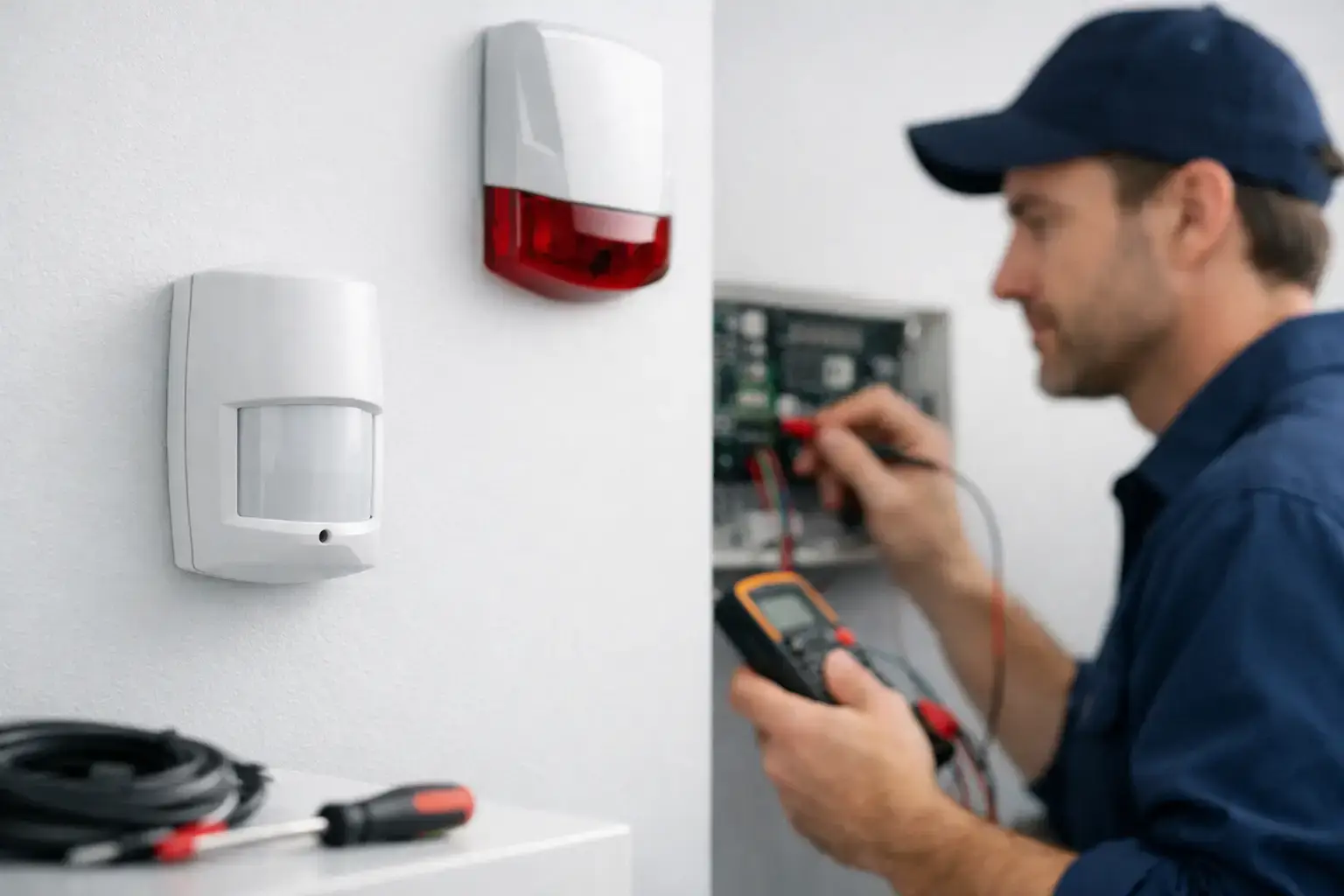
Alarm systems are not fit-and-forget. Sensors can drift out of tolerance, batteries can weaken, housings can become contaminated with dust or insects, and door contacts can move slightly over time as buildings settle or doors are used heavily.
Regular maintenance helps identify these issues before they lead to nuisance activations. A detector that appears functional may still be operating inconsistently. A backup battery might not fail completely, but it may generate faults or unstable performance. Wiring connections can also degrade, particularly in older systems or sites with vibration, moisture or temperature fluctuations.
For commercial premises, routine servicing is also part of keeping systems compliant and dependable. If the alarm is insurer-recognised or connected to monitoring, poor maintenance can create wider operational and insurance concerns. For homeowners, servicing is often the difference between an alarm that feels trustworthy and one that gets ignored.
A maintenance visit should not just be a basic tick-box exercise. It should include testing, cleaning, reviewing event history and checking whether the site use has changed since installation. A stockroom converted into an office, a pet now allowed into a hallway, or a newly added heater near a detector can all affect alarm performance.
Environmental causes are often overlooked
Many false alarms are caused by the conditions around the equipment rather than faults in the equipment itself. Sudden temperature changes, direct sunlight, moving air from vents, loose doors, vibrating roller shutters and even pests can all create problems.
In industrial and warehouse spaces, this is especially common. Large open areas may look straightforward to protect, but they often have fluctuating temperatures, high-level doors, machinery movement and irregular occupancy patterns. In retail and hospitality settings, regular changes to layout, displays or furniture can also interfere with sensor coverage.
At home, conservatories, garages and utility spaces are frequent trouble spots because they are less thermally stable than the main living areas. If an alarm detector is placed in a room that becomes very hot in summer and cold in winter, performance can become less predictable.
To reduce false alarms properly, the environment needs to be considered alongside the device. Sometimes that means repositioning a detector. Sometimes it means changing the sensor type. In other cases, it may be better to protect the area in a different way altogether.
How monitoring and signalling affect alarm reliability
A false alarm is not only about the sounder activating on site. If the system is connected to an alarm receiving centre or app-based notifications, every unwanted signal creates disruption. That is why signalling paths, confirmation methods and monitoring setup should be reviewed carefully.
For higher-risk commercial sites, confirmed alarm strategies can help reduce unnecessary response while still maintaining strong protection. That may involve using combined detection logic, sequential confirmation or integration with CCTV verification, depending on the site and risk profile. These measures need to be planned properly. If they are too strict, genuine incidents may take longer to verify. If they are too loose, nuisance signals continue.
The right balance depends on the property, occupancy and response requirements. A small home and a multi-access logistics facility do not need the same alarm logic. What matters is that the system is configured around the actual risk rather than a generic default.
When upgrades are better than repeated adjustments
There is a point where ongoing tweaks stop being cost-effective. If a system is ageing, has outdated detectors or was never designed well for the building, repeated engineer visits may only treat the symptoms.
Older alarm systems can become more prone to false activations because components wear out, spare parts become harder to source and the original layout no longer suits the site. Businesses that have expanded, altered room usage or introduced new access routines often outgrow their original setup. The same applies to homes that have been extended or renovated.
In those cases, an upgrade can reduce long-term cost and frustration. Modern systems offer better device options, clearer user management, app control, event logging and, where appropriate, smarter integration with CCTV and access control. That does not mean every property needs the latest features. It means the system should still match the building and the people using it.
For clients across Essex, London and the South East, this is often where a specialist security company adds real value. A proper review can separate a minor setup issue from a more fundamental design problem.
Practical steps to reduce false alarms now
If false alarms are already happening, start by looking at the pattern. Check whether activations happen at certain times, in certain zones or after specific users set the system. Recurring triggers usually point to a clear cause, even if it is not obvious at first.
Then look at the basics. Make sure users understand how to operate the system, replace any failing batteries, arrange servicing, and review whether detectors are exposed to heat sources, draughts or movement they should not be seeing. If the system has not been professionally checked for some time, that should move to the top of the list.
It is also worth being honest about whether the current setup still suits the property. A system installed years ago may not reflect how the building is used now. Reducing false alarms is often less about reacting to each activation and more about stepping back and correcting the underlying cause.
A dependable alarm should give reassurance, not repeated doubt. When the design is right, the equipment is maintained and users know exactly how the system works, false alarms become far less common – and the whole system becomes more valuable when you need it most.