
Securing commercial premises in Essex and London remains a pressing challenge for business owners and property managers. With 78,707 non-domestic break-ins recorded in 2024/25, choosing an effective alarm system has become essential rather than optional. Modern alarm technology offers verified police response, intelligent false alarm reduction, and integration capabilities that transform security outcomes. This article explores the key advantages of advanced alarm systems, practical selection criteria, and how different system types compare to help you make an informed investment in protecting your business premises.
Key takeaways
| Point | Details |
|---|---|
| Deterrence effectiveness | Alarm systems reduce break-ins by 60-70% through visible deterrence and rapid detection capabilities |
| Police response guarantee | Certified alarms meeting EN 50131 Grade 2-3 and PD 6662:2017 standards ensure verified police URN response |
| False alarm reduction | Modern dual-path signalling and ARC verification cut false activations, maintaining police response eligibility |
| System flexibility | Wired, wireless, and hybrid options offer different installation and scalability benefits for varied premises |
| Insurance benefits | Professionally installed alarm systems reduce premiums by demonstrating effective risk mitigation measures |
Key criteria for choosing an effective alarm system
Selecting the right alarm system requires understanding several critical evaluation factors that separate effective security from inadequate protection. The foundation starts with legal compliance and certification standards that determine whether your alarm will actually trigger a police response when needed.
Your alarm system must meet EN 50131 Grade 2-3 and PD 6662:2017 standards to obtain a Unique Reference Number from police forces. Without this certification, your alarm activations will not receive police attendance, rendering the system far less effective as a security measure. This distinction becomes crucial when you consider that commercial premises face significantly higher burglary risks than residential properties.
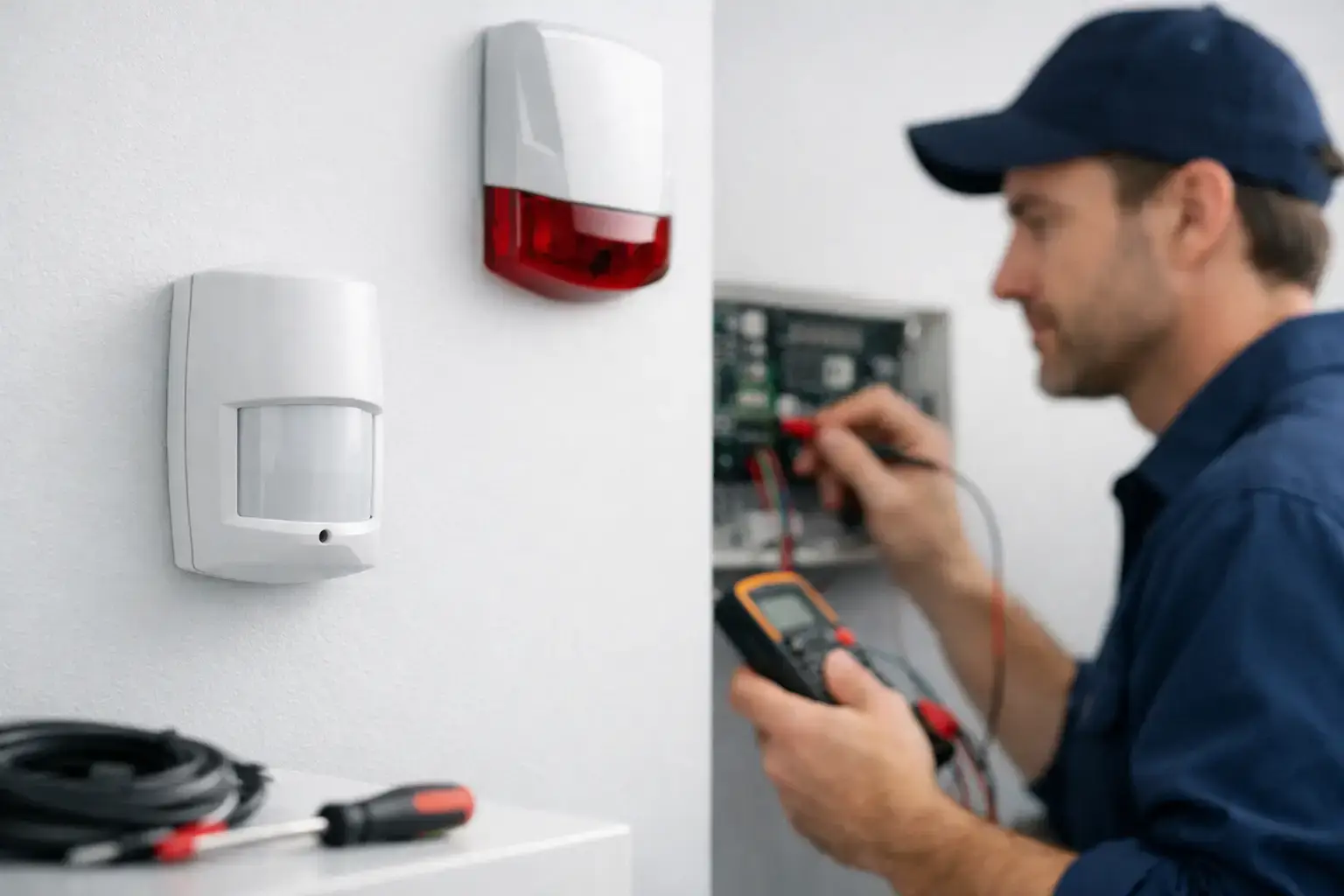
Sensor technology forms the detection backbone of any alarm system. Modern installations typically combine multiple sensor types for comprehensive coverage:
- Passive infrared sensors detect heat signatures from intruders moving through protected spaces
- Door and window contacts trigger when entry points open unexpectedly
- Glass break detectors recognise the acoustic signature of smashed windows
- Vibration sensors identify forced entry attempts on walls or ceilings
Dual-path signalling represents a critical reliability feature that distinguishes professional-grade systems from basic installations. This technology uses both internet protocol and mobile network connections to communicate with monitoring centres, ensuring alarm signals reach security teams even if criminals cut phone lines or disable your internet connection. For business premises where rapid response prevents substantial losses, this redundancy proves invaluable.
Integration with an Alarm Receiving Centre adds another essential verification layer. ARCs employ trained operators who can view CCTV footage, listen to audio verification, or follow sequential activation patterns before requesting police attendance. This verification process dramatically reduces false alarms whilst ensuring genuine incidents receive immediate professional response. Our burglar alarm setup guide explores these integration options in detail for UK properties.
Pro Tip: Request documentation proving EN 50131 Grade 2-3 certification and PD 6662:2017 compliance before finalising any alarm system purchase. Installers should provide certificates from accredited bodies like NSI or SSAIB to guarantee your system meets police response requirements.
Five major advantages of modern alarm systems for businesses
Investing in a certified alarm system delivers measurable security improvements that directly impact your bottom line and operational confidence. The evidence supporting alarm effectiveness comes from both crime statistics and insurance industry data.

Businesses with properly installed alarm systems experience 60-70% fewer break-ins compared to unprotected premises. This dramatic reduction stems from multiple deterrent factors working together. Visible alarm boxes signal to potential intruders that the premises has active protection, external sounders attract immediate attention during activation, and rapid notification ensures security personnel or police respond whilst criminals remain on site. Even when break-ins occur, alarm activation typically reduces time criminals spend inside, limiting theft and damage.
The five core advantages that make alarm systems essential for commercial premises include:
- Theft and loss prevention reduces direct financial impact from stolen inventory, equipment, and cash whilst limiting damage from forced entry
- Insurance premium reductions reflect the proven risk mitigation that certified alarm systems provide, often reducing annual costs by 10-20%
- Rapid incident detection enables immediate response before criminals can cause extensive damage or remove valuable assets
- Employee safety enhancement protects staff working early mornings or late evenings by providing panic button access and monitored protection
- Business continuity protection minimises operational disruption by preventing theft of essential equipment and reducing recovery time after incidents
The deterrent effect extends beyond physical security to psychological reassurance. Business owners report significantly reduced anxiety about premises security, particularly during closed hours, holidays, and weekends. This peace of mind translates into better focus on business operations rather than constant security concerns.
For properties housing high-value inventory or sensitive data, alarm systems provide the verification layer that insurance policies increasingly require. Many commercial policies now mandate certified alarm installation as a condition of coverage, making compliance both a security and contractual necessity. Our guide on the benefits of burglar alarms examines these advantages across different property types.
Pro Tip: Document all alarm activations and responses in a security log. This record proves system effectiveness to insurers during policy renewals and provides evidence for premium reduction negotiations.
How advanced alarm technology reduces false alarms and ensures police response
False alarms represent the most significant operational challenge for commercial alarm systems, threatening both police response eligibility and business credibility. Understanding how modern technology addresses this issue helps you select systems that maintain effectiveness whilst avoiding nuisance activations.
The scale of the false alarm problem remains staggering. 94-98% of burglar alarms and 99% of commercial fire alarms in London are false, consuming substantial police resources and creating response fatigue. When your premises generates multiple false alarms, police forces may suspend your URN, eliminating guaranteed response to future activations. This suspension effectively negates your security investment.
Modern alarm systems combat false activations through several technological advances:
- Intelligent sensor processing filters environmental factors like temperature changes, small animals, or air movement that trigger older systems
- Sequential activation requirements demand multiple sensors detect intrusion before signalling alarm conditions
- Time-delay settings allow authorised personnel to disarm systems before full activation occurs
- Environmental compensation adjusts sensor sensitivity based on ambient conditions throughout the day
Alarm Receiving Centres provide the critical verification layer that transforms alarm technology into reliable security. When your system activates, ARC operators immediately review the trigger circumstances. They can view integrated CCTV footage showing the protected area, listen to audio verification detecting actual intruder sounds, or analyse the activation sequence to distinguish genuine break-ins from false triggers. Only after confirming suspicious activity do operators request police attendance.
This verification process delivers two essential benefits. First, it maintains your police URN by ensuring only genuine incidents generate callouts. Second, it provides faster response for confirmed break-ins because operators can brief responding officers with specific threat information before arrival.
Dual-path signalling enhances reliability by maintaining communication even when criminals attempt to disable alarm systems. Traditional single-path systems using only phone lines or internet connections become vulnerable when intruders cut external cables. Modern dual-path technology automatically switches to mobile network signalling if the primary connection fails, ensuring your alarm signal reaches monitoring centres regardless of sabotage attempts. Our article on alarm communication methods explains these technologies in detail for UK properties.
Integration with smart alarm features further reduces false activations by up to 40%. These systems learn normal premises activity patterns, distinguishing authorised movement from suspicious behaviour. Geofencing technology can automatically adjust arming status based on authorised personnel location, whilst smartphone notifications allow immediate verification when unusual activity triggers sensors. Discover more about these capabilities in our smart alarms guide for Essex and London properties.
Comparing alarm system options: wired, wireless, and hybrid models
Selecting between wired, wireless, and hybrid alarm architectures significantly impacts installation complexity, ongoing reliability, and future scalability for your business premises. Each approach offers distinct advantages suited to different operational requirements and building characteristics.
Wired alarm systems provide the gold standard for reliability and performance. These installations use physical cables connecting all sensors, keypads, and sirens to a central control panel. The hardwired sensor architecture eliminates battery maintenance concerns and provides tamper-evident connections that criminals cannot easily disable. For permanent business premises with accessible cable routes, wired systems deliver unmatched long-term dependability.
However, wired installations require significant upfront work. Installers must run cables through walls, ceilings, and conduits, often necessitating building alterations that increase project costs and timelines. Listed buildings or premises with solid concrete construction may face particular installation challenges that make wired systems impractical.
Wireless alarm systems offer installation flexibility that suits many commercial applications. These systems use radio frequency communication between sensors and control panels, eliminating cable installation requirements. You can add sensors to new areas without building modifications, making wireless technology ideal for expanding businesses or temporary premises arrangements.
The trade-offs include:
- Battery maintenance requirements for each wireless sensor, typically annually
- Potential radio interference from other wireless devices or building materials
- Slightly higher equipment costs compared to equivalent wired components
- Signal range limitations in large premises requiring repeater installations
Hybrid alarm systems combine wired and wireless technologies to optimise both reliability and flexibility. These installations typically use wired connections for core components like control panels, main keypads, and external sirens whilst employing wireless sensors for areas where cable installation proves difficult or expensive. This approach delivers the reliability advantages of wired infrastructure whilst maintaining the flexibility to adapt coverage as your business evolves.
| System Type | Installation Complexity | Reliability | Scalability | Maintenance |
|---|---|---|---|---|
| Wired | High (cable runs required) | Excellent (no batteries) | Moderate (requires cabling) | Minimal (no battery changes) |
| Wireless | Low (no cabling needed) | Good (depends on batteries) | Excellent (easy sensor addition) | Regular (annual battery replacement) |
| Hybrid | Moderate (selective cabling) | Excellent (wired backbone) | Excellent (wireless expansion) | Low (fewer batteries than full wireless) |
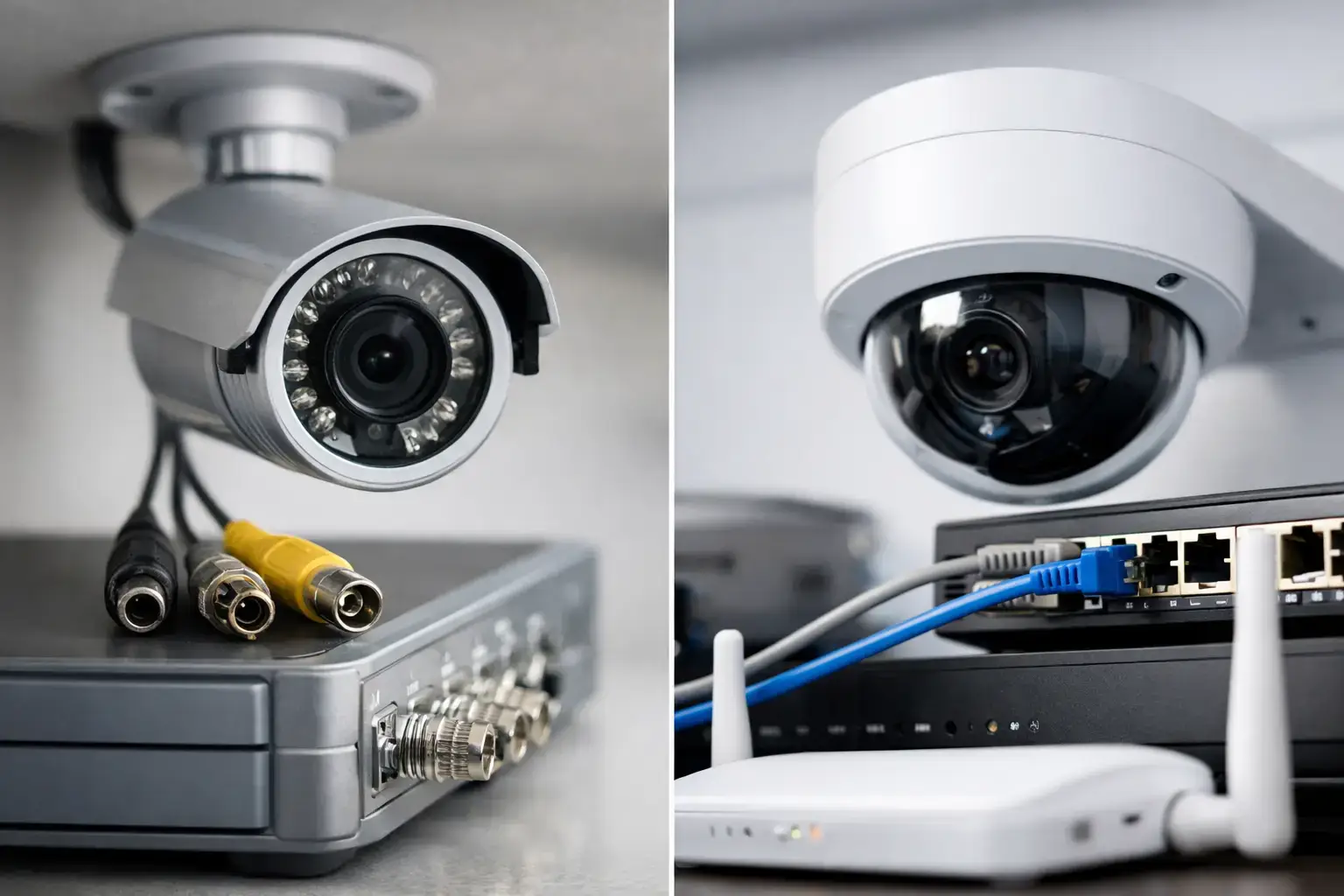
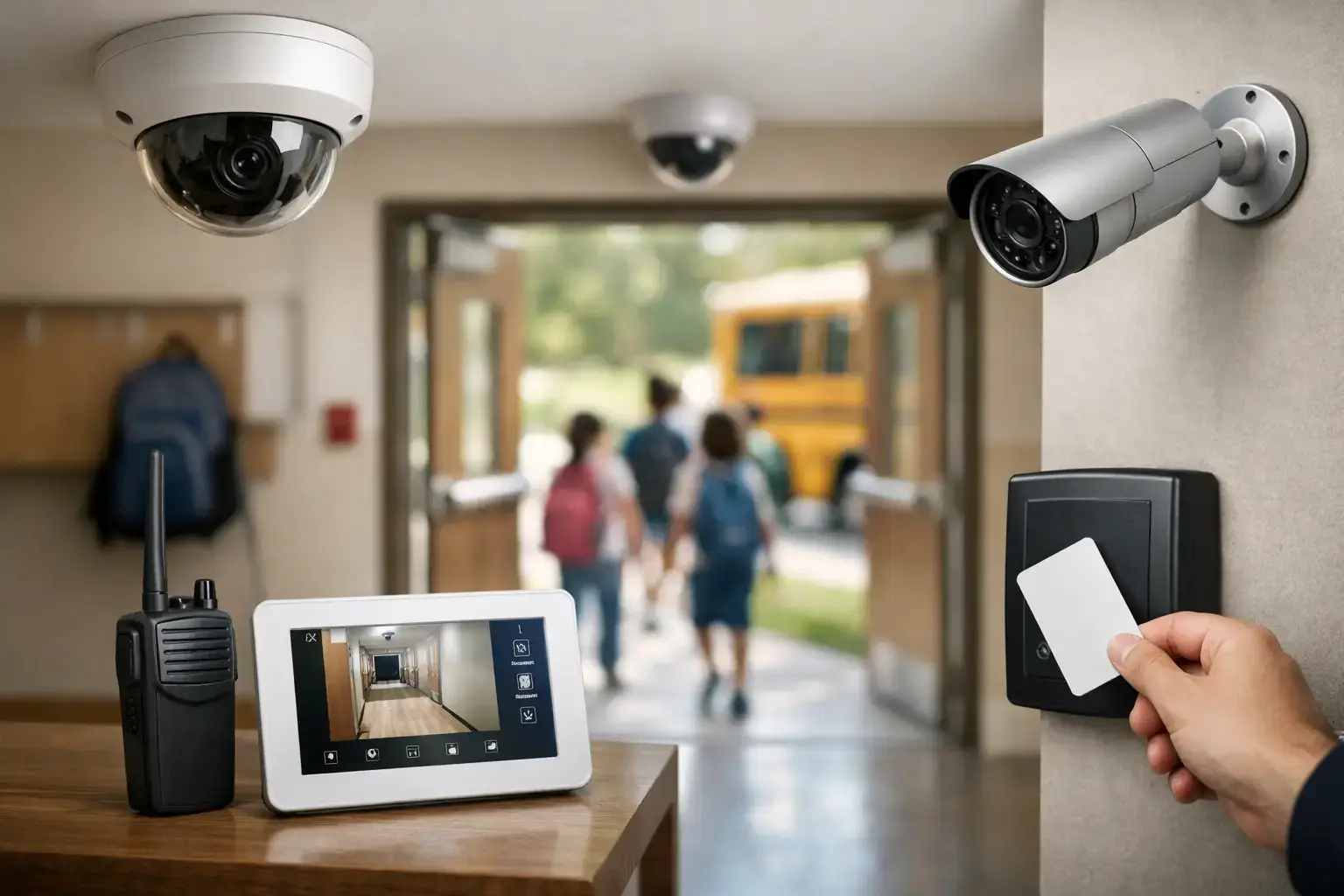
Integration capabilities deserve careful consideration when comparing system types. Modern alarm systems should connect seamlessly with CCTV cameras, access control systems, and fire detection equipment to create comprehensive security management. Hybrid systems often provide the most flexible integration options, supporting both traditional wired devices and newer wireless smart security components. Our overview of burglar alarm types examines these integration possibilities for UK installations.
Enhance your property security with 247 CCTV
Protecting your Essex or London business premises requires more than selecting the right alarm technology. Professional installation ensures your system meets certification standards, integrates effectively with existing security measures, and maintains the police response eligibility that makes alarm investment worthwhile.

247 CCTV specialises in certified burglar alarm installation across Essex and London, delivering EN 50131 Grade 2-3 and PD 6662:2017 compliant systems that guarantee police URN response. Our installations integrate alarm systems with CCTV surveillance and access control to create comprehensive security solutions tailored to your specific premises requirements. We provide ongoing alarm maintenance services that preserve system effectiveness and ensure continued compliance with police response standards. Our team guides you through system selection, designs optimal sensor placement for your premises layout, and delivers professional installation that minimises disruption to your business operations. Explore our complete CCTV and alarm installation guide to understand how integrated security systems protect commercial properties effectively.
Frequently asked questions
What standards must an alarm system meet to guarantee police response?
Your alarm system must achieve EN 50131 Grade 2-3 certification and comply with PD 6662:2017 standards to obtain a police Unique Reference Number. Installation must be completed by NSI or SSAIB accredited companies who provide the necessary certification documentation. Without these credentials, police forces will not attend alarm activations regardless of whether genuine break-ins occur.
How do modern alarm systems reduce the frequency of false alarms?
Advanced alarm systems use dual-path signalling and Alarm Receiving Centre verification to confirm genuine incidents before requesting police response. Intelligent sensor processing filters environmental triggers whilst sequential activation requirements demand multiple sensors detect intrusion before signalling alarm conditions. Integration with smart technology and CCTV verification reduces false alarms by up to 40% compared to traditional systems.
What are the main differences between wired and wireless alarm systems?
Wired systems offer superior reliability through physical cable connections that eliminate battery maintenance and provide tamper-evident security, but require complex installation with cable runs through building structures. Wireless systems deliver installation flexibility and easy scalability through radio frequency communication, though they need regular battery replacement and may experience interference issues. Hybrid systems combine wired backbone reliability with wireless expansion flexibility for optimal commercial applications.
How much do professional alarm systems typically reduce insurance premiums?
Certified alarm installations commonly reduce commercial insurance premiums by 10-20% annually, with exact savings depending on your insurer, premises risk profile, and alarm system grade. Many policies now mandate certified alarm systems as coverage conditions, making professional installation both a security investment and insurance requirement. Request premium quotes with and without alarm certification to quantify potential savings for your specific circumstances.
Can alarm systems integrate with existing CCTV and access control equipment?
Modern alarm systems support comprehensive integration with CCTV surveillance, access control, and fire detection equipment through common communication protocols and unified management platforms. This integration enables CCTV footage verification during alarm activations, automatic access control responses to security incidents, and centralised monitoring of all security systems. Hybrid alarm architectures typically provide the most flexible integration options for combining legacy wired equipment with newer wireless smart security devices.