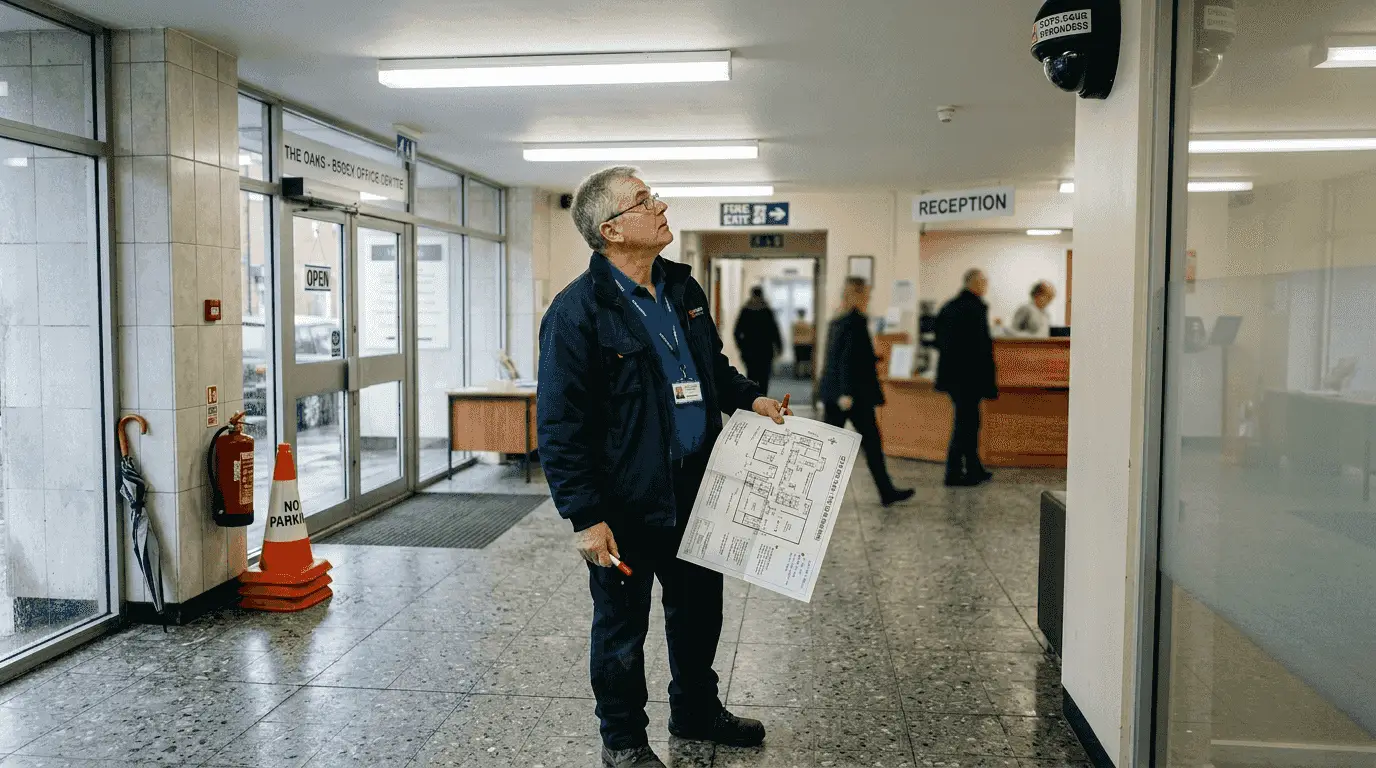
Poor camera placement wastes security budgets and leaves properties exposed to risks. Many Essex and London facilities struggle with blind spots, blurry footage, and regulatory compliance issues because they skip proper CCTV coverage planning. This guide walks you through a strategic approach to camera selection, placement, and pixel density matching, helping you maximise coverage whilst meeting legal requirements. Whether you manage commercial premises or residential properties, effective planning transforms CCTV from a tick box exercise into a genuine security asset.
Key takeaways
| Point | Details |
|---|---|
| Strategic placement eliminates blind spots | Proper camera positioning covers entry points, corridors, and vulnerable zones whilst avoiding wasted footage |
| Resolution and pixel density drive identification | HD or 4K cameras with correct pixel density per metre enable reliable person and event identification |
| Lighting and optics significantly affect performance | Camera effectiveness depends on ambient light, lens quality, and environmental conditions, not just resolution |
| Legal compliance requires privacy consideration | CCTV systems must follow local regulations for signage, data protection, and public space monitoring |
Understanding CCTV coverage basics
Effective CCTV systems depend on strategic camera placement rather than camera quantity or cost. Strategic camera placement significantly impacts coverage area, image quality, and blind spot elimination, directly influencing your security effectiveness. Poor placement creates wasted footage, leaving critical zones unmonitored whilst recording irrelevant areas.
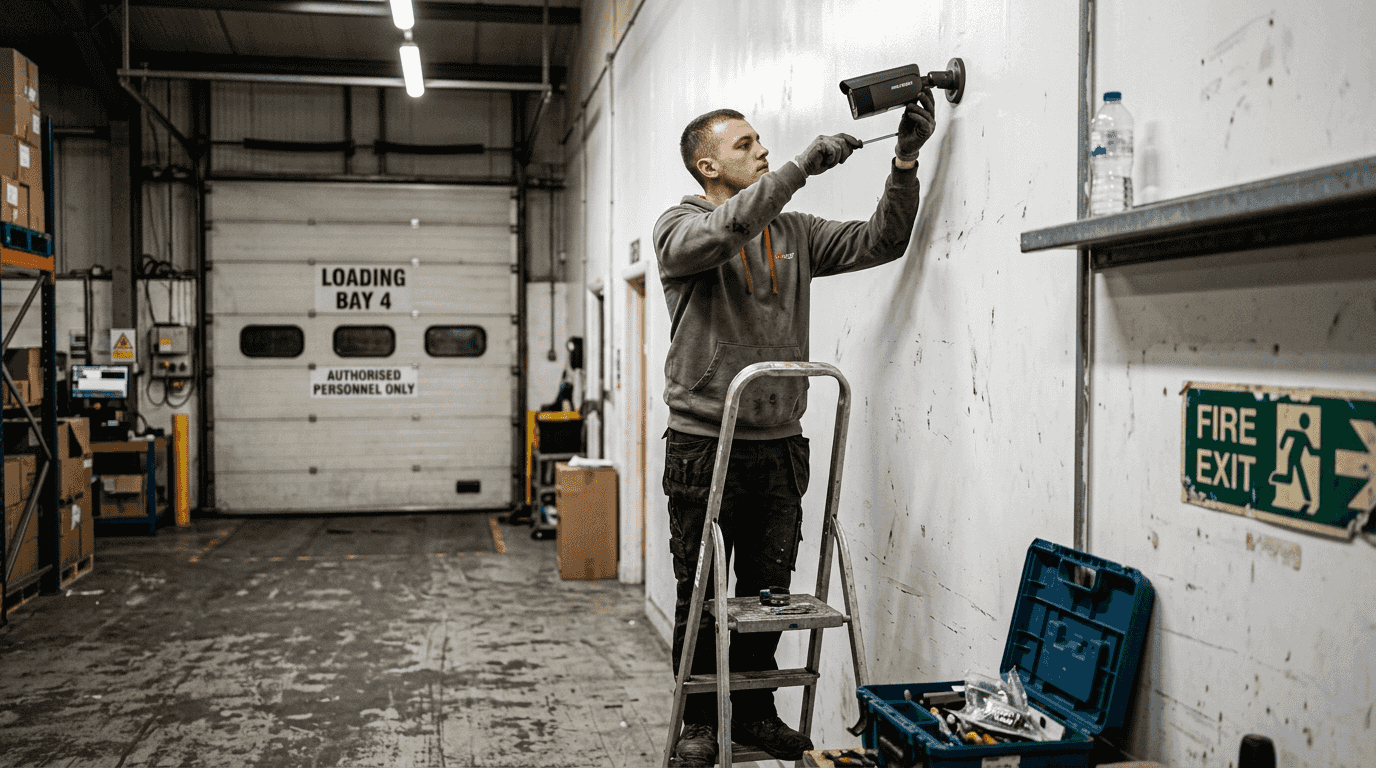
A mid-range HD camera positioned correctly will outperform an expensive 4K unit aimed at the wrong angle. Business owners often assume more cameras equal better security, yet gaps persist if coverage zones and viewing angles receive insufficient attention.
Key coverage fundamentals include:
- Identifying high-priority zones like entry points, cash handling areas, and perimeters
- Calculating camera field of view based on lens focal length and sensor size
- Accounting for mounting height, which affects both coverage area and facial recognition capability
- Considering environmental factors such as lighting changes throughout the day
Understanding these basics before purchasing equipment prevents costly mistakes. A proven CCTV placement workflow can reduce security incidents by addressing vulnerabilities systematically rather than reactively.
Pro Tip: Walk your property at different times of day, noting where natural light creates glare or shadows. These observations inform camera placement decisions that maintain image quality across varying conditions.
Planning for optimal camera resolution and pixel density
Camera resolution alone doesn’t guarantee usable footage. You need sufficient pixel density at the target distance to meet your operational requirements, whether that’s simple detection or detailed identification.
The pixel density model provides specific guidelines for camera resolution based on operational requirements spanning detection through identification. This framework quantifies how many pixels per metre you need for tasks ranging from noticing a person’s presence to reading a vehicle registration plate.

High definition footage at 1080p or 4K improves your ability to identify individuals and events, but only when pixel density matches the viewing distance. A 4K camera monitoring a car park from 50 metres might deliver lower effective pixel density than a well-positioned 1080p camera at 15 metres.
| Operational Level | Pixels per Metre Required | Typical Use Case |
|---|---|---|
| Detection | 25 px/m | Noticing presence of a person or vehicle |
| Observation | 62.5 px/m | Distinguishing general characteristics like clothing colour |
| Recognition | 125 px/m | Determining if a person is someone you know |
| Identification | 250 px/m | Establishing identity beyond reasonable doubt |
Lighting conditions, lens quality, and video compression all modify pixel density effectiveness. A camera meeting the 250 px/m identification threshold performs poorly in low light without infrared capability or adequate ambient illumination. Similarly, aggressive compression to save storage space degrades image quality, effectively reducing usable pixel density.
Comparing HD versus 4K CCTV for UK security applications reveals that higher resolution cameras justify their cost in scenarios requiring identification at distance, whilst 1080p suffices for many observation and recognition tasks.
Pro Tip: Calculate pixel density for your specific scenarios using camera resolution, lens focal length, and target distance. Free online calculators simplify this process, helping you match camera specifications to security goals without overspending.
Step-by-step guide to effective CCTV coverage planning
Creating an effective CCTV system becomes straightforward when you follow a systematic approach to camera placement, coverage analysis, and blind spot elimination. This workflow helps Essex and London businesses avoid common pitfalls whilst ensuring regulatory compliance.
Assess your property layout and security priorities. Walk the entire site, noting entry points, high-value areas, vulnerable zones, and existing lighting. Identify where incidents have occurred previously or where risks concentrate.
Define operational requirements for each zone. Determine whether you need detection, observation, recognition, or identification capability. Entry points typically require identification level coverage, whilst general corridors might need only observation.
Select camera types and resolutions based on pixel density guidance. Match camera specifications to your operational requirements and viewing distances. Consider whether fixed or PTZ cameras suit each location.
Plan camera placements to eliminate blind spots. Position cameras to cover critical zones with overlapping fields of view where possible. Account for mounting height, angle, and environmental factors like lighting and weather exposure.
Key placement considerations include:
- Mounting cameras 2.5 to 3 metres high for facial recognition whilst avoiding vandalism
- Angling cameras slightly downward to capture faces rather than tops of heads
- Positioning cameras to avoid direct sunlight or headlight glare
- Ensuring cameras have clear lines of sight without obstructions
Follow installation best practices and review footage quality. Professional installation ensures cameras are weatherproofed, securely mounted, and properly configured. Test recording quality under various lighting conditions before finalising placements.
Ensure compliance with local privacy and security regulations. Install appropriate signage, configure retention periods, and document legitimate security purposes. Review your system against ICO guidance for CCTV operators.
Comprehensive resources on CCTV installation for securing property provide additional technical details for each planning stage. Similarly, guidance on CCTV monitoring setup helps you configure recording schedules, motion detection, and alert systems to maximise security value.
Common pitfalls and troubleshooting for CCTV coverage planning
Even well-intentioned CCTV installations fail when planning overlooks fundamental mistakes. Poor camera placement frequently results in blurry footage, wasted recording capacity, or critical blind spots that undermine security investments.
Common planning errors include:
- Mounting cameras at incorrect heights, causing distorted facial angles or vandalism vulnerability
- Ignoring blind spots created by building features, vegetation, or parked vehicles
- Failing to account for lighting changes between day and night conditions
- Selecting camera specifications based on price rather than operational requirements
- Overlooking privacy regulations that restrict monitoring of neighbouring properties or public spaces
Blurry footage or signal interference often stems from incorrect camera positioning, inadequate lighting, or outdated equipment rather than technical faults. A camera aimed at a brightly lit background struggles with exposure, rendering foreground subjects too dark for identification. Similarly, cameras without infrared capability produce unusable footage after sunset.
Regular footage review helps identify coverage gaps and image quality issues before they compromise security during actual incidents.
Troubleshooting suboptimal coverage requires systematic analysis. Review recorded footage from different times and weather conditions, noting areas where image quality degrades or coverage proves inadequate. Adjust camera angles, add supplementary lighting, or reposition equipment to address specific problems.
Legal compliance issues arise when planning neglects privacy laws, signage requirements, or data protection obligations. The ICO requires visible signage, documented purposes, and appropriate retention periods. Businesses monitoring public spaces or shared areas face additional restrictions.
Guidance on optimising CCTV for security compliance addresses regulatory requirements whilst maintaining effective monitoring. Regular system audits ensure ongoing compliance as regulations evolve and property usage changes.
How 247 CCTV can help you plan and install the perfect system
Planning CCTV coverage requires technical knowledge, regulatory awareness, and practical installation experience. 247 CCTV brings all three to Essex and London businesses seeking reliable security solutions.
Our professional CCTV installation services start with thorough site assessments, identifying your specific security priorities and compliance requirements. We calculate optimal camera placements using pixel density analysis, ensuring your system delivers usable footage rather than decorative cameras.

Flexible CCTV leasing options help businesses manage budgets whilst accessing current technology. Leasing includes maintenance, upgrades, and ongoing support, protecting your investment as security needs evolve.
Our comprehensive resources, including detailed guides on securing property through proper CCTV installation, support informed decision making. Whether you need burglar alarms, door entry systems, or integrated access control, we design solutions matching your operational requirements and budget constraints.
Frequently asked questions
What is CCTV coverage planning and why is it important?
CCTV coverage planning involves strategically positioning cameras and selecting appropriate specifications to maximise monitored area whilst ensuring image quality meets security goals. Effective planning eliminates blind spots, optimises equipment investments, and supports legal compliance with privacy regulations. Poor planning results in wasted budgets, security gaps, and footage unusable for evidence or incident investigation. Resources on securing property through CCTV installation detail systematic approaches to coverage analysis and camera positioning.
How do I determine the right camera resolution for my property?
Choose resolution based on required identification level and monitoring distance using pixel density guidelines. Detection needs only 25 pixels per metre, whilst identification requires 250 pixels per metre at the target distance. Calculate whether 1080p, 4K, or other resolutions deliver sufficient pixel density for your specific scenarios, considering lighting conditions and lens quality. Comparing HD versus 4K CCTV options helps match camera specifications to operational requirements without overspending on unnecessary resolution.
What are common mistakes to avoid when planning CCTV coverage?
Avoid blind spots by conducting thorough site assessments that account for building features, vegetation, and vehicle parking patterns. Don’t overlook lighting conditions, which vary dramatically between day and night or across seasons. Privacy regulations require careful consideration of camera angles to avoid monitoring neighbouring properties or public spaces unnecessarily. Review and adjust camera positioning regularly as your property usage or security priorities evolve. Guidance on optimising CCTV security compliance addresses regulatory requirements alongside effective monitoring.
Can I plan my CCTV coverage without professional help?
Basic planning is feasible using available resources and pixel density guidelines, particularly for small, straightforward properties. However, professional installers ensure regulatory compliance, optimal camera positioning, and proper system configuration that DIY approaches often miss. Consult security experts for complex properties, compliance-sensitive sites, or installations requiring integration with existing security systems. Professional guidance on CCTV installation prevents costly mistakes and ensures your investment delivers intended security value.
Recommended
- CCTV Regulations in Essex: Essential Guide – 247 CCTV Security Ltd
- Quick Guide CCTV Setup for Essex and London Businesses – 247 CCTV Security Ltd
- CCTV Troubleshooting Guide for Essex Facilities Managers – 247 CCTV Security Ltd
- Why Everyone in Essex Is Talking About 4K CCTV Systems (And You Should Too) – 247 CCTV Security Ltd