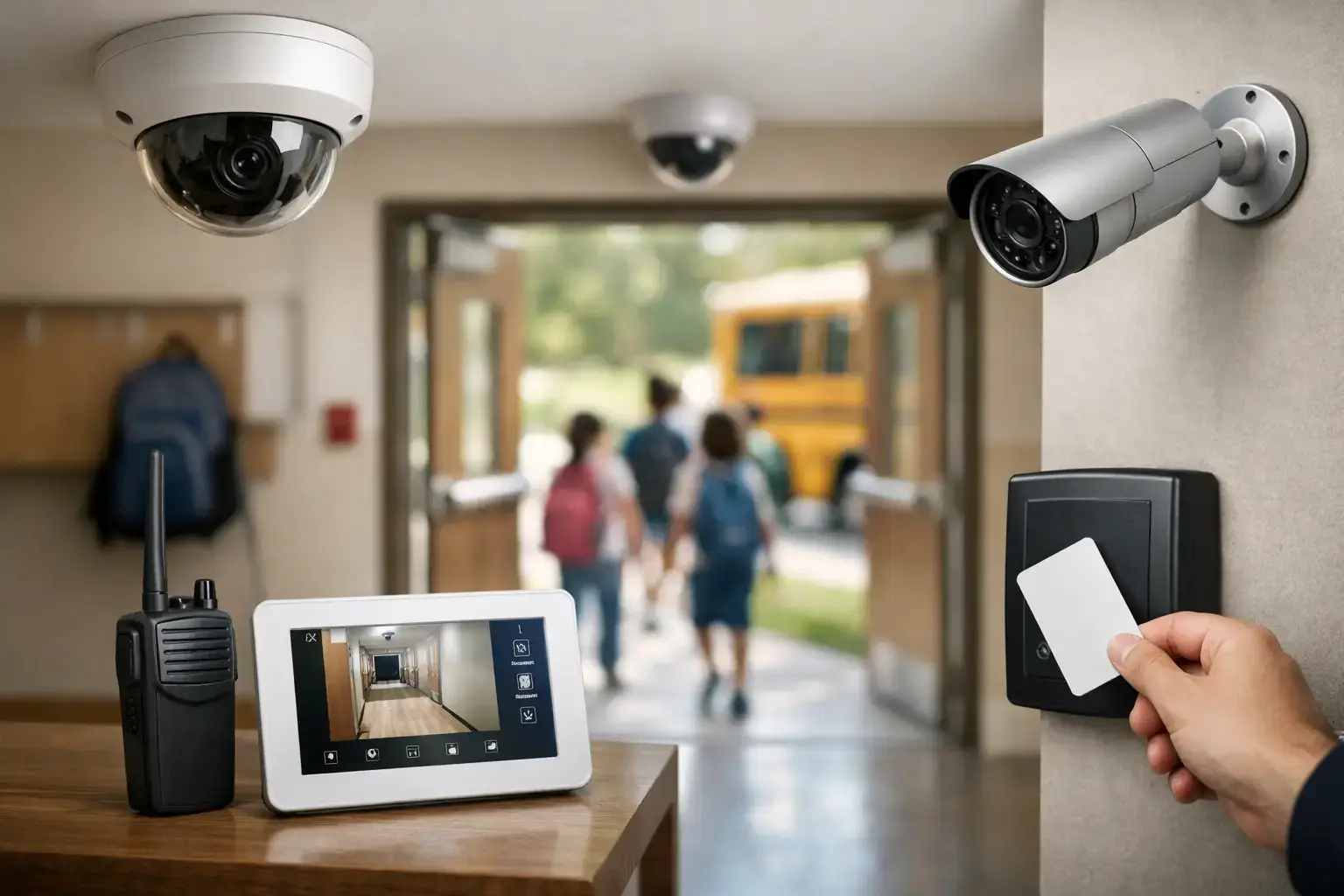

Property managers across Essex and London know that every commercial building comes with its own set of security challenges. Overlooked entry points, poorly lit perimeters, and complex layouts all make it easier for intruders to target valuable assets. Careful planning and a thorough assessment of site weaknesses form the backbone of an effective burglar alarm setup. By prioritising a tailored approach, you equip your property with reliable protection and greater peace of mind.
Quick Summary
| Key Point | Explanation |
|---|---|
| 1. Assess Property Vulnerabilities First | Conduct a thorough evaluation of your property’s risk points to identify where to place security measures effectively. |
| 2. Choose the Right Alarm System | Select a burglar alarm system that suits your specific requirements, considering features like monitoring options and installation type. |
| 3. Strategically Install Components | Install the main control panel and sensors in optimal locations to ensure effective communication and protection coverage across your property. |
| 4. Configure Sensors and Zones Methodically | Accurately assign sensors to designated zones and set appropriate sensitivity levels to minimise false alarms while ensuring comprehensive monitoring. |
| 5. Test System Functionality Regularly | Conduct detailed tests of your security system to verify each component’s performance and reliability, ensuring optimal security at all times. |
Step 1: Assess security needs and plan layout
Security begins with understanding your specific property vulnerabilities. Before installing a burglar alarm system, you need a comprehensive evaluation of potential risk points and entry zones. Professional site survey methods help systematically identify potential weak spots in your residential or commercial premises.
Start by walking around your entire property methodically. Document potential breach points like ground floor windows, rear entrances, and isolated areas with minimal visibility. Consider factors such as lighting conditions, landscape features, and proximity to neighbouring properties. Pay special attention to less obvious entry routes criminals might exploit: utility access points, side passages, or areas concealed from street view. Using the Hikvision AX Pro, RISCO LightSYS+, or Texecom Premier Elite systems allows strategic sensor placement based on your specific architectural layout.

Prioritise zones requiring immediate protection by ranking entry points from highest to lowest risk. Ground floor windows and rear entrances typically represent primary vulnerability zones. Consider additional factors like neighbourhood crime statistics, previous security incidents, and property characteristics when determining sensor placement and alarm configuration.
Helpful hint: Create a hand drawn property blueprint marking potential breach points before consulting your security installation professional to streamline the assessment process.
Step 2: Select suitable burglar alarm system
Choosing the right burglar alarm system requires careful consideration of your specific security requirements and property characteristics. Home security systems in the UK offer diverse options tailored to different residential and commercial needs, ranging from wireless configurations to professionally monitored solutions.
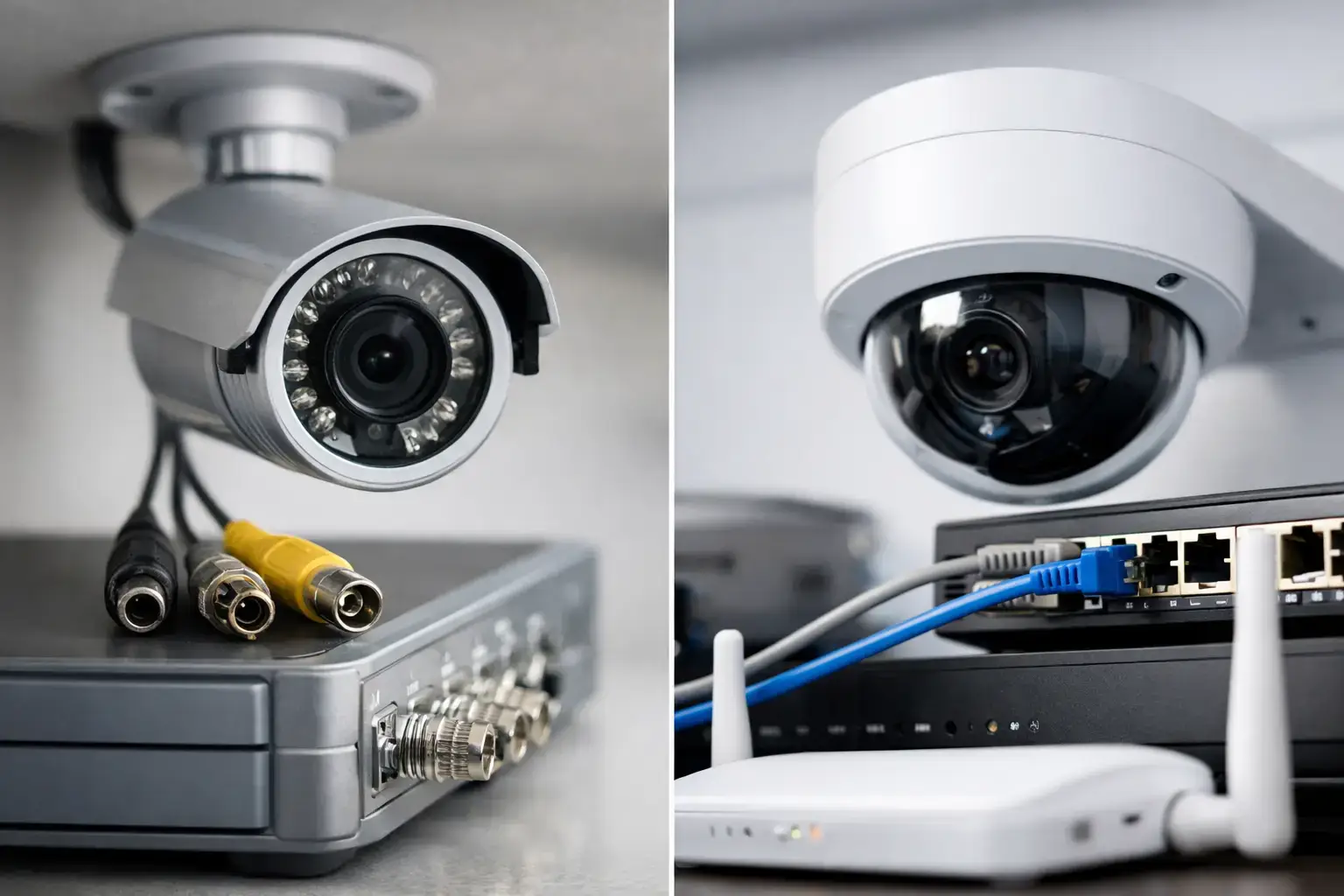
Begin by evaluating key system features such as connectivity type, monitoring options, and equipment compatibility. Wired systems like Texecom Premier Elite provide robust protection with direct electrical connections, while wireless alternatives such as RISCO LightSYS+ offer flexible installation with minimal structural disruption. Consider factors like smartphone integration, remote access capabilities, and potential expansion options for comprehensive security coverage.
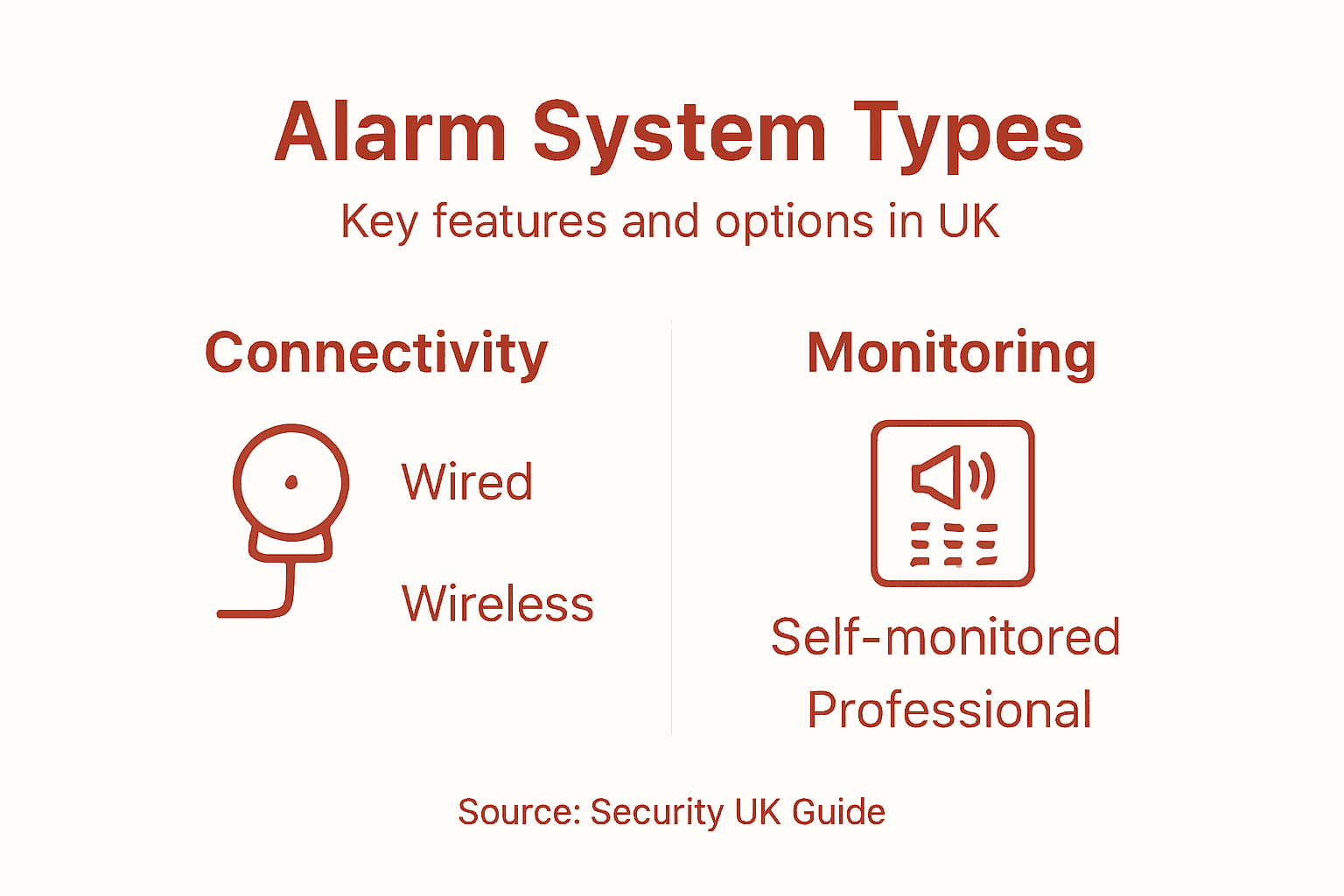
Assess your budget alongside critical performance specifications. Professional monitoring services add an extra layer of protection but increase ongoing costs. Some systems offer no-contract options with self-monitoring through mobile applications, providing cost-effective alternatives for budget conscious property owners. Compare response times, false alarm prevention technologies, and additional features like environmental monitoring for smoke or carbon monoxide detection.
Here’s a quick comparison of popular burglar alarm system types to help guide your selection:
| System Type | Key Benefits | Potential Drawbacks |
|---|---|---|
| Wired (Texecom Elite) | Reliable connections, low interference | Professional installation required |
| Wireless (RISCO LightSYS+) | Easy to install, flexible placement | Signal may be affected by distance |
| Hybrid (Hikvision AX Pro) | Combines wired and wireless, scalable | Slightly higher initial cost |
| Monitored | 24/7 response, added security | Ongoing subscription fees |
Helpful hint: Request detailed demonstrations from security providers to understand how different alarm systems perform in real world scenarios before making a final selection.
Step 3: Install main control panel and components
Installing the burglar alarm system requires precision and careful planning. Home security system installation demands attention to detail and strategic placement of key components to ensure comprehensive property protection.
Select a central location for your main control panel that offers easy access but remains discreet and protected from potential intruders. Typically, this means installing the panel near your main entrance or in a utility room with stable electrical connections. Ensure the location provides adequate space for wiring and allows clear signal transmission between the panel and various sensors. When mounting the panel, use a sturdy wall mount and ensure it is positioned at a comfortable height for convenient programming and management.
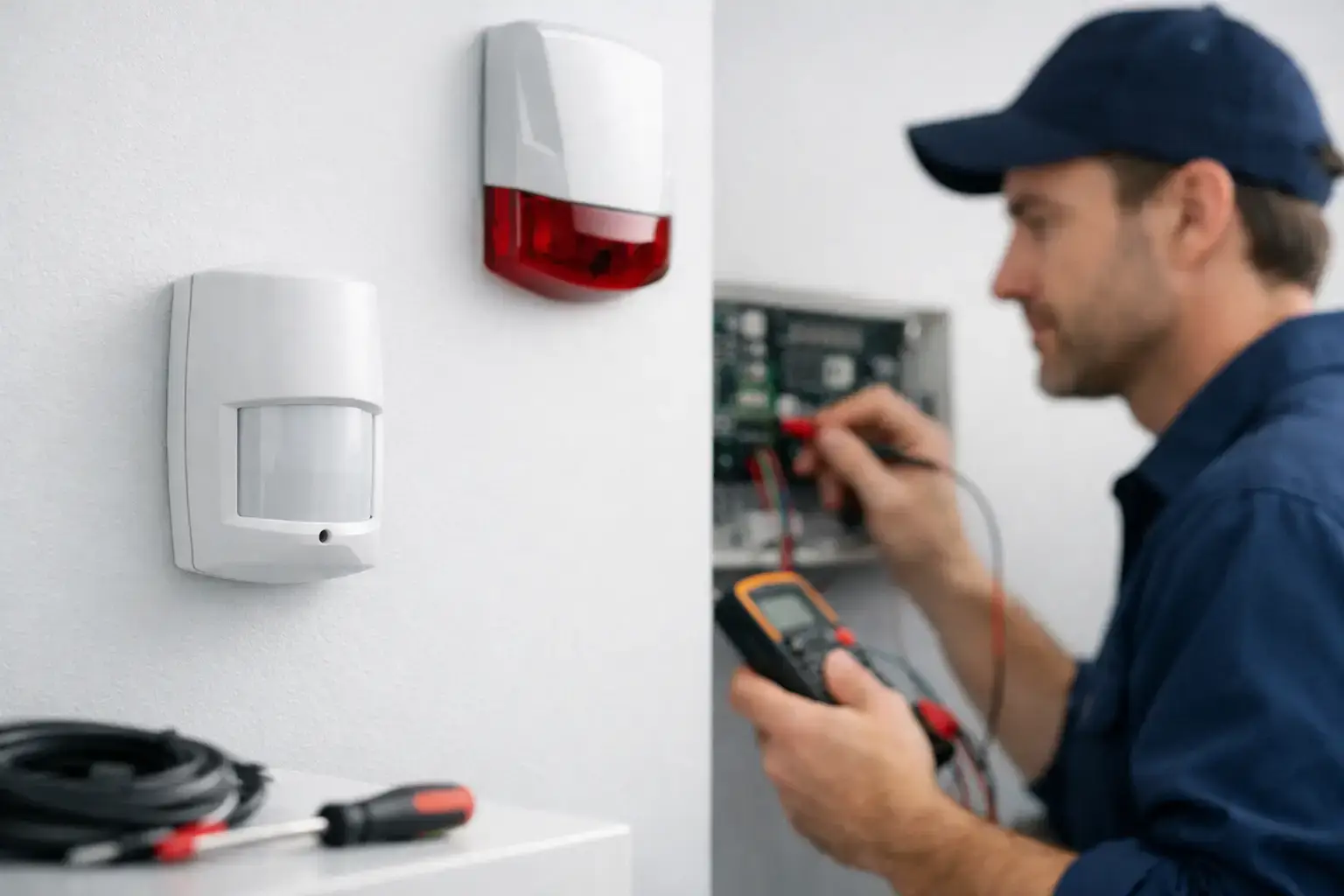
Connect the control panel to your primary power source and install the backup battery system. Wire sensors systematically across different zones including doors, windows, and motion detection areas. Configure your panel settings carefully, programming entry and exit delays, setting up user codes, and testing each sensor connection to verify proper functionality. Modern systems like Hikvision AX Pro and Texecom Premier Elite offer intuitive programming interfaces that simplify this complex process.
Helpful hint: Always photograph your wiring configuration before closing panels to create a personal reference guide for future maintenance or troubleshooting.
Step 4: Connect sensors and configure zones
Configuring your burglar alarm system requires strategic sensor placement and precise zone mapping. Microcontroller based security systems demonstrate the critical importance of segmenting your property into distinct detection areas for comprehensive protection.
Begin by mapping out your property and identifying unique zones such as ground floor entrances, rear access points, interior hallways, and perimeter areas. For each zone, select appropriate sensor types matching the specific environmental characteristics. Magnetic door contacts work best for entry points, while passive infrared motion sensors provide comprehensive interior coverage. When connecting sensors to the control panel, ensure each is assigned a unique zone number and programmed with appropriate sensitivity levels to minimise false alarm potential.
Test each sensor systematically to verify reliable communication with the main control panel. Use the programming interface on systems like RISCO LightSYS+ or Texecom Premier Elite to adjust detection parameters, set entry and exit delays, and configure zone behaviours. Pay close attention to sensor positioning angle and range to create overlapping coverage that eliminates potential blind spots while preventing unnecessary triggering from environmental factors like pet movement or air currents.
Helpful hint: Walk test your entire sensor configuration during daylight hours to identify and resolve any potential coverage gaps or interference issues.
This table summarises optimal sensor types for different zones within a property:
| Zone | Recommended Sensor Type | Rationale |
|---|---|---|
| Front/rear entrance | Magnetic door contact | Immediate entry detection |
| Ground floor windows | Glass break sensor | Detects forced window access |
| Interior hallway | Motion (PIR) sensor | Tracks unauthorised movement |
| Perimeter garden area | Outdoor motion sensor | Monitors external approach paths |
Step 5: Test and verify alarm functionality
Ensuring your burglar alarm system operates flawlessly requires methodical and comprehensive testing. Microcontroller security system testing provides crucial insights into verifying each component’s reliability and response accuracy.
Begin with a systematic zone test by intentionally triggering each sensor to confirm its precise communication with the control panel. Use the programming interface on systems like RISCO LightSYS+ or Texecom Premier Elite to simulate various intrusion scenarios. Check that each sensor generates the correct alarm signal, activates appropriate notification channels like smartphone alerts or monitoring centre connections, and responds within expected response times.
Conduct a comprehensive walkthrough test during different times of day and lighting conditions. Verify that motion sensors detect movement accurately without generating false alarms, door and window contacts register opening and closing events correctly, and the alarm system maintains consistent performance across all configured zones. Test backup battery functionality by temporarily disconnecting main power to ensure uninterrupted protection during potential electrical disruptions.
Helpful hint: Document your testing process and keep a detailed log of sensor responses to help with future maintenance and system optimisation.
Secure Your Property with Expert Burglar Alarm Installation Today
Understanding the challenges of setting up an effective burglar alarm system can feel overwhelming. From assessing your property’s unique security vulnerabilities to selecting and configuring the ideal sensors and control panels, each step requires precision and expertise. You want reliable protection that minimises risk and adapts to your property’s layout, just like explained in the “Burglar Alarm Setup Guide for Secure Properties UK”.

Take the next step towards safeguarding your home or business by choosing professional installation services you can trust. At 247 CCTV, we specialise in installing burglar alarms tailored to your security needs, ensuring seamless integration with CCTV and access control solutions. Our experts will help you design a system that covers all critical zones, configures sensors accurately, and guarantees responsive, dependable protection. Visit our main website to learn more about our services and start your journey to enhanced security now.
Frequently Asked Questions
How do I assess my property’s security needs before installing a burglar alarm?
Start by methodically walking around your property to identify potential vulnerability points like ground floor windows and rear entrances. Document these spots and consider factors such as landscape features and lighting conditions to prepare for a professional assessment.
What features should I look for when selecting a burglar alarm system?
Evaluate key features like connectivity type, monitoring options, and sensor compatibility based on your specific security requirements. Consider aspects like smartphone integration and the potential for system expansion to ensure comprehensive coverage.
How do I install the main control panel for my burglar alarm?
Choose a central and discreet location near your main entrance for your control panel, ensuring easy access. Connect it to the primary power source and programme the necessary settings for entry delays and user codes to ensure effective functionality.
What is the best way to connect sensors and configure zones in my alarm system?
Map out your property to create distinct zones and select sensor types based on their environment. Assign unique zone numbers to each sensor and programme their sensitivity to minimise false alarms while ensuring full coverage.
How can I effectively test and verify my burglar alarm system’s functionality?
Conduct a systematic test by triggering each sensor to ensure they communicate properly with the control panel. Document each sensor’s response to verify reliable performance throughout various scenarios and lighting conditions.
What should I do if I experience false alarms from my burglar alarm system?
Adjust the sensitivity settings of your motion sensors and ensure they are positioned correctly to avoid environmental triggers. Regularly test the system and consult your installation documentation for troubleshooting tips to improve performance.
Recommended
- What Is a Burglar Alarm? Complete Guide for the UK – 247 CCTV Security Ltd
- Complete Guide to Types of Burglar Alarms UK – 247 CCTV Security Ltd
- 7 Top Benefits of Burglar Alarms for Homes and Businesses – 247 CCTV Security Ltd
- Burglary Prevention Methods for Businesses and Homes UK – 247 CCTV Security Ltd