
Protecting your site in Essex or London often means facing persistent crime risks and growing demands for security compliance. CCTV installation delivers proven results, with monitored areas in the UK experiencing a 13% reduction in crime according to research from the College of Police. For facilities and property managers, this article offers insights into the role of CCTV in creating robust, legally compliant security strategies that deter offenders and support business operations.
Key Takeaways
| Point | Details |
|---|---|
| Integration is Essential | CCTV and burglar alarms should work together within a broader security strategy for maximum effectiveness. |
| Targeted Approach Increases Effectiveness | Strategic placement of security systems at vulnerable points enhances crime prevention outcomes. |
| Regular Maintenance is Crucial | Routine servicing and staff training ensure systems operate effectively and can deliver usable evidence. |
| Compliance with Legal Standards is Mandatory | Understanding data protection laws is essential to avoid fines and ensure CCTV usage is lawful. |
Role of CCTV in Modern Crime Prevention
Burglar alarm systems have transformed how businesses protect their assets and personnel. Modern systems like Hikvision AX Pro, RISCO LightSYS+, and Texecom Premier Elite represent the latest advancement in threat detection technology, offering real-time monitoring and rapid response capabilities.
Research demonstrates that CCTV crime reduction strategies deliver measurable results in monitored areas across the UK. Studies show an overall crime reduction of approximately 13% in locations with active surveillance, with particularly significant decreases in drug-related offences and vehicle or property crimes.
However, effectiveness depends on how systems integrate with your broader security strategy. CCTV alone cannot prevent crime—it works best alongside other interventions such as improved lighting, community engagement, and dedicated security personnel.
How Modern Burglar Alarms Work
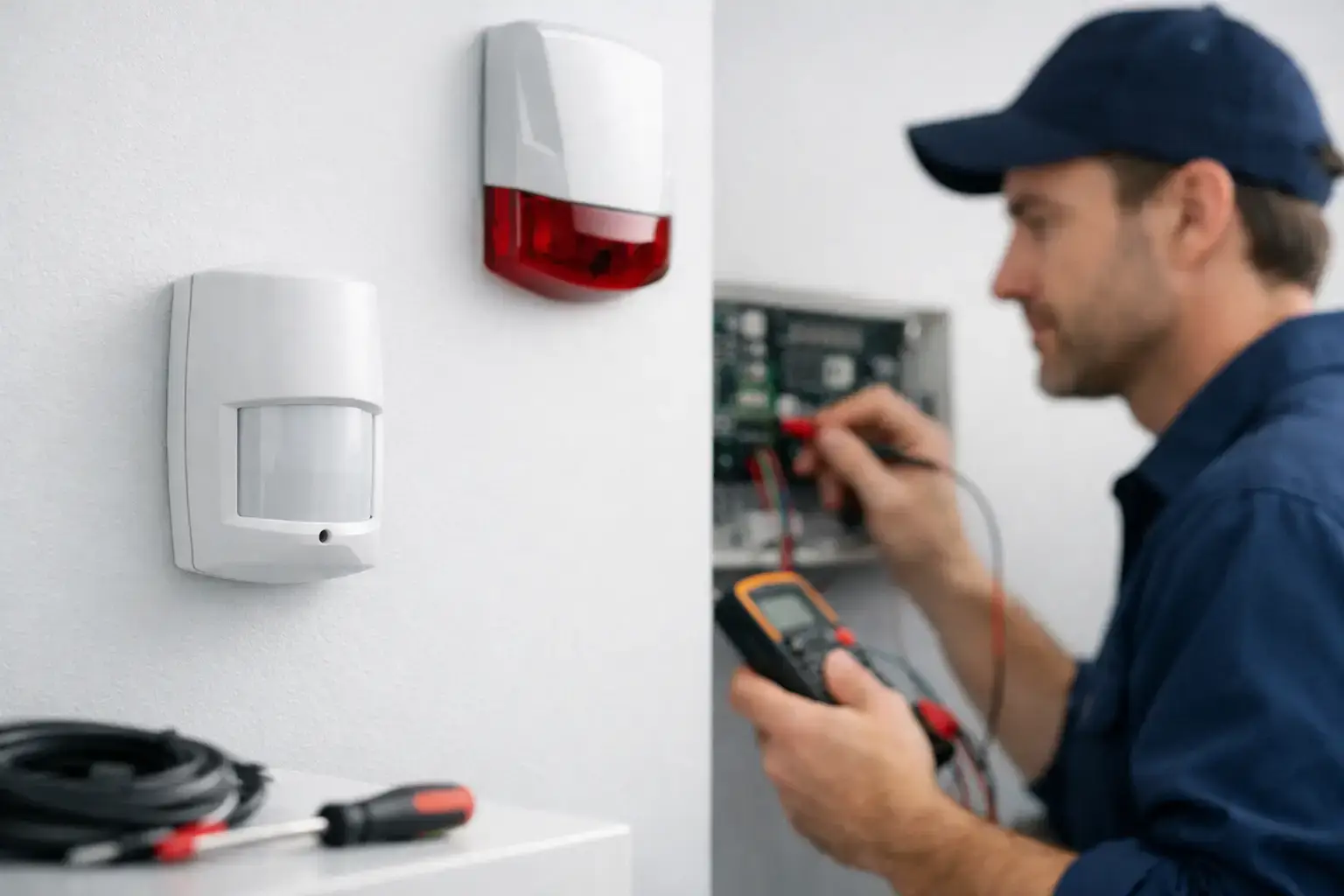
Today’s alarm systems function as intelligent security guardians. They detect unauthorised entry through door and window sensors, monitor internal spaces with motion detectors, and transmit alerts instantly to your monitoring centre and mobile device.
Key features of modern systems include:
- Real-time alerts sent directly to your phone or control panel
- 24/7 professional monitoring by certified response teams
- Integration with access control systems for comprehensive coverage
- Customisable zones allowing you to arm specific areas independently
- Silent alarms that alert authorities without warning intruders
The Hikvision AX Pro delivers advanced analytics that distinguish between genuine threats and false triggers. RISCO LightSYS+ offers wireless flexibility perfect for listed buildings or heritage properties where drilling is restricted. Texecom Premier Elite provides user-friendly controls whilst maintaining enterprise-grade security standards.
Here is a concise comparison of leading commercial burglar alarm systems and their unique business advantages:
| Burglar Alarm System | Distinctive Strength | Ideal Use Case |
|---|---|---|
| Hikvision AX Pro | Advanced threat analytics | High-risk, analytics-driven environments |
| RISCO LightSYS+ | Wireless flexibility | Listed buildings requiring no drilling |
| Texecom Premier Elite | Intuitive, enterprise controls | Large sites needing ease of management |
Burglar alarm systems that integrate multiple detection methods reduce false alarms by up to 40% whilst improving genuine threat detection accuracy.
Why Context Matters for Your Business
One-size-fits-all security rarely works in practice. CCTV effectiveness depends on context, particularly when deployed in targeted environments such as car parks, loading areas, and entry points where crimes commonly occur.
For facilities managers across Essex and London, this means assessing:
- Your site’s specific crime risks and patterns
- High-value areas requiring heightened protection
- Staff and visitor movement patterns
- Existing gaps in your current security arrangements
- Integration opportunities with door entry and access systems
A targeted approach prevents wasted investment whilst maximising deterrent impact. Rather than installing systems everywhere, strategic placement at vulnerable points delivers superior results.
Moving Beyond Surveillance Alone
Effective crime prevention requires combining multiple security layers. Burglar alarms work best when paired with CCTV monitoring, access controls, and visible deterrents.
This layered approach means criminals face multiple obstacles:
- Entry detection through door and window sensors
- Internal motion detection activating alarms
- Visual deterrent of visible alarm boxes and signage
- Immediate response from your monitoring centre
- Video evidence for law enforcement and insurance purposes
Businesses combining these elements report substantially higher crime deterrence rates than those relying solely on surveillance.
Pro tip: Request a site survey from your security provider to identify vulnerability points—this targeted assessment costs nothing but prevents expensive losses later.
Types of CCTV Systems for Commercial Sites
Choosing the right burglar alarm and monitoring system depends entirely on your site’s unique requirements. Commercial properties need solutions that detect threats reliably whilst integrating seamlessly with existing security infrastructure.
Fixed and PTZ Camera Systems
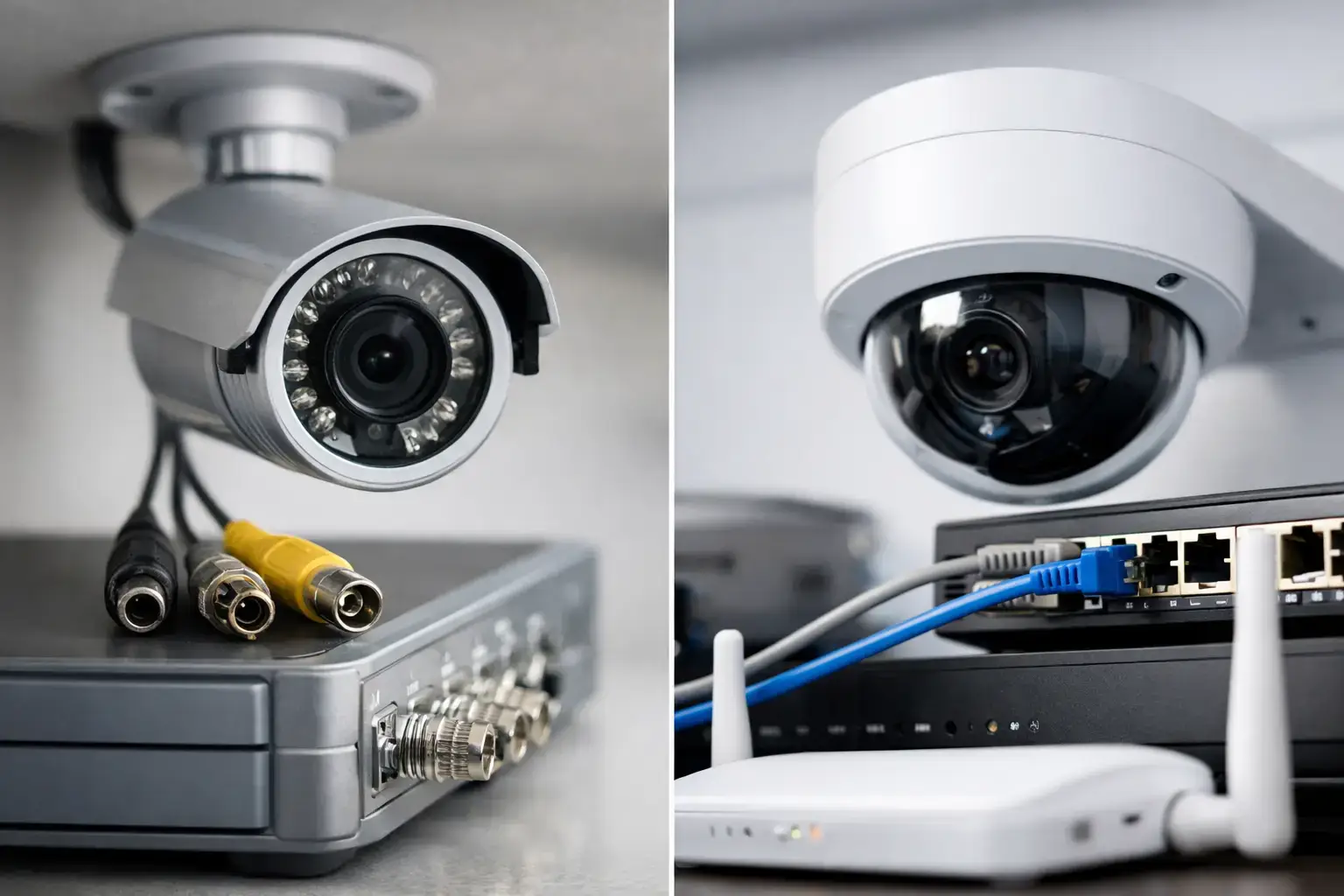
Commercial CCTV installations typically combine fixed and PTZ (Pan-Tilt-Zoom) cameras to cover different areas effectively. Fixed cameras monitor specific zones like entrances and loading bays, whilst PTZ units track movement across larger spaces such as car parks or perimeters.
Fixed cameras offer:
- Permanent coverage of critical entry points
- Lower maintenance requirements
- Consistent image quality for evidence
- Cost-effective deployment across multiple locations
- Reliable night vision capabilities
PTZ cameras provide:
- Wide area coverage with minimal hardware
- Operator control to follow suspicious activity
- Flexible monitoring without physical repositioning
- Integration with analytics software
Networked Digital Systems
Modern commercial sites benefit from networked digital systems that centralise monitoring and recording. These cloud-based or server-based platforms allow your facilities team to view multiple locations simultaneously from a single dashboard.
Digital systems eliminate the need for on-site recording equipment, reducing hardware costs and maintenance burdens. Remote access means you can check your premises from anywhere, whether during business hours or after closing.
Networked systems that integrate with your existing access control and alarm infrastructure create a unified security command centre, significantly improving response times during incidents.
Specialised Designs for Indoor and Outdoor Use
Different environments demand different camera specifications. Indoor systems for offices and corridors require discrete designs that don’t intimidate staff, whilst outdoor units must withstand weather conditions and provide clear visibility in varying light.
Consider your site’s specific needs:
- Retail environments: Dome cameras blend seamlessly whilst capturing customer activity
- Warehouse spaces: Rugged outdoor-rated cameras handle temperature fluctuations
- Vehicle areas: High-resolution cameras capture registration plates reliably
- Reception areas: Facial recognition capable systems support access verification
- Loading bays: Wide-angle coverage detects unauthorised access attempts
Integration with Alarms and Access Control
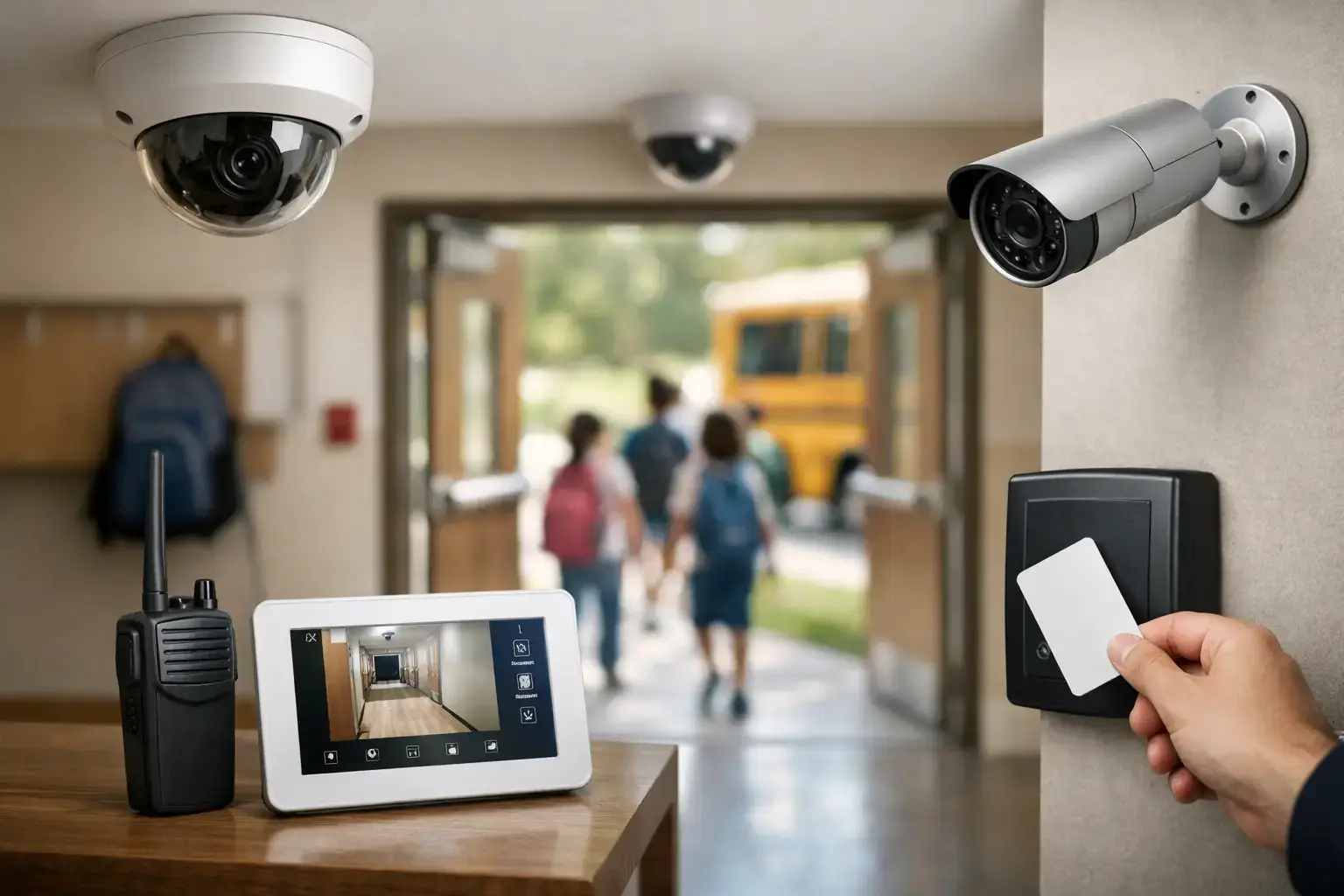
Effective commercial security combines burglar alarms, CCTV, and access controls into one coordinated system. When an alarm triggers, the system automatically records video and notifies your monitoring centre with precise location details.
This integrated approach means:
- Alarms activate recording on relevant cameras immediately
- Access control logs show exactly who was present
- Video evidence backs up alarm events for investigations
- Response teams arrive with complete situational awareness
- False alarms are quickly verified and dismissed
Real-time monitoring capabilities allow your security team to distinguish genuine threats from false triggers within seconds, preventing unnecessary emergency service callouts.
Pro tip: Request a system audit from your security provider to identify compatibility between your current alarms and proposed CCTV installation—this prevents expensive integration problems later.
How CCTV Deters and Detects Criminal Activity
Burglar alarms and CCTV systems work together to address crime through two distinct but complementary mechanisms: deterrence and detection. Understanding how each contributes helps you appreciate why integrated security delivers superior protection.
The Psychology of Deterrence
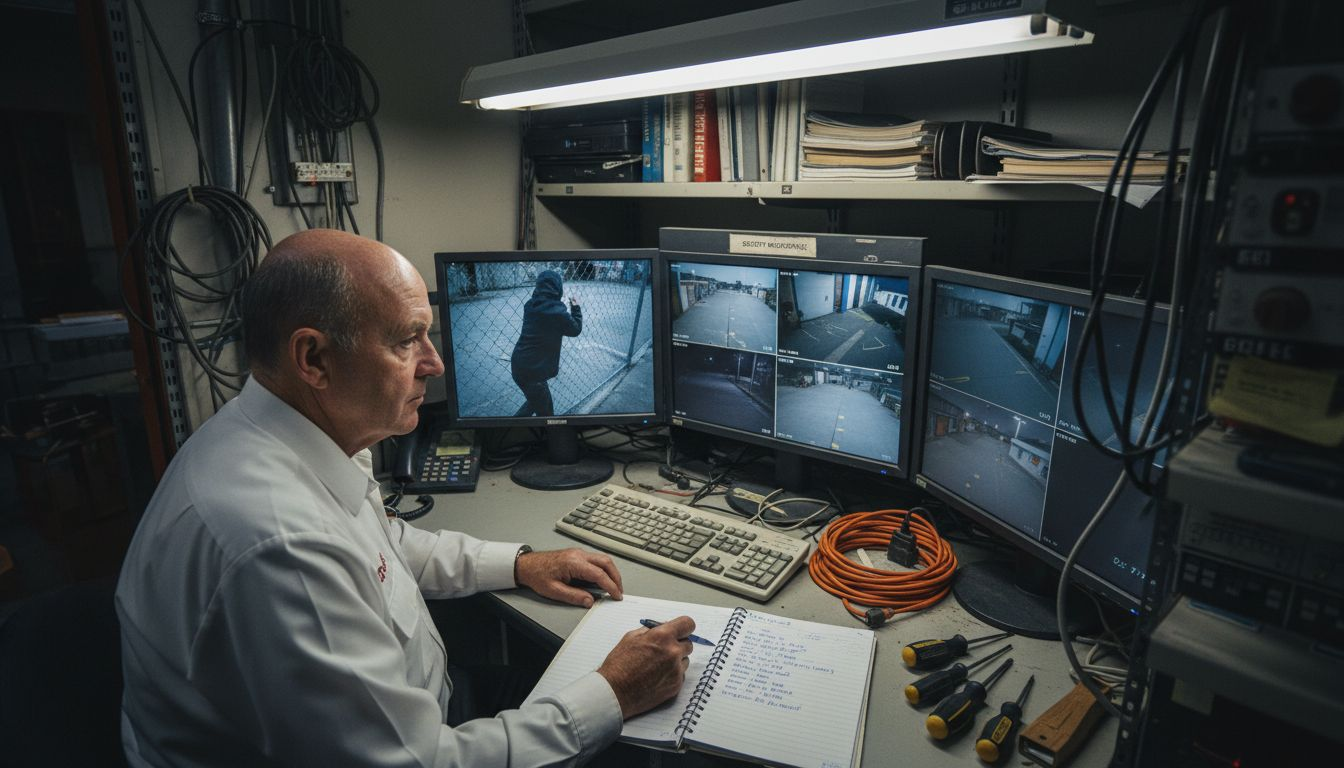
CCTV deters crime through perceived risk of detection, creating psychological barriers that discourage criminal behaviour before it starts. Potential offenders see visible cameras and recognise that their actions will be recorded and traced.
This deterrent effect works because criminals operate through cost-benefit analysis. When they notice active surveillance, the perceived risk of apprehension outweighs any potential reward from committing the crime.
Visible deterrents include:
- Prominent camera housings clearly visible at entry points
- Alarm system signage indicating 24/7 monitoring
- Motion sensor indicators warning of active detection
- Professional security notices stating footage is recorded
- Lit camera domes suggesting active monitoring overnight
Visible burglar alarm boxes and cameras deter approximately 67% of opportunistic criminals before they attempt entry, according to offender interviews.
Real-Time Detection and Evidence Gathering
When deterrence fails, detection becomes critical. Active monitoring paired with rapid response dramatically increases apprehension rates and provides irrefutable evidence for prosecution.
Your security team can identify suspects in real time, allowing police to intercept offenders whilst the crime is happening. Even after the fact, video footage provides investigators with suspect descriptions, vehicle registration numbers, and entry methods.
Detection benefits include:
- Identifying suspects through facial recognition or distinctive features
- Reconstructing crime sequences to understand methods and timing
- Linking multiple incidents through suspect identification
- Providing evidence that secures convictions
- Enabling rapid police response during active crimes
Integration Amplifies Both Effects
Burglar alarms trigger immediate video recording at relevant cameras when an intrusion occurs. This combination means offenders face both a psychological deterrent and the certainty that their actions are being captured and transmitted to a monitoring centre.
Your integrated system creates multiple layers of protection:
- Alarms deter before entry is attempted
- Cameras record if deterrence fails
- Real-time monitoring enables rapid response
- Evidence supports prosecution and insurance claims
- Historical footage identifies patterns and repeat offenders
Pro tip: Ensure your monitoring centre staff receive live alerts when alarms trigger—this split-second advantage allows them to respond whilst crimes are still in progress rather than investigating afterwards.
UK Laws and Compliance for CCTV Use
Running a commercial security system in the UK requires understanding strict legal obligations. Non-compliance can result in significant fines, reputational damage, and system shutdown orders from regulatory authorities.
Data Protection and Privacy Regulations
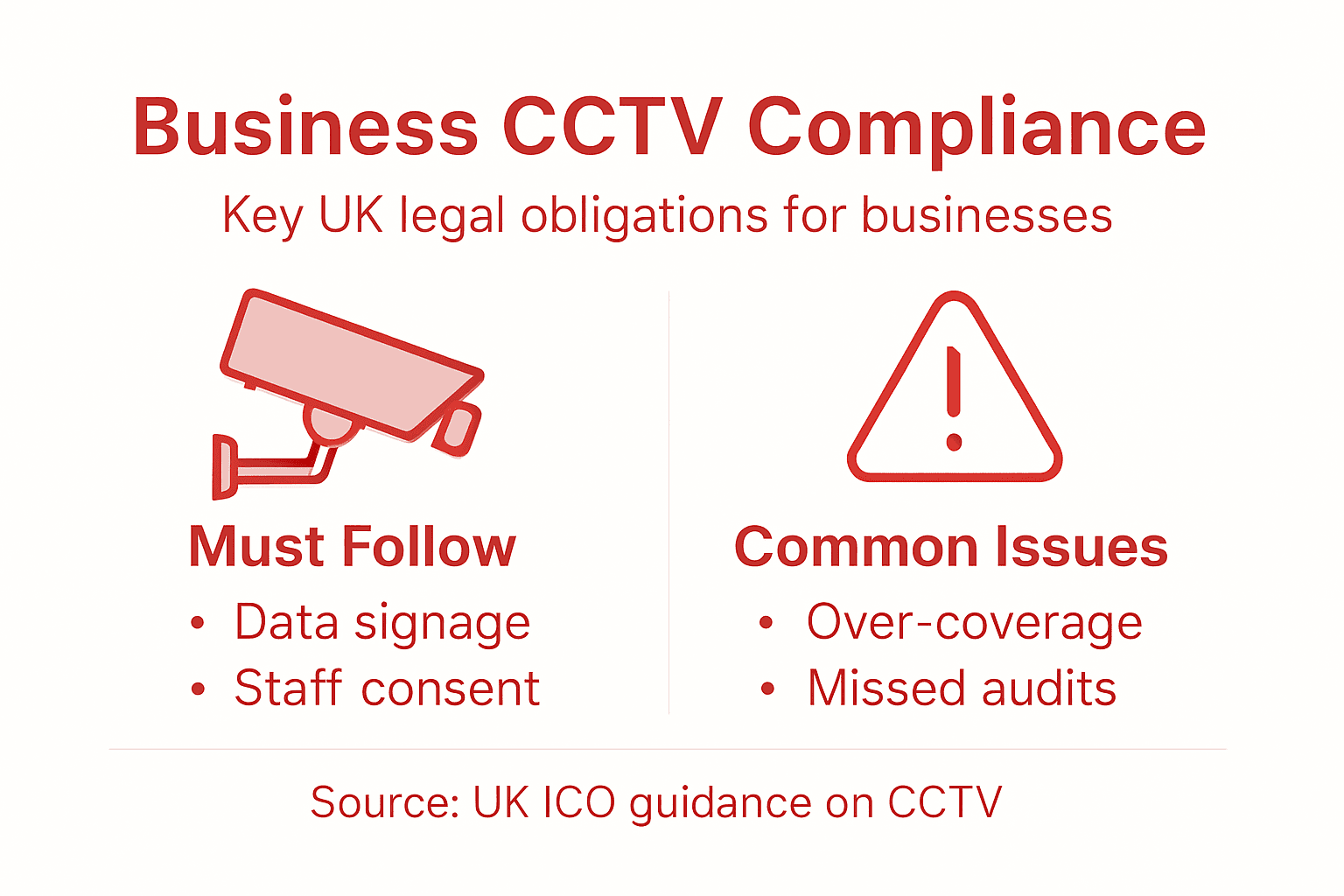
Privacy and CCTV compliance for UK businesses falls under the Data Protection Act 2018 and UK GDPR. These laws treat CCTV footage as personal data, meaning you must handle it with the same care as financial records or health information.
Key requirements include:
- Legitimate purpose: You must have valid security or crime prevention reasons for recording
- Transparency: Staff and visitors must know cameras are operating via visible signage
- Data security: Footage must be encrypted and stored securely with restricted access
- Retention limits: You cannot keep recordings indefinitely; most businesses retain footage for 30 days
- Subject access: Individuals can request copies of footage containing them
Businesses must document why they installed CCTV, where cameras operate, how long footage is retained, and who has access—this transparency prevents legal challenges.
Installation and Placement Rules
Camera placement matters legally. Recording in areas where people expect privacy—toilets, changing rooms, or private offices—violates privacy laws regardless of your security justification.
Compliant placement includes:
- Entry and exit points
- Car parks and loading areas
- Corridors and reception spaces
- Stairwells and common areas
- Exterior perimeters and grounds
Avoid filming beyond your property boundary into neighbouring businesses or residential areas, as this breaches their privacy rights.
Professional Monitoring and Signage
CCTV compliance requirements for 2025 emphasise active monitoring and clear notices. Generic signage stating “CCTV in operation” is insufficient—you must specify the organisation responsible, contact details, and your legal basis for recording.
Compliance checklist includes:
- Visible notices at all entry points stating why you record
- Contact information for data subject requests
- Data protection policy mentioning CCTV clearly
- Staff training on footage access restrictions
- Monitoring logs recording who accesses footage and when
Regular Audits and Updates
Compliance is not a one-time task. System configurations change, staff turnover occurs, and regulations evolve. Annual reviews ensure your CCTV system remains lawful and fit for purpose.
Pro tip: Request an annual compliance audit from your security provider to verify your system meets current Data Protection Act requirements and document evidence for regulatory inspections.
Common CCTV Installation Pitfalls to Avoid
Many businesses install security systems without proper planning, only to discover they don’t actually protect what matters. Understanding common mistakes helps you invest wisely and avoid costly failures.
Poor Camera Placement and Blind Spots
Improper camera placement causes blind spots that criminals exploit deliberately. A camera positioned too high misses faces; one angled downward captures only floors. Mounting cameras without considering sight lines leaves vulnerable corridors completely unwatched.
Avoid these placement mistakes:
- Cameras pointing directly at windows or bright light sources
- Mounting too high or too low for effective facial capture
- Positioning without considering obstructions like pillars or shelving
- Failing to overlap coverage between adjacent cameras
- Ignoring entry points that burglars naturally seek
Thorough site surveys identifying specific crime risks prevent wasted installations on low-value areas while leaving genuine vulnerabilities unprotected.
Inadequate Camera Types and Resolution
Choosing cameras without understanding your environment creates problems. A standard resolution camera in a warehouse cannot capture vehicle registration plates. A dome camera designed for indoors fails in harsh outdoor weather.
Common equipment mistakes include:
- Selecting cameras without matching them to lighting conditions
- Choosing budget models with poor night vision capabilities
- Insufficient resolution to identify suspects in evidence footage
- Wrong camera types for specific environments (retail versus warehouse)
- Failing to consider weather protection for outdoor installations
Neglecting Lighting and Environmental Factors
Comprehensive planning considering environmental factors prevents system failures. Darkness renders even high-resolution cameras useless. Poor weather protection causes rapid corrosion of outdoor equipment. Extreme temperatures affect recording reliability.
Address environmental challenges through:
- Installing additional lighting at critical entry points
- Using weatherproofed housings for outdoor cameras
- Selecting infrared or thermal cameras for poorly lit areas
- Positioning equipment away from condensation and moisture sources
- Testing systems across seasonal temperature variations
Inadequate Maintenance and Staff Training
Installation is just the beginning. Systems require ongoing maintenance to function properly. Staff must understand how to access footage and respond to alerts.
Below is a summary table highlighting common CCTV installation mistakes and their potential consequences:
| Installation Pitfall | Resulting Risk | Preventative Action |
|---|---|---|
| Poor camera placement | Missed footage at vulnerable points | Conduct thorough site survey |
| Low resolution or wrong type | Blurred or unusable evidence | Match camera type to each environment |
| Ignoring lighting/environment | Blind spots at night/weather failure | Install proper lighting/weatherproofing |
| Skipping regular maintenance | System failures and unusable footage | Schedule routine servicing and checks |
Maintenance gaps lead to:
- Failed recordings from overloaded storage systems
- Dirty lenses reducing image quality silently
- Outdated firmware missing security patches
- Staff unaware of how to retrieve evidence quickly
- Missing maintenance logs during compliance audits
Regular servicing protocols and staff training transform installed systems from passive recording devices into active crime prevention tools.
Pro tip: Request a pre-installation site survey from your security provider to identify camera positions, lighting needs, and environmental challenges before purchase—this prevents expensive repositioning and equipment replacements later.
Strengthen Your Business Security with Expert CCTV and Alarm Solutions
The article highlights how modern burglar alarms and CCTV systems play a crucial role in deterring crime and providing real-time detection. If your business in the UK faces challenges such as poorly integrated security, blind spots, or compliance risks, you need a tailored solution that addresses these vulnerabilities effectively. At 247cctv, we understand the importance of combining intelligent burglar alarms, CCTV, and access control systems to create a secure environment that not only protects your assets but also provides peace of mind.

Take control of your business security today with our professional installation services. Whether you need advanced analytics like the Hikvision AX Pro or flexible wireless options such as RISCO LightSYS+, we tailor solutions to your site’s unique risks and compliance needs. Visit 247cctv to explore how our expertise in Installing CCTV, Burglar Alarms, and access control systems can transform your crime prevention strategy. Don’t wait until false alarms or security gaps cost you more than they should. Get your free site survey and upgrade to a smarter, compliant security system now.
Frequently Asked Questions
How does CCTV contribute to crime prevention in businesses?
CCTV deters crime by creating a perceived risk of detection among potential offenders, making them less likely to commit crimes in areas with visible surveillance. Additionally, active monitoring allows for real-time responses, improving apprehension rates and providing crucial evidence for investigations.
What features should I look for in a commercial CCTV system?
When selecting a commercial CCTV system, look for features such as high-resolution cameras for clear image capture, night vision capabilities, wireless options for flexible installation, integration with alarm systems, and networked digital platforms that allow for remote monitoring.
How can I effectively integrate CCTV with existing security measures?
To effectively integrate CCTV with existing security measures, ensure that your alarm systems trigger immediate video recording at relevant cameras. Combine CCTV monitoring with access controls, visible deterrents, and professional monitoring services to create a more robust security framework.
What are common mistakes to avoid when installing a CCTV system?
Common mistakes include poor camera placement leading to blind spots, inadequate camera types that don’t suit the environment (e.g., low resolution for outdoor use), neglecting lighting which can compromise image quality, and failing to carry out regular maintenance and staff training to ensure the system operates effectively.