Security in care homes is never just about locks and alarms—it is about safeguarding both residents and staff while upholding dignity. For facilities managers in Essex and London, networked CCTV systems offer powerful oversight and real-time incident response. Yet the Care Quality Commission is clear: surveillance technology must support, not replace, compassionate care. This guide explores how networked CCTV, when deployed with care and compliance, can transform safety without compromising privacy in your facility.
Key Takeaways
| Point | Details |
|---|---|
| Networked CCTV Enhances Security | Networked systems provide real-time monitoring and intelligent analytics to improve safety for residents and staff alike. |
| Compliance is Crucial | Adhering to UK GDPR and data protection laws is essential to protect residents’ rights while ensuring effective monitoring. |
| Privacy and Dignity Matter | Care homes must balance surveillance with respect for residents’ privacy, using cameras only where necessary and with clear signage. |
| Implementation Requires Planning | Proper infrastructure and staff training are vital for the successful deployment and operation of networked CCTV systems in care environments. |
Networked CCTV systems in care environments
Networked CCTV systems represent a significant shift in how care homes approach security and resident safety. Unlike traditional closed-circuit setups, these systems connect directly to your facility’s network, enabling real-time monitoring from multiple locations and devices. This connectivity transforms how facilities managers oversee daily operations and respond to incidents.
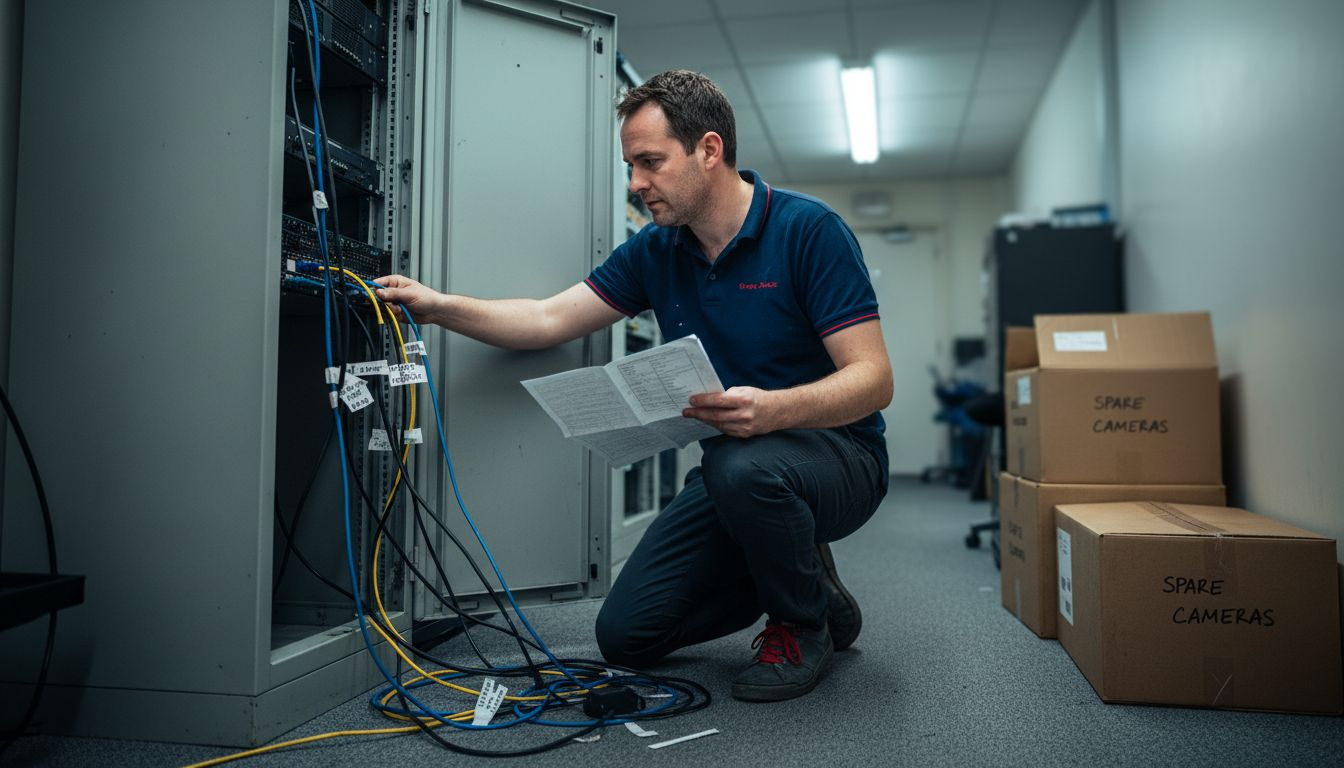
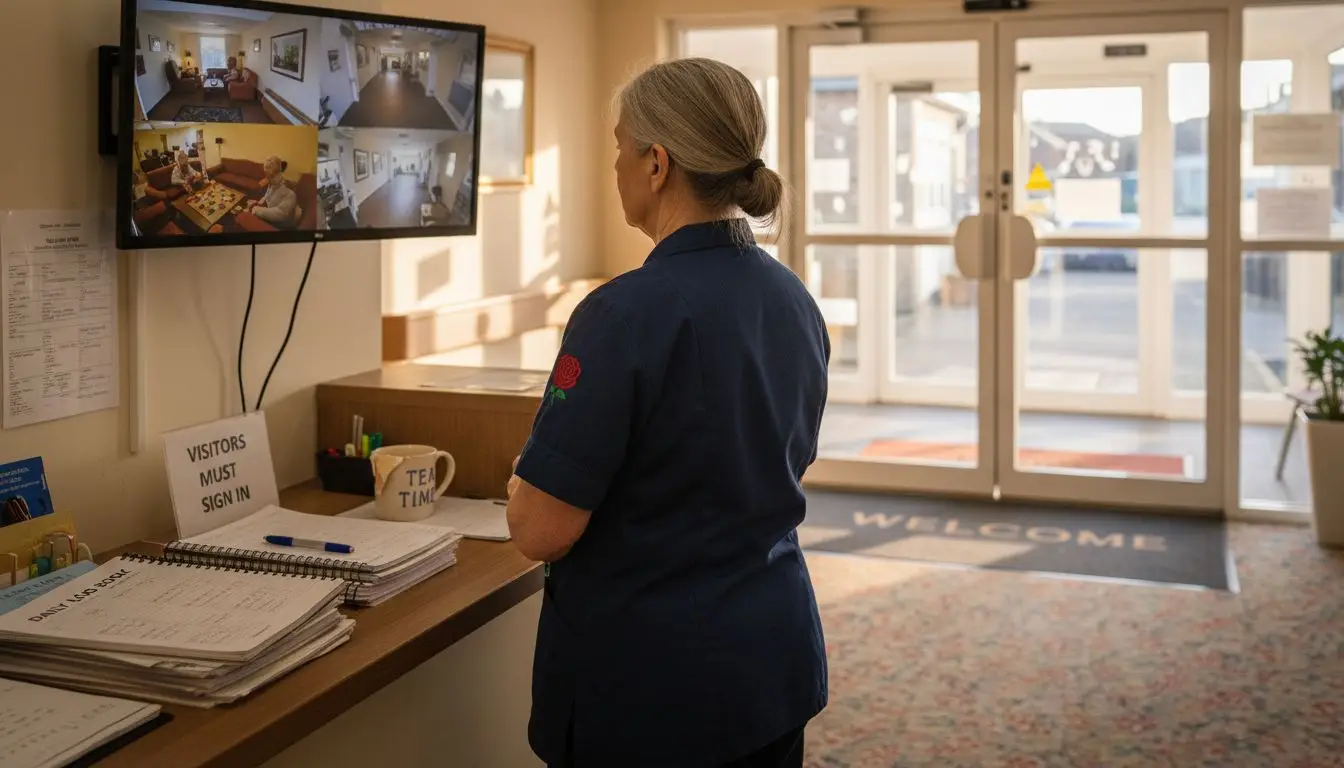
In care environments, networked systems serve dual purposes: protecting residents and safeguarding staff. They provide continuous oversight of common areas, entrances, and vulnerable zones without replacing proper staffing levels. Surveillance technology must work alongside robust care practices rather than substituting for them.
Key advantages of networked systems include:
- Real-time access from office, home, or mobile devices during emergencies
- Centralised recording stored securely in the cloud or on-site servers
- Instant alerts when motion or unusual activity is detected
- Easy integration with existing door entry and access control systems
- Scalability to add cameras as your facility grows or needs evolve
These systems differ fundamentally from analogue CCTV. Networked cameras transmit data digitally, meaning clearer footage, better storage efficiency, and smarter analytics. You gain the ability to search recordings by time, zone, or specific events rather than manually reviewing hours of footage.
Compliance matters significantly in care settings. Understanding CCTV privacy regulations specific to care homes ensures your system respects residents’ rights whilst maintaining security. Clear signage, transparent policies, and informed consent from residents and families are non-negotiable requirements.
Networked CCTV works best when residents, families, and staff understand why cameras are in place and what they monitor.
Networked systems also enable analytics features that improve facility operations. Modern cameras can detect falls, recognise when someone enters restricted areas, or alert staff to unusual inactivity. These intelligent functions help care homes identify risks before they become serious incidents.
Implementation requires planning. You’ll need adequate network bandwidth, secure Wi-Fi or cabled connections, and proper backup power supplies. Many care homes phase in networked systems gradually, starting with high-risk areas like entrances and moving to common areas.
Professional tip Work with your IT team during installation to ensure network security and sufficient bandwidth; modern networked systems demand robust infrastructure to function reliably.
Analogue vs IP CCTV: key distinctions
Understanding the difference between analogue and IP CCTV systems is crucial for care homes deciding which technology suits their needs. These two approaches represent fundamentally different ways of capturing, transmitting, and storing security footage. Your choice affects everything from image quality to how quickly you can respond to incidents.
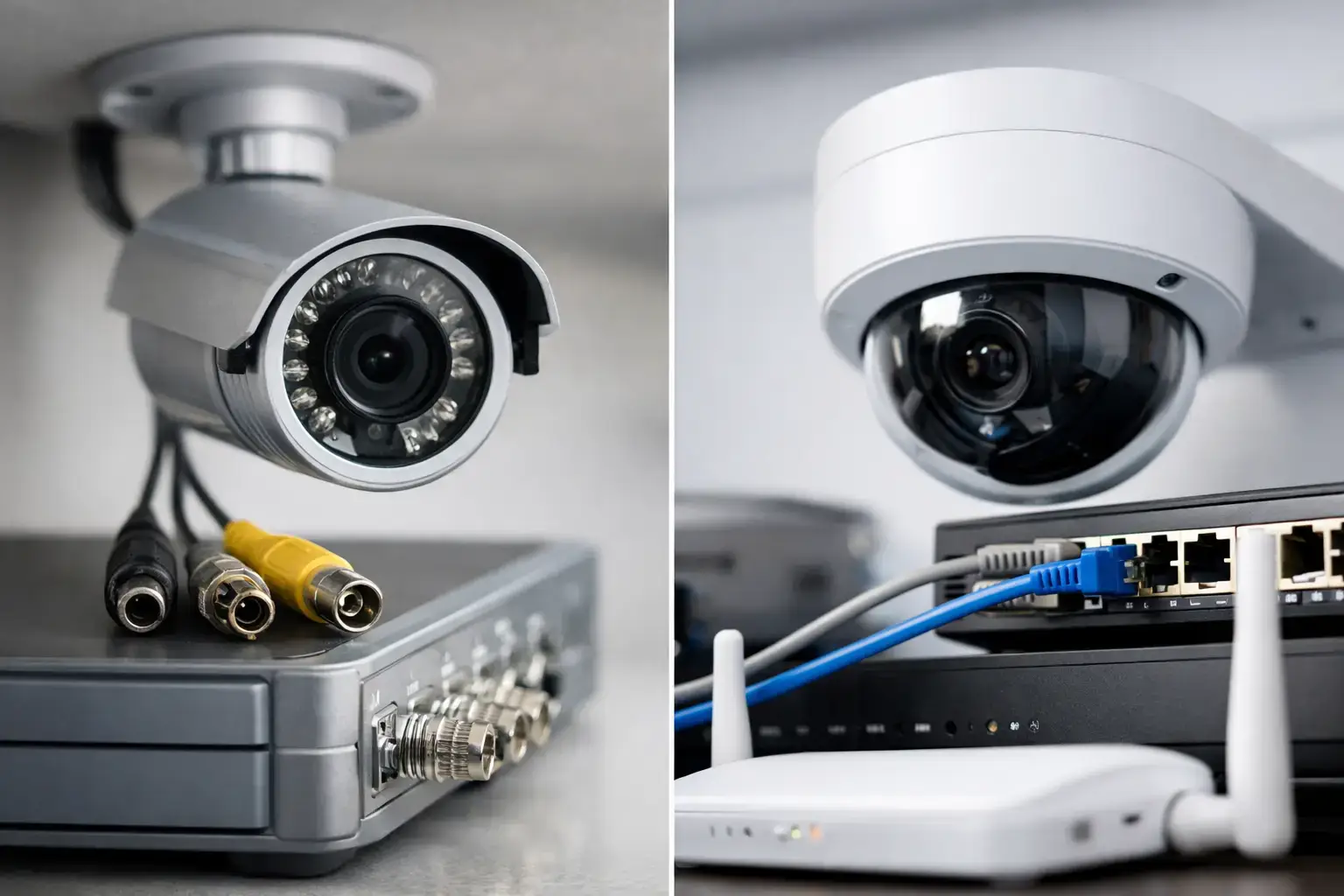
Analogue systems use traditional coaxial cables to transmit video signals directly to a DVR (Digital Video Recorder). The footage is recorded locally and accessed through dedicated monitors or playback devices. These systems have served facilities well for decades, but they come with significant limitations in modern care environments.
IP CCTV systems, by contrast, convert video into digital data packets transmitted across your network. Cameras connect via standard network infrastructure—either Wi-Fi or Ethernet cables—and footage streams to cloud storage or networked servers. IP CCTV supports enhanced evidential use through better data management and makes retrieval far simpler when incidents occur.
Key differences you should consider:
- Image resolution: IP cameras deliver superior clarity; analogue footage degrades with distance
- Remote access: IP systems allow monitoring from anywhere; analogue requires on-site equipment
- Storage efficiency: IP systems compress data intelligently; analogue requires vast physical space
- Integration: IP cameras connect seamlessly with access control and alarm systems; analogue cannot
- Scalability: Adding IP cameras is straightforward; analogue systems require new cabling infrastructure
- Installation costs: Analogue is cheaper upfront; IP saves money long-term through efficiency gains
IP CCTV’s real advantage emerges over time through reduced maintenance, easier searches, and integration capabilities that improve overall facility operations.
In care home settings, the choice often hinges on facility size and budget. Smaller homes might start with analogue systems, but growing facilities typically migrate to IP. Understanding IP camera functionality helps care managers make informed decisions about upgrading existing infrastructure.
Analogue systems struggle with compliance requirements. If you need to retrieve specific footage quickly—perhaps to investigate a safeguarding concern—IP systems let staff search by date, time, or camera zone instantly. Analogue requires manually reviewing hours of tape.
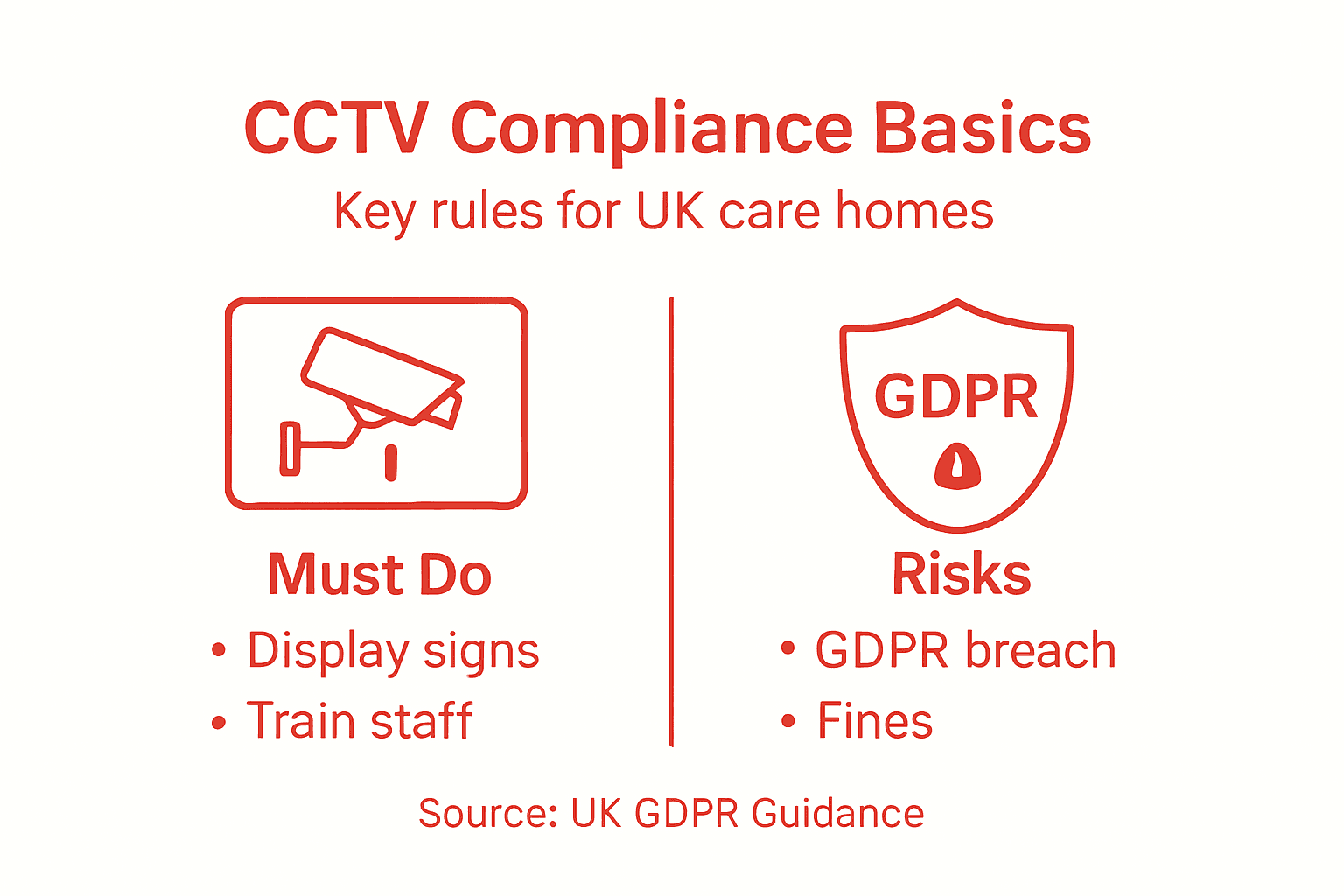
Modern care homes increasingly choose IP systems because they align with regulatory expectations around data management and evidence preservation. The initial investment pays dividends through operational efficiency and staff confidence.
Professional tip If your facility currently uses analogue CCTV, request a bandwidth assessment before upgrading to IP; this ensures your network can handle the additional data traffic without compromising performance.
To clarify the practical differences, here’s how analogue and IP CCTV systems compare in care home environments:
| Aspect | Analogue CCTV | IP (Networked) CCTV |
|---|---|---|
| Infrastructure | Coaxial cabling needed | Uses facility network |
| Monitoring Access | On-site only | Remote from any location |
| Data Retrieval | Manual playback | Searchable by event/time |
| Storage Method | Physical DVR | Cloud or networked server |
| Compliance Support | Limited | Enhanced with audits |
| Typical Upgrade Path | Rarely scalable | Easily expanded |
Legal requirements for CCTV in UK care homes
CCTV in care homes operates within a strict legal framework designed to protect residents whilst maintaining security. Facilities managers must navigate data protection laws, safeguarding regulations, and privacy rights simultaneously. Getting this balance right protects your residents and shields your organisation from costly compliance breaches.
The foundation of lawful CCTV use rests on UK GDPR compliance. Data protection compliance requires transparent signage, privacy impact assessments, secure footage handling, and clear retention policies. Care homes cannot install cameras without residents and families understanding why they exist and how footage is managed.
Key legal requirements include:
- Transparent signage at every location where cameras operate
- Privacy notices explaining what footage records and who accesses it
- Data protection impact assessments before system installation
- Secure storage preventing unauthorised access to recordings
- Retention policies specifying how long footage is kept
- Access controls limiting staff who can view sensitive areas
- Incident response procedures for handling data breaches
Care Quality Commission guidance emphasises that CCTV supplements proper staffing and safeguarding—it never replaces them. Covert surveillance is only permissible in exceptional circumstances and requires robust justification. Most care home footage should be captured openly, with residents and visitors informed.
Lawful CCTV protects vulnerable residents and staff alike, but only when implemented transparently with proper data handling procedures.
Compliance extends beyond installation. CCTV audits ensure facilities meet evolving regulatory standards and catch gaps before regulators do. Regular audits verify that your system remains compliant as regulations change and footage handling practices evolve.
Data subject rights matter significantly. Residents and their families can request copies of footage, require you to explain how data is processed, and demand deletion under certain circumstances. Your care home must respond to these requests within statutory timeframes.
Staff training forms part of legal compliance. Everyone accessing CCTV footage must understand data protection obligations and handle sensitive recordings responsibly. Untrained staff pose significant compliance risks.
Retention periods demand particular attention. Keeping footage longer than necessary violates UK GDPR principles. Most care homes retain footage for 30 days, though specific incidents may justify extended storage.
Professional tip Document your retention policy in writing and ensure all staff understand it; this evidence demonstrates good faith compliance if regulators ever question your practices.
This summary outlines vital legal checks for compliant CCTV use in UK care homes:
| Requirement | Main Purpose | Risk if Ignored |
|---|---|---|
| Signage & Notices | Inform everyone transparently | Resident privacy complaints |
| Privacy Impact Assess. | Identify sensitive risks | Regulatory breach |
| Access Controls | Restrict footage viewing | Data misuse, trust issues |
| Retention Policy | Set footage storage limits | GDPR violation, fines |
| Staff Training | Encourage responsible use | Unintentional breaches |
Balancing surveillance and privacy for residents
Finding the right balance between security and privacy defines modern care home management. Residents deserve protection from harm and staff deserve tools to respond quickly to incidents. Yet residents also deserve dignity, autonomy, and freedom from excessive monitoring. These needs are not opposing forces—they work together when systems are designed thoughtfully.
The tension arises because vulnerable people need safeguarding, yet safeguarding through blanket surveillance can undermine the very dignity care homes exist to protect. A resident confined to their room deserves privacy; a resident wandering confused at night deserves oversight. The art lies in proportionate monitoring that serves genuine safety purposes.
Surveillance should respect residents’ privacy and dignity whilst safeguarding their wellbeing through justified use. This means cameras in communal areas but not bedrooms, monitoring entrances but not private spaces, and recording only where necessary.
Practical strategies for maintaining this balance include:
- Targeted placement of cameras in high-risk areas, not throughout the facility
- Clear signage so residents understand exactly where they are monitored
- Family involvement in decisions about monitoring vulnerable residents
- Privacy zones where residents can expect freedom from observation
- Access restrictions limiting who reviews footage and when
- Regular review of camera positions to remove unnecessary coverage
- Resident feedback mechanisms allowing concerns about excessive monitoring
Proportionate surveillance protects residents without stripping away their autonomy and sense of safety within their own home.
Consult residents and families before installing new cameras or adjusting existing ones. Their perspective often identifies privacy concerns you might miss. A resident with dementia may feel distressed by constant observation, even though monitoring genuinely protects them. Family input helps calibrate surveillance to actual risks rather than assumed dangers.
Documentation strengthens your position. Record the safety rationale for each camera placement, explaining why that specific location requires monitoring. This demonstrates that decisions were thoughtful and proportionate, not arbitrary.
Staff behaviour matters enormously. Accessing footage out of curiosity, discussing recorded incidents inappropriately, or monitoring areas beyond their job requirements erodes trust. Strict access controls and regular training ensure your system respects privacy in practice, not just in policy.
Professional tip Conduct quarterly reviews of camera footage access logs to identify any unusual viewing patterns; this catches privacy breaches before they harm residents or expose your care home to complaints.
Common pitfalls, compliance risks and best practices
Many care homes install CCTV systems with good intentions but stumble on implementation details that create legal exposure and undermine trust. Understanding common mistakes helps you avoid costly corrections and resident complaints. The difference between compliant security and compliance liability often comes down to planning and oversight.
The most serious pitfall is lacking transparent policies about surveillance. Staff and residents must understand exactly where cameras operate, who accesses footage, and how long recordings are kept. Vague policies create confusion and expose your facility to complaints. Clear protocols for camera use and resident engagement prevent misuse of recordings and protect privacy rights. Without these safeguards, even well-intentioned monitoring becomes problematic.
Common mistakes include:
- Inadequate signage failing to inform residents and visitors about surveillance
- Uncontrolled footage access allowing staff to review recordings without justification
- No retention schedule keeping footage indefinitely or deleting it too quickly
- Missing data impact assessments installed before privacy analysis
- Covert cameras placed without resident knowledge or consent
- Insufficient staff training on data protection and appropriate use
- No incident procedures for handling footage of safeguarding concerns
- Blanket monitoring of areas where privacy expectations are high
Poor CCTV governance creates more problems than it solves, generating complaints, regulatory scrutiny, and legal risk alongside limited security benefit.
Best practices start with planning. Before purchasing equipment, conduct a privacy impact assessment identifying genuine security gaps. This document justifies camera placement and demonstrates proportionate thinking to regulators. It also guides staff on appropriate use.
Develop written policies covering footage access, retention periods, and incident procedures. Train all staff on these policies annually. Document the training to evidence compliance. Staff who understand why safeguards exist become champions of appropriate use rather than obstacles.
Implement role-based access controls limiting who can view footage. A receptionist needs different permissions than a manager investigating a safeguarding concern. Audit access logs regularly to catch inappropriate viewing. This demonstrates that your facility respects privacy actively, not just in theory.
Review your system annually. Technology evolves, regulations change, and facility needs shift. Regular audits catch gaps before regulators discover them and show residents that you take compliance seriously.
Professional tip Create a compliance checklist covering signage, policies, staff training, and access controls; use it quarterly to ensure nothing drifts during the busy rhythms of daily care operations.
Protect Your Care Home with Advanced Networked CCTV Solutions
Implementing a networked CCTV system in your care home is essential to safeguarding residents and complying with UK data protection laws. Many care homes face challenges such as unclear footage access, limited remote monitoring, and outdated analogue systems that hinder real-time responses. Our security installation services address these pain points by providing scalable IP CCTV systems that deliver clearer resolution, remote access, and secure cloud storage tailored for the unique demands of care environments.
Discover how 247 CCTV can help you upgrade to a compliant, intelligent surveillance network that supports both resident privacy and staff safeguarding needs. Act now to benefit from expert advice on installations that include CCTV, burglar alarms, and access control systems designed specifically for UK care homes. Visit our website and take the first step towards a safer, more transparent care environment today by exploring our security solutions and understanding how professional networked CCTV installations can transform your facility’s safety and compliance.
Frequently Asked Questions
What is a networked CCTV system?
Networked CCTV systems are security setups that connect directly to a facility’s network, allowing for real-time monitoring and recording of footage from multiple devices and locations.
How does networked CCTV improve resident safety in care homes?
These systems provide continuous oversight of common areas and vulnerable zones, enhancing security for residents while complementing proper staffing practices, rather than replacing them.
What are the advantages of using IP CCTV over analogue systems?
IP CCTV offers superior image resolution, remote access from anywhere, efficient data storage, easy scalability, and seamless integration with other security systems, making it more effective for modern care environments.
What legal requirements must care homes meet when using CCTV?
Care homes must ensure compliance with data protection laws, including transparent signage, privacy notices, secure storage, and defined retention policies for captured footage, to protect residents’ rights and maintain security.