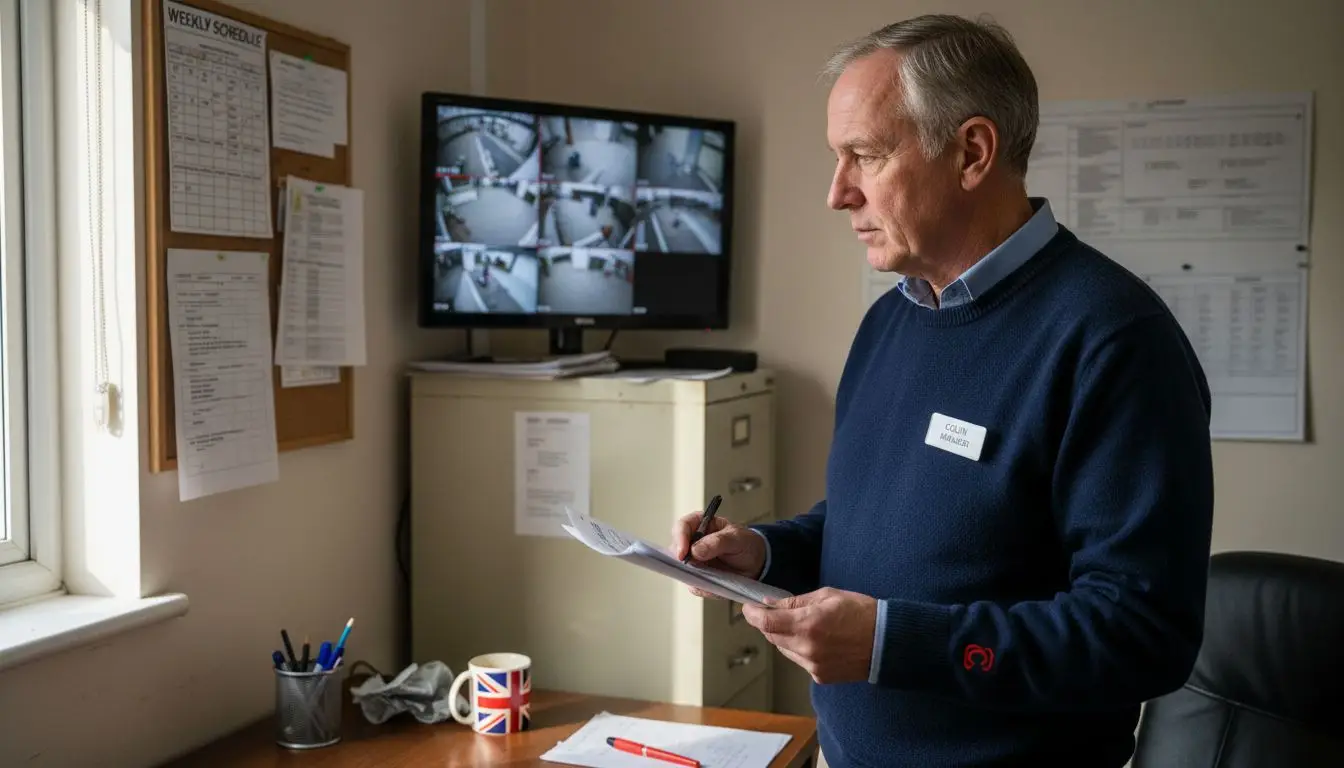
Keeping every resident safe while protecting their privacy is a challenge that sits at the heart of care home management in Essex. For facilities managers, the responsibility goes far beyond installing cameras. CCTV audits demand a structured review of legal compliance, consent protocols, staff training, and data protection to meet strict standards set by the Care Quality Commission and adhere to the UK General Data Protection Regulation. Understanding what these audits truly involve empowers care homes to safeguard residents and maintain public trust.
Key Takeaways
| Point | Details |
|---|---|
| CCTV Audits Ensure Compliance | Regular CCTV audits are essential for care homes to meet legal requirements and protect residents’ rights. |
| Diverse Audit Types Exist | Various audit types, such as internal and external, help identify vulnerabilities and ensure appropriate surveillance practices. |
| Legal Responsibilities Are Complex | Care homes must navigate multiple legislative frameworks to ensure ethical and legal surveillance implementation. |
| Risk Mitigation Is Critical | Proactively addressing potential risks through robust governance and staff training is vital for maintaining privacy and security. |
What CCTV Audits Involve for Care Homes
CCTV audits for care homes represent a systematic process designed to evaluate the effectiveness, legality, and ethical implementation of surveillance technologies. These comprehensive assessments go far beyond simple camera placement, focusing on protecting both residents’ safety and their fundamental human rights.
Specifically, CCTV audits in care home settings involve several critical evaluations:
- Legal compliance with UK data protection regulations
- Assessment of surveillance system configurations
- Review of consent and privacy protocols
- Examination of staff training and awareness
- Verification of data storage and management procedures
The primary objective is ensuring that surveillance supports resident protection while meticulously respecting individual privacy. Care homes must demonstrate that their CCTV use follows regulatory guidelines through transparent documentation and ethical implementation.
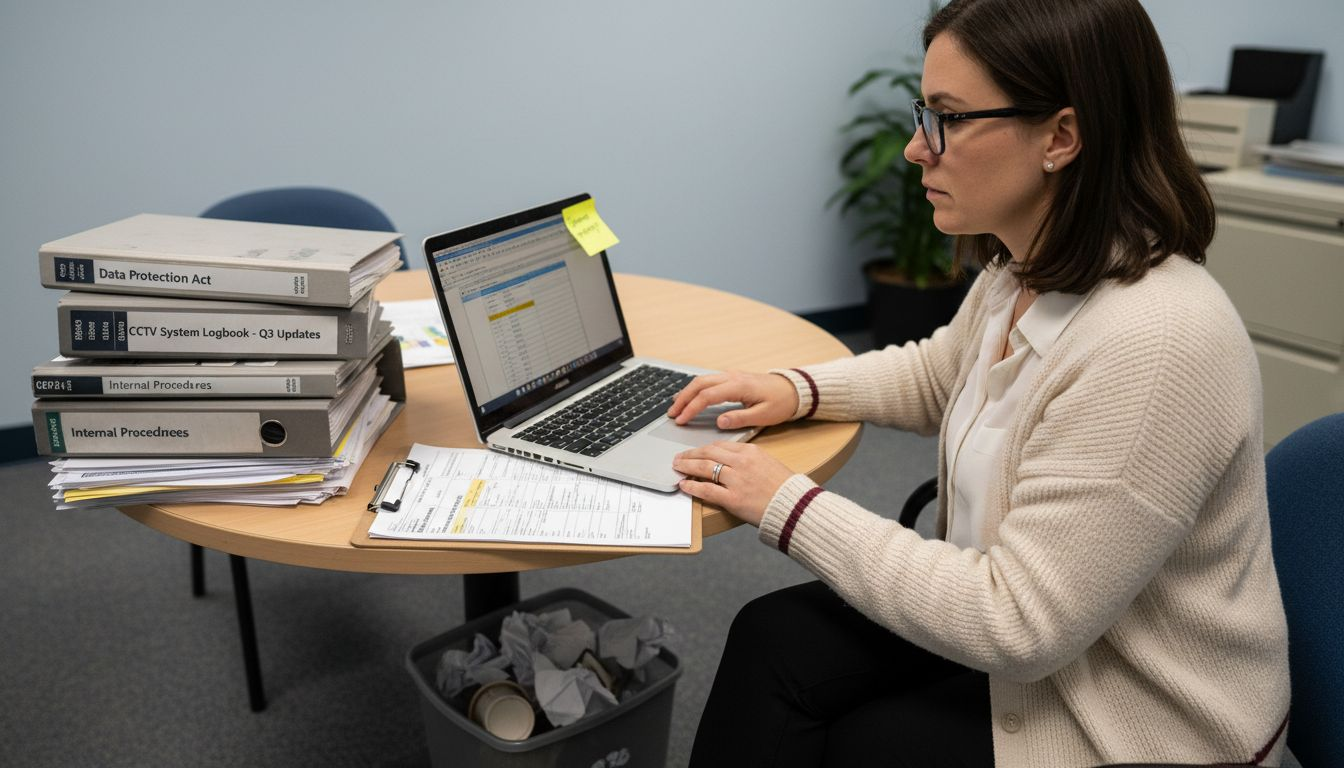
Auditors typically conduct thorough examinations by reviewing documentation, interviewing staff, and physically inspecting camera placements. They assess whether surveillance is overt, properly signposted, and serves a legitimate security or safeguarding purpose. The audit process requires care homes to articulate precise rationales for each camera’s location and operational parameters.
Key considerations during a CCTV audit include determining whether surveillance is:
- Proportionate to potential risks
- Minimally invasive to residents’ privacy
- Clearly communicated to all stakeholders
- Technically secure against unauthorized access
- Compliant with data protection legislation
Pro tip: Maintain comprehensive, up-to-date documentation of your CCTV system’s purpose, placement, and privacy safeguards to streamline potential audit processes.
Common Types of CCTV Audit Checks
CCTV audit checks in care homes involve multiple sophisticated approaches designed to ensure comprehensive surveillance oversight and regulatory compliance. These audits are crucial for maintaining high standards of resident safety while protecting individual privacy rights.
Care homes typically encounter several distinct types of CCTV audit checks:
- Internal audits conducted by care home management
- External regulatory audits from independent bodies
- Spot-check investigations
- Thematic audits focusing on specific surveillance aspects
- Comprehensive system reviews
The primary purpose of these audit checks involves systematic evaluation of surveillance practices, ensuring they meet legal and ethical standards. Each audit type serves a unique function in maintaining comprehensive security protocols.
External regulatory audits, typically conducted by organisations like the Care Quality Commission (CQC), represent the most rigorous form of assessment. These comprehensive reviews examine multiple dimensions of CCTV implementation, including:
- Equipment functionality and placement
- Data protection compliance
- Staff training records
- Consent documentation
- Privacy safeguard effectiveness
Care homes must approach CCTV audits as opportunities for continuous improvement, not merely compliance checkboxes.
Moreover, internal audits allow care homes to proactively identify and address potential surveillance vulnerabilities before external inspections. These self-assessments help organisations maintain robust security frameworks and demonstrate commitment to resident welfare.
Here is a summary of key audit types and their distinct focus in care homes:
| Audit Type | Conducted By | Primary Focus | Typical Frequency |
|---|---|---|---|
| Internal Audit | Care home management | Early issue detection, self-improvement | Quarterly or as needed |
| External Regulatory | CQC or third parties | Regulatory compliance and best practice | Annually or biannually |
| Spot-Check Investigation | Management or regulators | Incident-specific compliance review | Ad hoc, post-incident |
| Thematic Audit | Internal/External teams | In-depth focus on privacy or security | Periodic, targeted issues |
| Comprehensive Review | Internal/External teams | Full surveillance system evaluation | Every 1-2 years |
Pro tip: Develop a detailed, regularly updated CCTV audit checklist that covers legal, ethical, and technical dimensions to streamline your compliance processes.
Legal and Regulatory Duties for CCTV Use
Care homes face complex legal obligations when implementing surveillance technologies, requiring meticulous attention to regulatory frameworks that protect both resident safety and individual privacy rights. The landscape of CCTV deployment demands comprehensive understanding of multiple legislative requirements.
Key legal responsibilities for CCTV use include:
- Compliance with Health and Social Care Act
- Adherence to Data Protection Act 2018
- Registration with the Information Commissioner’s Office
- Conducting data protection impact assessments
- Maintaining transparent consent procedures
Care homes must navigate intricate legal requirements surrounding surveillance implementation. Every aspect of CCTV deployment requires careful consideration to ensure legal and ethical standards are consistently met.
The legislative framework demands that surveillance technologies meet stringent criteria. Providers must demonstrate that CCTV usage is:
- Legally justified
- Proportionate to identified risks
- Minimally intrusive
- Transparently implemented
- Respectful of individual dignity
CCTV in care homes is not a right, but a carefully managed privilege that demands constant ethical scrutiny.
Moreover, care homes must engage proactively with regulatory guidance, understanding that legal compliance extends beyond mere technical installation. This involves comprehensive staff training, regular system reviews, and maintaining detailed documentation demonstrating the necessity and appropriateness of surveillance methods.
Pro tip: Develop a comprehensive CCTV policy document that explicitly outlines legal compliance strategies and ethical considerations.
Safety, Compliance, and Privacy Risks
CCTV implementation in care homes represents a delicate balance between essential safety measures and rigorous privacy protection. The complex landscape of surveillance technologies demands meticulous consideration of potential risks that could compromise resident dignity and organisational integrity.
Primary risk categories include:
- Data protection vulnerabilities
- Unauthorized information access
- Potential privacy breaches
- Ethical surveillance limitations
- Technological security gaps
Care homes must systematically evaluate surveillance risks to maintain a responsible and legally compliant approach to monitoring. Understanding these risks becomes crucial for protecting both institutional interests and individual resident rights.
The multifaceted nature of CCTV risks encompasses several critical dimensions:
- Potential intrusion into personal privacy spaces
- Inappropriate data retention practices
- Inadequate technological security measures
- Insufficient staff training protocols
- Lack of transparent communication
Surveillance must enhance safety without undermining individual human dignity and fundamental privacy rights.
Moreover, care homes must develop comprehensive risk mitigation strategies that address potential technical, legal, and ethical challenges. This involves creating robust governance frameworks, implementing stringent access controls, and maintaining transparent documentation about surveillance purposes and limitations.
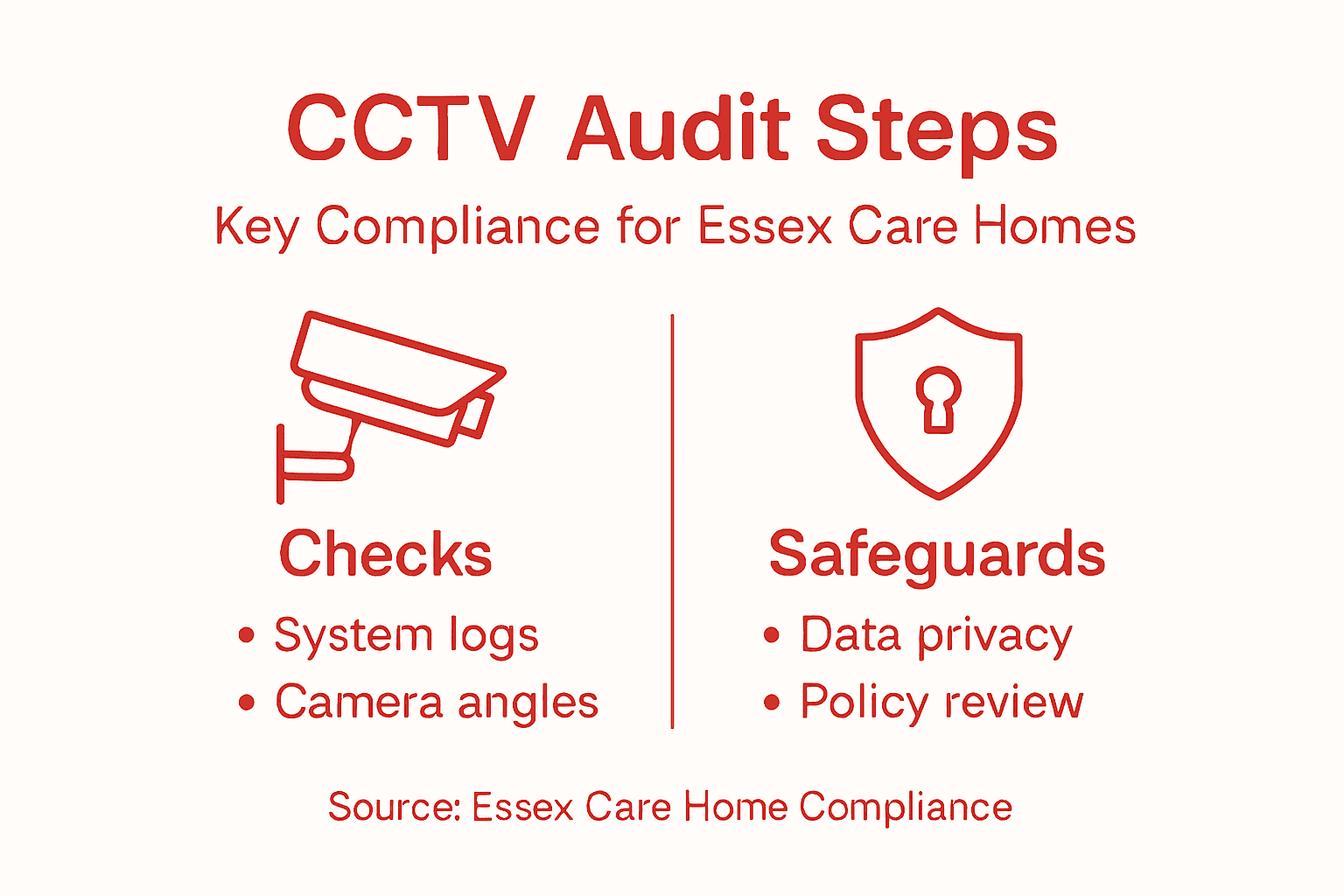
Below is a reference table of common CCTV risks in care homes and practical mitigation methods:
| Risk Area | Example Scenario | Mitigation Approach |
|---|---|---|
| Data Protection | Unauthorised data access | Strong encryption and user controls |
| Privacy Breaches | Cameras in private areas | Careful placement and consent |
| Security Vulnerabilities | Outdated firmware exploited | Regular updates and patching |
| Staff Training | Staff unaware of policies | Mandatory training, refresher courses |
| Transparency | Residents not informed | Clear signage and documentation |
Pro tip: Conduct regular independent privacy impact assessments to proactively identify and address potential surveillance vulnerabilities.
Best Practices for Effective CCTV Auditing
Effective CCTV auditing in care homes demands a comprehensive and strategic approach that balances technological oversight with fundamental human rights. Care home managers must develop robust methodologies that protect both resident safety and individual privacy with precision and sensitivity.
Key components of an effective CCTV audit framework include:
- Comprehensive documentation review
- Regular system functionality checks
- Privacy impact assessments
- Staff training and competency evaluations
- Consent and communication protocols
Care homes must implement systematic auditing practices that address the nuanced requirements of surveillance in sensitive care environments. This approach ensures that monitoring technologies serve their intended protective function without compromising resident dignity.
A structured CCTV audit process should encompass multiple critical evaluation stages:
- Initial system configuration review
- Data protection compliance assessment
- Technological security verification
- Staff awareness and training examination
- Ongoing monitoring and improvement planning
Effective CCTV auditing is not about surveillance, but about creating a transparent, safe, and respectful environment.
Moreover, successful auditing requires a proactive and holistic approach that goes beyond mere technical compliance. This involves creating a culture of transparency, maintaining detailed records, and continuously adapting surveillance practices to evolving legal and ethical standards.
Pro tip: Develop a dynamic CCTV audit checklist that evolves with changing regulatory requirements and technological advancements.
Secure Your Essex Care Home with Expert CCTV Solutions for Audit Compliance
Care homes face the critical challenge of balancing resident safety with strict legal and ethical CCTV audit requirements. The article highlights the need for proportionate surveillance, transparent communication, and robust privacy safeguards to meet regulatory standards and protect resident dignity. Without professional installation and ongoing system checks, homes risk non-compliance that could jeopardise both safety and reputation.
Take control of your CCTV audit readiness today with our expert security installation services tailored for care homes in Essex. At 247 CCTV we specialise in delivering compliant, secure systems including CCTV, burglar alarms and door entry solutions. Our team understands the importance of reliable technology and comprehensive documentation to support your audits and regulatory inspections. Visit our security installation services page to discover how we can help you maintain compliance and protect your residents with confidence. Act now and ensure your care home meets every CCTV audit requirement with ease and precision.
Frequently Asked Questions
What is involved in a CCTV audit for care homes?
CCTV audits for care homes involve assessing legal compliance, surveillance system configurations, consent and privacy protocols, staff training, and data storage. The goal is to ensure that CCTV systems enhance resident safety while respecting individual privacy rights.
How often should care homes conduct CCTV audits?
Care homes should conduct internal audits regularly, typically quarterly or as needed, and external audits at least annually or biannually to ensure continued compliance with regulatory standards.
What are the main legal responsibilities surrounding CCTV use in care homes?
Care homes must comply with the Health and Social Care Act, Data Protection Act 2018, and register with the Information Commissioner’s Office, among other legal duties. Monitoring technologies must be legally justified, proportionate, and minimally intrusive while respecting residents’ dignity.
What are the common risks associated with CCTV implementation in care homes?
Common risks include data protection vulnerabilities, unauthorized access to information, potential privacy breaches, and technology security gaps. Mitigation strategies should be developed to address these issues and protect residents’ rights.