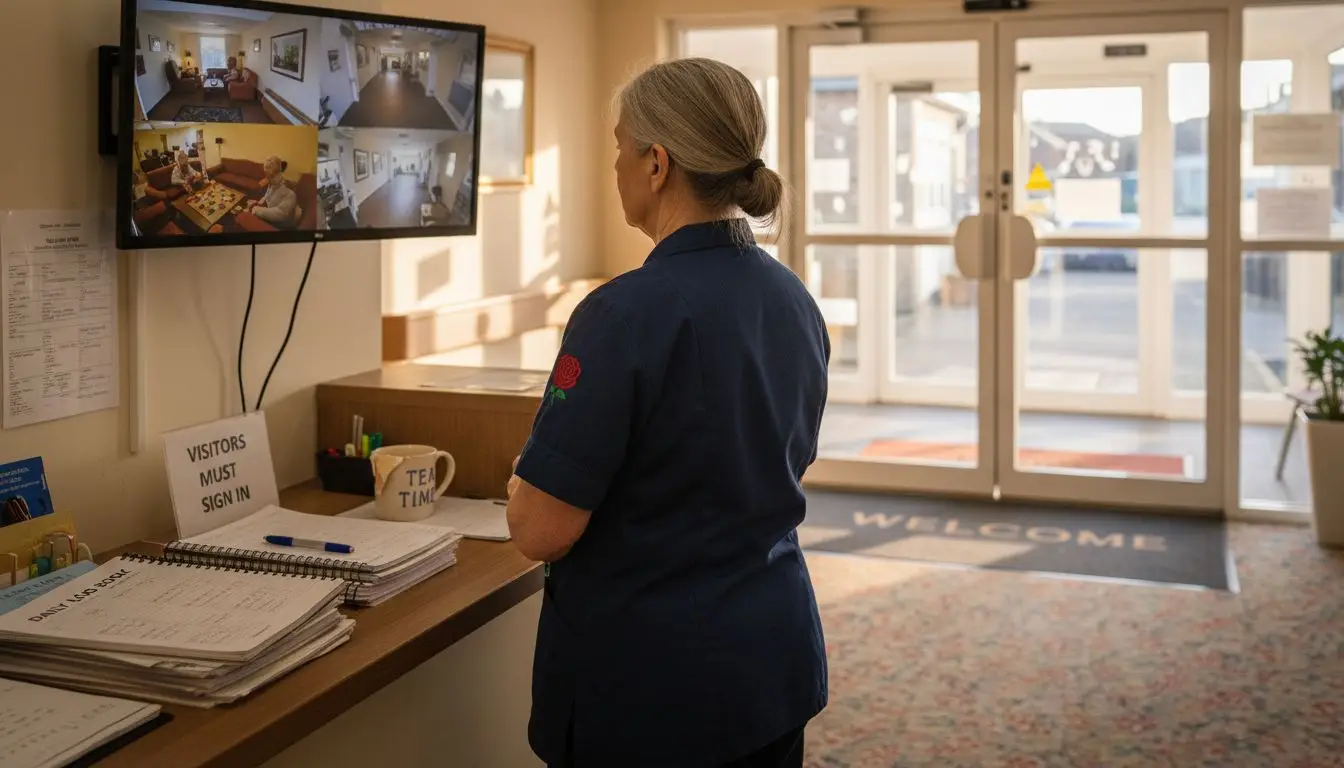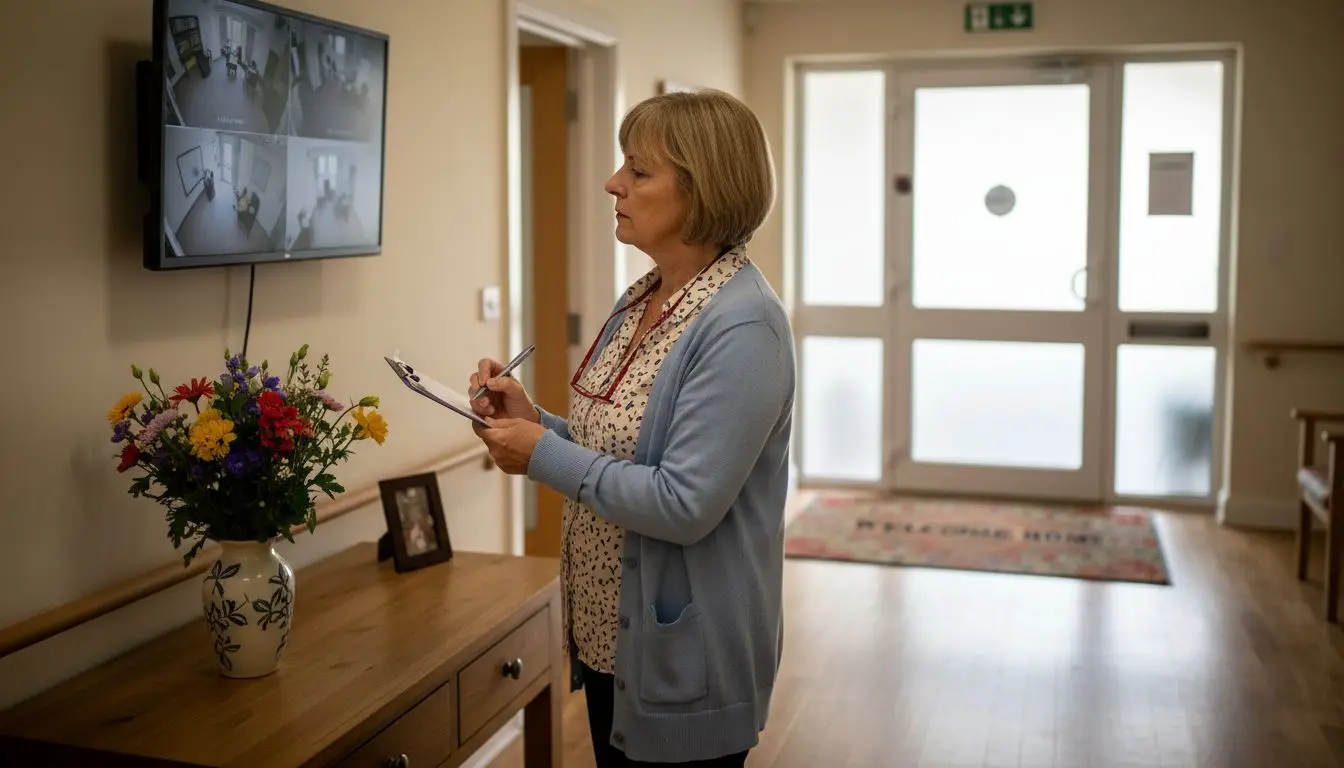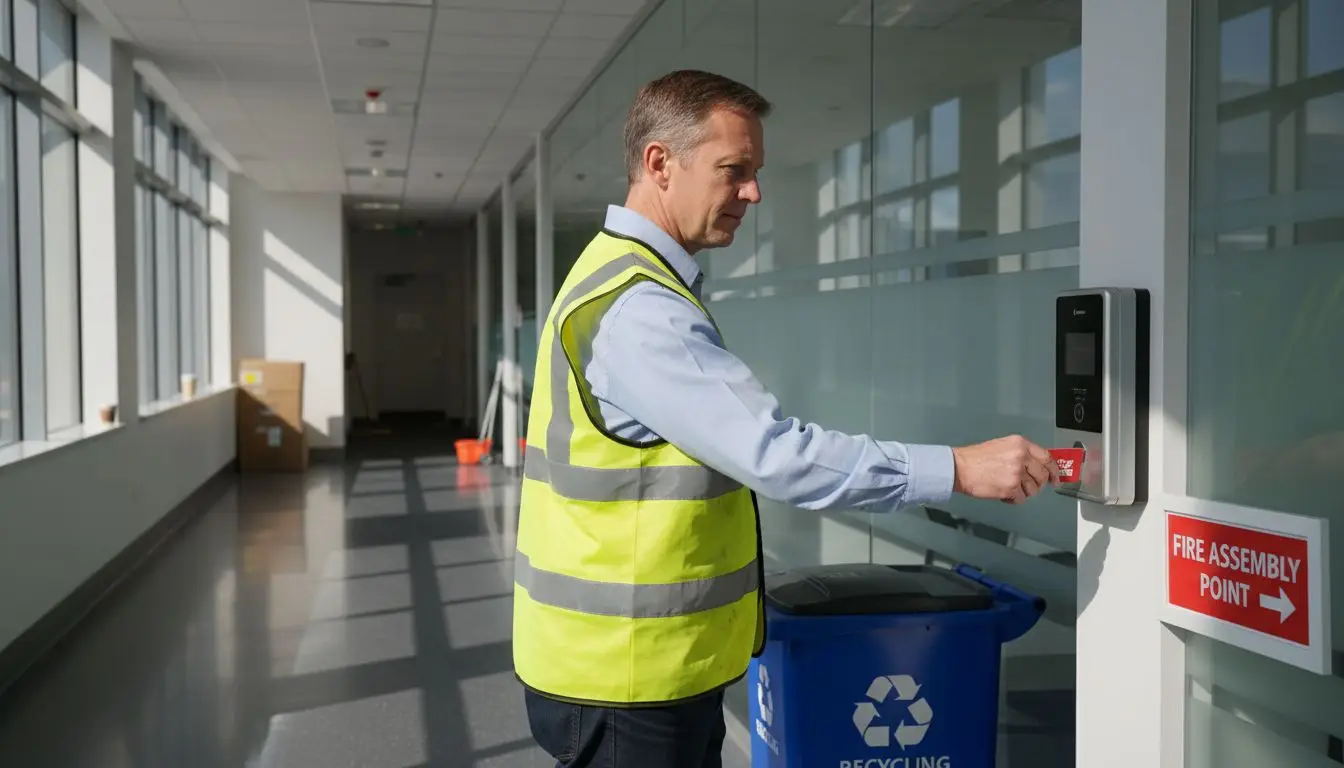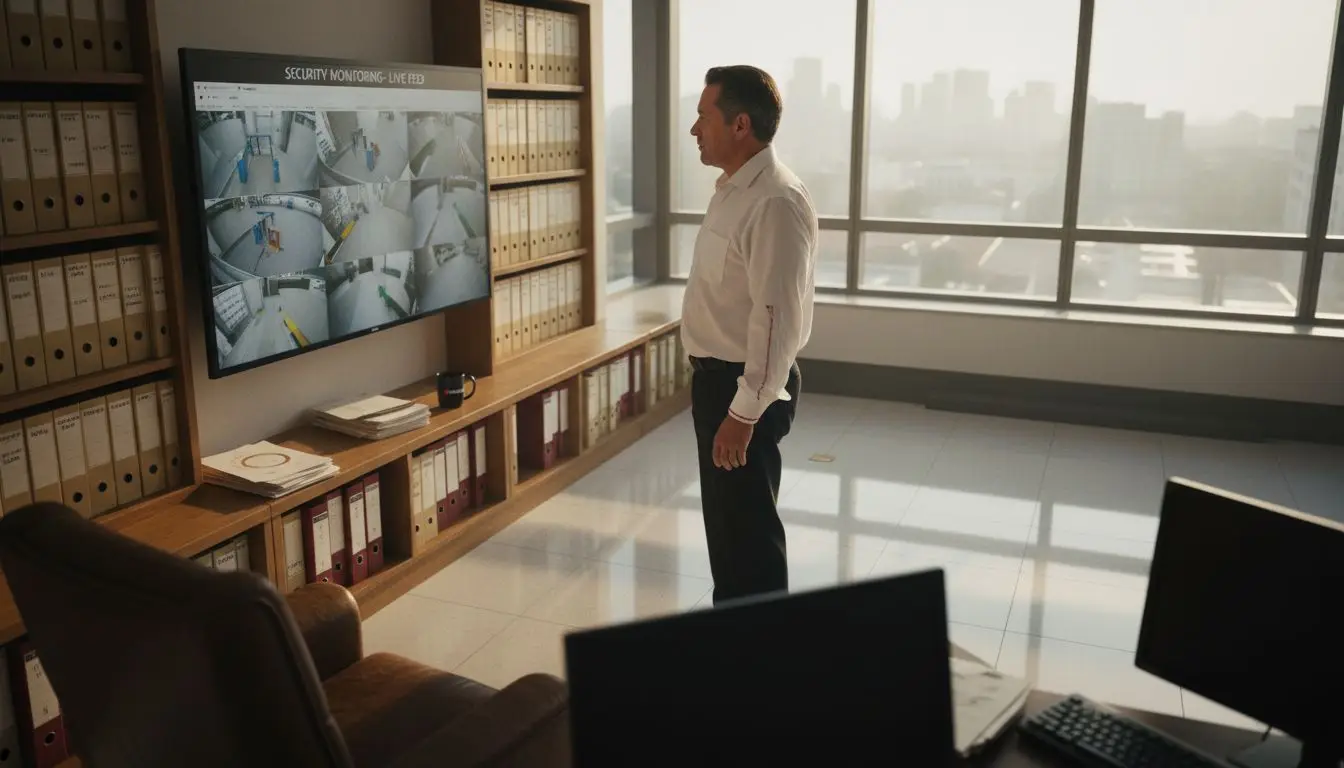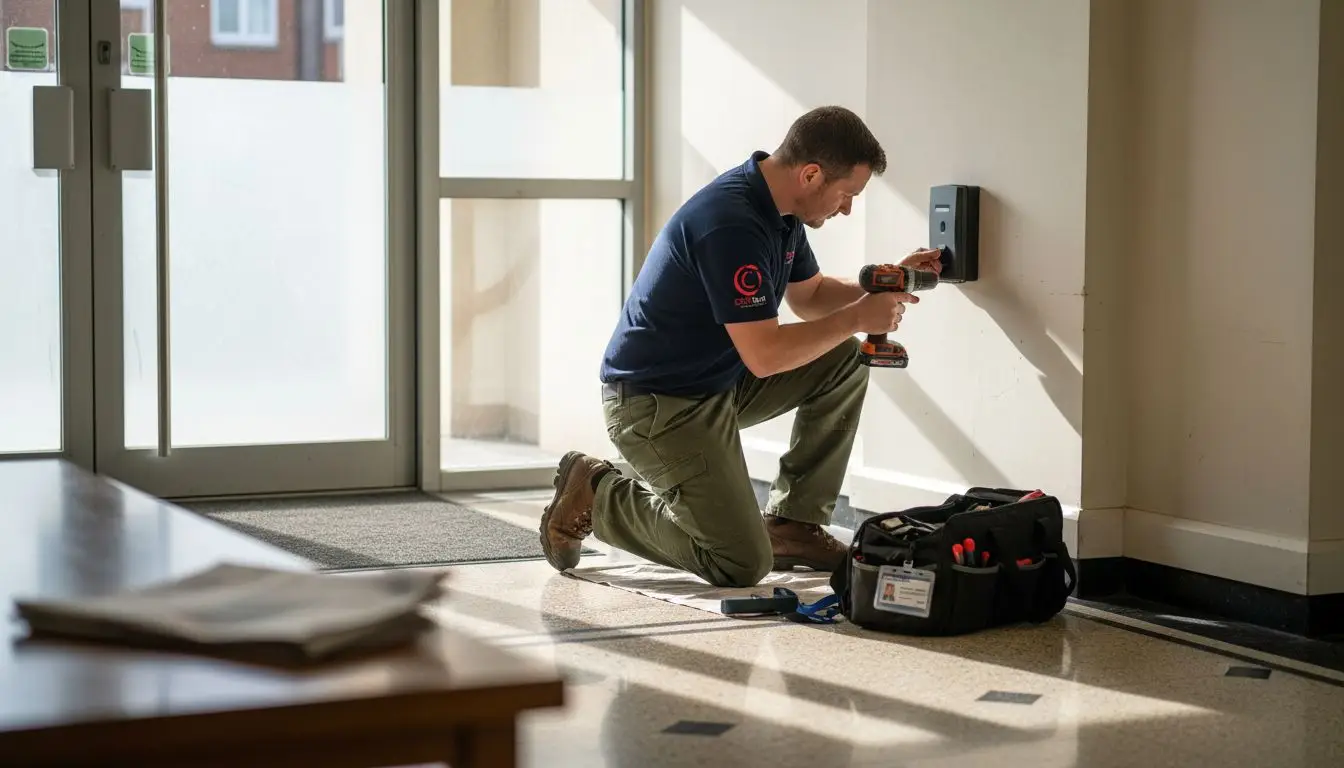
Care home security is never just about installing a few cameras or locking the front door. For Facilities Managers and Compliance Officers in Essex, each day brings the challenge of integrating physical, technological, and procedural security systems in care homes that align with strict legal standards. Residents’ wellbeing depends on much more than one device—it demands staff training, regular audits, risk assessments, and coordinated emergency procedures working together to create a safe, compliant environment.
Key Takeaways
| Point | Details |
|---|---|
| Comprehensive Security Systems | Security in care homes integrates physical, procedural, and technological controls to ensure resident and staff safety. |
| Regular Testing is Essential | Routine inspections and maintenance of security systems are crucial for compliance and effective risk management. |
| Legal and Financial Implications | Non-compliance can lead to legal liability and significant financial costs for care providers. |
| Staff Training and Awareness | Adequate training ensures staff are prepared to respond effectively to security incidents and emergencies. |
Security systems in care homes defined
Security in care homes is far broader than a single technology or device. It encompasses a comprehensive approach combining physical safeguards, staffing protocols, and technological solutions working together to protect residents and staff.
At its core, security systems in care homes are regulated measures designed to meet UK health and safety standards whilst addressing the unique vulnerabilities of vulnerable populations. These systems go well beyond traditional alarm systems or access control—they address an entire ecosystem of resident safety.
What security systems actually cover
The scope extends across several critical areas:
- Environmental design: Safe layouts that prevent falls, wandering, and accidents
- Staffing and training: Proper supervision, emergency response readiness, and health protocols
- Procedural controls: Clear routines, incident reporting, and risk management processes
- Technological elements: Burglar alarms, access control, emergency communication systems
- Health compliance: Infection control measures, medication management, and hygiene standards
True security combines all these layers. A state-of-the-art burglar alarm system cannot substitute for proper staff training or safe environmental design. Equally, excellent staffing alone cannot replace physical security measures that deter external threats.
Security systems in care homes are integrated frameworks balancing physical, procedural, and technological controls—not standalone technology solutions.
Why this definition matters for your facility
Understanding this comprehensive definition shifts how you approach testing and maintenance. You’re not simply checking whether sensors trigger or alarms sound. You’re verifying that every component of your multi-layered protection system performs its intended function under real conditions.
Regulated measures including health and safety compliance and risk assessments form the legal foundation. This means your burglar alarm systems must align with specific UK standards, your access controls must function reliably, and your emergency procedures must actually work when activated.
Facilities managers often focus heavily on technology because it’s visible and measurable. However, safety encompasses preventing falls, managing emergencies, and supporting residents with memory loss, which demands coordination across departments.
The three categories of security control
Think of your security system as operating across three distinct but interconnected categories:
- Physical controls: Locks, burglar alarm sensors, door entry systems, lighting
- Procedural controls: Visitor protocols, emergency response drills, incident logging, staff accountability
- Technological systems: Burglar alarms (such as Hikvision AX Pro, RISCO LightSYS+, or Texecom Premier Elite), access systems, emergency communication networks
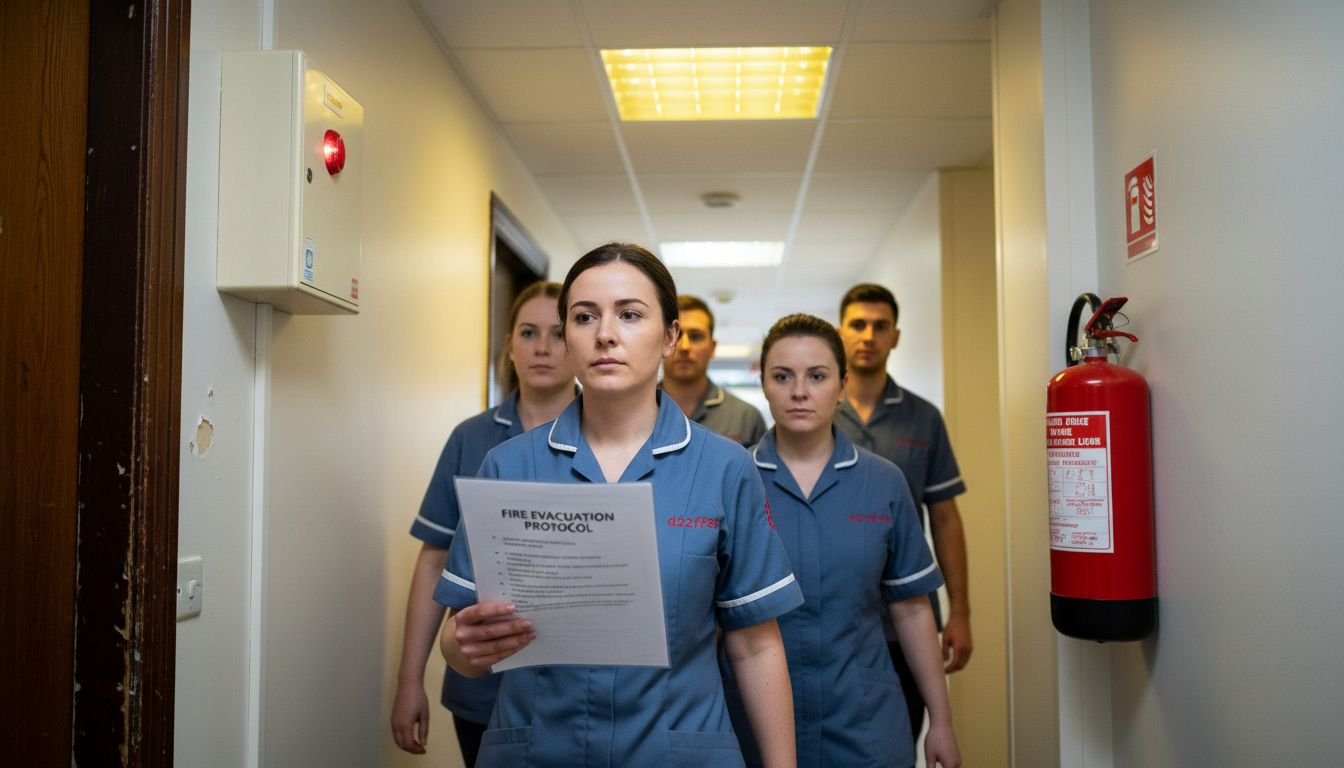
Testing must address all three. A burglar alarm system test that ignores your facility’s actual evacuation procedures is incomplete. Similarly, procedural drills that don’t trigger your alarm system miss critical integration points.
Your systems must work together seamlessly. When a resident’s emergency pendant triggers, does your alarm system log it? When your burglar alarm is activated, do staff know their roles immediately? These connections matter.
Pro tip: Document how each component of your security system connects to others—when testing one element, verify it triggers the expected response in related systems.
Types of systems and inspection methods
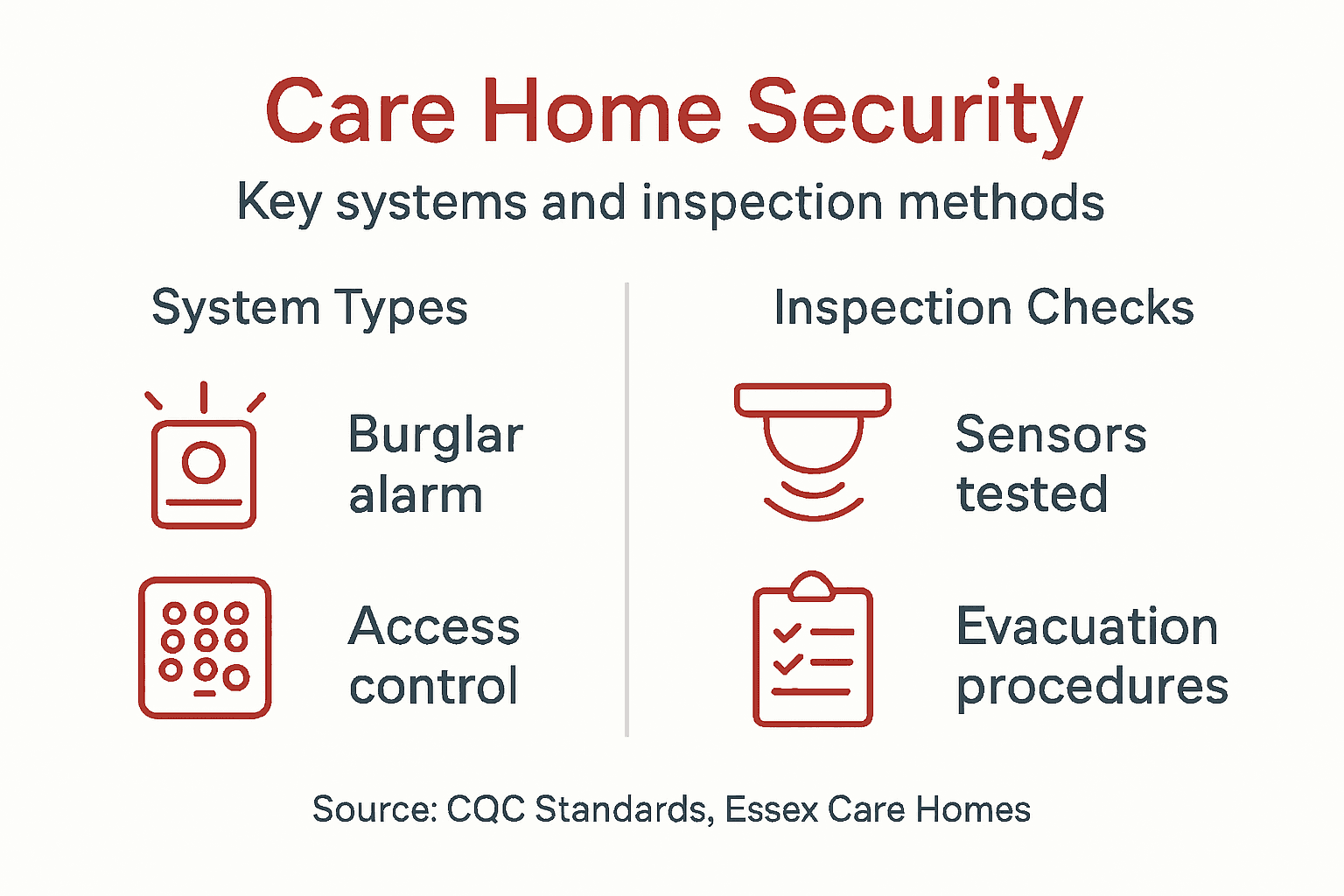
Care homes typically deploy several distinct security system types, each requiring different testing approaches. Understanding what you’re testing helps you identify which inspection methods actually matter for your facility.
Burglar alarm systems form the backbone of perimeter security. Popular options include Hikvision AX Pro, RISCO LightSYS+, and Texecom Premier Elite—each offering different sensor types, response capabilities, and integration features. These systems detect unauthorised entry attempts and trigger alerts to staff and monitoring centres.
Access control systems manage who enters and exits your building. These range from simple keypad locks to card readers and biometric devices. They’re particularly important in care homes where you need to prevent wandering residents from accessing unsafe areas whilst allowing staff rapid egress during emergencies.
Key system types to inspect regularly
Your facility likely operates across these categories:
- Burglar alarms: Door and window sensors, motion detectors, panic buttons
- Access control: Electronic locks, keypads, card readers, intercoms
- Emergency communication: Staff panic buttons, emergency call systems, two-way intercoms
- Environmental monitoring: Temperature sensors, lighting controls, occupancy detection
Each system requires tailored inspection methods. A burglar alarm sensor test looks completely different from an access control verification.
Here is a comparison of inspection methods for key care home security systems:
| System Type | Main Test Criteria | Potential Failure Impact |
|---|---|---|
| Burglar alarm | Sensor response, signal routing | Missed break-in, delayed alerts |
| Access control | Entry rejection, emergency exit | Locked exits, unauthorised access |
| Emergency communication | Pendant/button activation | Staff unaware of resident emergencies |
| Environmental monitoring | Data accuracy, alert signals | Unsafe conditions go undetected |
Effective security management involves ongoing risk assessment, staff training, and regular audits to ensure systems respond to evolving risks.
Inspection methods for burglar alarm systems
Testing burglar alarms requires specific procedures:
- Sensor activation tests: Physically trigger each sensor (open doors and windows, move past motion detectors) and verify the system registers the event
- Signal verification: Confirm alarm signals reach your monitoring centre or sound correctly on-site
- Battery backup checks: Test that systems function during power loss
- Tamper detection: Verify the system alerts when someone attempts to disable or bypass sensors
Don’t simply trust that sensors work. Physically test each one under conditions matching real emergencies.
Access control inspection methods
These systems need different testing:
- Card or code tests: Verify authorised credentials grant access whilst invalid ones are rejected
- Emergency unlock verification: Confirm doors unlock automatically during fire alarms or emergency situations
- Audit trail checks: Review system logs showing who accessed which areas and when
- Backup power testing: Ensure doors remain accessible if main power fails
Access control failures create serious problems. A locked door preventing evacuation is dangerous; a door accepting invalid credentials is a security breach.
Procedural inspection methods
Beyond technology testing, verify your procedures actually work:
- Staff respond correctly when alarms sound
- Emergency contact trees activate successfully
- Incident logs are completed accurately
- Response times meet your facility standards
Combine technical testing with procedural drills. Your burglar alarm system means nothing if staff don’t know what to do when it activates.
Pro tip: Schedule testing during normal operating hours and document all results, including dates, times, what was tested, and any faults discovered—this creates your compliance record.
Legal standards and compliance obligations
Your care home doesn’t test security systems because it’s convenient. You test them because the law requires it. Understanding your legal obligations transforms testing from an optional task into a non-negotiable compliance requirement.
The Care Act 2014 forms the legal foundation for all UK care home operations. This legislation, combined with guidance from regulatory bodies, creates specific duties around safety, security, and resident protection. Care providers must comply with Care Quality Commission regulations to maintain registration and demonstrate that services meet established safety standards.
Your facility faces inspection by the Care Quality Commission (CQC) regularly. During these inspections, inspectors will review your security testing records, maintenance logs, and incident reports. If your burglar alarm system hasn’t been tested properly, you’re not just missing a best practice—you’re demonstrating regulatory non-compliance.
What the CQC actually checks
During CQC inspections, you need to show evidence of:
- Regular system testing: Documented records proving all alarm sensors, access controls, and emergency systems function correctly
- Maintenance schedules: Evidence of planned preventative maintenance and swift repairs when faults occur
- Staff training: Records showing staff understand security protocols and respond appropriately when systems activate
- Incident logs: Documentation of any security breaches, false alarms, or system failures with corrective actions taken
- Risk assessments: Regular reviews identifying security gaps and how you’ve addressed them
Care homes must adhere to fundamental standards covering safety, staff training, and safeguarding whilst maintaining ongoing CQC compliance through regular inspections.
Failing to test security systems isn’t just poor practice—it’s evidence of non-compliance that directly affects your CQC rating.
Your specific compliance requirements
Beyond the Care Act, you’re obligated to:
- Register with the CQC: Maintaining active registration requires demonstrating safe, effective care
- Conduct risk assessments: Identify security vulnerabilities and document your response
- Maintain records: Keep testing results, maintenance schedules, and incident logs for at least three years
- Train staff: Ensure all employees understand emergency procedures and system responses
- Report incidents: Notify relevant authorities of serious breaches or system failures
These aren’t bureaucratic boxes to tick. They’re legal obligations tied directly to resident safety.
Why documentation matters for compliance
CQC inspectors don’t just ask whether your burglar alarm works—they ask for proof. Written records demonstrating your testing schedule, what was tested, when it was tested, and what faults were corrected form your compliance evidence.
Without proper documentation, you’re essentially claiming your systems are secure based on assumption. With comprehensive records, you’re demonstrating active management and regulatory competence.
This table highlights documentation needed for legal compliance during inspections:
| Record Type | Required Detail | Importance for CQC Inspections |
|---|---|---|
| Testing schedules | Dates, systems, faults found | Demonstrates regular checks |
| Staff training logs | Names, dates, covered procedures | Proves staff readiness and awareness |
| Incident reports | Event, actions taken, resolution | Shows prompt and effective response |
| Maintenance history | Repairs, upgrades, vendor contact | Confirms proactive system management |
Pro tip: Create a testing register documenting every test date, system type, specific components tested, results, and any faults found—this single document becomes your strongest compliance defence during CQC inspections.
Risks of neglecting system testing
Skipping security system tests feels harmless until something goes wrong. By then, the consequences extend far beyond a single incident. Untested systems create cascading failures that affect resident safety, staff confidence, and your facility’s operational integrity.
When burglar alarms, access controls, or emergency communication systems aren’t tested regularly, you’re operating on assumptions. A sensor that worked last month might fail silently this month. A door lock might jam at exactly the moment you need it. Without testing, you discover these problems only when they matter most.
The financial and reputational damage is significant. A security breach resulting from an untested system exposes your facility to liability claims, regulatory sanctions, and loss of resident trust. Families choosing care homes specifically ask about security measures—a visible failure damages your reputation permanently.
Direct risks to residents
Neglected security systems create specific hazards:
- Unauthorised access: Faulty door sensors or disabled alarms allow intruders into secure areas
- Wandering incidents: Failed access controls prevent you from restricting resident movement in unsafe zones
- Delayed emergency response: Broken panic buttons or intercoms mean staff cannot reach residents rapidly
- Medication or personal item theft: Weak perimeter security fails to deter opportunistic theft
- Increased falls and injuries: Poor lighting or environmental controls contribute to preventable accidents
Failing to test and maintain safety systems results in missed identification of critical needs and increased risk of crises or hospital admissions, directly impacting vulnerable residents.
Untested security systems aren’t merely ineffective—they actively compromise the safety environment you’re legally obligated to provide.
Staff and organisational risks
Your team faces serious consequences when systems fail:
- Inadequate emergency response: Staff trained on procedures that involve non-functional systems become confused during actual crises
- Liability exposure: Your facility becomes liable for incidents that proper testing would have prevented
- CQC enforcement: Documented negligence in system testing triggers regulatory action, fines, and potential deregistration
- Staff recruitment and retention: Employees lose confidence in your ability to keep them and residents safe
- Insurance complications: Many care home insurance policies require documented testing; neglecting this voids coverage
When a serious incident occurs and investigators discover your burglar alarm hasn’t been tested in months, responsibility falls directly on management.
The cumulative effect of neglect
Problems compound rapidly. A small fault discovered through testing costs pounds to fix immediately. The same fault left undetected grows into system failure, requiring expensive emergency repairs and creating vulnerability windows.
Regular system evaluation and standardised monitoring help care providers deliver consistent, responsive, and safer care to vulnerable residents, preventing preventable harm.
Your burglar alarm system, access controls, and emergency communications aren’t optional features. They’re critical infrastructure protecting people who depend entirely on your facility for their safety.
Pro tip: Calculate the cost of one serious security incident (staff time, investigation, potential compensation, reputation damage) and compare it to routine testing costs—the financial case for regular testing becomes immediately obvious.
Cost and liability implications for providers
Ignoring security system testing isn’t just a compliance oversight. It’s a financial decision with serious consequences. When incidents occur, your facility bears the costs directly—investigation expenses, legal fees, compensation claims, and reputational damage all accumulate rapidly.
Think about what happens after a security breach. Staff hours spent investigating. Documentation and reporting required by regulators. Potential legal action from residents or families. Insurance claims that may be denied if you can’t prove you maintained systems properly. A single incident can cost tens of thousands of pounds or more.
Proactive testing is genuinely cheap compared to managing the fallout from preventable incidents. Regular burglar alarm checks, access control verification, and emergency system testing cost relatively little when budgeted properly. These costs are investments in protection, not expenses to be minimised.
Direct financial exposure
Your care home faces specific cost risks:
- Compensation claims: Residents injured due to security failures can claim damages for physical harm, emotional distress, and ongoing care costs
- Regulatory fines: CQC enforcement action resulting from documented negligence can reach thousands of pounds
- Emergency repairs: Systems failing unexpectedly often require expensive urgent fixes at premium rates
- Insurance premium increases: Insurers raise premiums significantly after security-related claims or incidents
- Loss of business: Families withdraw residents following visible security breaches, reducing income
Effective risk management, including regular testing and staff training, reduces financial exposure significantly whilst protecting residents and your facility’s reputation.
A single serious incident resulting from neglected testing can cost more than a decade of preventative maintenance.
Legal liability and duty of care
Your facility has an absolute duty of care toward residents. Security system failures demonstrate a breach of that duty. When something goes wrong, courts examine whether you tested systems regularly and maintained proper documentation.
If you can’t produce testing records, the court assumes negligence. You’re essentially admitting you didn’t verify your protective measures worked. This assumption is extremely difficult to overcome once established.
Conversely, comprehensive testing documentation demonstrates diligent care. If a system failed despite regular testing, you’ve shown reasonable efforts to prevent harm. This distinction matters enormously in legal proceedings.
Insurance and contractual obligations
Most care home insurance policies contain specific requirements around security system testing and maintenance. Failing to meet these requirements may void your coverage entirely.
Your insurance provider won’t pay claims related to negligence you can’t defend. If your burglar alarm hasn’t been tested in months, you’re essentially admitting negligence. That admission becomes grounds for claim denial.
Understanding liability frameworks and contractual obligations helps care providers manage financial and legal risks effectively whilst fulfilling duty of care requirements.
Review your insurance policy today. Identify specific testing requirements. Document that your facility meets every requirement. This proactive approach prevents disputes and ensures coverage when incidents occur.
Pro tip: Request a cost analysis from your insurance provider showing what premium increases follow security breaches—this figure often shocks management into prioritising testing budgets immediately.
Protect Vulnerable Residents with Reliable Security Systems Today
The challenge of maintaining comprehensive security systems in Essex care homes means more than just installing technology. It requires regular testing and seamless integration of burglar alarms, access controls, and emergency communication systems to meet UK health and safety standards and ensure resident safety. Ignoring these crucial checks can put your residents at risk and jeopardise your legal compliance.

Don’t leave safety to chance. At 247 CCTV, we specialise in installing and maintaining advanced burglar alarms, door entry, and access control systems designed specifically for care environments. Our expert solutions help you stay compliant with Care Quality Commission requirements and protect those who depend on you the most. Act now to safeguard your care home against security failures by booking an assessment at 247 CCTV. Ensure every system functions exactly when it matters.
Frequently Asked Questions
Why is it important to test security systems in care homes?
Testing security systems ensures they function properly, safeguarding residents and staff from potential threats. Regular checks help identify vulnerabilities and ensure compliance with legal requirements.
What types of security systems should be tested in care homes?
Care homes typically employ burglar alarms, access control systems, emergency communication systems, and environmental monitoring. Each type requires tailored inspection methods to ensure effectiveness.
How often should security systems be tested in care homes?
Security systems should be tested regularly, with checks performed at least annually or as required by regulatory bodies. More frequent inspections may be necessary depending on the facility’s specific needs and incident history.
What are the consequences of neglecting security system testing?
Neglecting testing can lead to serious risks, including unauthorised access, delayed emergency responses, and increased liability in the event of an incident. This negligence can also result in regulatory non-compliance and financial repercussions.