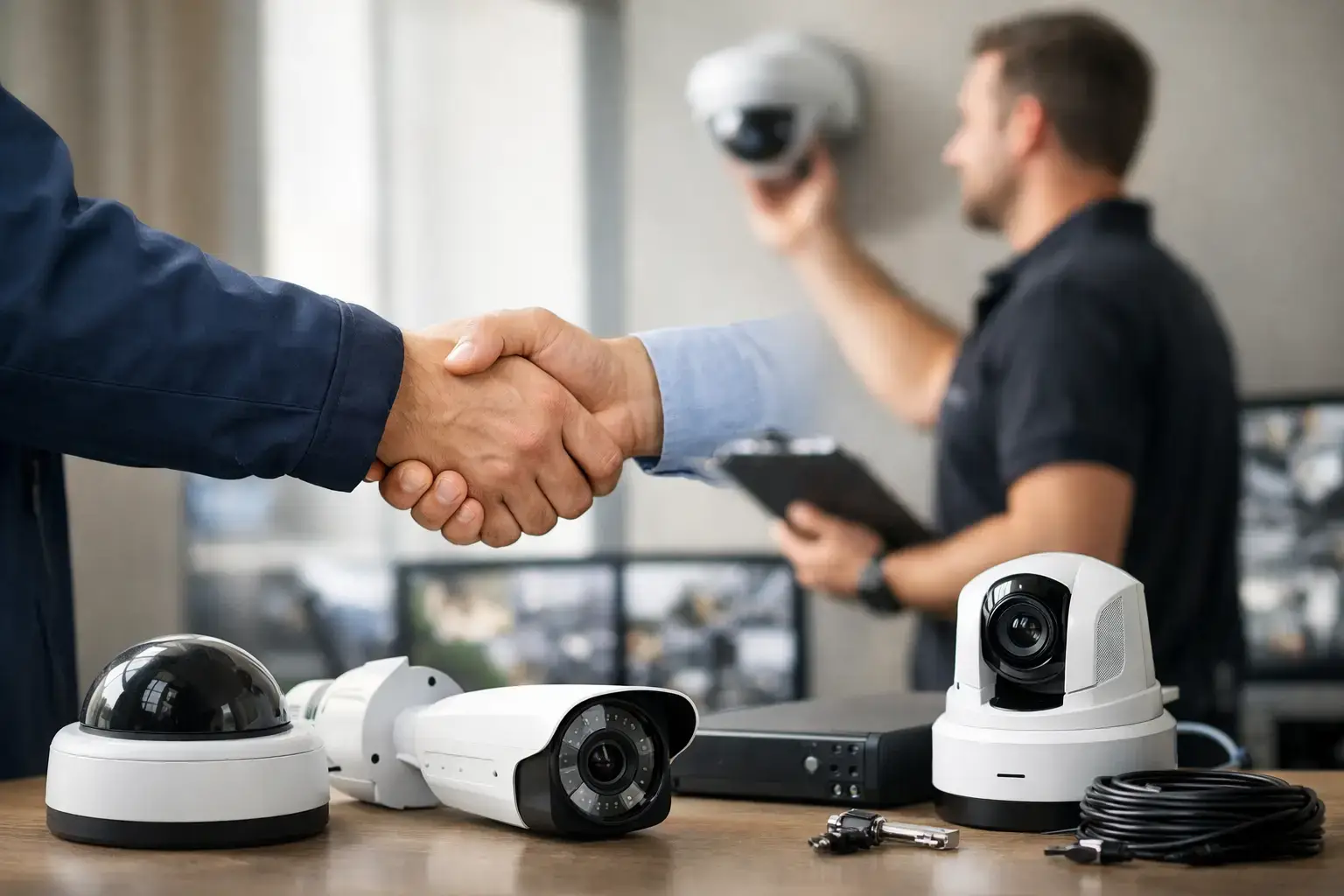
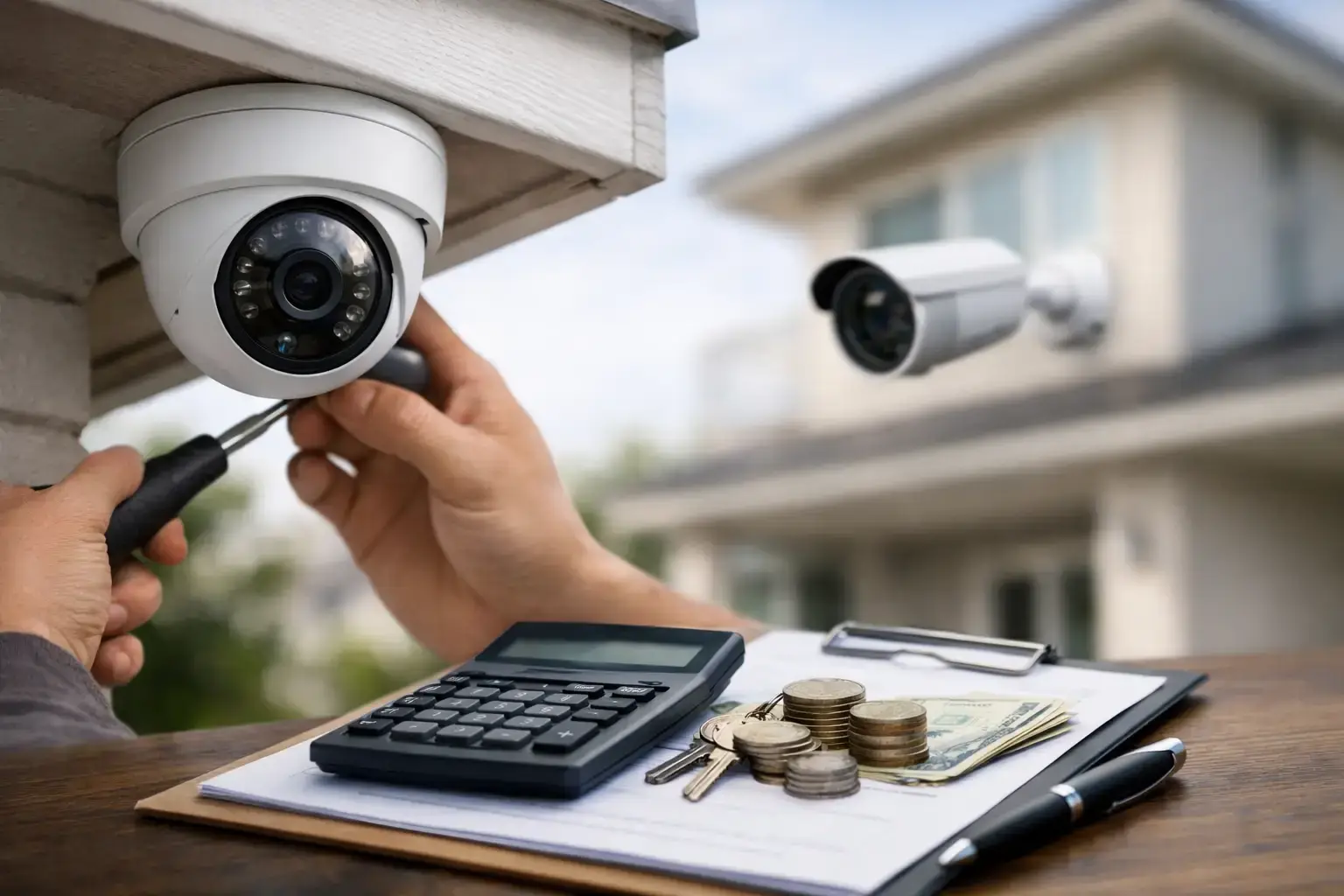
If you are comparing quotes and seeing very different figures, that is usually because home CCTV installation cost is shaped by more than the number of cameras on the wall. Cable routes, recording quality, night vision, remote access, storage time and the standard of the installer all affect the final price.
For most homeowners, the real question is not simply what CCTV costs. It is what level of protection the system will provide, how reliably it will perform over time, and whether it has been designed properly for the property. A cheaper system can look similar on paper, yet leave key entry points uncovered or produce poor footage when you actually need it.
What affects home CCTV installation cost?
The biggest cost factor is usually the size and layout of the property. A small terraced house with one front entrance and a compact rear garden needs far less equipment and labour than a detached home with side access, a driveway, outbuildings and multiple external approaches. The more areas that need reliable coverage, the more cameras, cabling and configuration time are involved.
Camera type also matters. Basic fixed cameras are usually less expensive than turret or dome models with stronger low-light performance, wider dynamic range or built-in analytics. If you want number plate capture on a driveway, clear facial recognition at a gate, or coverage across a long garden boundary, the specification needs to match that task. That often means better hardware, not just more hardware.
Recording equipment and storage have a direct impact on price as well. A system recording continuously in higher resolution will need more hard drive capacity than one set to record on motion only. Some households want a shorter retention period simply to review recent activity. Others want several weeks of footage for reassurance, insurance purposes or because the property may be unoccupied for periods.
Installation difficulty is another major variable. Easy access to loft spaces, short cable runs and sensible camera positions can keep labour costs under control. If the installer needs to work around thick walls, decorative finishes, limited void space or a multi-storey layout, the job naturally becomes more involved.
Typical price ranges for a professionally installed system
As a broad guide, a professionally installed home CCTV system in the UK often starts from a few hundred pounds for a straightforward entry-level setup and can rise into the low thousands for larger or more advanced properties. For many homeowners, a quality system with two to four external cameras, a recorder and mobile viewing sits somewhere in the middle of that range.
That said, broad averages only go so far. A two-camera system fitted to a small home can cost more than a four-camera package if the first property needs specialist access equipment, longer runs or higher-grade cameras. This is why a proper survey is more useful than a standard package price.
When reviewing a quotation, it helps to check whether it includes all of the essentials. Recorder setup, mobile app configuration, cable management, power supplies, image optimisation and user handover should all be clear. A low initial figure can climb quickly if those elements are treated as extras.
Cheap CCTV versus professionally designed CCTV
There is a clear difference between consumer-grade kits and professionally installed security systems. Off-the-shelf products can suit some households, particularly where the aim is basic visual deterrence. The trade-off is often in long-term reliability, image quality, secure installation and aftercare.
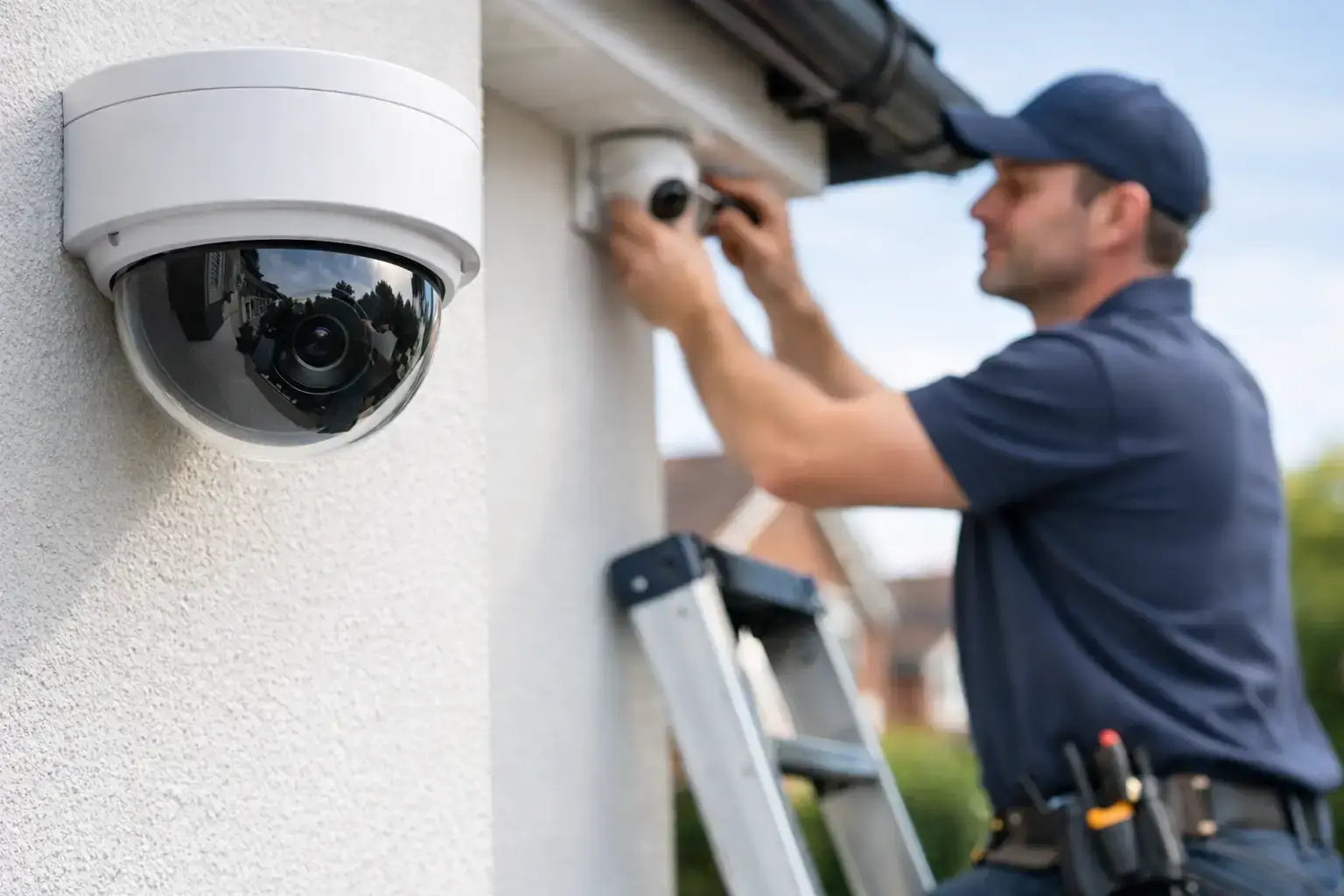
Professional installation is not only about fitting the cameras neatly. It is about placing them at the correct height and angle, reducing blind spots, protecting equipment from tampering, and making sure footage is usable in real conditions such as glare, darkness and bad weather. That planning is part of the value.
For homeowners who want dependable protection rather than a simple gadget purchase, it usually makes more sense to invest in a system designed around the property. This is especially true for larger homes, properties with vulnerable side access, or addresses where insurer expectations and evidence quality matter.
The hidden costs homeowners should ask about
A quote can look competitive until you find out what has been left out. One common omission is network setup. If you want remote viewing on your mobile phone, the installer may need to configure the system on your broadband network, set up secure access and ensure stable performance.
Maintenance is another point worth checking. CCTV is often treated as fit-and-forget, but lenses need to remain clean, recording equipment needs to stay healthy and settings should occasionally be reviewed. If a camera drifts out of position or a hard drive begins to fail, you want to know before an incident takes place.
There can also be costs linked to upgrades later on. Homeowners sometimes start with front and rear coverage, then decide they want driveway monitoring, side access coverage or integration with an intruder alarm. Choosing a scalable recorder and suitable infrastructure at the start can prevent unnecessary replacement costs later.
How to budget for the right level of protection
The best way to approach home CCTV installation cost is to budget around risk rather than around the cheapest package. Start with the obvious questions. Which areas are most vulnerable? Do you need general awareness, or do you need footage that can clearly identify a person or vehicle? Are you mainly protecting against opportunistic theft, nuisance behaviour, parcel theft or repeated trespass?
A modest property may only need a well-positioned pair of cameras to cover the front entrance and rear access effectively. A larger family home might need four to six cameras to remove blind spots and monitor the perimeter properly. More is not always better, but gaps in coverage can undermine the whole system.
It is also worth thinking about how the system will be used day to day. Many homeowners want straightforward mobile alerts and quick playback if something happens. Others want a more comprehensive setup with high-quality evidence, outbuilding protection or integration with gates, lighting or alarms. The right budget follows the outcome you need.
Why surveys matter more than package deals
A proper site survey can save money as well as improve security. Without one, you risk paying for cameras that do not solve the actual problem, or choosing too few cameras and ending up with weak coverage. Good installers assess access points, lighting conditions, likely approach routes and the practicalities of cable installation before recommending equipment.
That process also gives you a clearer understanding of what you are paying for. Instead of a generic four-camera bundle, you receive a proposal built around your home. For many buyers, that clarity is the difference between buying confidently and guessing.
For homeowners in Essex, London and the South East, working with an experienced specialist such as 247 CCTV can also provide reassurance around system design, installation standards and ongoing support. That matters if you want a solution that performs consistently rather than one that simply looks good on installation day.
Home CCTV installation cost and long-term value
The true value of CCTV is measured over years, not at the moment the invoice is paid. A reliable system can deter intrusion, support police enquiries, help resolve disputes and give homeowners greater confidence when away from the property. If it prevents even one significant loss or provides the footage needed after an incident, the investment can quickly justify itself.
That is why the cheapest quote is not always the lowest cost option in practice. If cameras fail early, produce poor night images or leave crucial areas uncovered, replacement and remedial work can cost more than doing it properly in the first place.
A well-installed CCTV system should feel dependable, straightforward to use and appropriate for the risks around your home. When you compare prices, focus on coverage, image quality, recording capacity, installation standard and support – not just the headline number.
If you are budgeting for CCTV, the sensible next step is not to hunt for the lowest figure. It is to ask what level of protection your property genuinely needs, then choose a system that will still be doing its job properly years from now.