A fire alarm that fails during a routine test is inconvenient. A fire alarm that fails during a real incident is a serious risk to life, property and business continuity. That is why a fire alarm maintenance contract matters. It is not simply a service add-on. It is the practical arrangement that helps make sure your system remains compliant, dependable and fit for purpose long after installation.
For many property owners and facilities managers, maintenance only becomes urgent when faults start appearing, false alarms increase, or an insurer asks for service records. By that stage, the system may already be underperforming. A planned contract puts structure around inspections, testing, servicing and fault response, so problems are identified early rather than during an emergency.
What a fire alarm maintenance contract actually covers
At its core, a fire alarm maintenance contract is an agreement between the system owner and a competent provider to carry out scheduled servicing and, in many cases, provide reactive support when faults arise. The exact scope varies, and that is where many buyers need to look carefully.
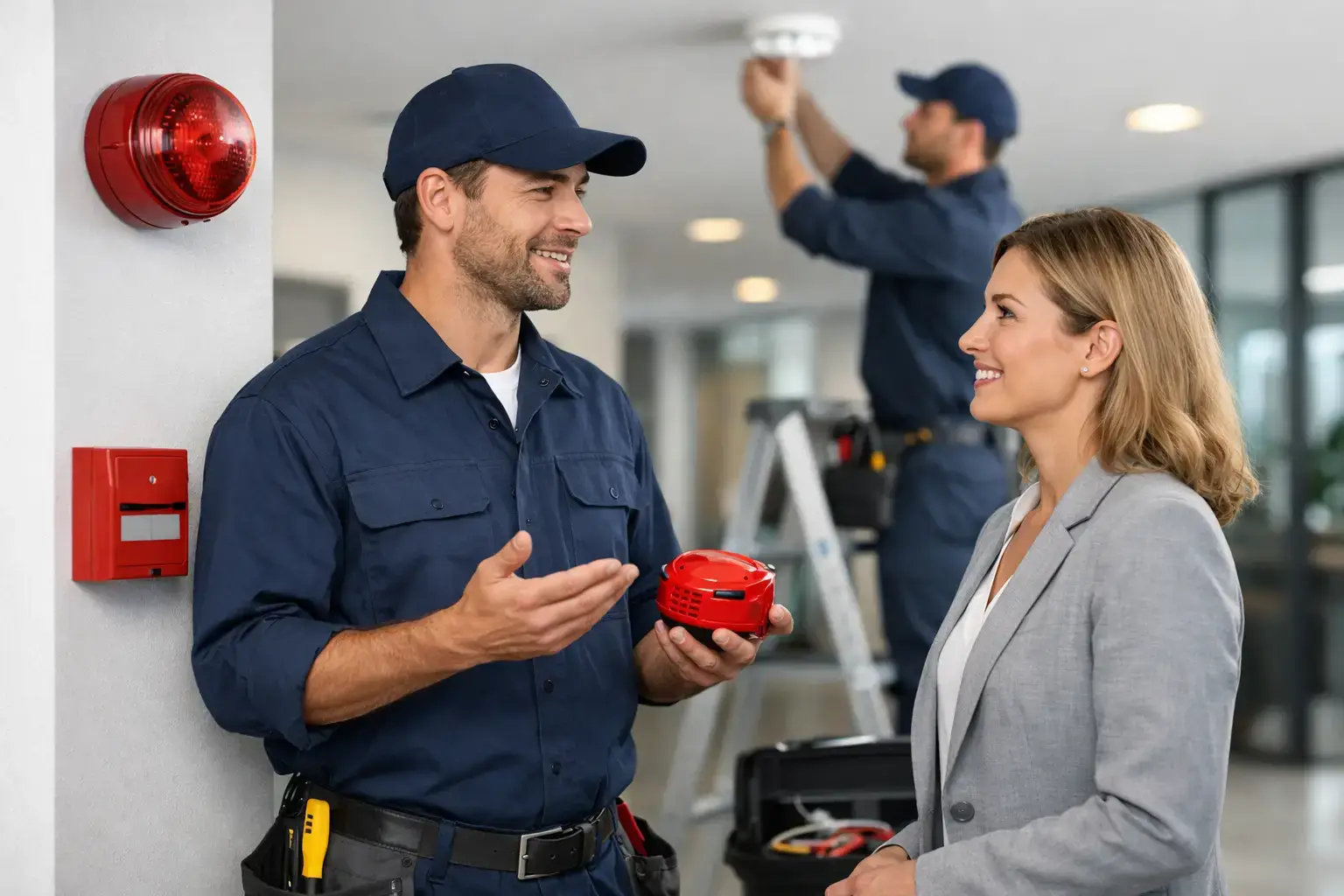
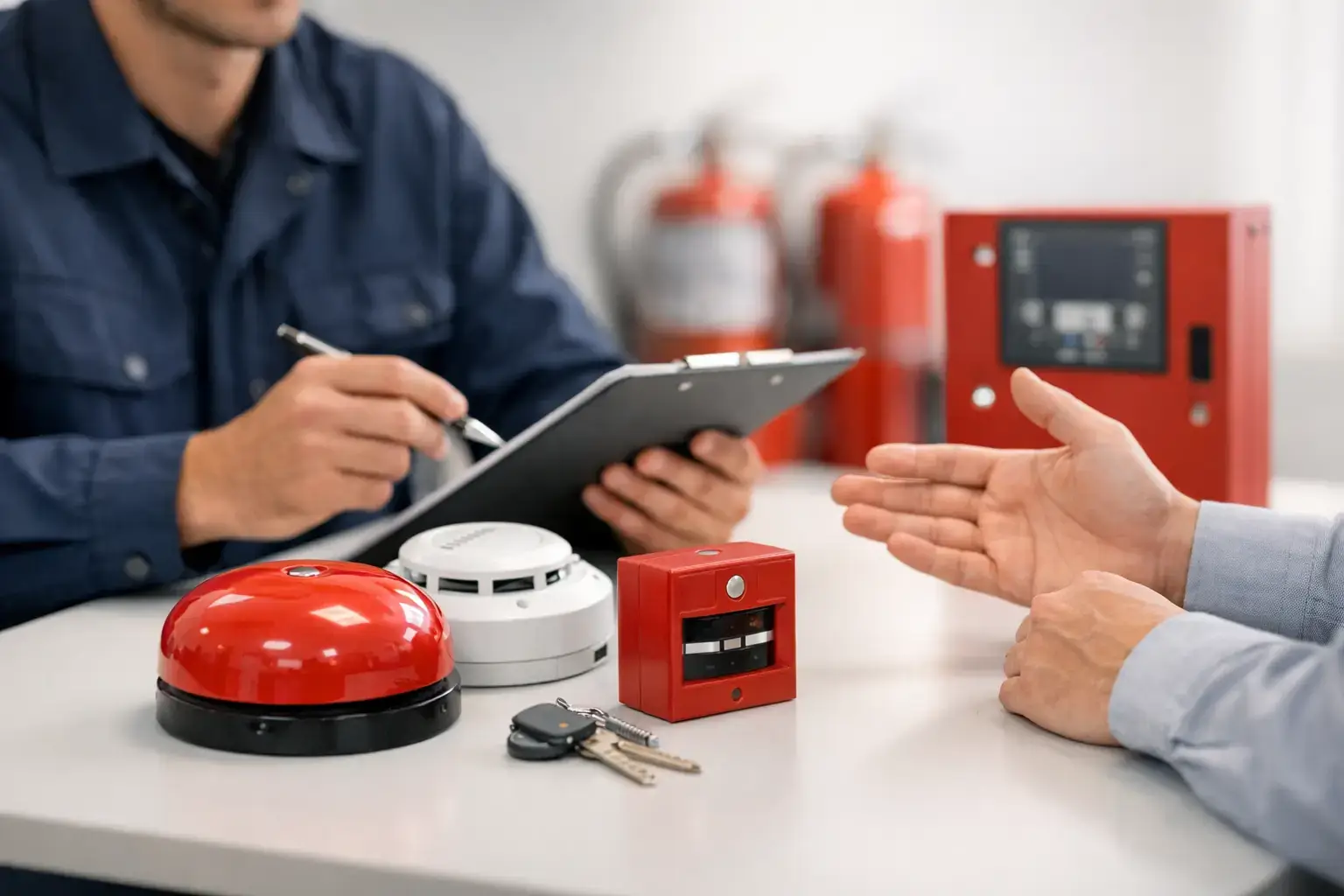
A good contract will usually include periodic inspections of the control panel, detectors, sounders, manual call points, standby power supplies and any connected devices or interfaces. It should also cover functional testing, checking for contamination or damage, reviewing log books and confirming that the system is operating as intended.
In some buildings, the fire alarm is not working in isolation. It may be connected to door release systems, smoke control, lift grounding, remote signalling or other life safety measures. In those cases, maintenance needs to reflect the wider system design. A cheaper contract that only tests the panel and a sample of field devices may leave important cause-and-effect functions unchecked.
There is also a difference between planned maintenance and emergency repairs. Some contracts include labour for call-outs but charge separately for parts. Others include a set level of response but not out-of-hours attendance. Neither approach is automatically right or wrong, but the details affect both cost and risk.
Why maintenance is about more than compliance
Compliance is a major reason to have a contract in place, especially in commercial premises, HMOs, blocks, schools, healthcare settings and public-facing buildings. Responsible persons need evidence that fire detection and alarm systems are being maintained properly. A documented maintenance regime supports that duty.
But compliance is only part of the picture. The day-to-day value is reliability. Dust, decorating work, accidental damage, battery deterioration, environmental changes and device ageing can all affect performance over time. Without regular servicing, false alarms become more likely, faults can remain unnoticed and coverage may no longer match the risks in the building.
False alarms deserve special attention because they carry a real operational cost. In offices and schools they disrupt activity. In residential blocks they reduce confidence in the system. In commercial settings they can create complacency, which is dangerous if a genuine activation occurs later. Good maintenance helps identify recurring causes rather than simply resetting the panel and moving on.
What to look for in a fire alarm maintenance contract
The best contracts are clear, specific and suited to the building. If the agreement is vague, there is room for misunderstanding when you need support most.
Start with visit frequency. The required servicing interval depends on the type of premises, the system category and the risk profile. Many commercial systems will require more than an annual visit. If a provider offers a very low-cost package, check whether the number of visits is actually adequate.
Then look at response times. A contract should say how quickly faults will be attended to, and whether response differs during evenings, weekends or bank holidays. For high-risk premises, long response windows can leave you exposed.
It is also worth checking whether the provider will maintain a system they did not install. Some companies are happy to take over existing systems after an initial inspection, while others are not. Where they do, they may first recommend remedial works to bring the installation up to a maintainable standard. That can be frustrating if you were expecting a simple handover, but it is often the responsible approach.
Documentation matters too. You should expect service reports, records of tests and clear notes on faults, recommendations and any limitations identified. These records are useful for audits, insurers, fire risk management and internal accountability.
Fire alarm maintenance contract terms that affect price
Price always matters, but with life safety systems it should never be the only test. A low annual fee can look attractive until you discover that call-outs, batteries, detector replacements and out-of-hours labour sit outside the agreement.
Several factors influence cost. The size of the system is the obvious one, including the number of devices, panels and interfaces. Building complexity also matters. A straightforward office is not the same as a school, warehouse, care setting or mixed-use site with linked systems.
Access arrangements can affect pricing as well. If maintenance needs to be carried out around trading hours, within secure areas or across multiple buildings, service time increases. Older or unsupported systems can also cost more to maintain because faults are harder to diagnose and parts may be less readily available.
That said, the cheapest quote is not always poor and the highest quote is not always best. The real question is what is included, how competent the provider is, and whether the contract matches the consequences of failure in your building.
Who needs a more tailored agreement
A small single-site premises with a conventional fire alarm may only need a straightforward planned maintenance arrangement. Larger or more demanding environments often need more than that.
Retailers may require servicing outside opening hours. Schools and colleges need maintenance planned around term time and safeguarding controls. Construction sites and temporary buildings may need flexible support because layouts change. Healthcare and supported living environments usually require greater care around continuity, false alarms and coordination with staff procedures.
Landlords and managing agents often benefit from one provider covering multiple systems across a portfolio, especially where fire alarms sit alongside CCTV, access control, door entry or intruder alarms. It simplifies accountability and can make fault response more efficient. For buyers across Essex, London and the South East, working with a specialist company that understands both compliance and integrated security can make contract management considerably easier.
Questions worth asking before you sign
Before agreeing to a fire alarm maintenance contract, ask who will actually carry out the work. Competence, accreditation and experience are not marketing details. They directly affect the quality of inspection and advice.
Ask what happens at takeover if the system is existing rather than new. Ask how faults are categorised and what the response commitment is. Ask whether consumables, batteries and replacement devices are covered. Ask how service records are issued and whether recommendations are prioritised clearly.
You should also ask whether the provider understands your type of premises. A contractor used to simple domestic systems may not be the right fit for a large commercial addressable installation with phased evacuation, remote signalling and linked doors. Likewise, a large corporate maintenance model may not suit a smaller residential block that needs straightforward, responsive support.
Choosing a provider you can rely on
Fire alarm maintenance is one of those services where consistency matters as much as technical skill. You want a provider that turns up when scheduled, explains issues clearly, and does not disappear once the installation is complete. If they also understand wider building security and life safety systems, that is often an advantage rather than an extra.
A specialist company such as 247 CCTV can support clients who want a dependable partner rather than a box-ticking visit. That matters when buildings have multiple electronic systems, when compliance records need to stand up to scrutiny, and when downtime carries real operational risk.
The right contract should leave you with confidence, not questions. It should be clear on what is inspected, what is covered, how quickly help arrives and what your responsibilities are between visits. If a provider cannot explain those points plainly, it is worth pausing before you sign.
A fire alarm system is only as reliable as the care it receives over time, and the best maintenance contracts do something simple but essential – they reduce uncertainty when safety depends on the system working exactly as it should.