A blurred image of a till area or loading bay is no use when you need to identify a face, confirm a vehicle registration, or understand exactly what happened after an incident. That is why IP cameras for business need to be chosen around risk, layout and day-to-day operations – not just headline resolution or a low upfront price.
For most commercial sites, CCTV is no longer just about recording crime after the event. It is part of a wider security strategy that can deter theft, support staff safety, reduce false claims, assist with access control, and provide managers with a clearer view of how a site is operating. The right system can do all of that reliably. The wrong one can leave blind spots, create storage problems, and fail when evidence is needed most.
Why IP cameras for business are now the standard
IP CCTV has become the preferred choice for many business premises because it offers better flexibility than older analogue systems. Cameras can be installed across single or multiple buildings, viewed remotely, integrated with other security systems, and configured with features such as motion detection, line crossing alerts and people or vehicle analytics.
That does not mean every site needs the same specification. A small office with a single entrance has very different requirements from a retail unit, school, warehouse or construction site. In each case, the purpose of the camera system should come first. Some businesses need evidential image quality at key points such as receptions, cash handling areas or gates. Others need wider situational coverage to monitor movement, deliveries, perimeter activity or health and safety concerns.
A professional design takes both into account. It avoids the common mistake of fitting cameras where they are easy to mount rather than where they are genuinely needed.
Start with risk, not camera count
One of the first questions buyers ask is how many cameras they need. In practice, that is not the right starting point. A better question is what risks the system must address.
For a retailer, that may mean entrances, tills, stock rooms and external approach routes. For a logistics site, it may be vehicle gates, loading areas, yard coverage and vulnerable perimeter lines. In a school or healthcare setting, safeguarding, controlled access and privacy are all part of the picture. The camera plan should reflect those priorities.
This is also where site conditions matter. Lighting levels, reflective surfaces, narrow corridors, high ceilings, outdoor exposure and network availability all affect performance. A camera that looks suitable on paper may produce poor results if it is positioned against strong backlight or asked to cover too large an area. Good system design is usually less about adding more equipment and more about placing the right cameras in the right places.
What to look for in business IP cameras
Image quality matters, but resolution alone is not enough. A 4MP or 8MP camera may sound impressive, yet image clarity still depends on lens choice, frame rate, compression settings and available light. If the goal is facial recognition at a doorway, the field of view must be set correctly. If the goal is general monitoring of a car park, a wider angle may be more appropriate.
Low-light performance is another key point. Many incidents happen early in the morning, after closing, or in poorly lit service areas. Infrared capability can help, but it is not a substitute for proper scene assessment. In some locations, white light deterrence or supplementary lighting will produce more useful footage.
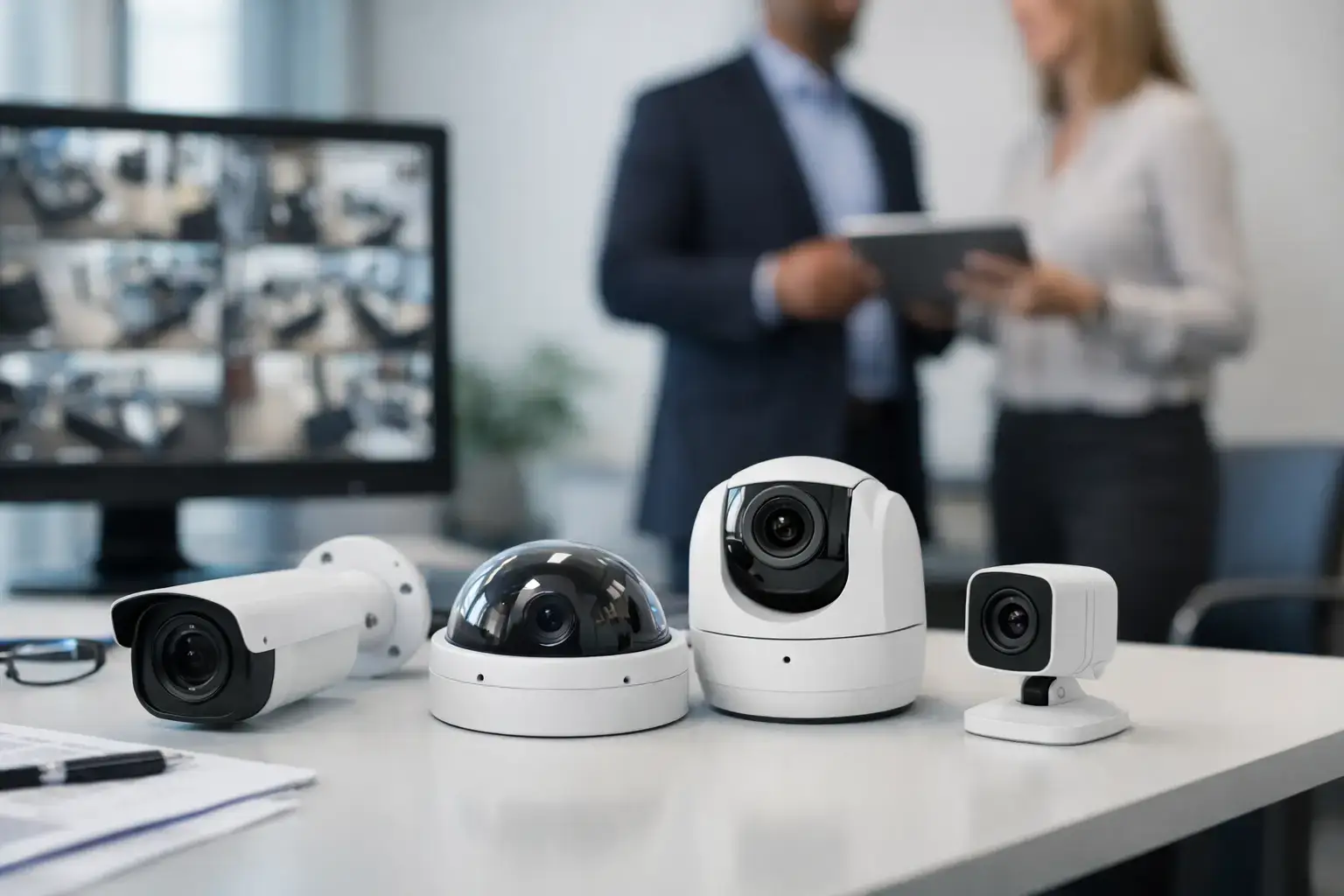
Then there is the camera type itself. Dome cameras are often chosen for internal areas where a discreet finish is preferred. Bullet cameras can be useful externally where longer viewing distances are needed. Turret cameras are popular because they often offer a strong balance of image quality and straightforward adjustment. PTZ cameras can cover larger spaces, but they are rarely the answer everywhere. A PTZ can only look in one direction at a time unless it is paired with fixed cameras covering key areas.
This is where many businesses benefit from experienced guidance. The best result usually comes from combining camera types based on operational need rather than selecting one model for the whole site.
Analytics, alerts and remote access
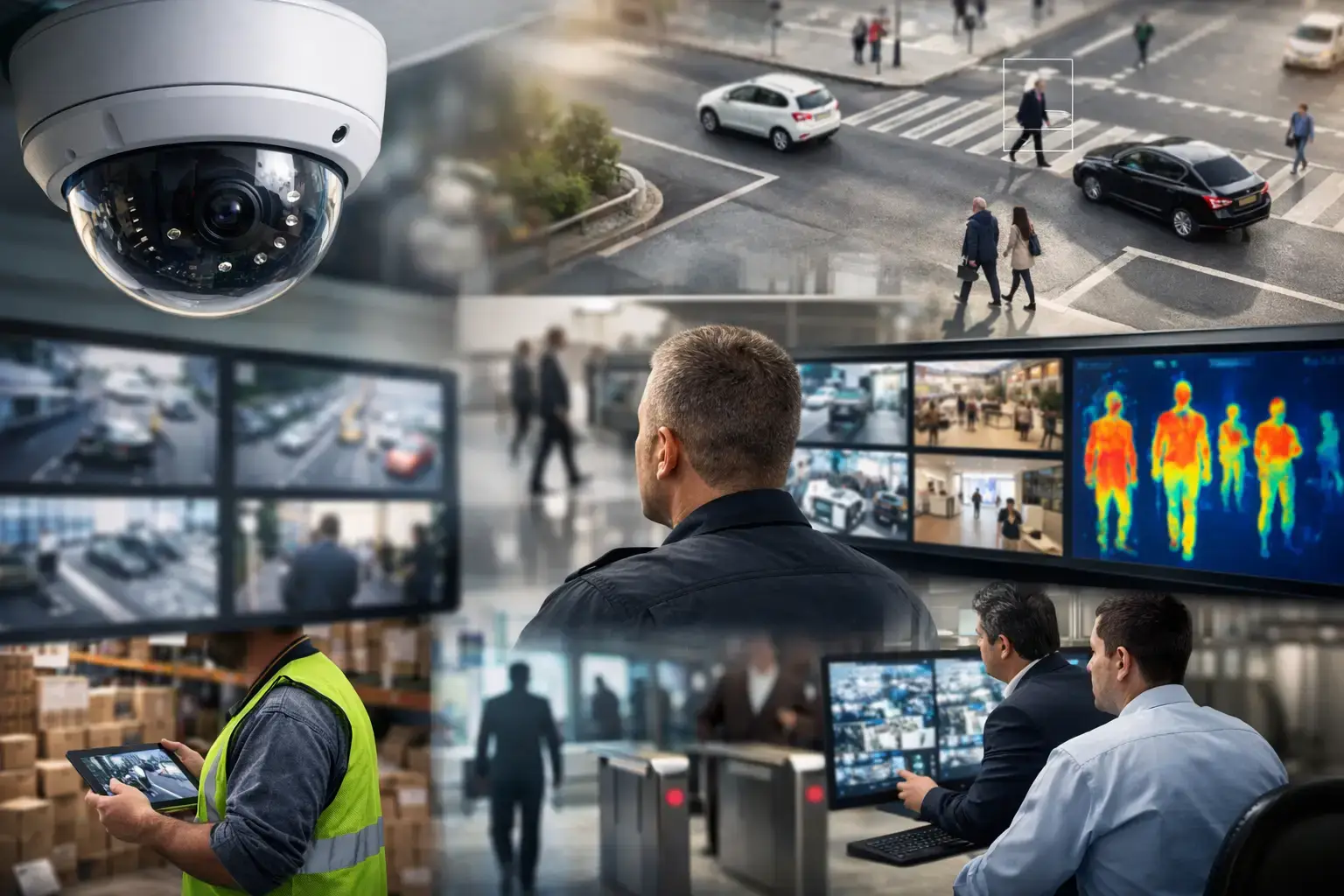
Modern IP cameras for business can do far more than record footage. Video analytics can identify line crossing, intrusion into restricted areas, loitering, people counting and vehicle movement. Used properly, these features can improve response times and reduce reliance on someone constantly watching live screens.
However, analytics need careful setup. A system that sends constant alerts because of weather, shadows or normal site activity quickly becomes ignored. A properly configured system should distinguish between real security events and routine movement as far as possible. That is especially valuable on commercial premises where false alarms waste time and can disrupt operations.
Remote viewing is now expected by many business owners and facilities teams. Being able to check cameras from a phone, tablet or desktop is useful, especially across multiple sites. But convenience should not come at the expense of security. Remote access should be configured with strong passwords, secure user permissions and sensible access levels for different staff members.
Storage, retention and network considerations
A business CCTV system is only as useful as its recording setup. Storage needs depend on the number of cameras, recording resolution, frame rates, compression, recording schedule and how long footage must be retained. Some businesses only need event-based recording in certain areas. Others need continuous recording for compliance, investigations or insurer requirements.
It is important to be realistic here. Higher resolution and longer retention periods demand more storage space. If the budget is fixed, decisions may need to be made about where maximum detail is truly required. For example, entrances and payment points may justify higher-quality recording than low-risk internal circulation spaces.
Network performance also matters. IP cameras use data, and on busy sites this should be designed properly from the outset. Poorly planned systems can suffer lag, dropped footage or unreliable remote access. Power over Ethernet can simplify installation, but it still needs the right switching infrastructure and cable routes.
For larger or more complex premises, CCTV should not be treated as a stand-alone purchase. It needs to sit comfortably within the building’s wider IT and security environment.
Compliance, privacy and insurer expectations
Business CCTV needs to be effective, but it also needs to be compliant. If cameras capture staff, visitors or members of the public, data protection responsibilities apply. That does not mean businesses should avoid surveillance. It means the system should be designed and managed properly, with clear purpose, suitable signage, appropriate retention settings and controlled access to recordings.
This is another reason professional installation matters. A well-designed system helps avoid common problems such as excessive coverage of neighbouring land, poor camera placement in sensitive areas, or recording settings that do not match the business’s obligations.
For some premises, insurer expectations and certification standards will also influence the specification. Businesses often need reassurance that their CCTV forms part of a dependable, professionally installed security solution rather than a consumer-grade setup with uncertain performance.
Why professional installation usually pays off
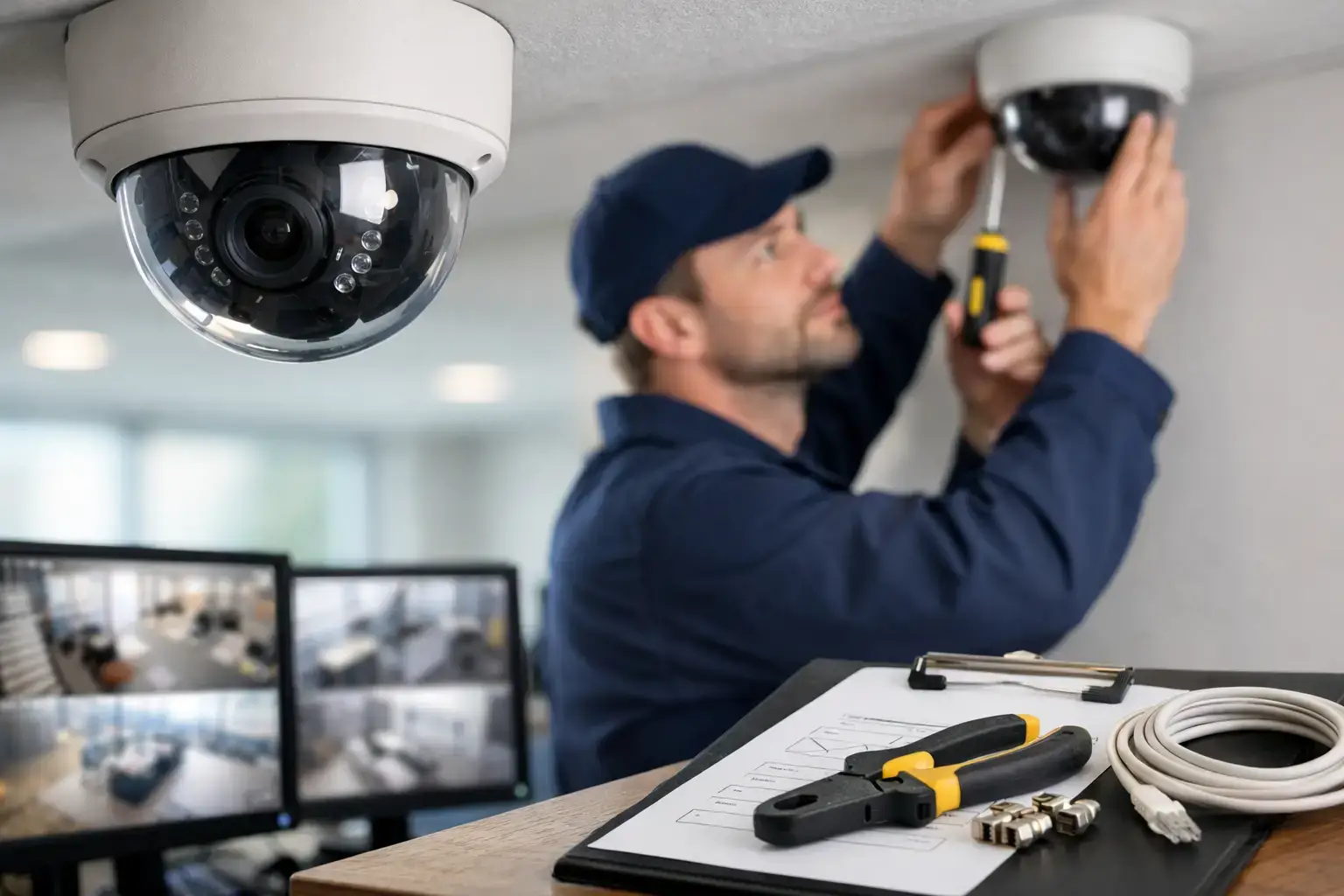
There is a clear difference between buying cameras and having a security system designed. Professional installers assess the site, identify risk points, account for lighting and infrastructure, and configure the system to support real operational needs. That includes not only image coverage but also recording reliability, user access, analytics setup and future maintenance.
For businesses across Essex, London and the South East, this is often the difference between a system that simply exists and one that genuinely supports incident response, staff protection and loss prevention. Companies such as 247 CCTV work with this broader view in mind, combining survey, design, installation and ongoing support rather than leaving the client to piece everything together.
Maintenance should not be overlooked either. Cameras can move slightly over time, lenses become dirty, storage fills, and firmware may need updating. A system that was fit for purpose on day one still needs periodic attention to remain dependable.
Choosing the right system for your premises
The best IP CCTV system for a business is rarely the one with the longest feature list. It is the one that suits the site, the risks and the way the building is used. A hospitality venue may need strong coverage of customer-facing areas and late-night incident review. An industrial unit may prioritise perimeter protection and yard visibility. An office may focus on entrances, access points and car parking. Each setting calls for a different balance of image quality, coverage, analytics and storage.
If you are comparing options, ask practical questions. What do you need the footage to prove? Which areas are most vulnerable? Who will use the system day to day? How long do recordings need to be kept? Will the cameras need to integrate with alarms or access control later on? Those answers will shape the right specification far more effectively than choosing by price alone.
A well-planned CCTV system should make a business feel more controlled, not more complicated. When cameras are chosen properly, installed professionally and maintained over time, they become a dependable part of running a safer site.