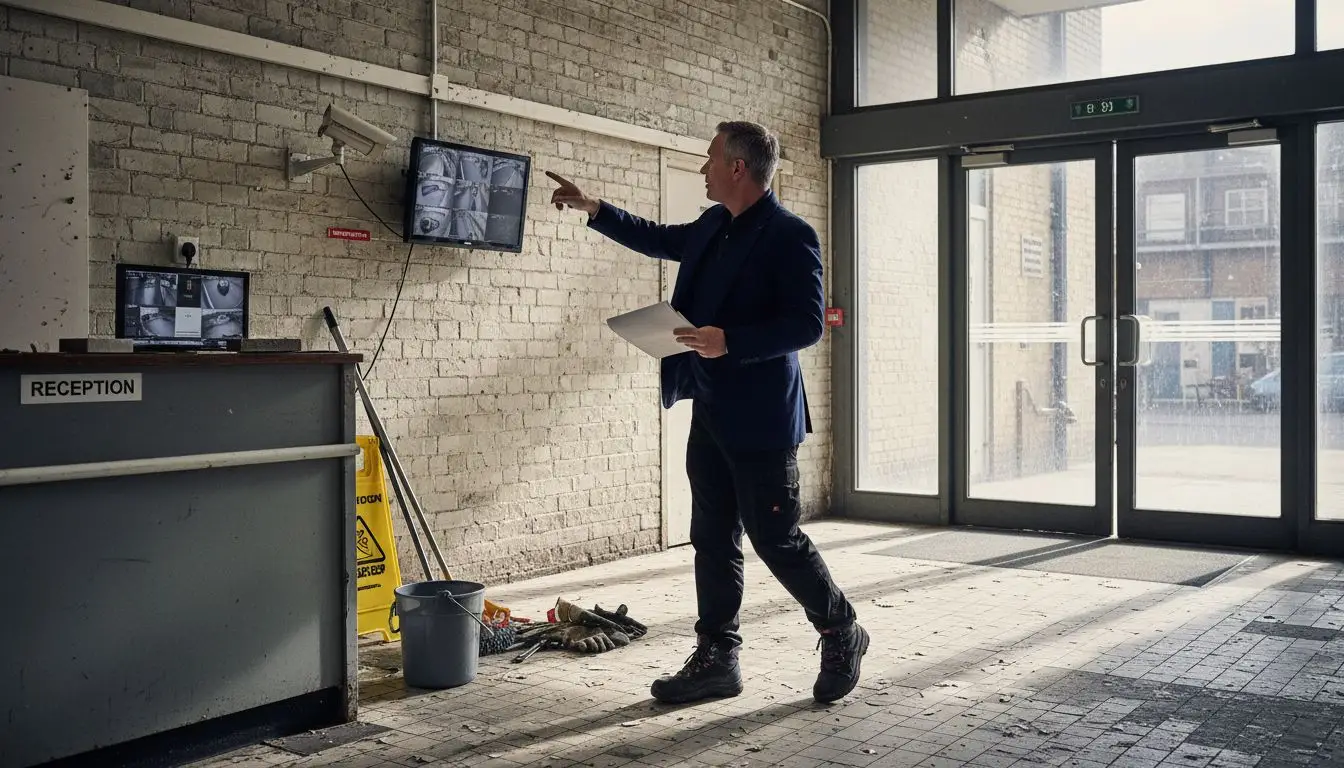
Commercial properties face unprecedented security challenges. Over 400,000 commercial burglaries were recorded across England and Wales between 2019 and 2020, highlighting significant risks to your assets. This guide walks you through proven security solutions designed specifically for warehouses and retail establishments in Essex and London, covering legal compliance, technology integration, and practical implementation strategies that reduce incidents and protect your business.
Key Takeaways
| Point | Details |
|---|---|
| Commercial burglary rates remain critically high | Businesses face substantial theft and vandalism risks requiring immediate security action |
| UK legal compliance is mandatory for CCTV operators | ICO registration, data protection signage, and strict retention policies are non-negotiable |
| Integrated systems deliver superior protection | Combining CCTV, burglar alarms, and access control creates layered defence reducing vulnerabilities |
| AI technology reduces false alarms significantly | Smart surveillance improves threat detection accuracy while lowering operational costs |
| Tailored solutions suit different property types | Warehouse security needs differ substantially from retail premises requiring customized approaches |
Introduction to Business Security Risks in Essex and London
Commercial properties in Essex and London face distinct security threats that demand immediate attention. More than 400,000 commercial burglaries took place across England and Wales between 2019 and 2020, emphasizing the persistent risk level businesses must address. Warehouses storing high-value inventory, retail establishments with accessible entry points, and offices containing sensitive equipment all attract criminal attention.
Theft represents the most common threat, but vandalism and unauthorized access also create substantial operational disruptions. Understanding security basics for Essex and London businesses provides the foundation for effective protection strategies.
Typical threat vectors include:
- Forced entry through weakly secured doors and windows during closed hours
- Internal theft from employees with unrestricted access to valuable stock
- Opportunistic break-ins targeting properties with visible security gaps
- Coordinated burglaries following surveillance of business routines and vulnerabilities
- Vandalism causing costly property damage and operational downtime
Warehouse facilities face additional challenges with multiple loading bays and large perimeters creating numerous potential entry points. Retail premises must balance customer accessibility with security, making comprehensive protection more complex.
Physical security measures form your primary defence against these threats. Without proper systems monitoring access points and recording activity, you cannot effectively deter criminals or provide evidence for prosecutions. The financial impact extends beyond immediate theft losses to include property damage, insurance premium increases, and lost productivity during incident recovery.
UK Legal Framework and Compliance for Business Security
Installing security systems triggers specific legal obligations you must understand before implementation. UK businesses must register CCTV systems with the ICO, provide clear signage, and comply with strict data access and retention policies. Failure to meet these requirements results in substantial fines and legal complications.
The Information Commissioner’s Office oversees CCTV data protection compliance. If your system captures footage beyond your immediate property boundaries or monitors staff, registration becomes mandatory. Understanding CCTV compliance guidelines helps you navigate these requirements effectively.
Key legal responsibilities include:
- Registering as a data controller with the ICO before operating CCTV systems
- Displaying prominent signage informing people they are entering a monitored area
- Implementing secure storage preventing unauthorized access to recorded footage
- Establishing clear policies governing who can view footage and under what circumstances
- Limiting retention periods to only what is necessary for security purposes
- Responding promptly to subject access requests from individuals seeking their recorded data
Property owners carry ultimate responsibility for compliance regardless of who installs or maintains the equipment. Landlords cannot transfer data protection obligations to tenants simply by providing installed systems. Similarly, installation companies handle technical implementation but do not assume ongoing legal duties.
Staying current with CCTV regulations 2025 ensures you avoid penalties as requirements evolve. The General Data Protection Regulation establishes strict standards for processing personal information, including video surveillance data. Non-compliance can trigger fines reaching millions of pounds depending on violation severity.
Best practice involves conducting regular compliance audits examining signage adequacy, access controls, retention schedules, and staff training. Documenting your compliance efforts provides valuable evidence if questions arise about your data handling practices.
Understanding Business Security Technologies: CCTV, Alarms, and Access Control
Three core technologies form the foundation of effective commercial security systems. Each serves distinct functions, but integration creates comprehensive protection exceeding individual component capabilities.
CCTV systems provide continuous visual monitoring and recording. Analogue cameras transmit video signals through coaxial cables to digital video recorders, offering reliable basic surveillance at lower cost points. IP cameras connect via network infrastructure, delivering higher resolution footage with advanced features like remote access and intelligent analytics. Modern IP systems support resolutions up to 4K, capturing fine detail crucial for identifying individuals and vehicle registration plates.
| Feature | Analogue CCTV | IP CCTV |
|---|---|---|
| Resolution | Up to 1080p typical | 4K and beyond available |
| Infrastructure | Dedicated coaxial cabling | Existing network or WiFi |
| Remote access | Limited requiring additional hardware | Built-in via internet connection |
| Analytics capability | Minimal | Advanced AI detection and alerts |
| Scalability | Cable runs limit expansion | Easy addition of network cameras |
| Cost | Lower initial investment | Higher upfront but greater functionality |
Burglar alarms detect unauthorized entry through sensors monitoring doors, windows, and interior spaces. When triggered, these systems activate loud sirens deterring intruders while alerting you and potentially monitoring services. Motion detectors, door contacts, and glass break sensors create detection layers ensuring attempted break-ins trigger immediate responses.
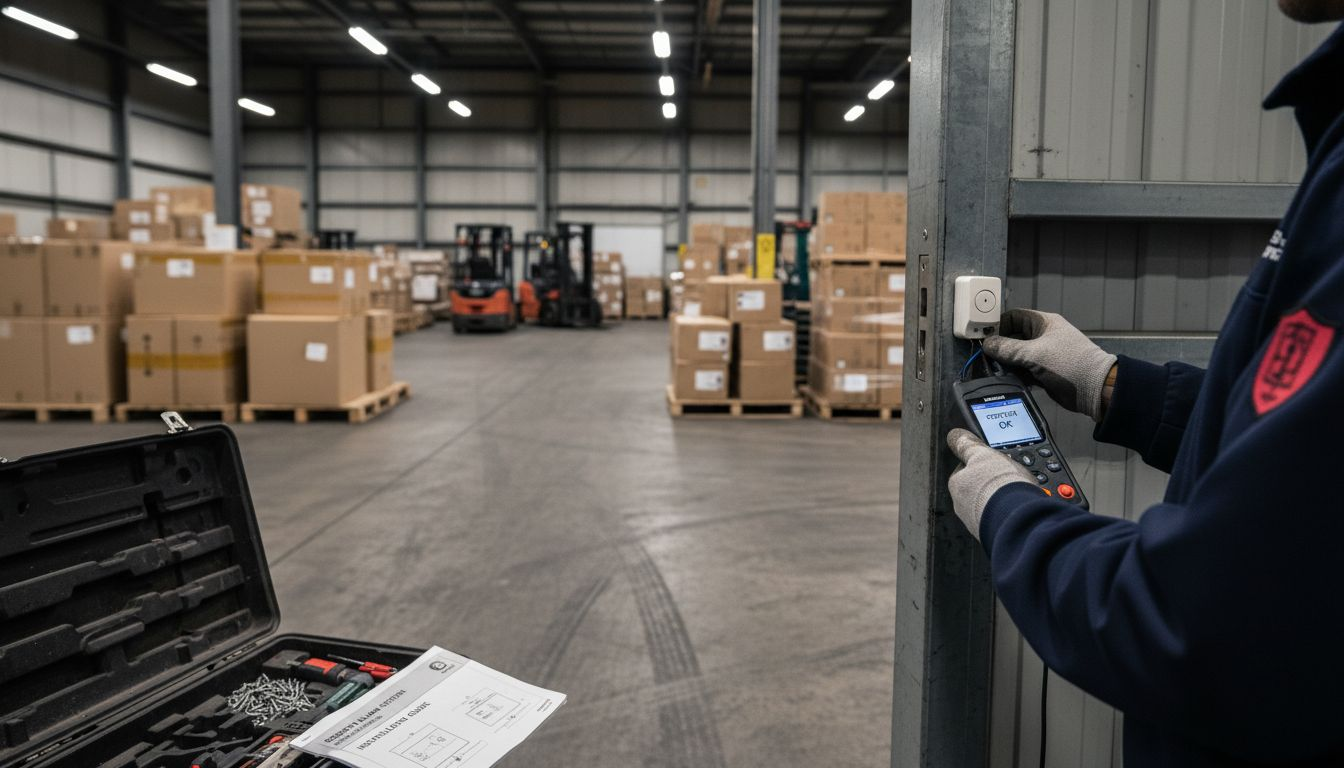
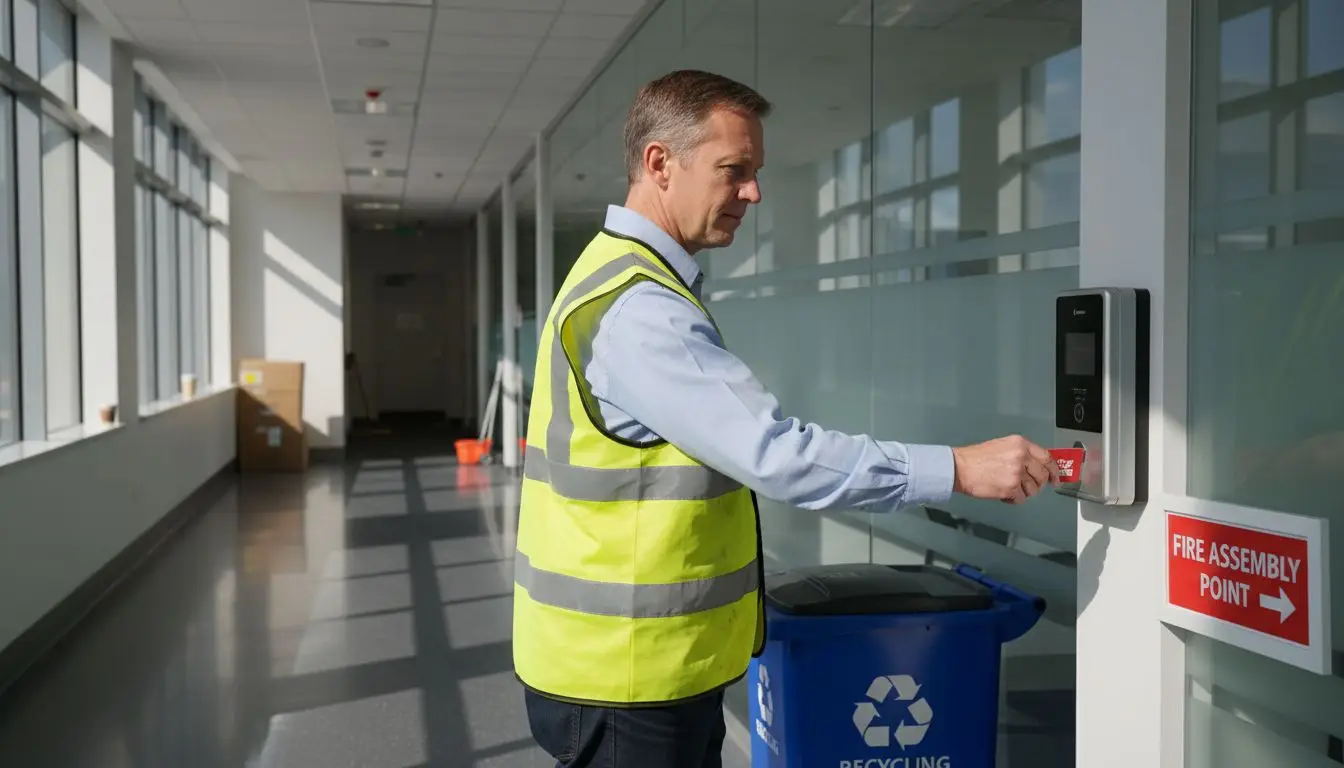
Access control systems manage and monitor who enters your premises. Electronic locks, keycard readers, and biometric scanners replace traditional keys, allowing you to grant or revoke access privileges instantly. Detailed logs record every entry attempt, providing valuable audit trails and identifying unauthorized access patterns.
AI-powered surveillance reduces false alarms by accurately detecting suspicious behavior, improving efficiency and lowering response costs. Understanding false alarm causes and solutions helps you configure systems optimally.
Integrating these technologies delivers superior protection:
- CCTV provides visual verification when alarms trigger, confirming genuine threats
- Access control logs correlate with video footage identifying who accessed areas during incidents
- AI analytics detect loitering or unusual movement patterns triggering preventative responses
- Centralized monitoring platforms display all systems simultaneously enabling coordinated reactions
Pro Tip: Deploy cameras covering alarm sensor locations. When motion detectors trigger, reviewing corresponding video footage immediately confirms whether response is necessary or the alert resulted from environmental factors.
Reading our business CCTV guide provides additional implementation insights for Essex and London commercial properties.
Common Misconceptions and Pitfalls in Business Security
Several widespread misunderstandings lead businesses to implement ineffective security measures. Recognizing these errors helps you avoid costly mistakes compromising your protection.
Many assume landlords or installation companies remain responsible for ongoing system maintenance. This misconception leaves equipment unserviced until failures occur during critical incidents. Property owners carry full responsibility for maintaining operational systems regardless of who performed initial installation. Understanding security responsibility misconceptions clarifies these obligations.
Common mistakes include:
- Installing cameras in poor locations capturing unusable footage during incidents
- Selecting inadequate resolution preventing identification of individuals or vehicles
- Configuring insufficient retention periods erasing evidence before it is reviewed
- Neglecting regular maintenance allowing equipment degradation and failure
- Relying solely on CCTV without alarm systems detecting intrusions in real time
- Failing to train staff on proper system operation and data handling procedures
CCTV alone does not constitute comprehensive security. Cameras record incidents but provide no active deterrence or immediate alerts when breaches occur. Criminals often disable visible cameras before proceeding, especially when no alarm systems trigger responses.
Outdated equipment presents significant vulnerabilities. Older analogue systems may lack sufficient resolution for modern investigative needs. Hard drives fill quickly without proper retention management, overwriting crucial evidence. Network security weaknesses in connected systems create entry points for cyber attacks accessing your surveillance data.
Pro Tip: Schedule quarterly system tests verifying all cameras record clearly, alarms trigger properly, and access controls function correctly. This proactive approach identifies failures before they compromise your security during actual incidents.
The false sense of security from visible cameras without functional backing systems creates dangerous complacency. Criminals recognize dummy cameras and poorly maintained equipment, targeting properties with security theater rather than genuine protection.
Integrating and Managing Security Systems for Optimal Protection
Effective security requires coordinated operation across all installed technologies. Integration transforms independent systems into unified protection platforms delivering superior threat detection and response capabilities.
Follow this approach for successful integration:
- Conduct comprehensive site surveys identifying all potential entry points and vulnerable areas requiring coverage
- Design camera placement ensuring overlapping fields of view eliminating blind spots criminals exploit
- Position alarm sensors covering every accessible door, window, and high-value storage location
- Configure access control restricting entry to authorized personnel with activity logging
- Connect all systems to centralized monitoring displaying unified alerts and video verification
- Implement automated responses linking alarm triggers to camera recording and notification systems
- Establish clear protocols defining staff responsibilities when security events occur
Integrated systems accelerate incident detection and improve response accuracy. When motion sensors trigger, corresponding cameras automatically begin recording while sending alerts with live video feeds to your monitoring devices. This immediate verification distinguishes genuine threats from false alarms caused by environmental factors.
Maintenance schedules preserve system reliability. Monthly checks should verify camera clarity, test alarm sensors, and confirm access control hardware functions properly. Annual professional inspections examine wiring integrity, replace aging components, and update software addressing security vulnerabilities.
The AI surveillance market is projected to reach $63.68 billion by 2030, reflecting growing adoption for enhanced security analytics. AI technologies distinguish between routine activity and suspicious behavior, dramatically reducing false alarm rates that waste resources and desensitize response teams.
Implementing effective systems requires:
- Regular software updates patching security vulnerabilities and adding improved features
- Scheduled equipment cleaning preventing image degradation from dirt and weather exposure
- Battery backup systems ensuring continued operation during power failures
- Secure credential management for access control preventing unauthorized duplication
- Comprehensive staff training on system operation and emergency response procedures
- Documented incident response protocols ensuring consistent effective reactions
Learning about access control integration tips helps you implement these systems effectively. Additionally, managing false alarms reduces operational disruptions and maintains system credibility.
AI analytics provide advanced capabilities including facial recognition, license plate reading, and behavioral analysis detecting unusual patterns. These features trigger alerts only for genuine security concerns, allowing your team to focus on real threats rather than investigating countless false positives.
Tailoring Security Solutions for Warehouses and Retail Establishments
Different commercial property types demand customized security approaches addressing their unique operational characteristics and vulnerability profiles.
Warehouses present distinct challenges requiring multi-layered strategies. Large floor areas with numerous loading bays and limited staff presence create abundant opportunities for unauthorized access. High-value inventory attracts organized theft operations employing sophisticated methods.
Effective warehouse security includes:
- Perimeter cameras monitoring all exterior walls and access points continuously
- Motion-activated lighting deterring nighttime intrusion attempts
- Access control at loading bays tracking driver and visitor entry with time-stamped logs
- Interior cameras covering high-value storage areas and main traffic routes
- Alarm systems with multiple zones allowing selective activation during partial operations
- Regular security audits identifying emerging vulnerabilities as operations evolve
Retail premises balance customer accessibility with theft prevention. Open layouts facilitating shopping create challenges for comprehensive monitoring. Multiple entry points and high foot traffic complicate distinguishing authorized customers from potential threats.
| Security Need | Warehouse Approach | Retail Approach |
|---|---|---|
| Perimeter protection | Full coverage of all exterior walls and loading areas | Focus on entry/exit points and back-of-house areas |
| Interior monitoring | Strategic placement in storage zones and aisles | Comprehensive floor coverage including sales area and stockrooms |
| Access control | Strict employee and visitor management at all entry points | Staff-only area restrictions with customer access tracking |
| Alarm coverage | Zone-based allowing partial activation during operations | Full premises activation during closed hours |
| Staff monitoring | Focus on high-value inventory handling | Balance theft prevention with privacy considerations |
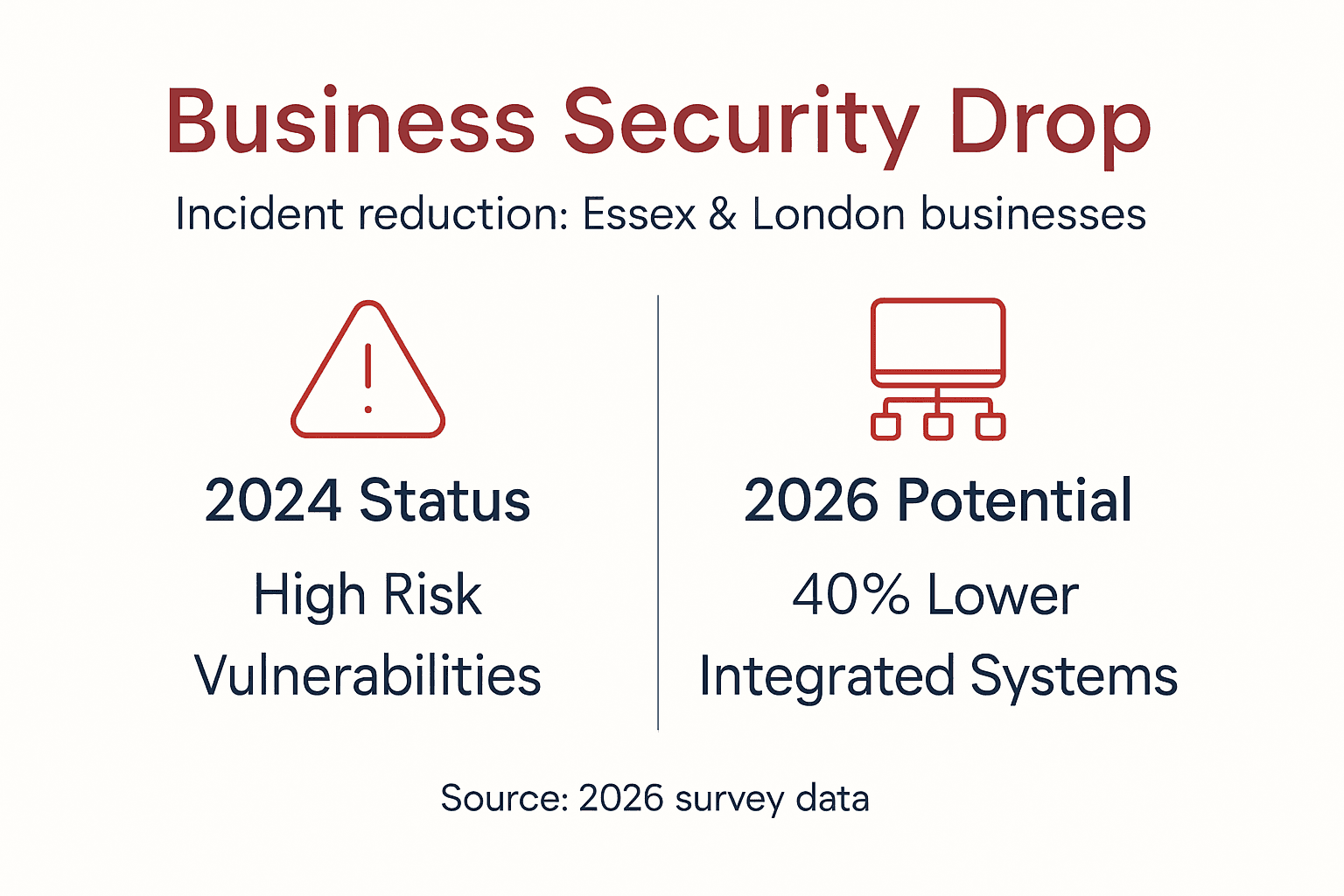
Essex and London businesses implementing integrated security solutions report substantial incident reductions. Improving CCTV placement through strategic positioning and coverage optimization demonstrates measurable security improvements.
Cost-effective strategies scale with business size and risk profiles. Small retail operations may prioritize entry point monitoring and alarm systems before expanding to comprehensive interior coverage. Large warehouses justify significant investment in perimeter security and sophisticated access control preventing costly inventory losses.
Regular evaluation ensures security systems remain effective as your business evolves. Changing inventory values, modified layouts, and adjusted operating hours all impact vulnerability profiles requiring corresponding security adaptations. Annual reviews comparing incident logs against coverage capabilities identify areas needing enhancement.
Summary and Next Steps for Business Security in Essex and London
Protecting your commercial property demands understanding the integrated approach combining legal compliance, appropriate technology selection, and ongoing system management. The substantial commercial burglary rates across England and Wales underscore the critical importance of proactive security measures.
Essential principles include:
- Adhering strictly to UK data protection requirements including ICO registration and proper signage
- Implementing layered security combining CCTV surveillance, burglar alarms, and access control
- Maintaining systems through regular testing, cleaning, and professional inspections
- Training staff on proper operation, incident response, and data privacy obligations
- Tailoring solutions to your specific property type and operational characteristics
- Leveraging AI technology reducing false alarms while improving threat detection
Moving forward, assess your current security posture identifying gaps in coverage, compliance, or functionality. Consult experienced security providers who understand Essex and London commercial property challenges and can design solutions meeting your specific needs. Professional installation ensures systems operate reliably while meeting all regulatory requirements.
Investing in comprehensive security protects your assets, maintains business continuity, and provides peace of mind knowing your property has robust defences against the persistent threat of commercial crime.
Enhance Your Business Security with 247 CCTV Solutions
Protecting your Essex or London business requires expertise in security technology and UK compliance requirements. We specialize in designing and installing tailored security systems for commercial properties throughout the region.

Our certified professionals deliver comprehensive solutions combining CCTV surveillance, burglar alarms, and access control systems specifically configured for your property type and operational needs. We ensure full compliance with ICO registration requirements and data protection regulations, eliminating legal risks while maximizing security effectiveness.
From initial consultation through installation and ongoing maintenance, we provide complete support keeping your systems operational and effective. Whether you operate a warehouse facility requiring perimeter protection or a retail establishment needing integrated monitoring, our professional CCTV installation services, expert burglar alarm installation, and advanced access control systems deliver reliable protection for your valuable assets.
Frequently Asked Questions
Who is legally responsible for maintaining my business security systems?
Property owners and business operators carry full responsibility for maintaining security systems regardless of who performed installation. Landlords cannot transfer data protection obligations to tenants, and installation companies provide technical implementation without assuming ongoing maintenance duties. You must ensure systems remain operational, compliant with ICO requirements, and properly maintained throughout their service life.
How often should I schedule maintenance and audits for my CCTV and alarm systems?
Conduct monthly checks verifying camera clarity, testing alarm sensors, and confirming access control functionality. Schedule professional inspections annually to examine wiring integrity, replace aging components, and update software addressing security vulnerabilities. Quarterly comprehensive system tests ensure all components work correctly before incidents occur.
What advantages do IP CCTV systems have over analogue for commercial use?
IP cameras deliver superior resolution up to 4K enabling clear identification of individuals and vehicles. They integrate with existing network infrastructure eliminating dedicated cabling costs, support remote access from any internet connection, and enable AI analytics detecting suspicious behavior. While requiring higher initial investment, IP systems provide substantially greater functionality and easier scalability.
Can AI technology reduce false alarms in my business security setup?
AI-powered surveillance distinguishes between routine activity and genuine threats by analyzing movement patterns and behavioral indicators. This intelligent detection reduces false alarms by triggering alerts only for suspicious behavior rather than environmental factors like weather or wildlife. Lower false alarm rates decrease operational costs and maintain response team effectiveness.
How can I ensure compliance with UK data protection laws when using CCTV?
Register your system with the ICO before operation, display prominent signage informing people of monitoring, implement secure footage storage with restricted access, establish clear retention policies limiting data storage duration, and train staff on proper handling procedures. Document all compliance efforts and conduct regular audits verifying adherence to GDPR requirements.
Do I need different security approaches for warehouses versus retail properties?
Warehouse security prioritizes perimeter protection, access control at loading bays, and monitoring high-value storage areas with fewer entry points. Retail premises require comprehensive interior coverage balancing customer accessibility with theft prevention, focusing on entry/exit monitoring and stockroom protection. Each property type demands tailored strategies addressing its specific operational characteristics and vulnerability profiles.
Recommended
- Why Everyone in Essex Is Talking About 4K CCTV Systems (And You Should Too) – 247 CCTV Security Ltd
- Warehouse Security: Preventing Theft in Essex and London – 247 CCTV Security Ltd
- 7 Top CCTV Benefits for Businesses in Essex and London – 247 CCTV Security Ltd
- 7 Key Benefits of Video Surveillance for Essex Businesses – 247 CCTV Security Ltd