Most british businesses now face a critical choice between analogue and digital CCTV systems as security needs grow more complex. With over 80% of new installations in the United Kingdom using digital technology, the shift is transforming how organisations protect property and people. Understanding the differences between these two surveillance solutions helps decision makers select the best fit for their environment, ensuring reliable monitoring and compliance with modern British standards.
Key Takeaways
| Point | Details |
|---|---|
| Analogue vs Digital Systems | Analogue CCTV systems are traditional but limited by lower resolution and manual processes, while digital systems offer superior image quality, remote access, and automated data handling. |
| Performance and Image Quality | Digital CCTV systems provide enhanced resolution and instant data retrieval, crucial for effective security monitoring and evidence collection. |
| Legal Compliance | Organisations must adhere to stringent data protection laws and ensure transparent surveillance practices, especially when handling sensitive information. |
| Strategic Selection | Selecting the right CCTV system requires evaluating technical capabilities, operational needs, and budget constraints for effective long-term investment. |
Defining Analogue and Digital CCTV Systems
CCTV systems have undergone significant technological transformation, primarily dividing into two foundational categories: analogue and digital surveillance solutions. These systems represent distinct approaches to capturing, storing, and managing security footage, each with unique characteristics that impact their effectiveness for different environments.
Analogue CCTV systems are the traditional surveillance method, recording video directly onto magnetic storage media such as VCR tapes. These systems require manual intervention for tape replacement and physical storage management. Operators must physically swap tapes, label them, and maintain an organised archive, which can be time-consuming and prone to human error. The image quality in analogue systems is typically lower resolution, limiting detailed visual information.
Digital CCTV systems represent the modern evolution of surveillance technology. These advanced systems capture video digitally, enabling efficient storage, remote access, and superior image quality. Unlike analogue predecessors, digital cameras convert visual information into electronic signals immediately, allowing for immediate data transmission, cloud storage, and sophisticated analytics. Key advantages include:
- Unlimited digital storage capacity
- Remote monitoring from multiple devices
- Higher resolution image capture
- Advanced motion detection capabilities
- Easier data retrieval and management
The transition from analogue to digital reflects broader technological trends towards more intelligent, flexible security solutions that provide comprehensive protection with minimal manual intervention.
Core Differences in Technology and Features
The technological landscape of CCTV systems reveals profound distinctions between analogue and digital surveillance technologies, fundamentally transforming how security monitoring operates. These differences extend far beyond mere image capture, encompassing data processing, storage, accessibility, and overall system intelligence.
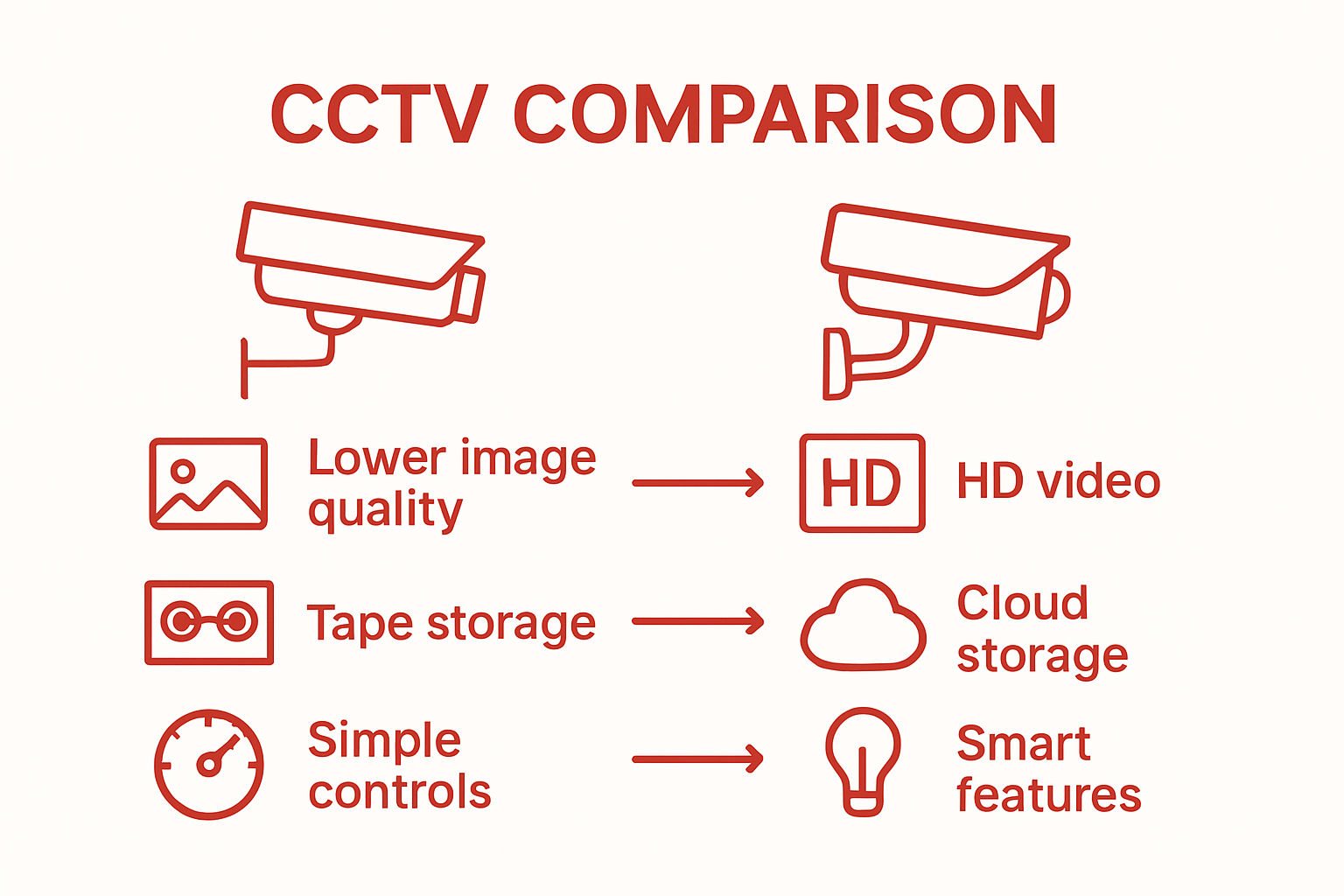
Analogue systems are characterised by significant technological limitations, presenting challenges in resolution, flexibility, and remote accessibility. Traditional analogue cameras convert visual information into basic electrical signals, which are then recorded directly onto physical media. This approach restricts image quality, typically supporting lower resolutions between 380 and 750 television lines (TVL), which significantly reduces the ability to capture fine details or identify specific individuals in footage.
Digital CCTV systems, by contrast, represent a quantum leap in surveillance technology. These advanced systems offer higher resolution, flexible recording options, and seamless internet connectivity, enabling comprehensive remote monitoring capabilities. Digital cameras instantly transform visual data into digital signals, allowing for:
- Unprecedented image clarity (often 1080p or 4K resolution)
- Instant data transmission across networks
- Cloud-based storage solutions
- Advanced video analytics
- Precise motion detection
- Scalable infrastructure
The technological divergence between analogue and digital systems is not merely incremental but represents a fundamental reimagining of surveillance capabilities, transforming security from a reactive to a proactive operational model.
Performance, Image Quality and Storage Solutions
Performance and image quality represent critical considerations when evaluating CCTV systems, with technological advancements creating substantial disparities between analogue and digital surveillance solutions. These differences profoundly impact the effectiveness and reliability of security monitoring across various environments.

Analogue systems demonstrate inherent limitations in video resolution, typically spanning 240 to 340 television lines (TVL), which restricts the clarity and detail of captured footage. The lower resolution directly impacts identification capabilities, making it challenging to discern critical details during forensic review or security investigations. Physical storage mechanisms further compound these limitations, requiring manual tape management and creating significant logistical challenges for comprehensive security documentation.
Digital CCTV systems represent a transformative leap in surveillance technology. These advanced solutions provide superior image resolution, efficient storage solutions, and unprecedented data retrieval capabilities. Key performance advantages include:
- Enhanced resolution (up to 4K and beyond)
- Instant digital storage and backup
- Automated video compression
- Remote access and monitoring
- Intelligent video analytics
- Seamless data integration
The progression from analogue to digital surveillance represents more than a technological upgrade. It signifies a fundamental shift towards intelligent, data-driven security solutions that offer unprecedented insights, reliability, and operational efficiency.
Legal and Compliance Requirements in the UK
Navigating the complex landscape of CCTV legal requirements demands a comprehensive understanding of data protection regulations, privacy laws, and ethical surveillance practices in the United Kingdom. The regulatory framework surrounding surveillance technologies has become increasingly sophisticated, reflecting the delicate balance between security needs and individual privacy rights.
The UK government provides explicit guidance on capturing and recovering digital imaging evidence, establishing stringent protocols for organisations implementing surveillance systems. These regulations mandate meticulous documentation, secure data handling, and transparent communication about surveillance practices. Organisations must ensure that their CCTV installations comply with multiple legislative frameworks, including the Data Protection Act 2018 and the General Data Protection Regulation (GDPR).
Institutional Compliance is particularly critical for sectors handling sensitive information. Educational institutions, for instance, must adhere to strict data protection legislation when implementing CCTV systems, ensuring the safe capture, storage, and utilisation of personal data. Key compliance requirements include:
- Explicit consent for video monitoring
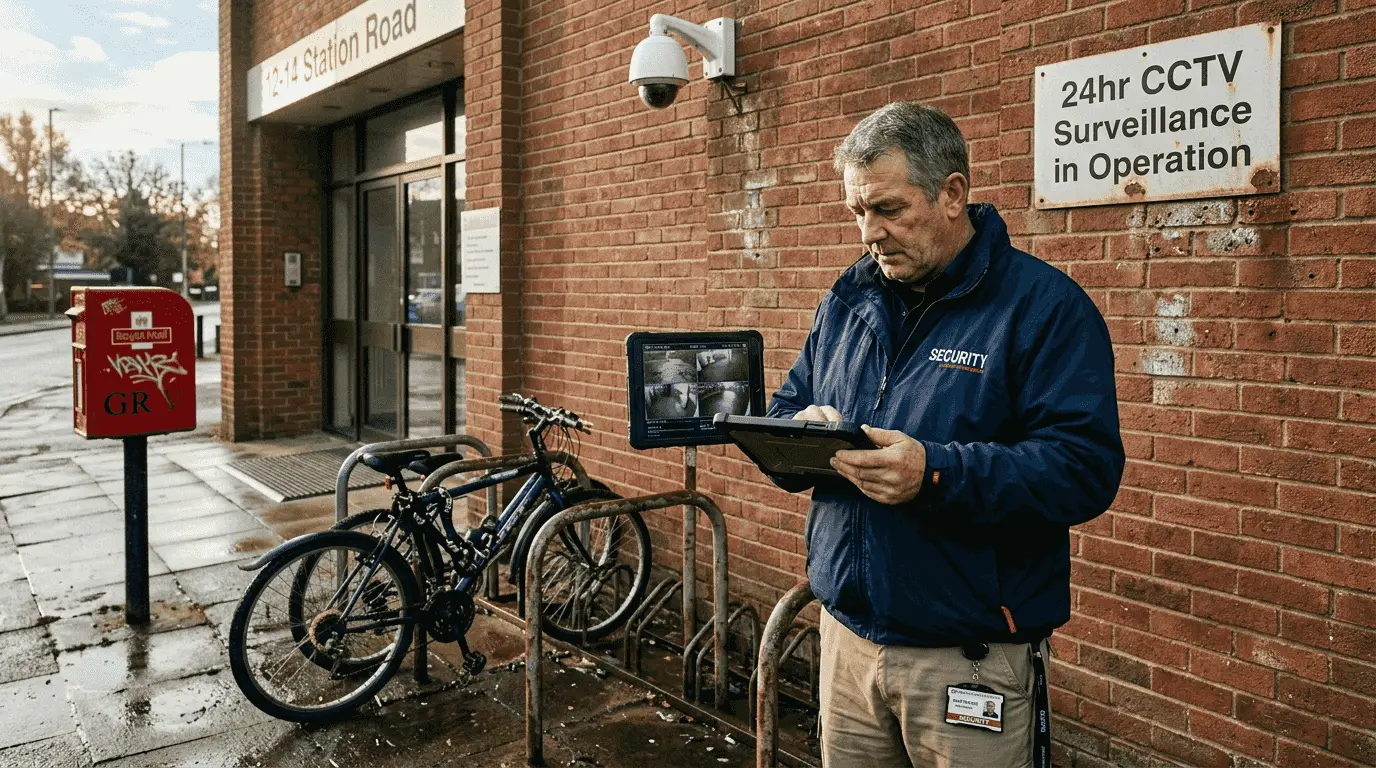
- Clear signage indicating CCTV presence
- Secure and limited data storage periods
- Restricted access to surveillance footage
- Regular data protection impact assessments
- Transparent privacy policy documentation
The legal landscape surrounding CCTV surveillance continues to evolve, demanding organisations remain proactive in understanding and implementing robust compliance mechanisms that protect both security interests and individual privacy rights.
Installation, Maintenance and Cost Implications
Implementing a comprehensive CCTV system requires careful consideration of installation complexity, long-term maintenance strategies, and financial investments. The transition from analogue to digital surveillance technologies presents organisations with nuanced challenges and opportunities across technical and economic dimensions.
Digital CCTV systems offer significant potential for reducing annual maintenance expenditures, with potential cost reductions approaching 50% compared to traditional analogue infrastructure. The initial investment in digital technology might appear more substantial, but the long-term operational efficiencies create compelling economic arguments for modernisation. Professional installation becomes critical, requiring specialised technical expertise to ensure optimal system configuration, network integration, and cybersecurity compliance.
Installation Considerations extend beyond mere technical implementation. Advanced digital systems provide streamlined data handling and enhanced operational efficiency, transforming surveillance from a reactive to a proactive security approach. Key financial and operational factors include:
- Initial hardware and software procurement costs
- Professional installation expenses
- Network infrastructure requirements
- Ongoing maintenance and software update fees
- Training for personnel
- Scalability and future-proofing potential
Organisations must approach CCTV system selection as a strategic investment, balancing immediate financial constraints with long-term technological sustainability and operational effectiveness.
Selecting the Ideal CCTV System for Your Needs
Choosing the right CCTV system requires a strategic approach that balances technical capabilities, operational requirements, and budgetary constraints. Each organisation and environment presents unique surveillance challenges that demand a tailored security solution, making thoughtful selection crucial for effective monitoring and protection.
When planning new surveillance infrastructure, organisations must carefully consider current regulatory standards and consult with security experts, ensuring the selected system meets both operational needs and legal compliance requirements. This process involves comprehensive assessment of site-specific vulnerabilities, potential security risks, and the precise monitoring objectives that will guide technological investment.
Technological Selection Criteria play a pivotal role in determining the most appropriate CCTV solution. Digital systems offer superior functionality and significant long-term cost efficiency, making them increasingly attractive across various sectors. Critical evaluation factors include:
- Coverage area and physical environment
- Required image resolution
- Low-light performance capabilities
- Remote monitoring requirements
- Integration with existing security infrastructure
- Budget constraints and long-term maintenance costs
- Scalability and future technological adaptability
Selecting the ideal CCTV system is not merely a technical decision but a strategic investment in organisational security, demanding careful analysis and forward-thinking planning.
Find the Perfect CCTV System That Meets Your Security Needs
Choosing between analogue and digital CCTV can be confusing, especially with important factors like image quality, storage, and legal compliance to consider. If you are struggling with outdated low-resolution footage or complex tape management, you are not alone. Many businesses and homes are moving towards digital systems for better clarity, remote access, and smarter monitoring capabilities. Our team understands these challenges and will guide you through selecting a tailored CCTV solution that fits your unique environment and budget.

Take control of your security with expert installation and ongoing support from 247 CCTV. Learn how advanced digital CCTV can provide sharper images and easier management compared to analogue systems. Visit our main site today to explore how we deliver quality CCTV installations designed for compliance and efficiency or get advice on upgrading your existing setup. Don’t wait until security gaps become costly problems. Act now to safeguard your property with a trusted partner who understands the important differences highlighted in “Analogue vs Digital CCTV: Choosing the Right Fit.”
Frequently Asked Questions
What are the main differences between analogue and digital CCTV systems?
Analogue CCTV systems record video using magnetic storage media and typically provide lower image resolution. In contrast, digital CCTV systems capture video in digital format, allowing for higher resolution, cloud storage, and advanced features like remote monitoring and intelligent analytics.
How do image quality and resolution differ between analogue and digital CCTV systems?
Analogue CCTV systems usually offer lower resolutions, between 240 and 750 TV lines, which limits detail clarity. Digital CCTV systems, however, can achieve resolutions up to 4K, providing much clearer and more detailed images that enhance the ability to identify individuals in footage.
What are the cost implications of installing analogue vs digital CCTV systems?
While digital CCTV systems may involve higher initial costs, they can significantly reduce maintenance expenses by up to 50% in the long term due to efficiencies in storage, monitoring, and data management compared to analogue systems.
What legal requirements must be considered when installing CCTV systems?
Legal compliance involves understanding data protection regulations, such as the Data Protection Act 2018 and GDPR, which mandate permissions for monitoring, signage indicating CCTV presence, and secure data storage practices, ensuring transparency and privacy rights are upheld.
Recommended
- Complete Guide to Types of Security Cameras – 247 CCTV Security Ltd
- CCTV Cameras Have Grown Up
- CCTV vs Alarm Systems: Complete Security Guide – 247 CCTV Security Ltd
- 6 Key CCTV System Features to Look For
- Complete Guide to Types of Video Inputs – Projector Display