A burglar alarm usually chooses the worst possible moment to show a fault – after closing time, during a weekend away, or just when you thought the system could be left to look after itself. That is why one of the most common questions we hear is when should alarms be serviced. The short answer is regularly, but the right schedule depends on the type of system, the risk level of the property, insurer requirements, and how heavily the alarm is relied on day to day.
When should alarms be serviced for most properties?
For most professionally installed intruder alarm systems, a service at least once a year is the minimum sensible standard. In many commercial settings, and in some higher-risk residential properties, twice-yearly servicing is the more appropriate approach. If the system is monitored, insurer-approved, or installed in premises where a failure would create major disruption, more frequent attention may be required.
That distinction matters. A domestic alarm in a typical owner-occupied home does not face the same pressure as a graded alarm protecting a retail unit, warehouse, school, healthcare setting, or multi-occupancy building. The more complex the site, the more important routine maintenance becomes.
There is also a difference between what is technically possible and what is prudent. An alarm may continue to set and unset for years without obvious issues, but that does not mean detectors, standby batteries, signalling paths, sounders, keypads, or tamper circuits are all operating exactly as they should. Security systems often fail quietly before they fail completely.
Why alarm servicing is not just a box-ticking exercise
Alarm servicing is about reliability, compliance, and reducing unwanted surprises. A proper service checks whether the system will perform when it is actually needed, not just whether it appears to be working on the surface.
In a commercial environment, missed faults can become expensive quickly. A failing battery can lead to signalling issues during a power cut. A detector that has drifted out of range can leave part of the building less protected than intended. A damaged contact on a roller shutter or fire exit can trigger repeated false alarms, which wastes staff time and can create problems with keyholders, monitoring stations, and emergency response arrangements.
For homeowners, the stakes are different but still serious. Many people assume the flashing external bell box means the alarm is fine. In reality, internal components wear over time, sensors can become misaligned, and backup power can degrade long before the user notices anything wrong.
What happens during an alarm service?
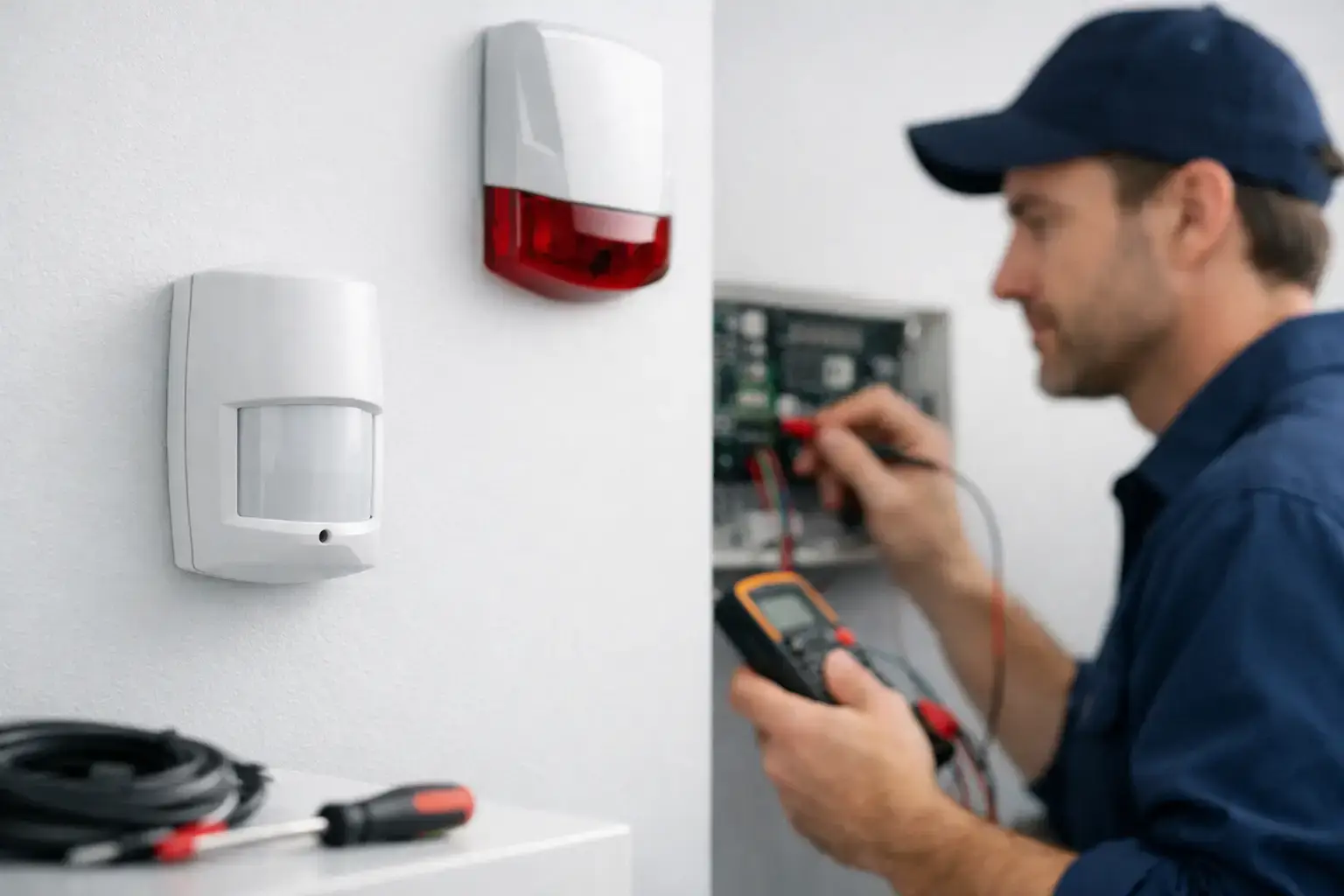
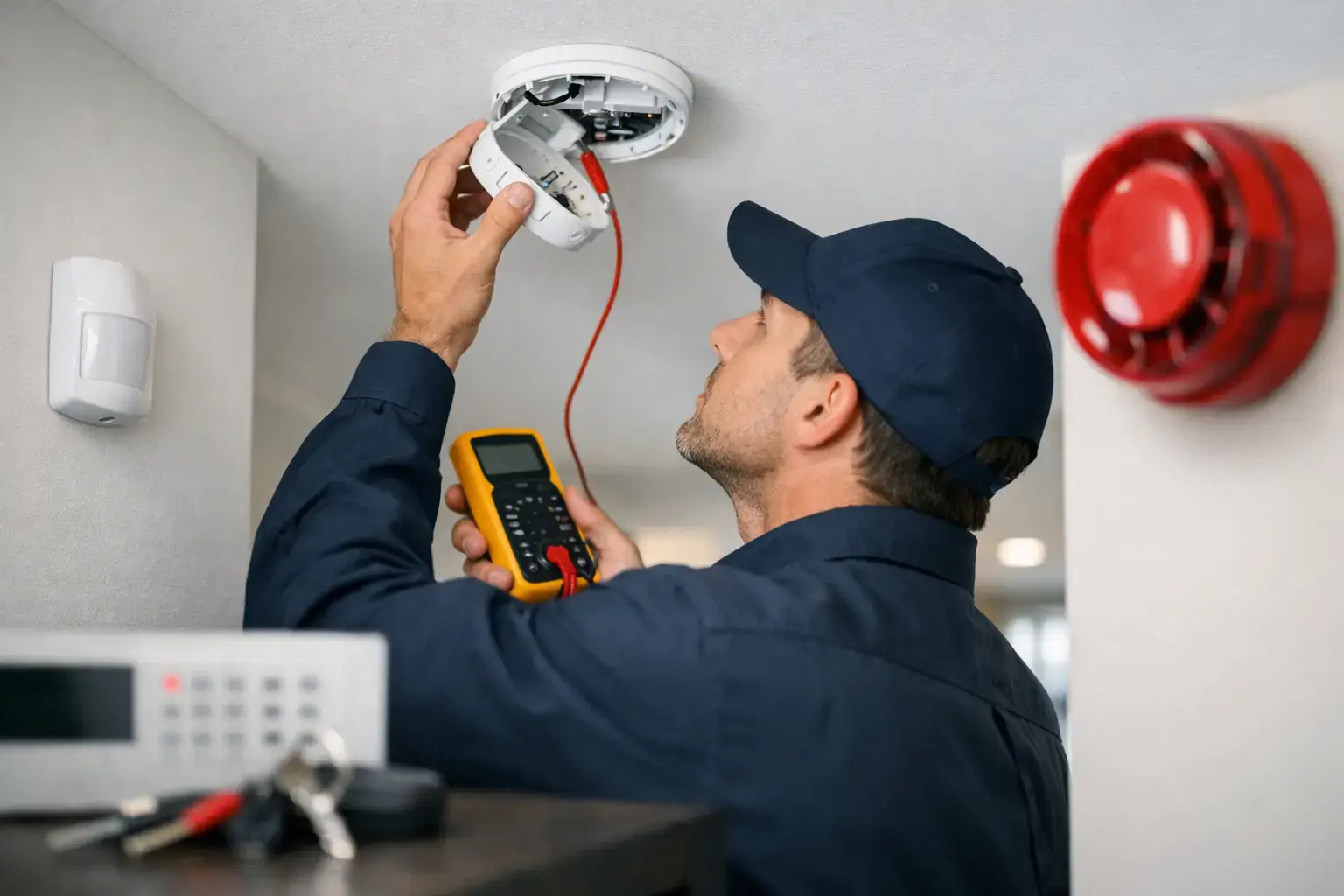
A professional alarm service should go beyond pressing a few buttons and confirming that the siren sounds. The engineer should inspect the control equipment, test detection devices, check batteries, review event logs where available, confirm communication paths on monitored systems, and identify any wear, contamination, or damage that could affect performance.
On modern systems, servicing may also include reviewing app connectivity, firmware status, user settings, and remote signalling functions. On larger or more specialised systems, the engineer may need to assess zoning logic, part-set configurations, interfaces with access control, or links to other security measures on site.
This is where professional maintenance makes a real difference. A competent engineer is not simply checking whether the system turns on. They are assessing whether it is still suitable, dependable, and compliant for the building it protects.
How often should monitored and insurer-approved alarms be serviced?
If the system is monitored or installed to meet insurer conditions, annual servicing may not be enough. Many monitored intruder alarms are maintained on a twice-yearly basis, especially where police response categories, risk grading, or insurer expectations are involved.
This is not just caution for its own sake. Monitored systems rely on dependable communication between the alarm panel, signalling equipment, and receiving centre. If any part of that chain is compromised, the value of monitoring drops sharply. A service visit gives the opportunity to verify that communication remains stable and that any faults are addressed before they affect response.
Business owners should also check their policy terms and any system documentation. If your insurer requires a maintained alarm under a recognised standard, missing service intervals could create problems if you later need to make a claim. The same applies to landlords and site managers responsible for shared or higher-risk premises.
Signs your alarm needs servicing sooner
Sometimes the calendar is not the main issue. There are clear situations where an alarm should be inspected earlier than planned.
Frequent false alarms are one of the biggest warning signs. These can be caused by detector faults, battery deterioration, environmental changes, loose devices, damaged cabling, or user setup issues. Ignoring them rarely improves the situation.
You should also arrange attention if the system displays faults, loses mains power repeatedly, shows communication errors, produces low battery warnings, or behaves inconsistently when setting and unsetting. Even if the alarm appears to recover, repeated issues usually point to an underlying problem.
Property changes matter too. If the layout has altered, partitions have been moved, stock levels have changed, new pets have been introduced, or parts of the site have been repurposed, the system may need adjustment as well as servicing. An alarm that was well designed three years ago may no longer match the real risk on site today.
Domestic and commercial alarm servicing are not quite the same
Homeowners often want a simple answer, while commercial clients usually need a more structured one. Both need maintenance, but the reason and scope can differ.
In domestic properties, servicing tends to focus on keeping the system dependable, reducing false alarms, and checking that the alarm still suits the household’s routine. If the property is empty for long periods, contains high-value items, or depends on app-based control, maintenance becomes more important.
In commercial settings, alarm servicing is tied more closely to business continuity, compliance, and risk management. A faulty alarm in a shop, office, school, warehouse, or healthcare building can lead to vulnerability out of hours, repeated call-outs, avoidable disruption, and insurer concerns. The service history itself may also matter, particularly where standards, audits, or tenancy obligations apply.
Older systems often need a closer look
Not every alarm needs replacing simply because it is old. Many established systems can remain effective if they are properly maintained. That said, age does change the maintenance conversation.
Replacement parts may become harder to source. Legacy signalling methods may no longer be ideal. Batteries and detectors may be reaching the stage where reactive repairs become more frequent than planned maintenance. In these cases, servicing is still worthwhile, but it may also highlight that an upgrade is the more cost-effective long-term option.
That is especially true where the existing system no longer reflects how the property is used. If your site now relies on remote access, mobile notifications, integrated CCTV verification, or different levels of user control, maintaining an outdated panel may only solve part of the problem.
Choosing the right service interval for your site
The best service interval comes down to risk, complexity, and responsibility. A straightforward home intruder alarm may be well served by an annual visit. A monitored commercial system, a multi-unit premises, or a site with insurer conditions will often justify two visits a year.
If there is heavy footfall, changing occupancy, vulnerable stock, frequent deliveries, multiple access points, or a history of false alarms, shorter intervals can make sense. The same applies if the system forms part of a wider security arrangement with CCTV, access control, or remote monitoring.
A good maintenance provider will not push a one-size-fits-all answer. They should look at how the building is used, what the consequences of failure would be, and what level of response or compliance the system needs to support.
A serviced alarm is a trusted alarm
An alarm only earns its place if it works properly when pressure is on. Servicing is what turns a fitted system into a dependable one. Whether you are protecting a family home, a retail unit, a school, a warehouse, or a managed property, regular maintenance gives you a clearer picture of the system’s condition and a better chance of avoiding faults before they become security gaps.
If you are unsure what schedule is right, the safest approach is to have the system assessed by a qualified security specialist. For many properties across Essex, London and the South East, that means moving from guessing to having a maintenance plan that matches the real level of risk – and that is usually where peace of mind starts.