
Managing properties across Essex and London means facing questions every time a new security requirement appears. With regulations evolving and insurers demanding more, understanding what “certified” really means for your alarm systems is now business-critical. The Security Industry Authority (SIA) reviews and updates frameworks so only professionals with security-critical skills and knowledge are legally approved to protect your people and assets. This guide clarifies which certifications matter, how they affect compliance, and what you need to ask your next security provider.
Key Takeaways
| Point | Details |
|---|---|
| Importance of Certification | Certification signifies compliance with rigorous standards, ensuring both equipment and personnel are adequately assessed for security installations. |
| Legal Compliance by 2026 | By 2026, adherence to mandatory security standards is crucial, as non-compliance may lead to insurance claim denials and potential legal issues. |
| Financial Benefits | Investing in certified systems typically results in lower insurance premiums and eligibility for government contracts, providing a strong return on investment. |
| Choosing Certified Providers | Selecting providers with transparent and verifiable certifications is essential to ensure quality installation and ongoing compliance with standards. |
What Security System Certification Means In The UK
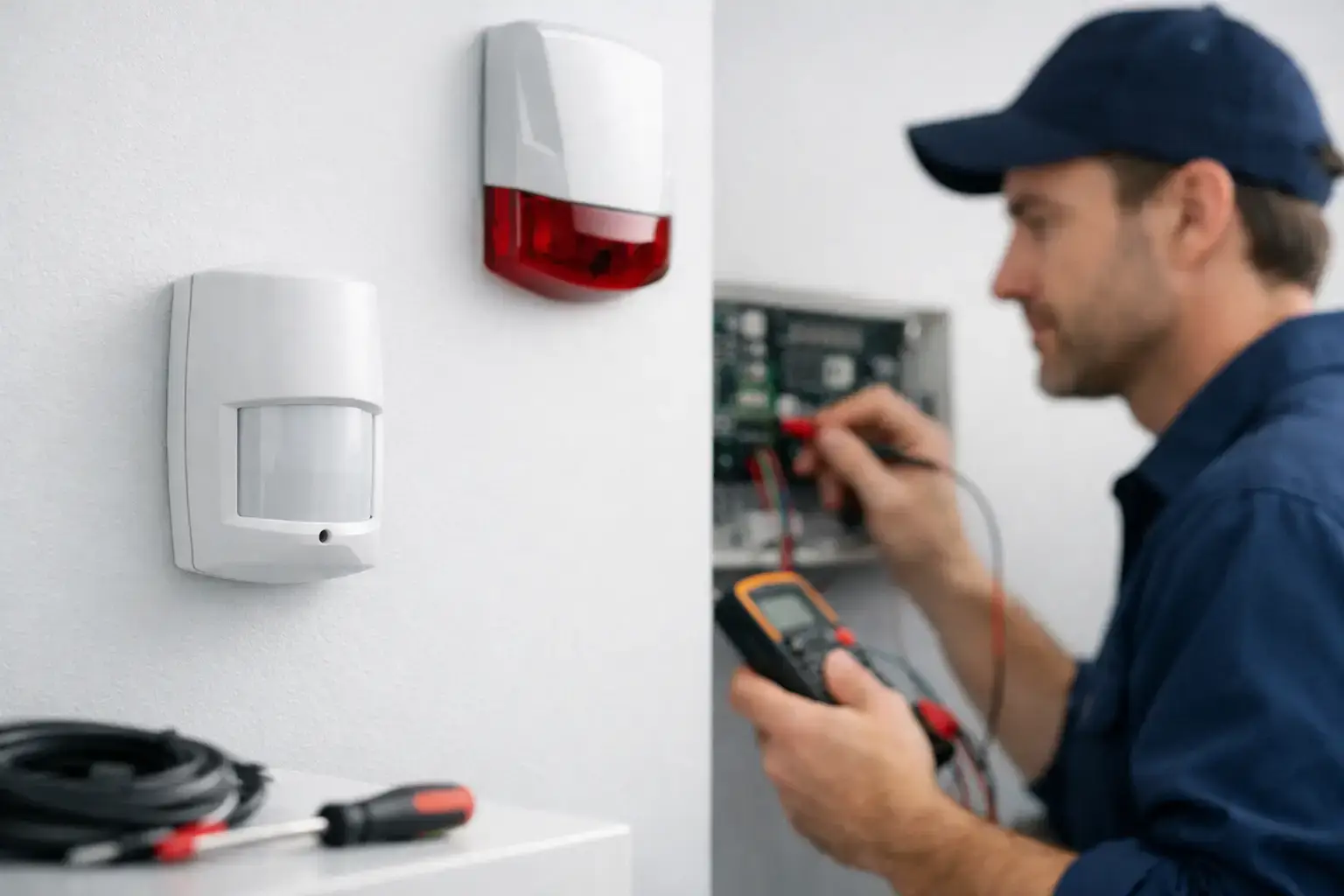
Security system certification in the UK represents far more than a badge on the wall. It’s proof that your burglar alarm system and the professionals managing it meet strict standards set by regulatory bodies. When a burglar alarm installation carries proper certification, you know the equipment and personnel have been rigorously assessed.
The Security Industry Authority (SIA) establishes the framework for all security certifications across the country. Their role is to ensure that security-critical skills and knowledge protect the public effectively. This means regular reviews, updated standards, and continuous assessment of emerging threats and technologies.
For facility and property managers in Essex and London, understanding what certification actually means is crucial. Different systems and professionals hold different qualifications. A technician installing a Hikvision AX Pro burglar alarm, RISCO LightSYS+, or Texecom Premier Elite system should have credentials matching their role.
Why Certification Matters for Your Property
Certification protects your property in three specific ways:
- Legal compliance: Your insurer may require certified systems to validate claims
- Performance assurance: Certified equipment and installers follow tested methodologies
- Liability protection: You have documented proof of professional standards being met
Without proper certification, you’re operating in a grey zone. A burglar alarm that isn’t certified may function, but it leaves your business exposed to insurance disputes and regulatory scrutiny.
Certification isn’t optional for commercial properties—it’s the difference between being protected and being exposed.
When you hire security installers, always ask for certification details. Request documentation proving their qualifications match the systems they’re installing. This applies whether you’re securing a warehouse in London or managing multiple residential properties across Essex.
The certification process also means your burglar alarm system undergoes regular inspection and maintenance. Certified installers follow documented procedures, not shortcuts. They can explain exactly why they’ve chosen specific equipment for your property.
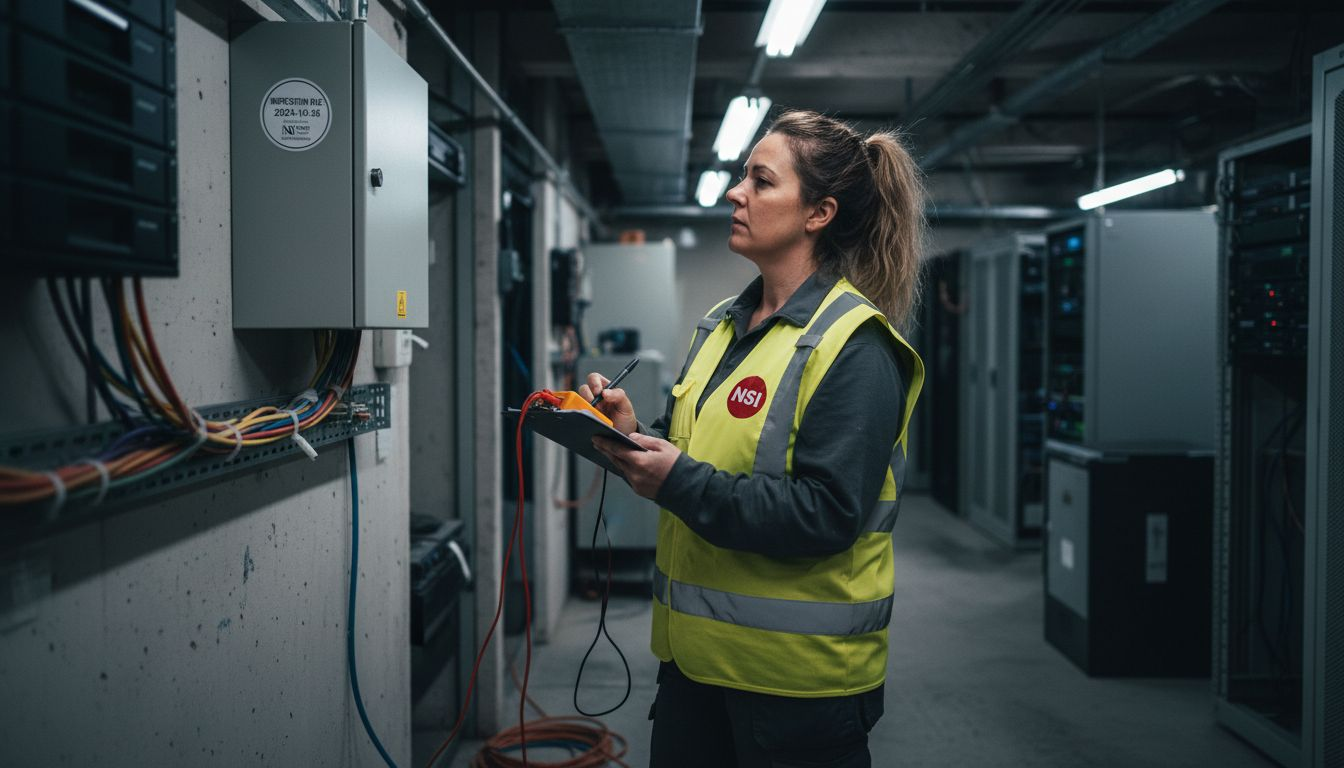
Pro tip: Request copies of all certification credentials before signing any installation contract, and verify the certifications directly with the SIA to confirm they’re current and valid.
Key Types: NSI, SSAIB, SIA, And Cyber Essentials
The UK security industry relies on four main certification frameworks. Each serves a specific purpose and covers different aspects of security compliance. Understanding which certification applies to your burglar alarm system is essential for proper compliance and insurance coverage.
The Security Industry Authority (SIA) is the government-backed regulator for front-line security personnel. They issue licences for roles like door supervisors and monitoring operatives. An SIA licence requires approved training from recognised organisations, ensuring personnel meet standardised safety and operational competencies. For properties in Essex and London, any security operative monitoring your alarm system should hold valid SIA credentials.
NSI and SSAIB are private certification bodies recognised across the UK. They focus on physical and electronic security system standards rather than personnel. When your burglar alarm system carries NSI or SSAIB certification, it means the equipment and installation methodology have passed rigorous technical assessments. You can also explore SSAIB compliance requirements to understand how these standards protect your specific installation.
Understanding Each Certification Type
Here’s how these four frameworks differ:
- SIA: Covers personnel licensing for security operatives and supervisors
- NSI: Audits security companies and certifies their installation quality standards
- SSAIB: Provides third-party certification for security system equipment and installers
- Cyber Essentials: Focuses on cybersecurity protection for connected alarm systems
Cyber Essentials represents the newest addition to UK compliance standards. As burglar alarms become increasingly connected—whether monitoring remotely via Hikvision AX Pro, RISCO LightSYS+, or Texecom Premier Elite systems—cybersecurity compliance protects against digital threats. This government-backed scheme ensures your system resists common cyber attacks and unauthorised access attempts.
Most commercial properties require multiple certifications. Your installer might hold NSI accreditation, the personnel carrying the SIA licence, and the system itself bearing SSAIB standards. When these overlap, you’ve got comprehensive coverage.
To help compare the main UK security system certifications, see this summary of their scope and typical stakeholders:
| Certification Type | Focus Area | Stakeholders Involved | Key Requirement |
|---|---|---|---|
| SIA | Personnel licensing | Security operatives, supervisors | Government-backed training |
| NSI | System installation | Security companies, installers | Quality installation audit |
| SSAIB | Equipment & methodology | Installers, manufacturers | Third-party system review |
| Cyber Essentials | Cybersecurity protection | Owners of network-connected alarms | Mandatory cyber controls |
Each certification framework protects a different layer of your security infrastructure—personnel, equipment, installation, and digital resilience combined.
When evaluating security providers, ask which certifications they hold. Don’t settle for partial compliance. A company claiming NSI accreditation but employing uncertified operatives is leaving gaps. Complete certification coverage means your property is protected across all fronts.
Pro tip: Request written proof of all four certification types from your installer, verify them directly with each issuing body, and ensure they’re current before signing any contract.
Legal Standards And Compliance Requirements 2026
The legal landscape for security systems in the UK is tightening. By 2026, facility and property managers must understand the mandatory standards their burglar alarm systems and installations must meet. These aren’t optional guidelines—they’re legally binding requirements affecting insurance, liability, and operational legitimacy.
The UK government has established clear compliance frameworks through its Government Functional Standard GovS 007: Security. This standard covers cyber, personnel, physical, and technical security components. Organisations must adopt a risk-based approach aligned with government security outcomes. For commercial properties in Essex and London, this means assessing threats specific to your location and implementing proportionate controls.
Cybersecurity compliance has become legally mandatory, not optional. The Cyber Essentials scheme establishes mandatory cybersecurity controls that reflect emerging threats. By 2026, holding Cyber Essentials certification will be increasingly crucial for bidding on government contracts and maintaining insurance eligibility. If your burglar alarm system connects to the internet—whether monitoring via Hikvision AX Pro, RISCO LightSYS+, or Texecom Premier Elite systems—cybersecurity compliance applies directly to you.
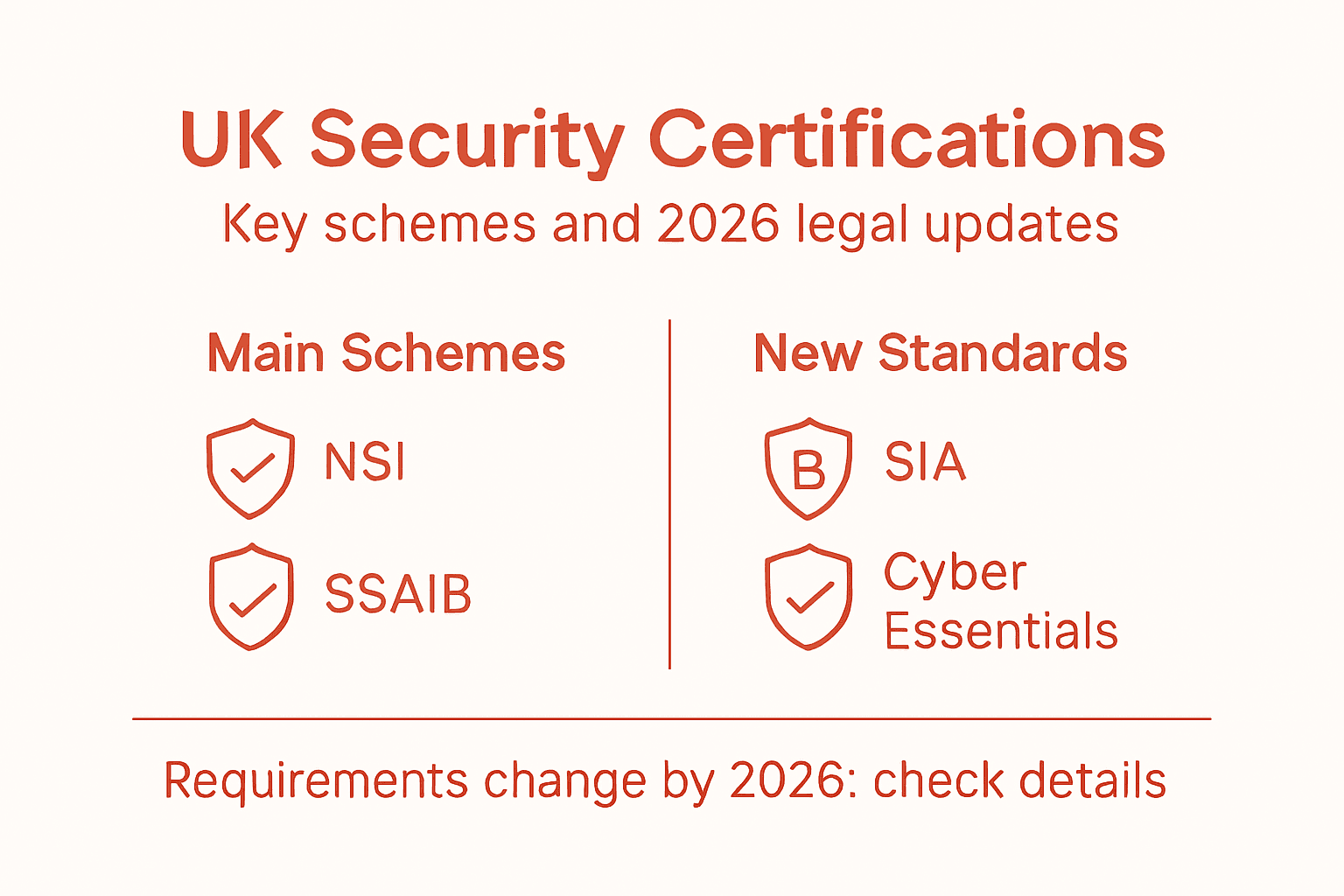
What You Must Meet In 2026
These are the core compliance obligations:
- Government Functional Standards: Mandatory security outcomes your property must demonstrate
- Cyber Essentials certification: Required for connected systems and government contract eligibility
- NSI or SSAIB standards: Technical and installation quality benchmarks for physical alarm systems
- SIA licensing: All security personnel must hold valid, current licences
- Insurance requirements: Underwriters increasingly demand certified systems before covering claims
Non-compliance carries real consequences. Insurance providers can refuse claims if your system lacks proper certification. Local authorities may issue compliance notices. You could face liability if a breach occurs on improperly certified infrastructure.
Non-compliance isn’t just about regulations—it directly affects your insurance coverage and liability exposure in 2026.
The shift towards 2026 standards reflects changing threat landscapes. Cyber attacks on alarm systems are increasing. Remote monitoring vulnerabilities need addressing. Regulatory bodies are tightening expectations because incidents have proven lax standards don’t work. Your responsibility as a facility manager is ensuring your burglar alarm meets every applicable standard before the deadline.
Pro tip: Conduct a full compliance audit of your current security system now, identify any gaps against 2026 standards, and begin remediation immediately—don’t wait until the deadline.
Assessing Cost, Renewal, And Insurance Benefits
Investing in certified burglar alarm systems requires understanding the full financial picture. Costs extend beyond the initial installation—renewal fees, compliance updates, and insurance implications all factor into your total security budget. For facility managers across Essex and London, calculating the actual return on investment matters.
Certification costs vary significantly based on system type and scope. A Hikvision AX Pro, RISCO LightSYS+, or Texecom Premier Elite burglar alarm system carrying NSI or SSAIB certification will cost more than uncertified alternatives. However, this upfront investment protects you against far costlier consequences. Cyber Essentials certification involves variable costs depending on your organisation size and certification level, but the benefits justify the expense.
Renewal is mandatory and ongoing. Your certification isn’t a one-time purchase—it’s a commitment to continuous compliance. Most certifications require renewal annually or every three years. SIA licence holders must renew every three years with updated training requirements. This means budgeting for regular training, assessment fees, and administrative costs.
Financial Benefits That Matter
The insurance advantage is substantial. Consider these real benefits:
- Reduced insurance premiums: Certified systems qualify for lower rates with most underwriters
- Claim eligibility: Insurance providers honour claims only when systems meet their standards
- Government contract access: Cyber Essentials opens doors to lucrative public sector work
- Liability protection: Documented compliance shields you from negligence claims
- Avoided breach costs: Proper certification prevents expensive security incidents
Many facility managers resist renewal costs, seeing them as unnecessary expenses. But claims denial far exceeds renewal fees. A single rejected insurance claim for £50,000 because your system wasn’t certified makes those annual renewal payments look trivial.
Certification costs are insurance—they prevent far more expensive problems than they create.
Break down your security budget honestly. Calculate certification costs against potential claim denials and liability exposure. Add the cost of system downtime if an uncertified system fails during a breach. Most managers discover that certification actually saves money over five-year cycles.
Government contract eligibility adds another financial dimension. If your commercial property operates contracts with local authorities or public bodies, Cyber Essentials becomes legally necessary, not optional. Missing this requirement eliminates entire revenue streams.
Pro tip: Build certification and renewal costs into your annual security budget now, then compare insurance quotes from providers requiring certified systems—the premium savings typically offset all renewal expenses.
Here is a quick reference of financial and operational impacts of maintaining full security certification:
| Impact Area | With Certified System | With Uncertified System |
|---|---|---|
| Insurance Coverage | Valid claims, lower premiums | Claims denied, higher risk |
| Contract Eligibility | Access to government work | Disqualified from tenders |
| Legal Standing | Meets all regulatory needs | Subject to compliance action |
| Ongoing Costs | Predictable renewal budget | Potential major liabilities |
Common Pitfalls And Choosing Certified Providers
Choosing the wrong security provider can undermine everything certification represents. Many facility managers make costly mistakes when selecting installers or training providers. These errors often aren’t discovered until claims are denied or compliance audits fail. Understanding what separates legitimate certified providers from those cutting corners protects your investment.
The most critical pitfall is using unapproved training sources. When personnel receive training from unrecognised providers, their qualifications become invalid. This means an operative holding what appears to be a valid SIA licence actually carries no legal standing. Selecting training from approved providers recognised by awarding organisations is non-negotiable. Always verify training provider accreditation independently—don’t rely on the installer’s word.
Another common mistake is failing to understand licence scope. Different SIA licence types cover different roles and responsibilities. Using a door supervisor licence holder to operate a monitoring centre is compliance violation. Each person must hold credentials matching their exact responsibilities. Confusion here creates liability exposure despite having “certified” personnel.
How To Identify Legitimate Certified Providers
Reliable providers demonstrate these characteristics:
- Transparent accreditation: They freely provide certification numbers and issuing body details
- Verifiable credentials: You can independently confirm their certifications are current and valid
- Written scope documentation: They clearly explain what their certifications cover and what they don’t
- Ongoing compliance commitment: They discuss renewal timelines and continuous training obligations
- Insurance backing: They carry professional indemnity insurance covering their certified work
When evaluating burglar alarm providers installing Hikvision AX Pro, RISCO LightSYS+, or Texecom Premier Elite systems, ask for their NSI or SSAIB certification references. Contact the issuing bodies directly. Legitimate providers expect this verification—they know it protects both parties.
Cyber Essentials introduces another layer of complexity. Selecting certified providers with recognised accreditation ensures your certification remains valid. Many organisations fail Cyber Essentials compliance because they misunderstand control scope or fail maintaining ongoing compliance. Your provider must explain exactly what controls they’re implementing and why.
Choosing a certified provider isn’t about finding the cheapest option—it’s about finding someone whose credentials actually mean something.
Red flags include providers reluctant to discuss credentials, those claiming certifications without documentation, or installers charging significantly less than market rates. Cut-price installations often skip documented procedures or use inferior equipment.
Pro tip: Request written proof of all certifications, contact the issuing bodies to verify them before signing anything, and always get scope-of-work documentation defining exactly which standards apply to your system.
Secure Your Property with Certified UK Security Systems Today
Navigating the complex landscape of UK security system certification can feel overwhelming. The article highlights the crucial need for full certification coverage from NSI, SSAIB, SIA licences to Cyber Essentials compliance to protect your property legally and financially. Avoid costly insurance claims and liability exposure by choosing certified installations tailored to your business or residential needs in Essex and London.
At 247 CCTV we specialise in installing CCTV, burglar alarms, door entry and access systems that fully comply with all UK security certifications. Our expert team ensures every system, whether Hikvision AX Pro, RISCO LightSYS+, or Texecom Premier Elite, meets strict quality and cybersecurity standards. Take control of your security setup now to guarantee insurance eligibility, legal compliance and peace of mind for 2026 and beyond. Get in touch via our landing page and discover how certified security solutions protect what matters most.
Frequently Asked Questions
What does security system certification represent in the UK?
Security system certification in the UK signifies that your burglar alarm system and its installers meet stringent standards set by regulatory bodies, ensuring they are reliable and compliant with legal requirements.
Why is security system certification important for property owners?
Certification protects property owners by ensuring legal compliance, increasing performance assurance of the systems, and providing liability protection in case of incidents. It helps in reducing insurance disputes and verifying the quality of the installation.
What are the main types of security certifications in the UK?
The main certifications include the SIA for personnel licensing, NSI for system installations, SSAIB for equipment and methodology compliance, and Cyber Essentials for cybersecurity measures related to connected alarm systems.
How can I verify the legitimacy of a security system installer’s certification?
You can verify an installer’s certification by requesting their certification numbers and the issuing body details. Contact the respective issuing bodies directly to confirm that their certifications are current and valid.
Recommended
- Security System Maintenance: Essential UK Guide – 247 CCTV Security Ltd
- Understanding SSAIB Compliance: Safeguarding Your Security System – 247 CCTV Security Ltd
- Complete Guide to Security System Maintenance UK – 247 CCTV Security Ltd
- Security System Basics: Protecting Essex and London Properties – 247 CCTV Security Ltd