
Most british care homes face increasing pressure to meet strict regulatory standards for resident security, with more than 90 percent adopting advanced burglar alarms to safeguard vulnerable individuals. For Facilities Managers and Compliance Officers in Essex, staying current with the right alarm grades and legal requirements is critical not just for safety but also for regulatory compliance. This guide untangles the essential british standards, certifications, and best practices every care home needs to know before their next system upgrade.
Key Takeaways
| Point | Details |
|---|---|
| Robust Security Standards Required | UK care homes must adhere to stringent burglar alarm standards set by the National Security Inspectorate, ensuring the safety of vulnerable residents. |
| Importance of Professional Installation | Alarm systems should be installed by NSI-approved technicians to guarantee compliance with British Standards PD 6662:2017. |
| Accreditation and Police Response Critical | Care homes must secure necessary certifications and maintain regular communications with local police for effective emergency response. |
| Ongoing Risk Management Essential | Regular assessments, staff training, and updated security measures are vital to mitigate risks and enhance resident safety in care homes. |
Burglar alarm standards in UK care homes
Ensuring robust security for vulnerable residents demands stringent burglar alarm standards across UK care homes. The National Security Inspectorate guidelines establish comprehensive protocols for alarm systems designed to protect elderly and dependent individuals.
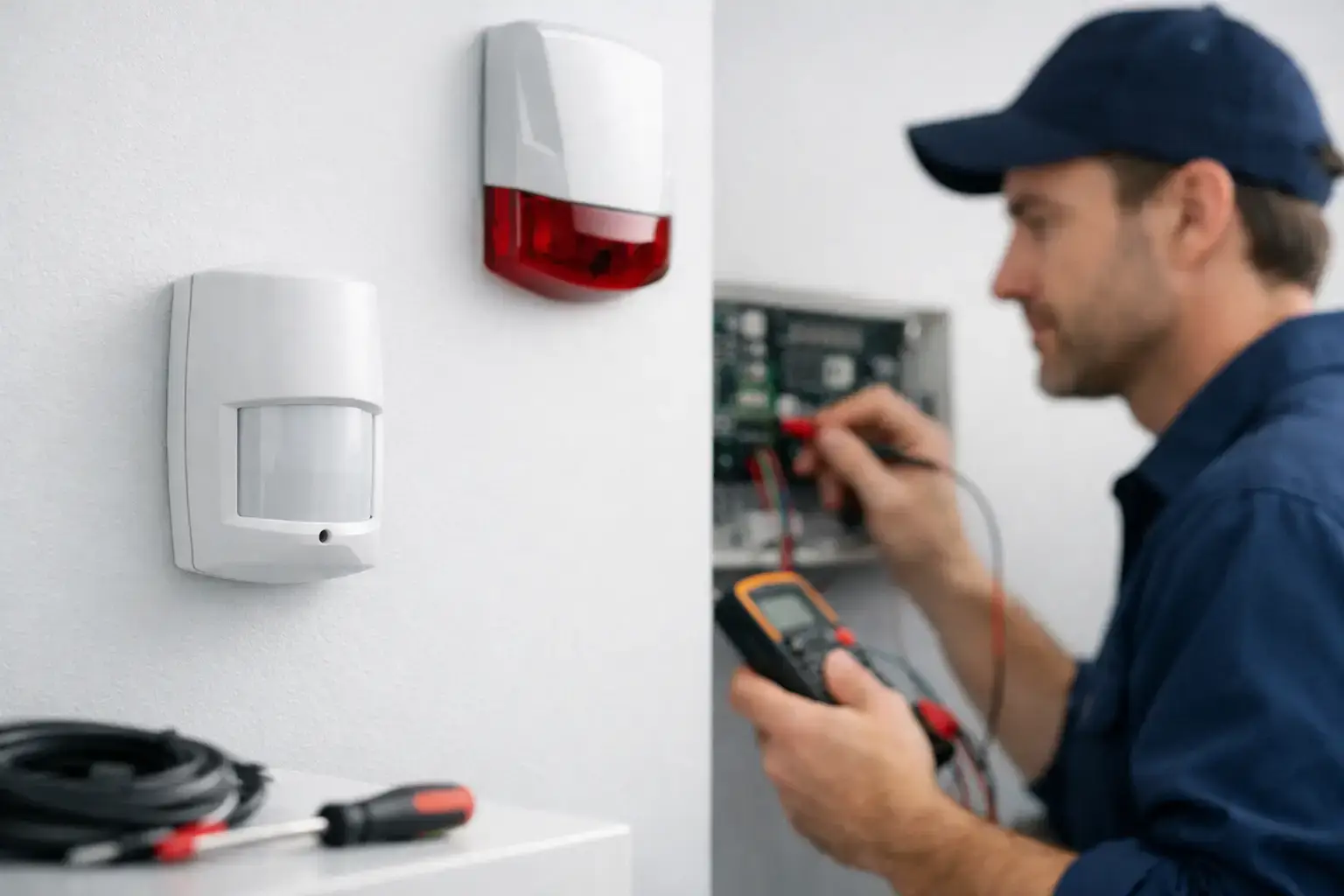
Care home security requires adherence to specific technical standards that go beyond standard residential requirements. The British Standard PD 6662:2017 provides comprehensive guidance for intruder alarm installations, specifying performance criteria that protect both physical infrastructure and resident safety. These standards mandate professional installation, regular maintenance, and sophisticated detection mechanisms tailored to care home environments.
Key requirements for burglar alarm systems in care homes include:
- Professional installation by NSI-approved technicians
- Comprehensive coverage of all potential entry points
- Minimal false alarm potential
- Integration with existing building management systems
- Remote monitoring capabilities
- Compliance with disability access regulations
Pro tip: Always request documentation confirming your burglar alarm system meets NSI PD 6662:2017 standards before final installation.
Types and grades of intruder alarm systems
Intruder alarm systems are classified into specific security grades that determine their complexity, reliability, and suitability for different environments. Alarm system certification by the National Security Inspectorate ensures each system meets rigorous performance standards critical for care home safety.
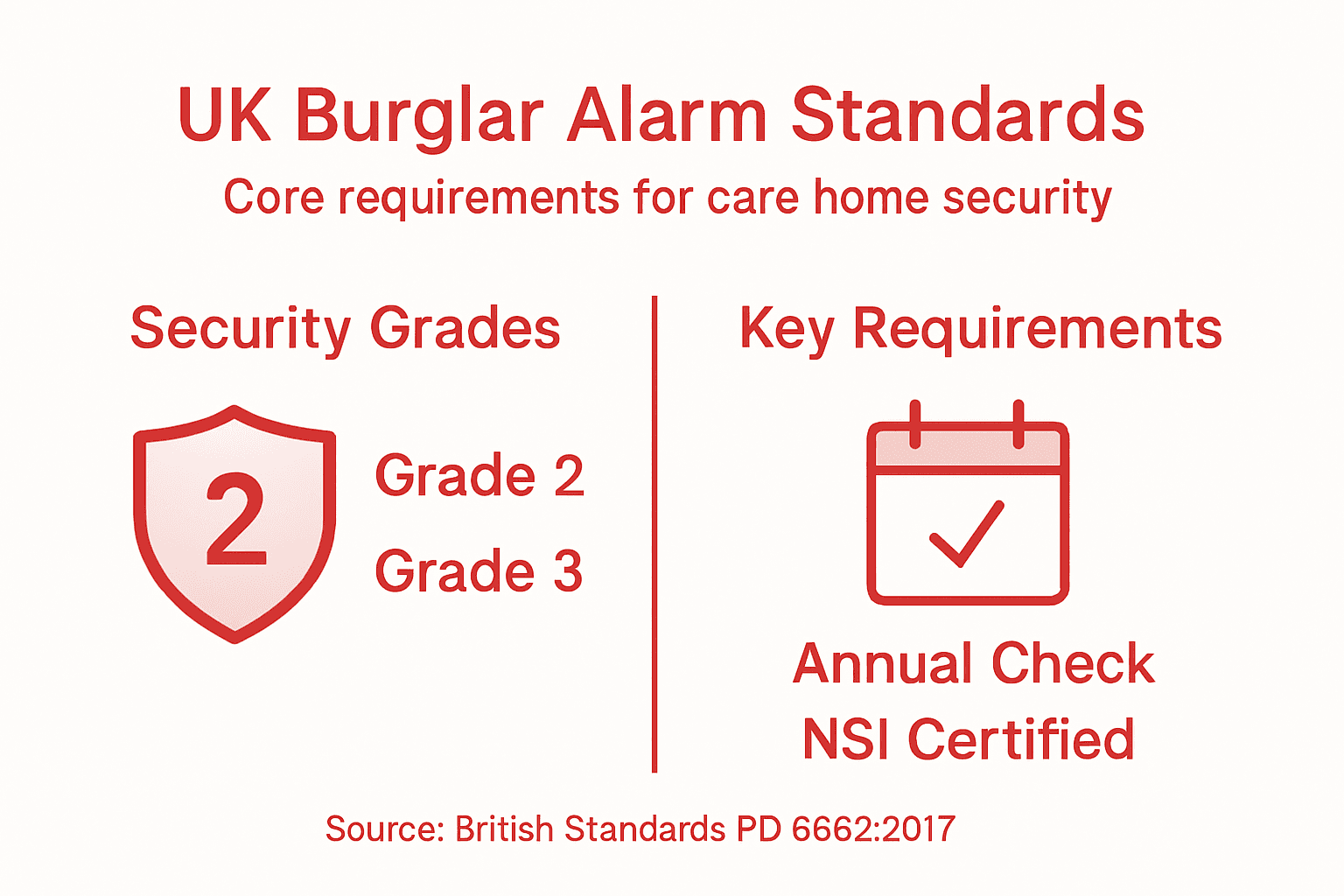
The grading system ranges from Grade 1 to Grade 4, with higher grades offering increasingly sophisticated protection. Grade 1 represents basic domestic protection, while Grade 4 provides the most comprehensive security suitable for high-risk environments like care homes housing vulnerable residents. These grades consider factors such as detection capabilities, alarm transmission methods, power supply resilience, and resistance to tampering.
Specific characteristics of different alarm system grades include:
- Grade 1: Standalone systems for low-risk residential settings
- Grade 2: Enhanced protection with more robust detection
- Grade 3: Professional monitoring and complex sensor networks
- Grade 4: Maximum security with redundant communication paths
Typical care home installations typically require Grade 3 or Grade 4 systems to ensure comprehensive resident protection, incorporating features like:
Below is a concise comparison of intruder alarm system grades relevant for care home environments:
| Alarm Grade | Typical Application | Key Features | Suitability for Care Homes |
|---|---|---|---|
| Grade 1 | Low-risk domestic homes | Basic detection, no monitoring | Not suitable; lacks resilience |
| Grade 2 | Standard residences, small offices | Enhanced sensors, limited tamper protection | Insufficient for high-risk, vulnerable settings |
| Grade 3 | Commercial/care facilities | Advanced sensors, professional monitoring | Meets care home standards |
| Grade 4 | High-risk environments | Redundant communications, maximum security | Optimal for vulnerable residents |
- Multiple sensor types
- Backup power systems
- Professional monitoring
- Rapid emergency response protocols
Pro tip: Always commission a comprehensive risk assessment before selecting an intruder alarm system to match your specific care home environment.
Legal frameworks and British Standards explained
Care home security is governed by a complex network of legal frameworks and rigorous British Standards designed to protect vulnerable residents. Fundamental safety standards established by the Care Quality Commission mandate comprehensive risk management and security protocols for care facilities.
The primary regulatory document, PD 6662:2017, serves as the cornerstone of intruder alarm system compliance in the United Kingdom. This British Standard provides detailed specifications for alarm system design, installation, commissioning, and maintenance, with particular emphasis on environments housing vulnerable individuals. The standard incorporates European regulations and sets precise requirements for system performance, ensuring that care homes receive the highest level of security protection.
Key legal requirements for care home security systems include:
- Mandatory risk assessment procedures
- Comprehensive system design meeting British Standards
- Regular maintenance and verification protocols
- Compliance with data protection regulations
- Explicit resident safety considerations
These legal frameworks intersect with multiple regulatory bodies, including:
The table below outlines how key regulatory bodies interact to ensure comprehensive care home security protection:
| Regulatory Body | Primary Role | Impact on Care Home Alarms |
|---|---|---|
| CQC | Sets care quality standards | Mandates security risk management |
| NSI | Certifies systems and installers | Enforces technical compliance |
| BSI | Defines British Standards | Provides alarm system criteria |
| Local Fire Service | Enforces safety and emergency response | Coordinates alarms with fire systems |
- Care Quality Commission (CQC)
- National Security Inspectorate (NSI)
- British Standards Institution (BSI)
- Local fire and rescue services
Pro tip: Consult a legal compliance expert to ensure your care home’s security system meets all current regulatory requirements and standards.
Accreditation, insurance, and police response requirements
Navigating the complex landscape of security system accreditation is crucial for care homes seeking comprehensive protection. Security system certifications play a critical role in determining the reliability and responsiveness of intruder alarm installations.
The National Security Inspectorate (NSI) provides two primary certification levels: NACOSS Gold and Systems Silver. These accreditations serve as benchmarks for quality, ensuring that security systems meet stringent performance standards. Insurance companies frequently use these certifications to assess risk, often offering significant premium reductions for care homes with NSI-approved installations.
Key requirements for accreditation and police response include:
- Compliance with British Standard PD 6662:2017
- Professional installation by certified technicians
- Regular system maintenance and verification
- Documented risk assessment procedures
- Compatibility with local police force monitoring protocols
Specific insurance and police response considerations involve:
- Verified alarm systems with confirmed signal transmission
- Rapid response protocols for emergency situations
- Comprehensive documentation of system capabilities
- Annual certification and performance reviews
- Explicit communication channels with local law enforcement
Pro tip: Request a comprehensive certification audit to ensure your care home’s security system meets all current insurance and police response requirements.
Risks, compliance gaps, and best practices
Care homes face complex security challenges that demand proactive and strategic risk management. Comprehensive safeguarding policies are fundamental to identifying and mitigating potential security vulnerabilities affecting vulnerable residents.
Typical compliance gaps emerge from multiple systemic weaknesses, including inadequate staff training, outdated security infrastructure, and inconsistent incident reporting mechanisms. Care home managers must adopt a holistic approach that integrates technological solutions, staff education, and robust procedural frameworks to create a comprehensive security ecosystem.
Key risk mitigation strategies include:
- Regular security system vulnerability assessments
- Comprehensive staff training programmes
- Documented incident response protocols
- Ongoing staff background verification
- Technology-enabled monitoring systems
Best practices for minimising security risks encompass:
- Implementing multi-layered security approaches
- Conducting periodic risk management reviews
- Establishing clear communication channels
- Maintaining detailed documentation
- Fostering a culture of vigilance and accountability
Pro tip: Develop a dynamic risk management framework that evolves with changing security technologies and regulatory requirements.
Secure Your Care Home with Expert Burglar Alarm Solutions
Protecting vulnerable residents with industry-leading burglar alarm standards is essential. The article highlights the critical need for NSI-approved, Grade 3 or Grade 4 intruder alarm systems that comply with British Standards PD 6662:2017. Without professionally installed and regularly maintained alarms, care homes risk gaps in security that could lead to safety breaches and compliance issues.
At 247 CCTV, we understand these challenges and specialise in tailored security installations for care homes. Our expert team ensures your property meets all legal and technical requirements including professional installation, integration with existing systems, and ongoing maintenance to guard against vulnerabilities.

Don’t compromise resident safety with substandard security. Act now to safeguard your care home with reliable and fully compliant burglar alarms. Visit our security installation services to learn how we can help you exceed the requisite standards today. You can also explore our professional CCTV solutions designed to complement your intruder alarm system and offer a comprehensive security strategy.
Frequently Asked Questions
What standards must burglar alarm systems in care homes meet?
Burglar alarm systems in care homes must meet the National Security Inspectorate (NSI) guidelines, particularly the British Standard PD 6662:2017, which establishes comprehensive requirements for installation, performance, and maintenance to ensure resident safety.
What are the different grades of intruder alarm systems?
Intruder alarm systems are graded from Grade 1 to Grade 4. Grade 1 offers basic residential protection, while Grade 4 provides maximum security ideal for high-risk environments like care homes, which typically require Grade 3 or Grade 4 systems for optimal safety.
How often should burglar alarm systems in care homes be maintained?
Burglar alarm systems in care homes should undergo regular maintenance and verification as part of compliance with PD 6662:2017. This ensures their effectiveness, reduces false alarms, and maintains system integrity.
What are the key legal requirements for care home security systems?
Key legal requirements include conducting mandatory risk assessments, ensuring systems meet British Standards, performing regular maintenance, and adhering to data protection regulations to safeguard resident information.