Managing security for busy facilities in Essex and London can present daily challenges, especially when balancing access control with safety regulations. Door entry systems now offer far more than basic locking mechanisms, acting as intelligent interfaces that deliver both comprehensive access management and robust protection. For businesses and care homes, these systems are essential, enabling you to restrict unauthorised entry, log movements, and maintain compliance with evacuation procedures recommended by the London Fire Brigade. Discover how modern solutions can transform physical security into a flexible, compliant framework tailored to your organisation’s needs.
Key Takeaways
| Point | Details |
|---|---|
| Advanced Access Control | Modern door entry systems enhance security through technology, enabling precise control over building access and personnel movement. |
| Legal Compliance | Facilities managers must adhere to legal standards and regulations to ensure both security effectiveness and compliance with safety measures. |
| Operational Benefits | Door entry systems offer significant operational advantages, including improved security monitoring and streamlined access management for businesses and care homes. |
| Risk Management | Implementing a robust risk management strategy is essential to mitigate potential vulnerabilities and ensure the effectiveness of door entry systems. |
Defining Door Entry Systems and Their Purpose
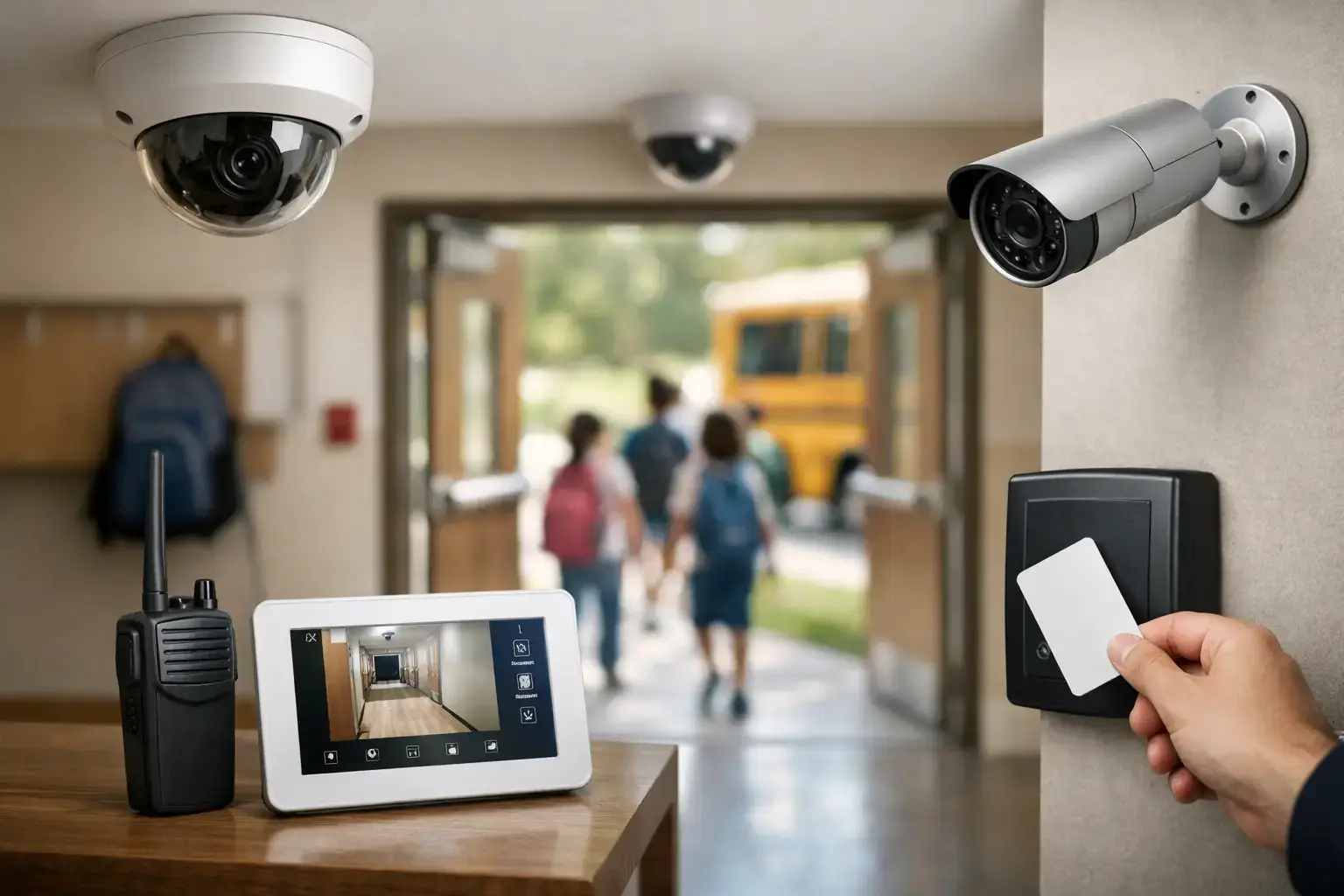
Door entry systems represent sophisticated security solutions designed to control and monitor physical access to buildings and facilities. These intelligent systems go far beyond simple locks and keys, offering comprehensive access management that protects people, property, and sensitive areas.
At their core, door entry systems leverage technology to control physical access mechanisms through advanced mechanisms like electronic locks, card readers, biometric scanners, and integrated software platforms. Their fundamental purpose involves three critical security objectives:
- Restricting unauthorised entry
- Tracking and logging personnel movement
- Providing flexible access permissions
Modern door entry systems serve multiple critical functions for Facilities Managers. They are not merely barriers but intelligent security interfaces that offer granular control over who enters specific spaces, when they can enter, and what areas they can access.
The London Fire Brigade emphasises that these systems must balance security with emergency preparedness, ensuring that while access is controlled, escape routes remain unobstructed during potential crisis scenarios like fires or evacuations.
Key Components of Advanced Door Entry Systems:
- Proximity card readers
- Biometric scanners
- Electromagnetic locks
- Integration with alarm systems
- Real-time access logs
- Remote management capabilities
Pro tip: When implementing door entry systems, always conduct a comprehensive risk assessment to ensure your security solution meets both safety regulations and organisational access requirements.
Common Types of Door Entry Solutions
Facilities managers have an array of door entry solutions available to meet diverse security requirements, ranging from simple mechanical systems to advanced technological interfaces. Each type of system offers unique advantages depending on the specific operational context and security needs of an organisation.
Traditional door entry solutions include mechanical and electronic access mechanisms, which can be categorised into several primary types:
- Keypad Entry Systems: Require numerical code for access
- Proximity Card Readers: Use electronic cards for authentication
- Biometric Scanners: Leverage unique physical characteristics
- Video Intercom Systems: Provide visual verification before entry
- Magnetic Lock Systems: Offer electromagnetic access control
Modern door entry technologies have evolved beyond basic security measures. They now integrate sophisticated features like remote management, real-time tracking, and comprehensive access logging, enabling facilities managers to maintain granular control over building entry points.
Home and business security technologies increasingly overlap, with advanced entry systems offering customisable access controls that balance convenience and robust security. These intelligent systems can be programmed to grant different access levels, track personnel movements, and generate detailed activity reports.
Key Considerations for Door Entry System Selection:
Here is a comparison of common door entry system types and their ideal use cases:
| System Type | Typical Use Case | Security Level | User Convenience |
|---|---|---|---|
| Keypad Entry | Small offices or residential | Moderate | Requires memorised code |
| Proximity Card Reader | Large businesses and schools | High | Easy staff management |
| Biometric Scanner | High-security facilities | Very high | Fast and accurate identification |
| Video Intercom | Flats and visitor access | Moderate | Visual verification possible |
| Magnetic Lock System | Emergency exits or high traffic | Variable | Integrates with alarms easily |
- Scalability of the system
- Integration with existing security infrastructure
- Ease of user management
- Compliance with safety regulations
- Cost-effectiveness
Pro tip: When selecting a door entry solution, prioritise systems that offer flexibility, comprehensive reporting, and seamless integration with your existing security ecosystem.
Core Features and How the Systems Work
Door entry systems represent sophisticated security technologies that combine multiple components to create intelligent access control solutions. These systems function through a complex interplay of hardware and software designed to verify, authenticate, and manage building access with precision and reliability.
The fundamental operational mechanism involves electronic locking mechanisms and credential verification, which typically follows a multi-stage authentication process:
- Credential Presentation
- Signal Transmission
- Authentication Verification
- Access Granted/Denied
- Logging of Access Event
Modern door entry systems integrate advanced technologies that go beyond simple mechanical restrictions. They incorporate sophisticated features like biometric scanning, remote management interfaces, and real-time monitoring capabilities that transform traditional security approaches.

Building standards play a crucial role in ensuring these systems maintain performance criteria for durability and safety. Compliance with regulations like BS 6375-1 ensures that door entry systems can withstand environmental pressures while maintaining consistent functionality.
Critical Technical Components:
- Central control unit
- Authentication devices
- Electronic locks
- Communication interfaces
- Access management software
- Audit trail and reporting systems
Door entry systems transform physical security from passive barriers to intelligent, adaptive protection mechanisms.
Pro tip: Invest in systems that offer comprehensive integration capabilities, allowing seamless communication between different security technologies and platforms.
Legal and Compliance Requirements in the UK
Facilities managers must navigate a complex landscape of legal standards governing door entry systems, ensuring both security effectiveness and regulatory compliance. The regulatory framework in the United Kingdom requires careful consideration of multiple legislative requirements and technical standards.
Safety standards for powered doors are critically defined by specific British Standards, including BS EN 12453:2017 and BS EN 12604:2017. These regulations mandate comprehensive risk assessments and specify precise safety protocols for mechanical and electronic door systems.
Key Legal Compliance Requirements:
- Adherence to Health and Safety Executive guidelines
- Compliance with Building Regulations 2010
- Implementation of risk assessment protocols
- Regular maintenance and safety inspections
- Documentation of system performance and modifications
Approved Document Q provides additional regulatory guidance, particularly for new dwelling security standards. This document establishes critical requirements for door hardware robustness, installation quality, and resistance to potential physical intrusion.
Regulatory compliance is not just a legal obligation, but a fundamental aspect of comprehensive security management.
Beyond physical standards, facilities managers must also consider data protection regulations. Door entry systems that collect personal data must comply with GDPR principles, ensuring appropriate data handling, storage, and user consent mechanisms.
Compliance Documentation Requirements:
- Detailed installation certificates
- Manufacturer’s technical specifications
- Risk assessment reports
- Maintenance logs
- User access records
Pro tip: Maintain a comprehensive compliance folder documenting every aspect of your door entry system’s installation, performance, and ongoing maintenance to demonstrate regulatory adherence.
Operational Benefits for Businesses and Care Homes
Door entry systems provide far more than basic security, offering transformative operational advantages for businesses and care homes. These intelligent technologies enable organisations to manage access, monitor movements, and enhance overall operational efficiency with unprecedented precision.
Access control systems dramatically improve facilities management by providing granular control over personnel movement and building access. The strategic implementation of these systems delivers multiple critical operational benefits:
Benefits for Businesses:
- Enhanced security monitoring
- Reduced risk of unauthorized entry
- Detailed activity logging
- Streamlined staff management
- Lower insurance premiums
Benefits for Care Homes:
- Resident safety tracking
- Controlled visitor access
- Protection of vulnerable individuals
- Comprehensive visitor management
- Emergency response coordination
Modern door entry technologies go beyond traditional security measures. They integrate seamlessly with other management systems, providing real-time insights, generating comprehensive reports, and enabling proactive security strategies that protect both physical assets and human resources.
Intelligent access control transforms security from a passive barrier to an active management tool.
The data generated by these systems offers unprecedented operational intelligence. Facilities managers can track personnel movements, identify potential security vulnerabilities, and create more efficient workplace protocols based on empirical access data.
Key Performance Metrics Tracked:
The table below summarises key performance metrics facilities managers can monitor using advanced door entry systems:
| Metric Tracked | What It Reveals | Management Benefit |
|---|---|---|
| Entry/Exit Timestamps | Staff arrival and departure patterns | Optimises scheduling and security checks |
| Individual Access Patterns | Frequency of area access | Highlights unusual staff behaviour |
| High-Traffic Zones | Popular entry points | Improves site layout and monitoring |
| Duration of Presence | Time spent onsite | Aids compliance and safety planning |
| Credential Usage Frequency | Card or biometric system reliability | Identifies user or technical issues |
- Entry and exit timestamps
- Individual access patterns
- High-traffic zones
- Duration of site presence
- Credential usage frequency
Pro tip: Implement a comprehensive access control strategy that balances robust security with user convenience, ensuring smooth operational workflows while maintaining stringent protection standards.
Risks, Costs, and Mistakes to Avoid
Implementing door entry systems requires careful consideration of potential operational vulnerabilities and financial implications. Facilities managers must navigate a complex landscape of technical challenges and potential risks that could compromise system effectiveness and organisational security.
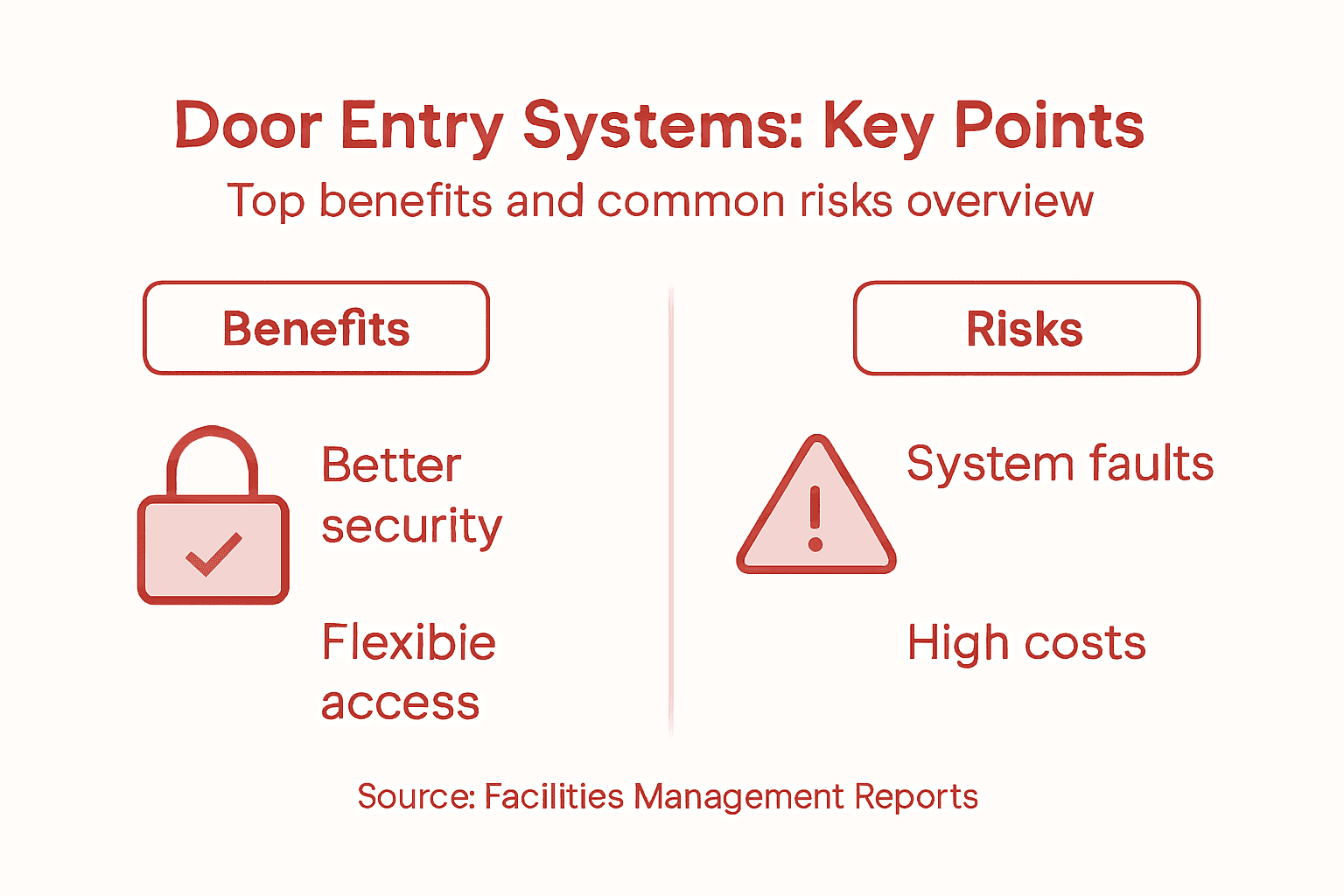
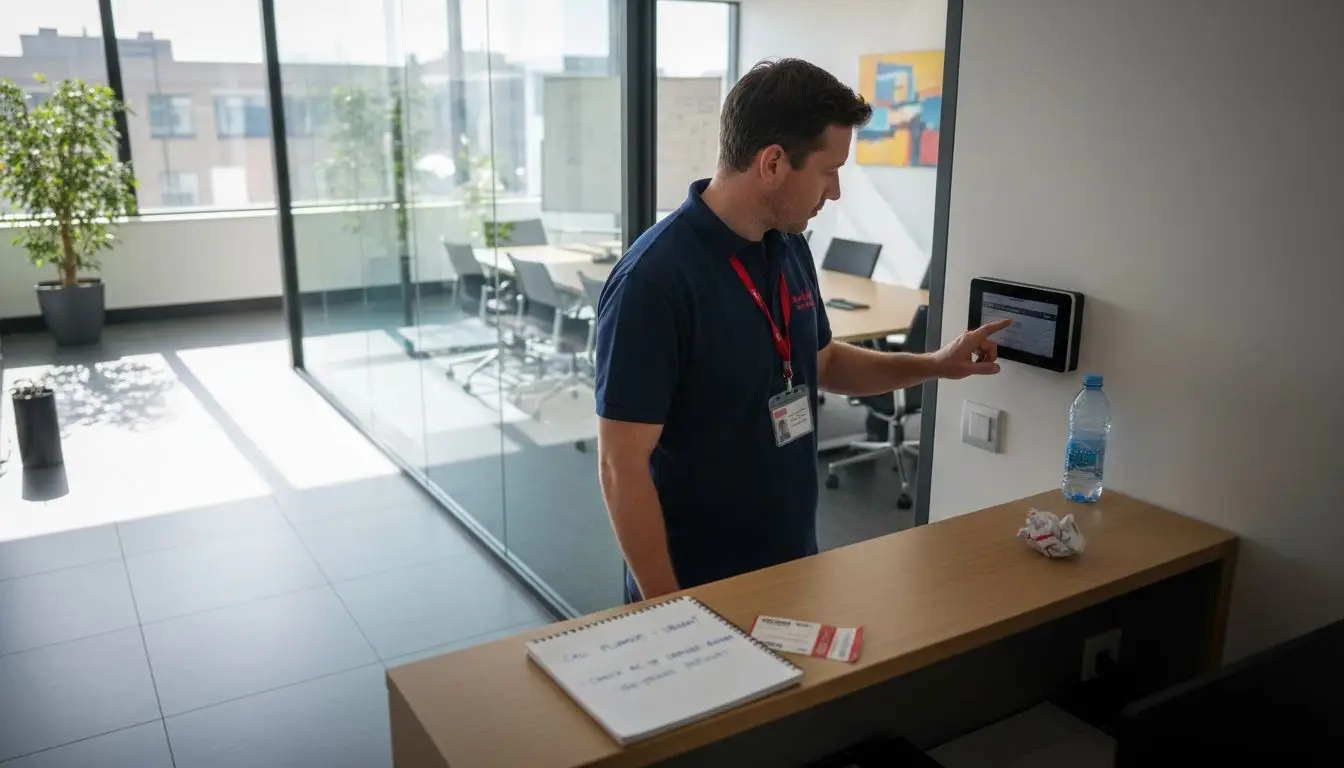
Powered door systems present significant mechanical risks that demand meticulous planning and ongoing management. Critical risks include mechanical failures, potential entrapment hazards, and system misuse that could lead to workplace accidents or security breaches.
Common Operational Risks:
- Inadequate system maintenance
- Poor user training
- Insufficient access management protocols
- Outdated security configurations
- Incomplete integration with existing systems
Financial Considerations:
- Initial installation costs
- Ongoing maintenance expenses
- Training and user management
- Potential liability from system failures
- Upgrade and technology refresh cycles
Facilities managers must balance security requirements with practical considerations, ensuring safety for vulnerable individuals while maintaining emergency access protocols. This involves carefully selecting appropriate technologies and developing robust operational procedures.
Effective door entry system management requires a proactive approach to risk mitigation and continuous system evaluation.
Key Risk Mitigation Strategies:
- Regular system audits
- Comprehensive staff training
- Periodic risk assessments
- Maintaining detailed documentation
- Implementing redundant access methods
Pro tip: Develop a comprehensive risk management strategy that includes regular system testing, staff training, and contingency planning to minimise potential vulnerabilities in your door entry system.
Take Control with Expert Door Entry Solutions Tailored for Facilities Managers
Managing access with precision and safety is a critical challenge for Facilities Managers who seek to restrict unauthorised entry while ensuring compliance with UK legal standards. If maintaining robust security with flexible, intelligent door entry systems feels overwhelming, you are not alone. Key pain points such as ongoing system maintenance, seamless integration, and balancing emergency access requirements demand a trusted partner.
At 247 CCTV, we specialise in installing high-quality door entry and access control systems designed to deliver granular control, real-time monitoring, and peace of mind for both businesses and residential clients. Our expert team understands the importance of comprehensive security management combined with GDPR compliance and risk mitigation strategies so you can confidently protect what matters.
Ensure your facility is protected now with advanced technology and professional installation that aligns perfectly with safety regulations and your operational needs. Explore how our bespoke access system installations can transform your security approach today. Visit 247 CCTV to discuss your requirements and secure your premises with trusted expertise.
Frequently Asked Questions
What are the primary purposes of door entry systems?
Door entry systems primarily aim to restrict unauthorised entry, track and log personnel movement, and provide flexible access permissions.
What are the key components of advanced door entry systems?
Key components include proximity card readers, biometric scanners, electromagnetic locks, integration with alarm systems, real-time access logs, and remote management capabilities.
How do door entry systems enhance security for businesses?
Door entry systems enhance security by providing detailed activity logging, reducing the risk of unauthorised entry, and allowing facilities managers to monitor and control access effectively.
What considerations should facilities managers keep in mind when selecting a door entry system?
Facilities managers should consider system scalability, integration with existing security infrastructure, ease of user management, compliance with safety regulations, and cost-effectiveness.