Over 60 percent of british businesses report security incidents every year. For Facilities Managers in Essex, staying ahead means more than simply installing cameras. Legal compliance, theft prevention, and robust monitoring all demand clear understanding of modern video surveillance options. This guide spotlights the best approaches for commercial properties—helping you protect assets while meeting the strict standards set across the United Kingdom.
Key Takeaways
| Point | Details |
|---|---|
| Importance of Video Surveillance | Video surveillance in the UK is essential for security management in commercial and public spaces, helping in crime prevention and asset protection. |
| Types of Systems | Businesses can choose between analogue CCTV, IP cameras, and hybrid systems, each offering different benefits tailored to specific security needs. |
| Legal Compliance | Organisations must adhere to UK GDPR and Data Protection Act 2018 requirements, ensuring transparency, data protection, and proper documentation of surveillance practices. |
| Risk Management | Effective system implementation involves careful camera placement, robust data management, and regular security audits to mitigate legal and operational risks. |
Defining Video Surveillance Systems in the UK
Video surveillance systems represent technological solutions designed to monitor and record activities within specific physical spaces across business and public environments. In the United Kingdom, these systems have become critical infrastructure for security management, particularly for commercial facilities seeking comprehensive threat detection and prevention strategies.
According to the UK Information Commissioner’s Office guidance, video surveillance encompasses various technological platforms ranging from traditional closed-circuit television (CCTV) to advanced artificial intelligence-powered monitoring solutions. These systems capture visual data with specific security objectives, including crime prevention, workplace safety monitoring, and asset protection.
Modern video surveillance technologies in the UK typically integrate multiple components such as high-resolution cameras, network connectivity, digital storage systems, and sophisticated analytics software. For commercial facilities in Essex, these systems can include burglar alarm integration using platforms like Hikvision AX Pro, RISCO LightSYS+, and Texecom Premier Elite, which provide comprehensive security monitoring capabilities.
The primary functions of contemporary video surveillance systems include real-time monitoring, incident recording, forensic evidence collection, and deterrence of potential criminal activities. By strategically positioning cameras and implementing intelligent tracking algorithms, businesses can create robust security infrastructures that protect physical premises and provide actionable insights.
Pro tip: When implementing video surveillance systems, always consult local data protection regulations and ensure proper signage informing individuals about monitoring zones to maintain legal compliance.
Types of Surveillance: CCTV, IP, and Hybrid
Video surveillance technologies in the United Kingdom have evolved significantly, offering businesses and security professionals multiple approaches to monitoring and protecting premises. British security industry standards outline three primary types of surveillance systems: traditional Closed-Circuit Television (CCTV), Internet Protocol (IP) cameras, and hybrid solutions that combine multiple technological platforms.
Traditional CCTV systems represent the foundational approach to video surveillance, utilising analogue cameras connected through coaxial cables to centralised recording equipment. These systems are straightforward, reliable, and often more cost-effective for smaller installations. In contrast, IP camera systems leverage digital network technologies, allowing remote access, higher resolution imaging, and more sophisticated data management capabilities. These advanced systems can transmit video signals over computer networks, enabling more flexible and scalable security solutions.
Hybrid surveillance systems represent the most versatile approach, integrating both analogue and digital technologies to create comprehensive security infrastructures. According to the UK Information Commissioner’s Office guidance, these systems can incorporate multiple camera types, providing businesses with maximum flexibility in monitoring strategies. Hybrid solutions are particularly beneficial for organisations seeking to upgrade their security incrementally without completely replacing existing infrastructure.
Each surveillance type offers distinct advantages for Essex commercial facilities. CCTV provides robust, straightforward monitoring; IP cameras deliver advanced analytics and remote management; while hybrid systems offer seamless technological integration. The selection depends on specific security requirements, budget constraints, and long-term infrastructure planning.
The following table compares the key features and practical considerations of the main video surveillance system types:
| System Type | Technology Used | Notable Advantage | Typical Use Case |
|---|---|---|---|
| Analogue CCTV | Coaxial cable, DVR | Cost-effective for basics | Small business monitoring |
| IP (Digital) | Networked cameras, NVR | Remote access, high quality | Multi-site organisations |
| Hybrid | Both analogue & digital | Flexible, scalable upgrades | Gradual system migration |
Pro tip: When selecting a video surveillance system, conduct a comprehensive site survey to determine the most appropriate technological approach for your specific security needs.
How Video Surveillance Operates Effectively
Video surveillance systems function through a complex network of technological components designed to capture, process, and analyse visual information for security purposes. Government surveillance guidelines highlight the critical importance of understanding these operational mechanisms to ensure both effective security and legal compliance.
The core operational process begins with camera positioning and data capture. Strategic camera placement is crucial, focusing on high-traffic areas, entry points, and potential security vulnerability zones. Modern surveillance systems utilise advanced sensors capable of capturing high-resolution imagery in various lighting conditions, with some sophisticated models incorporating infrared and thermal imaging technologies. These cameras continuously record visual data, transmitting signals through secure network connections to centralised recording and monitoring stations.
Data processing represents the next critical stage of video surveillance effectiveness. According to the Information Commissioner’s Office guidance, effective systems integrate intelligent analytics software that can perform real-time monitoring, movement detection, facial recognition, and anomaly identification. These advanced algorithms enable proactive security measures, allowing immediate alerts and automated responses to potential security breaches. For Essex commercial facilities, this means significantly enhanced threat detection and rapid incident response capabilities.
Successful video surveillance also demands robust data management protocols. This includes secure storage mechanisms, strict access controls, and comprehensive data retention policies. Modern systems typically utilise cloud-based storage solutions and encrypted data transmission to ensure both accessibility and protection of sensitive visual information. The integration of artificial intelligence and machine learning further enhances these systems’ predictive and analytical capabilities, transforming passive recording into an active security management tool.
Pro tip: Regularly review and update your video surveillance system’s positioning, settings, and analytical parameters to maintain optimal security performance and adapt to changing facility landscapes.
Legal Requirements for CCTV in Commercial Settings
Commercial organisations in the United Kingdom must navigate a complex landscape of legal obligations when implementing video surveillance systems. Information Commissioner’s Office guidance provides comprehensive frameworks for ensuring legal compliance in surveillance practices, emphasising the critical balance between security needs and individual privacy rights.
Under the UK General Data Protection Regulation (GDPR) and Data Protection Act 2018, businesses must adhere to several fundamental legal requirements when installing and operating CCTV systems. These include establishing a clear and legitimate purpose for surveillance, ensuring data collection is proportionate and necessary, and implementing robust mechanisms for data protection. Commercial facilities must develop formal documentation explaining the rationale behind their surveillance strategy, including detailed assessments of why specific monitoring is essential for security and operational management.
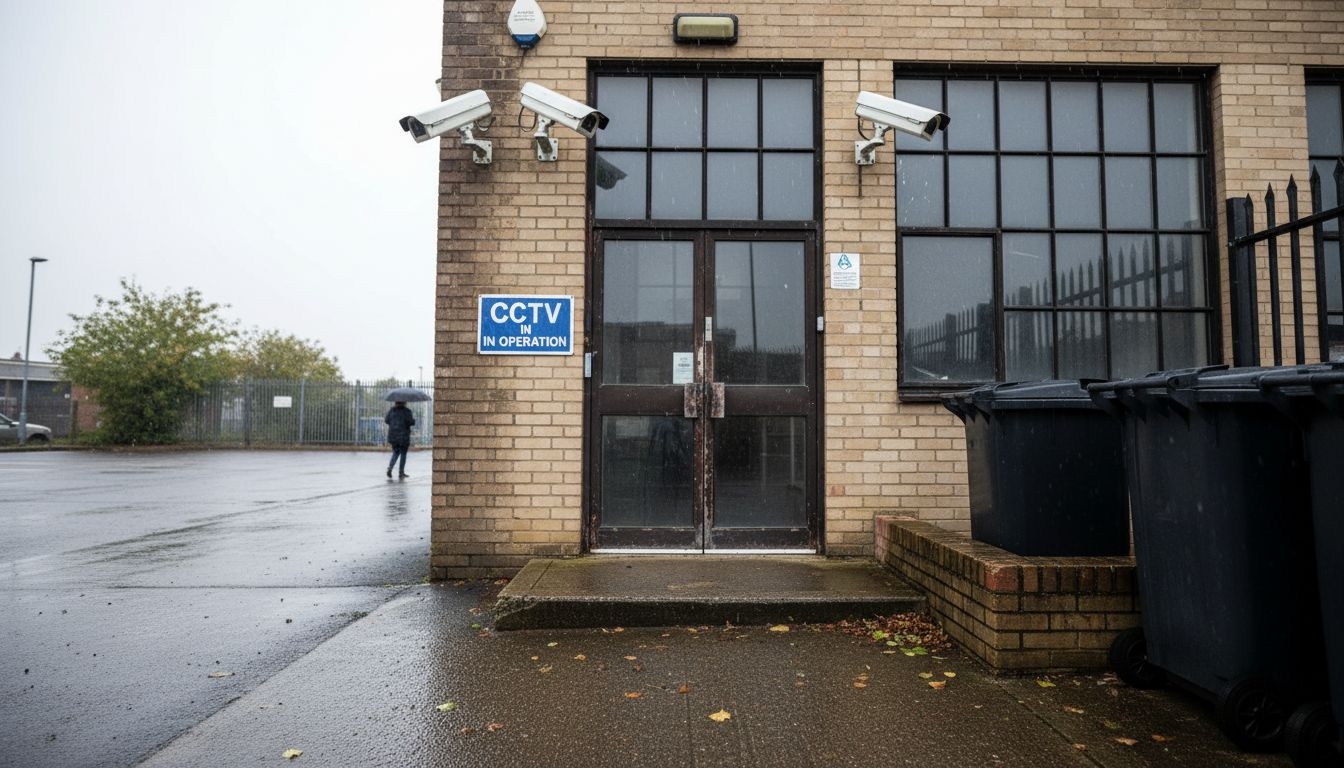
Key legal obligations for commercial CCTV implementation include comprehensive transparency requirements mandating clear signage informing individuals about camera locations and monitoring activities. Organisations must provide explicit information about data storage duration, access protocols, and individuals’ rights to request footage or challenge surveillance practices. This involves displaying prominent notices explaining the purpose of video monitoring, identifying the data controller, and providing contact information for further inquiries about data processing.
Additionally, commercial settings must implement strict technical and organisational measures to protect recorded data. This encompasses secure storage systems, limited access controls, defined retention periods, and robust processes for data deletion. Essex businesses must ensure that only authorised personnel can access surveillance footage, with comprehensive audit trails documenting any interactions with recorded material. Encryption, secure network configurations, and regular security assessments are crucial to maintaining legal compliance and protecting sensitive visual information.
This table provides an at-a-glance overview of major legal obligations for commercial CCTV in the UK:
| Legal Requirement | Purpose | Business Consequence |
|---|---|---|
| Clear Signage | Notify individuals of monitoring | Avoids privacy complaints |
| Access Controls | Limit footage access to personnel | Reduces misuse risk |
| Data Protection | Secure storage and data handling | Complies with GDPR |
| Documentation | Record surveillance rationale | Demonstrates legal compliance |
Pro tip: Conduct an annual comprehensive review of your CCTV system’s legal compliance, documenting any changes in surveillance practices and ensuring ongoing alignment with current data protection regulations.
Risks, Liabilities, and Installation Pitfalls
Video surveillance systems present significant legal and operational challenges for commercial facilities in Essex, requiring meticulous planning and strategic implementation. Information Commissioner’s Office guidance identifies numerous potential risks that organisations must proactively manage to ensure effective and legally compliant security infrastructure.
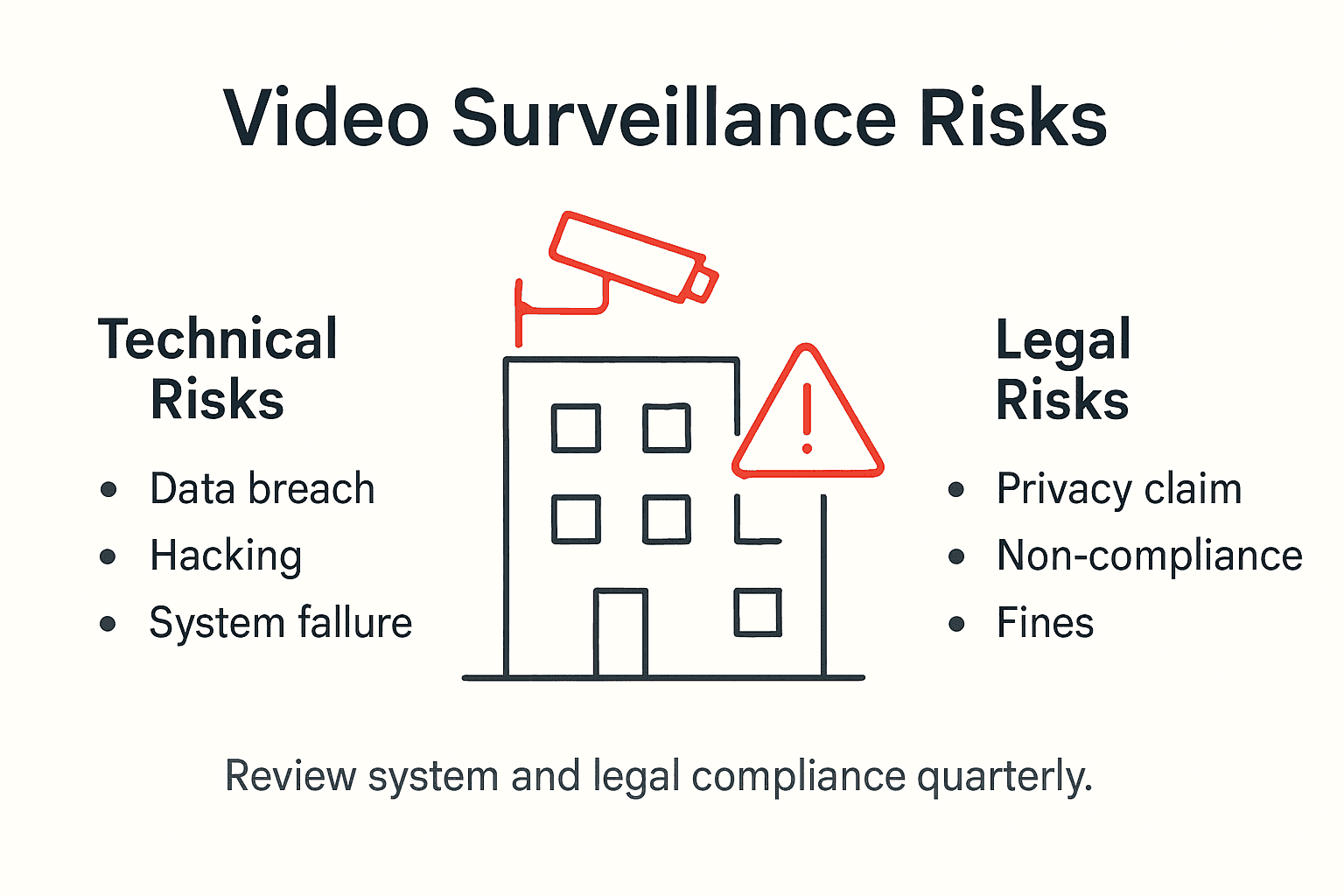
Primary installation pitfalls include inappropriate camera positioning, which can inadvertently capture excessive or irrelevant visual information, potentially breaching data protection regulations. Businesses must conduct comprehensive site assessments to determine optimal camera placement, ensuring surveillance focuses exclusively on necessary areas without infringing on individuals’ reasonable expectations of privacy. This requires detailed mapping of surveillance zones, understanding sight lines, and implementing technical configurations that limit unnecessary data collection.
British security industry standards emphasise the critical importance of maintaining robust technical and organisational safeguards to mitigate potential liabilities. Key risk management strategies include implementing strict access controls, developing comprehensive staff training programmes, and establishing clear protocols for data handling and retention. Essex commercial facilities must develop formal documentation demonstrating their commitment to responsible surveillance, including detailed risk assessments, privacy impact evaluations, and transparent policies explaining monitoring practices.
Technical vulnerabilities represent another significant risk area, with potential consequences ranging from data breaches to system compromises. Organisations must invest in secure network configurations, advanced encryption technologies, and regular security audits to protect recorded footage from unauthorised access or potential cyber intrusions. This involves implementing multi-layered security protocols, including robust authentication mechanisms, network segmentation, and continuous monitoring of system integrity.
Pro tip: Conduct quarterly comprehensive security audits of your video surveillance infrastructure, systematically reviewing technical configurations, legal compliance, and potential vulnerability points.
Secure Your Essex Facility with Expert Video Surveillance Solutions
The article highlights the growing need for reliable and legally compliant video surveillance systems tailored to commercial spaces in Essex. You understand the challenge of balancing effective monitoring with data protection regulations and the importance of integrating high-quality CCTV and burglar alarm systems like Hikvision AX Pro or Texecom Premier Elite. Protecting your facility from security risks while ensuring transparency and access control are vital goals every business must meet.
At 247cctv, we specialise in installing comprehensive security solutions designed to address these exact concerns. Whether you need advanced IP cameras, hybrid systems, or burglar alarm integration, our skilled team manages every detail from secure camera positioning to data handling policies. We ensure your surveillance setup complies fully with UK regulations and provides the peace of mind your business deserves.

Don’t leave your facility’s security to chance. Discover how our bespoke CCTV and burglar alarm installations can transform your Essex business premises. Visit 247cctv today and take the first step towards a safer, compliant, and smarter security infrastructure.
Frequently Asked Questions
What are the primary functions of video surveillance systems?
The primary functions include real-time monitoring, incident recording, forensic evidence collection, and deterring potential criminal activities.
How do IP camera systems differ from traditional CCTV?
IP camera systems leverage digital network technologies for higher resolution imaging and remote access, whereas traditional CCTV uses analogue cameras connected via coaxial cables.
What are hybrid surveillance systems and their benefits?
Hybrid surveillance systems combine both analogue and digital technologies, offering flexible and scalable security solutions, which is particularly useful for organisations upgrading their systems gradually.
What legal requirements must businesses adhere to when using CCTV?
Businesses must ensure clear signage about surveillance, establish strict access controls to footage, protect data, and maintain comprehensive documentation to demonstrate legal compliance.
Recommended
- 7 Key Benefits of Video Surveillance for Essex Businesses – 247 CCTV Security Ltd
- Why Everyone in Essex Is Talking About 4K CCTV Systems (And You Should Too) – 247 CCTV Security Ltd
- Why Everyone in Essex Is Talking About 4K CCTV Systems (And You Should Too) – 247 CCTV Security Ltd
- Protect Your Shop with Facial Recognition CCTV