Protecting residents and valuable assets in Essex care homes calls for more than basic measures. For property managers and compliance officers, navigating security demands means balancing daily safety with strict regulatory standards. Effective burglar alarm solutions built to British Standards, such as Grade 2 and Grade 3 systems, offer reliable protection and insurance eligibility while reducing disruptive false alarms. This guide gives practical steps for assessing needs, choosing compliant systems, and maintaining robust security tailored to your care home’s unique environment.
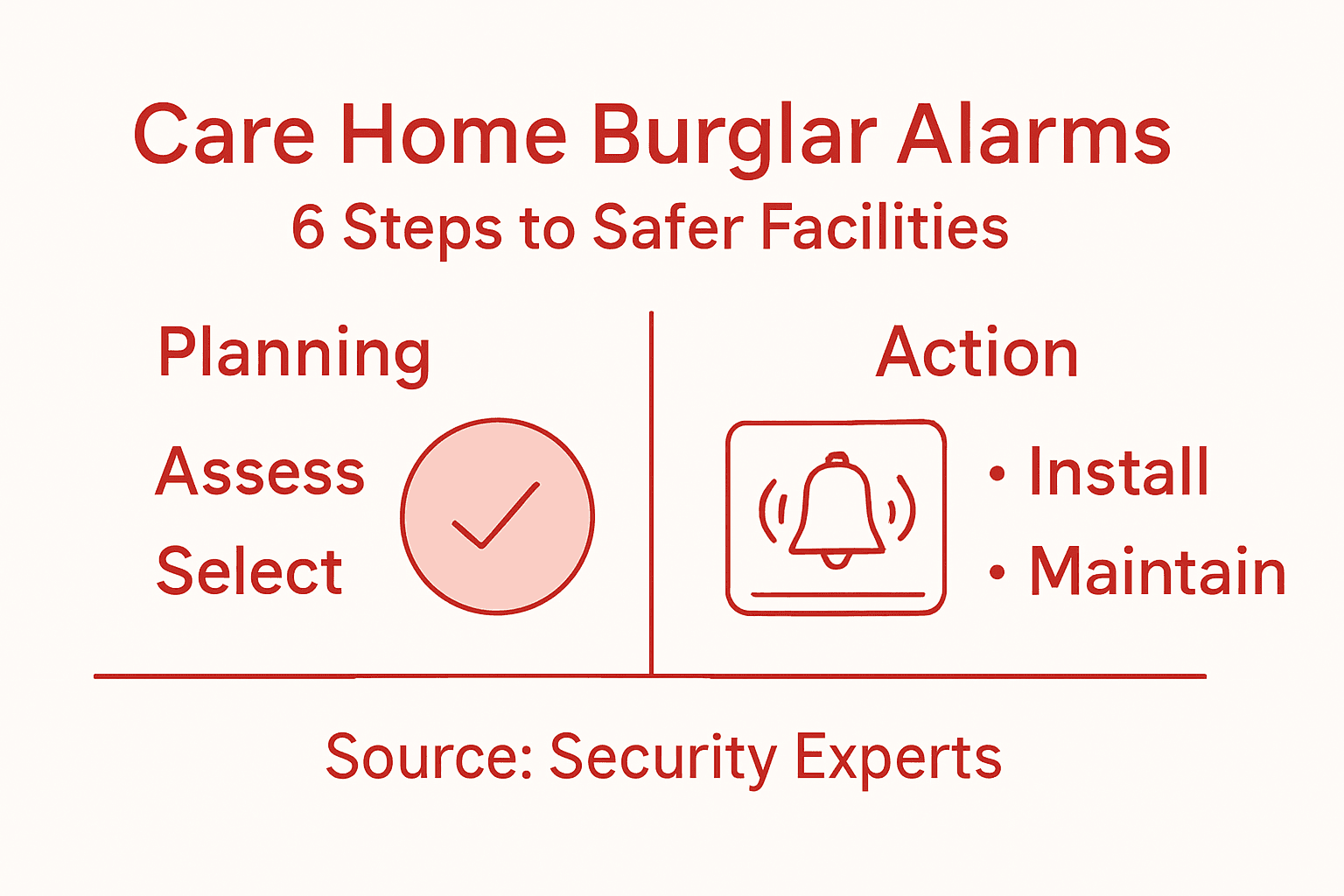
Quick Summary
| Key Insight | Explanation |
|---|---|
| 1. Assess security needs thoroughly | Evaluate the unique vulnerabilities of your care home, considering layout, resident needs, and historical incidents. |
| 2. Choose compliant alarm systems | Select burglar alarm systems like Hikvision AX Pro and RISCO LightSYS+ that meet British Standards for superior security. |
| 3. Plan for effective installation | Strategically place sensors to cover high-risk areas and ensure minimal false alarms while maintaining resident privacy. |
| 4. Verify system performance regularly | Conduct thorough testing of alarm systems to ensure functionality and compliance with established standards. |
| 5. Implement a maintenance schedule | Establish a routine maintenance programme to address vulnerabilities and uphold the system’s operational efficiency. |
Step 1: Assess security needs and compliance requirements
Securing a care home requires a comprehensive approach to burglar alarm systems that goes beyond basic protection. Your first priority is understanding the unique security landscape of your facility while ensuring strict regulatory compliance.
Beginning your security assessment involves multiple critical considerations. Care homes must evaluate their specific vulnerabilities by examining factors such as:
- Physical layout and entry points
- Resident population and mobility requirements
- Staff shift patterns and access management
- Historical security incidents or risks
Regulatory requirements play a pivotal role in your security strategy. Understanding SSAIB compliance standards helps ensure your burglar alarm system meets essential legal and safety benchmarks. Each care home has unique requirements based on resident needs, building design, and potential risk factors.
When selecting a burglar alarm system, prioritise solutions like the Hikvision AX Pro, RISCO LightSYS+, and Texecom Premier Elite that offer robust features tailored for care home environments. These systems provide comprehensive protection with features such as multiple zone monitoring, wireless sensor integration, and remote management capabilities.
Security is not about perfection; it’s about implementing intelligent, adaptable systems that evolve with your care home’s changing needs.
Professional recommendation: Conduct a comprehensive security audit with a professional who specialises in care home security to identify nuanced vulnerabilities and compliance requirements.
Step 2: Select suitable burglar alarm systems
Choosing the right burglar alarm system for a care home requires careful consideration of multiple technical and regulatory factors. Your selection must balance comprehensive protection with the specific needs of vulnerable residents and staff safety.
When evaluating potential systems, focus on burglar alarms that meet critical performance standards. Alarm systems complying with British Standards provide essential reliability and insurance requirements. Care homes typically require Grade 2 or Grade 3 systems, which offer enhanced security features:
- Advanced motion detection capabilities
- Wireless sensor integration
- Remote monitoring options
- Tamper-resistant design
- Quick emergency response mechanisms
Three recommended burglar alarm systems for care homes include the Hikvision AX Pro, RISCO LightSYS+, and Texecom Premier Elite. These models provide robust security features specifically designed for complex care environments. Each system offers unique advantages such as multiple zone monitoring, comprehensive sensor networks, and sophisticated alarm verification technologies.
Here’s how the leading burglar alarm systems for care homes compare on key features:
| System Model | Monitoring Zones | Sensor Type | Remote Management |
|---|---|---|---|
| Hikvision AX Pro | Customisable zones | Wireless & wired sensors | Full app/web portal |
| RISCO LightSYS+ | Multi-area coverage | Advanced wireless sensors | Smartphone control |
| Texecom Premier Elite | Segmented protection | Integrated sensor network | Web platform access |
The ideal burglar alarm system transforms security from a reactive measure to a proactive protection strategy.
Key selection criteria should include compatibility with existing infrastructure, ease of use for staff, and seamless integration with other security systems like access control and CCTV.
Professional recommendation: Consult a security specialist who understands care home regulations to ensure your chosen system meets both technical and legal compliance requirements.
Step 3: Plan installation for optimal coverage
Planning the installation of a burglar alarm system in a care home demands meticulous attention to detail and strategic sensor placement. Your goal is to create a comprehensive security network that protects residents while minimising potential false alarms.
British Standard installation guidelines provide crucial insights into designing effective security configurations. When mapping out your alarm system, consider these critical placement strategies:
- Identifying high-risk entry points
- Mapping resident movement patterns
- Creating overlapping sensor coverage
- Considering unique architectural features
- Accounting for potential blind spots
Each care home presents unique challenges that require tailored security approaches. Intelligent sensor positioning means understanding the specific layout of corridors, communal areas, and potential vulnerability points. The Hikvision AX Pro, RISCO LightSYS+, and Texecom Premier Elite systems offer flexible configurations that adapt to complex care home environments.
Effective alarm installation is about creating a seamless protective ecosystem, not just placing sensors randomly.
Key considerations include minimising false triggers, ensuring clear sensor lines of sight, and maintaining resident privacy while providing comprehensive coverage.
Professional recommendation: Conduct a comprehensive site survey with a security professional who can map out precise sensor locations and identify potential coverage challenges.
Step 4: Install alarm components securely
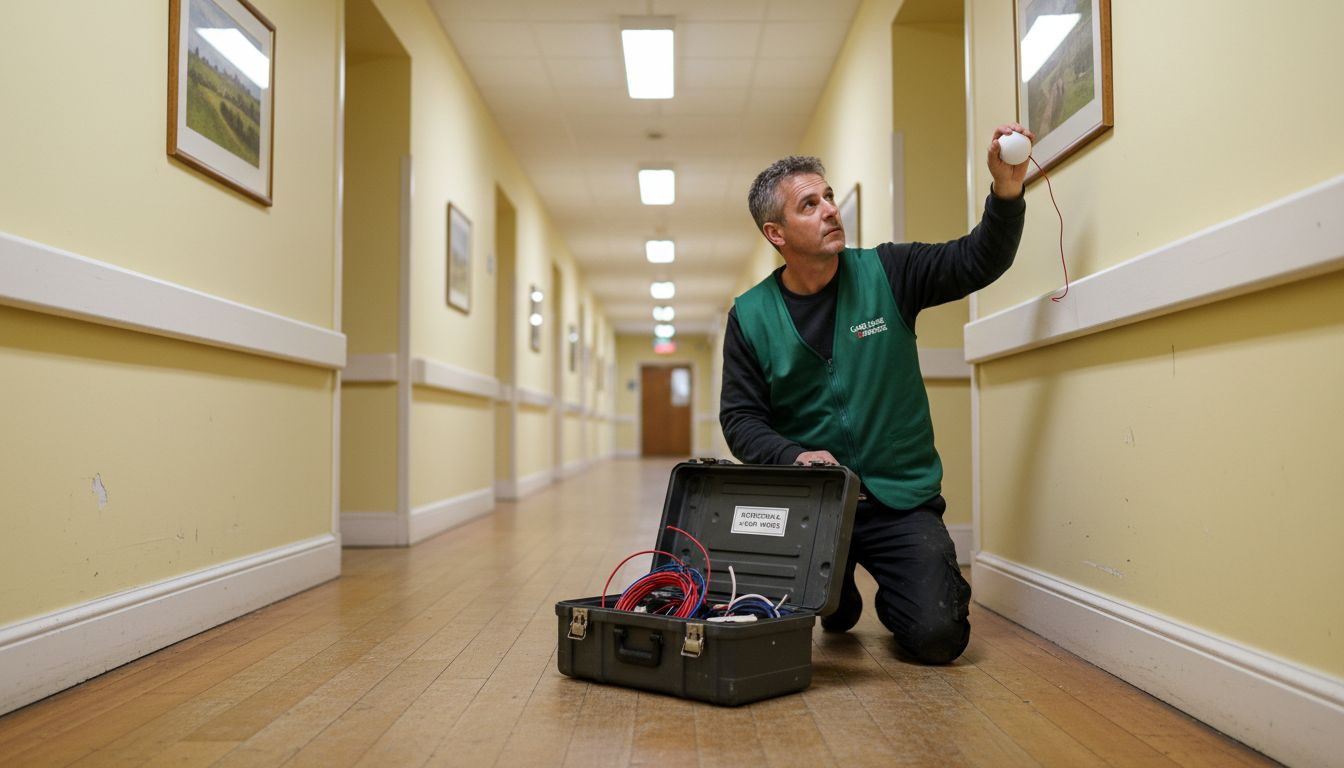
Installing burglar alarm components in a care home requires precision, technical expertise, and a deep understanding of the facility’s unique security requirements. Your installation process must prioritise both technical effectiveness and resident safety.
Prepare for installation by carefully reviewing burglar alarm setup protocols and gathering all necessary components for the Hikvision AX Pro, RISCO LightSYS+, or Texecom Premier Elite systems. Critical installation steps include:
- Mounting control panels securely
- Positioning wireless sensors strategically
- Ensuring reliable power connections
- Protecting communication pathways
- Minimising potential interference
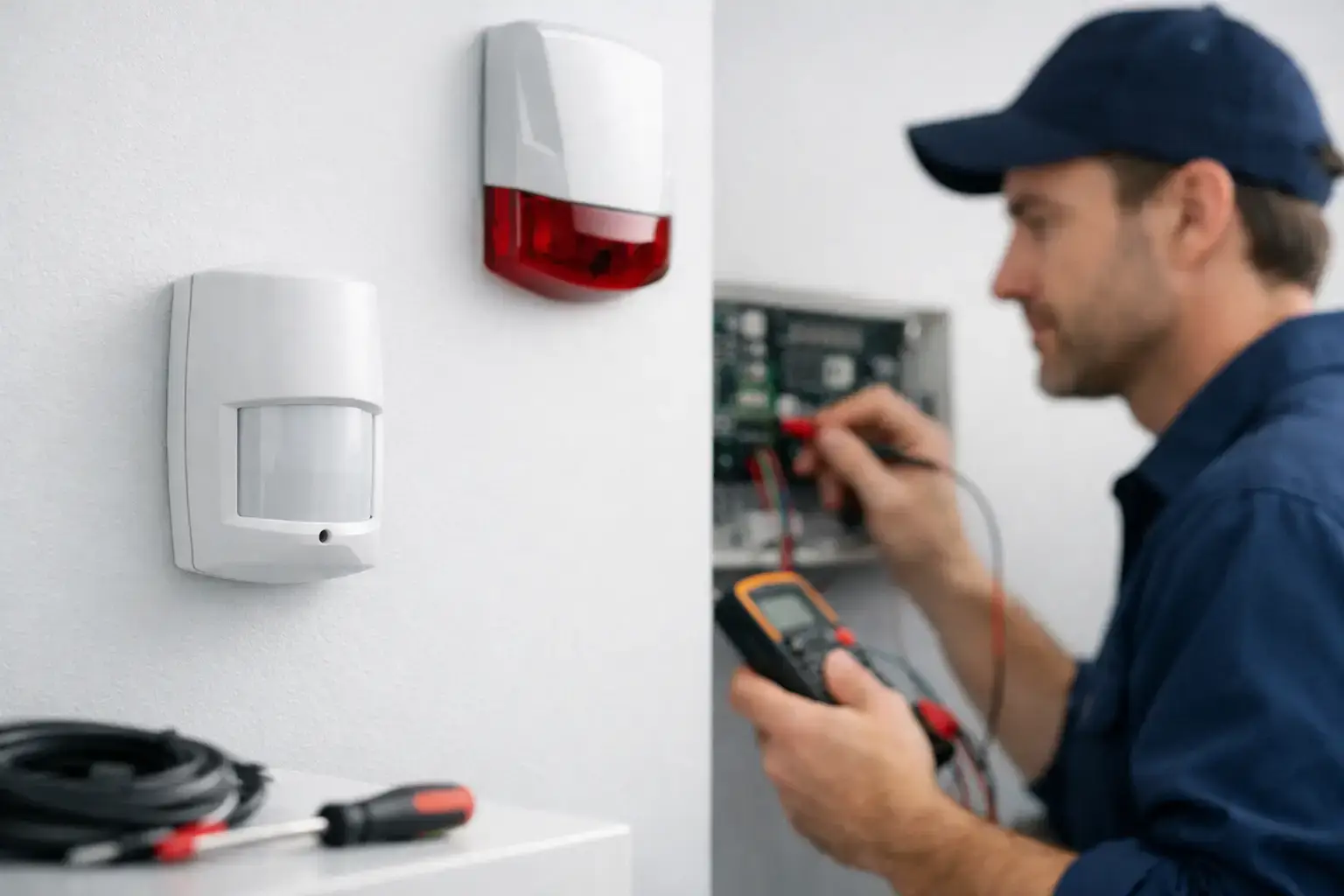
Professional installation involves meticulous cable management and precise sensor alignment. Technicians must carefully route wiring to prevent potential tampering, ensuring sensors are placed at optimal heights and angles to capture comprehensive room coverage without compromising resident privacy.
Successful security installation balances technological sophistication with human-centric design.
Pay special attention to battery backup systems, communication modules, and integration points with existing security infrastructure. Each component must be installed with future maintenance and potential system upgrades in mind.
Professional recommendation: Always conduct a comprehensive post-installation testing procedure to verify each sensor’s functionality and overall system performance.
Step 5: Test and verify system performance
Validating your burglar alarm system’s performance is a critical final step that ensures comprehensive protection for your care home residents. Your testing process must be methodical, thorough, and designed to uncover any potential vulnerabilities.
British Standard testing protocols recommend comprehensive verification of your alarm system’s functionality. Key testing procedures for the Hikvision AX Pro, RISCO LightSYS+, and Texecom Premier Elite systems include:
- Sensor sensitivity calibration
- Full perimeter coverage testing
- Communication module verification
- Battery backup system checks
- Emergency response trigger tests
Systematic testing involves simulating various potential security scenarios to ensure each component responds precisely as designed. Technicians should methodically activate sensors, test wireless communication ranges, and verify that alarm signals are transmitted correctly to monitoring centres.
A well-tested security system transforms uncertainty into reliable protection.
Pay particular attention to zone-specific responses, ensuring that different areas of the care home trigger appropriate alarm sequences without creating unnecessary disruptions to resident routines.
Professional recommendation: Schedule quarterly comprehensive system tests and maintain detailed documentation of each verification procedure to ensure ongoing reliability and compliance.
Step 6: Maintain and monitor for ongoing protection
Sustaining the effectiveness of your burglar alarm system requires consistent, proactive maintenance and monitoring strategies. Your ongoing approach will determine the long-term reliability and performance of your care home’s security infrastructure.
Security system maintenance strategies are crucial for preserving the integrity of your Hikvision AX Pro, RISCO LightSYS+, or Texecom Premier Elite system. Key maintenance activities include:
- Regular software updates
- Battery and power supply checks
- Sensor cleaning and alignment
- Communication pathway verification
- Firmware version management
Professional monitoring involves establishing a systematic approach to tracking system performance, including quarterly comprehensive reviews and immediate response to any detected anomalies. Care home managers should develop a structured maintenance schedule that minimises potential security vulnerabilities.
Consistent maintenance transforms a security system from a static installation into a dynamic protective shield.
Ensure your maintenance programme includes detailed documentation, staff training on system operations, and partnerships with certified security maintenance professionals who understand the unique requirements of care home environments.
The following table summarises vital benefits of regular alarm maintenance in care homes:
| Maintenance Practice | Impact on Security | Compliance Relevance |
|---|---|---|
| Quarterly system inspection | Identifies vulnerabilities | Meets regulatory standards |
| Battery backup testing | Prevents power failures | Ensures emergency readiness |
| Software updates | Strengthens cyber security | Protects personal data |
| Sensor cleaning/alignment | Reduces false alarms | Improves detection accuracy |
Professional recommendation: Create a dedicated log tracking all maintenance activities, system updates, and performance metrics to demonstrate ongoing compliance and system reliability.
Enhance Care Home Security with Expert Burglar Alarm Installation
Ensuring the safety and peace of mind for care home residents is a responsibility that demands precise, professional solutions. The challenges of protecting vulnerable individuals while maintaining regulatory compliance require burglar alarm systems with advanced features like wireless sensor integration, multiple zone monitoring, and reliable remote management. At 247 CCTV, we understand these concerns and specialise in installing tailored security systems that align with the highest British Standards and SSAIB compliance.

Take control of your care home’s security today. Explore how our expert installation of top-tier burglar alarms complements CCTV, door entry, and access systems by visiting our website. Discover reliable solutions specifically designed to meet the rigorous demands of care environments in our complete security services portfolio. Don’t leave your residents’ safety to chance. Contact us now to schedule a bespoke security assessment and protect what matters most.
Frequently Asked Questions
What are the key factors to consider when assessing security needs for a care home?
Understanding security needs involves evaluating the physical layout, entry points, and resident mobility requirements. Conduct a detailed examination to identify potential vulnerabilities and historical security incidents within the facility.
How can I ensure my burglar alarm system meets compliance requirements for care homes?
Ensure your system complies with relevant regulatory standards by selecting alarms that align with British Standards for security. Consulting a security specialist familiar with care home regulations can help you select the right system that meets these legal benchmarks.
What type of burglar alarm system is best suited for a care home environment?
Select systems that offer advanced features like multiple zone monitoring and remote management capabilities, which are crucial for complex environments. Assess options to find a system that provides comprehensive protection tailored to your care home’s specific needs.
What steps should I follow to plan for the installation of a burglar alarm system?
Begin by mapping out the care home’s layout to identify high-risk entry points and ensure overlapping sensor coverage. Involve a security professional to create a detailed installation plan that accounts for unique architectural features.
How often should I test and maintain my burglar alarm system?
It’s essential to conduct comprehensive system tests at least quarterly to verify the functionality of all components. Establish a structured maintenance schedule that includes regular updates, sensor cleaning, and performance reviews to sustain system reliability.
What actions can I take to minimise false alarms in a care home?
To reduce false alarms, focus on intelligent sensor placement and calibration during installation. Regularly maintain and clean sensors to ensure accurate functionality, which can lower false alarm rates by up to 30%.